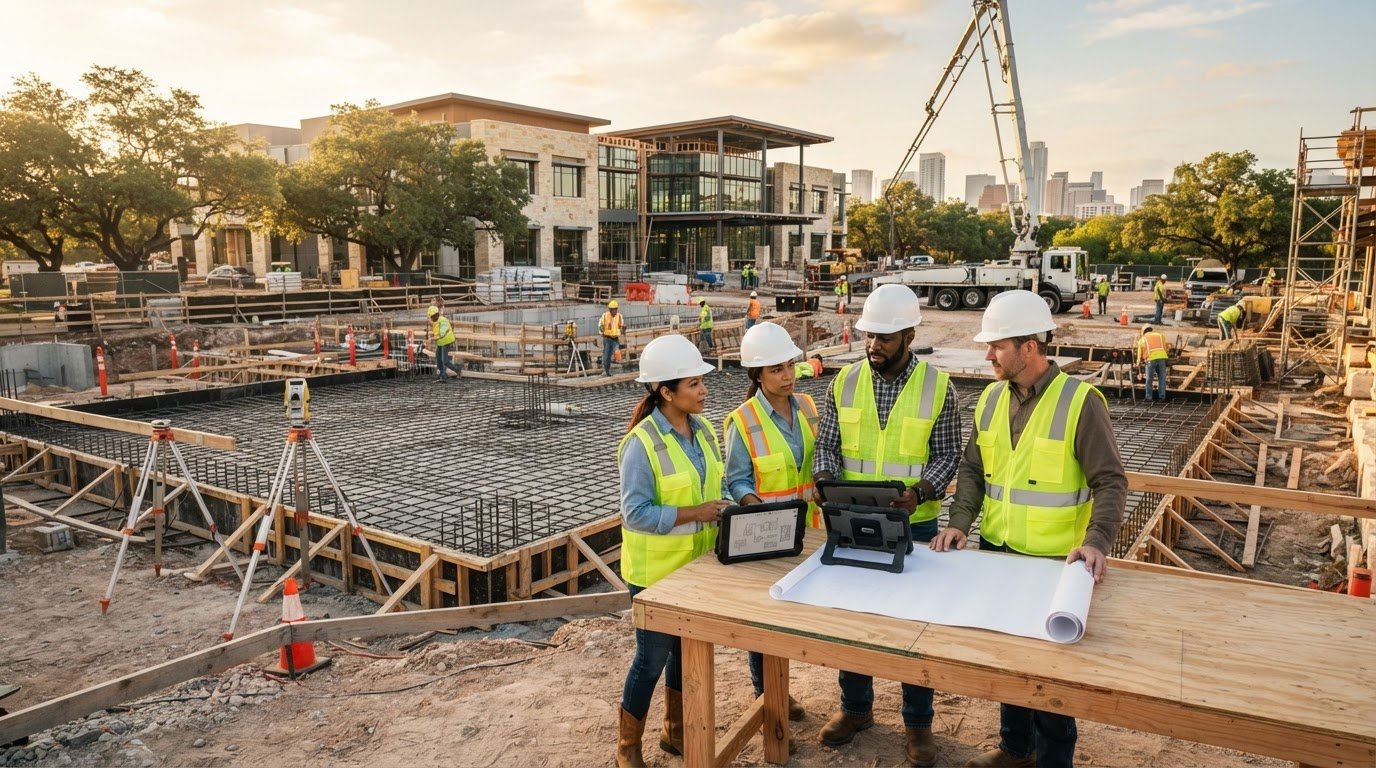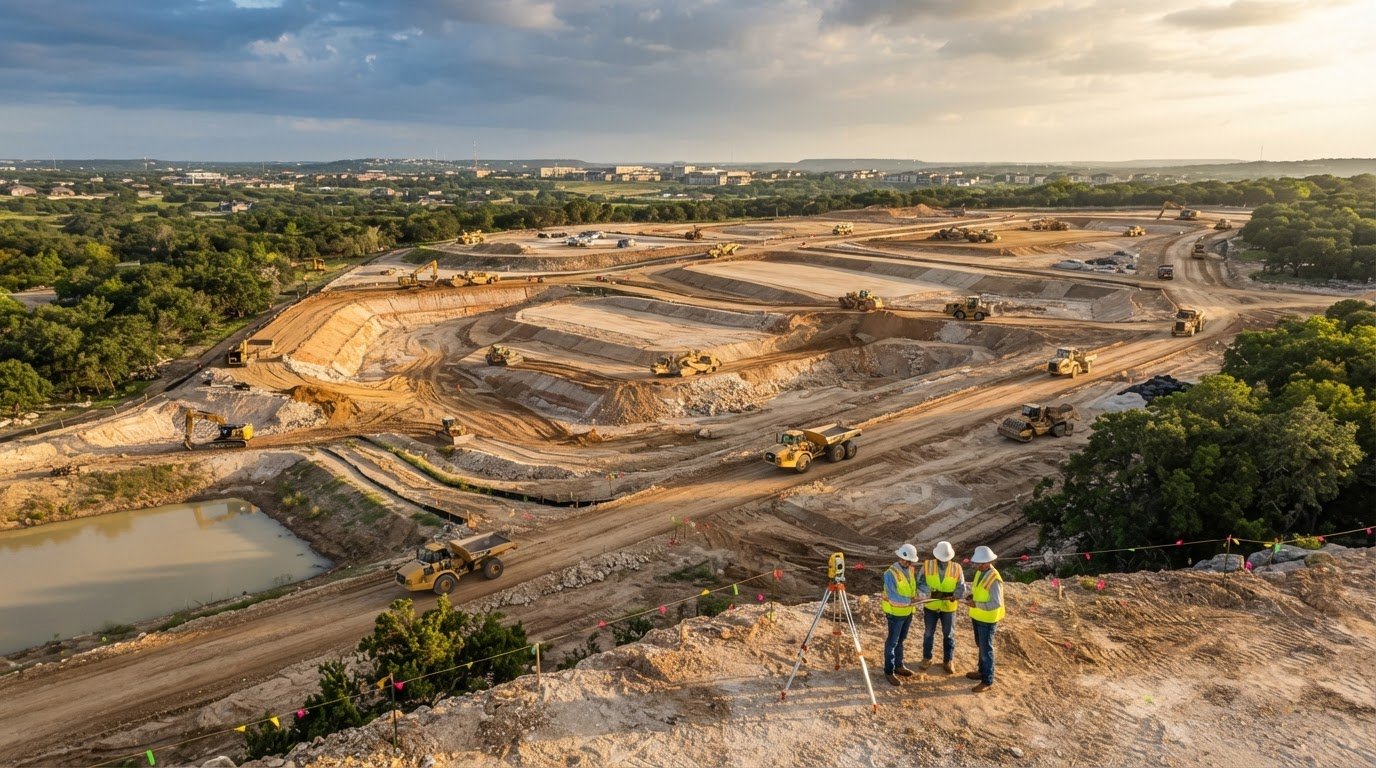
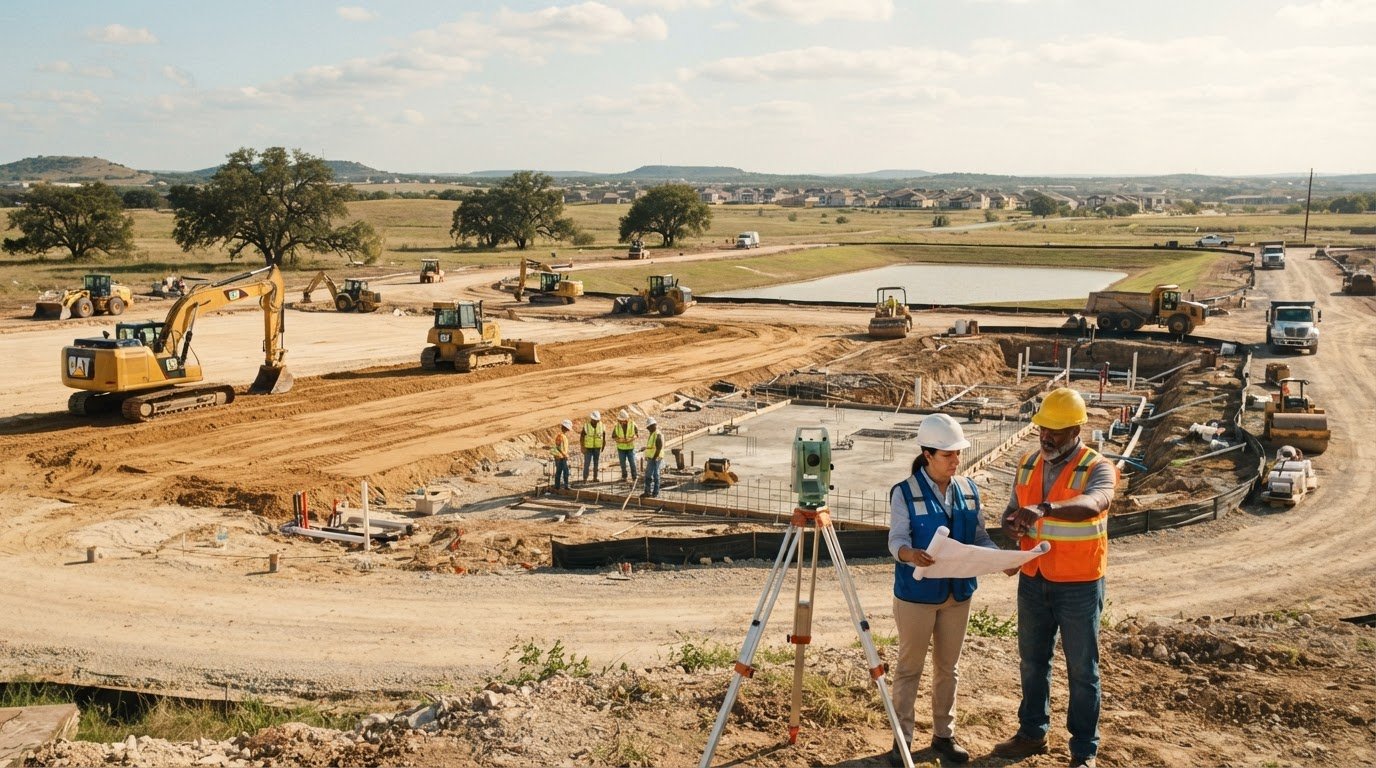
What if the most disruptive part of site work isn’t excavation or concrete placement, but the handoff between them? The benefits of turn key civil construction become clear when grading, underground utilities, and concrete work need to progress in a coordinated sequence. If separate scopes aren’t aligned, one crew may finish without leaving the site ready for the next.
Project owners and construction teams know that site schedules depend on clear scope, timely communication, and work that prepares the way for what follows. An integrated approach brings civil and concrete capabilities together under one delivery plan, while defining project-specific responsibilities.
This article explains how turnkey civil construction can simplify coordination, which work may fit within an integrated civil scope, and how to compare it with separately managed contracts. It also covers how to evaluate the approach for a Texas project, from mass excavation and underground utilities to detention ponds, soil stabilization, and concrete construction. The right structure depends on the site and project requirements, but understanding the sequence and scope helps teams make a more informed decision.
Key Takeaways
- Define the agreed civil scope and contract boundaries so responsibilities are clear from the outset.
- Map how site preparation, underground utilities, and concrete work connect to identify sequencing needs and scope interfaces.
- Compare turnkey and separate contractor packages by communication paths, scope ownership, and coordination responsibilities. The benefits of turn key civil construction depend on project fit, not a guaranteed lower cost or shorter schedule.
- Use a practical evaluation framework that accounts for project outcomes, site access, utility coordination, drainage, and concrete requirements.
- See how Born Integrated Construction’s civil and concrete capabilities support an integrated approach to Texas site work.
What Turnkey Civil Construction Means for a Texas Development
Turnkey civil construction coordinates agreed site and civil scopes under one project approach, with responsibilities defined by the contract. Rather than covering one isolated trade, an integrated civil scope can connect site preparation, underground infrastructure, drainage, and concrete work. The exact boundaries depend on project requirements and the agreement, so “turnkey” doesn’t automatically mean every site-related task is included.
The broader Turnkey project concept describes a contractor delivering a completed project. In civil construction, the contractor coordinates the civil work defined for the development, while the owner and project team establish the required outcomes and scope. This distinction matters when assessing the benefits of turn key civil construction. Integration creates a coordinated path across related scopes, but it doesn’t remove the need to define responsibilities.
Which civil scopes can be coordinated under one approach?
Mass excavation can establish site grades and prepare areas for construction. Depending on the agreed project scope, underground work may include storm sewer, sanitary sewer, or domestic water installation. Each can affect site access and the sequence of other tasks. Soil stabilization and drainage work may also factor into how the site is prepared and used.
Concrete work connects to that broader sequence. Paving, slabs, sidewalks, and other flatwork need to align with the site layout and the work that comes before them. Coordinating these scopes helps the project team plan how one activity hands off to the next instead of treating each trade package as a separate endpoint.
Why coordination matters before construction begins
Scope interfaces can affect when crews can work, which areas need to remain accessible, and what must be completed before concrete is placed. For example, a Texas development with planned building areas, underground utilities, drainage features, and paved access needs a sequence that accounts for how those elements connect. Actual requirements depend on the site, design, and contract scope.
Early coordination gives the team a chance to identify scope boundaries and sequencing constraints before they become field decisions. It doesn’t replace project planning, design coordination, or owner decisions. Instead, it helps align the agreed civil work and clarify where one responsibility ends and another begins. That clarity supports site readiness and a dependable transition to later construction.
How Turnkey Civil Construction Coordinates Site Work, Utilities, and Concrete
Coordinated delivery gives connected work packages a shared sequence. Site preparation establishes working areas; underground utility installation proceeds according to project plans; and paving, slabs, or other concrete work follows when the relevant areas are ready. The order varies by development, but treating each scope as part of the same delivery plan helps teams plan handoffs instead of addressing them only when work reaches the field.
Coordination relies on clearly defined scope, assigned responsibilities, agreed sequencing, and communication among the teams responsible for excavation, soil stabilization, utilities, drainage, and concrete. A shared delivery structure can make it easier to resolve questions about where work connects and who is responsible for each task. It doesn’t make project decisions automatic. It gives the team a common basis for managing them. T.W. Brown’s overview of turnkey site development also describes the integrated site-work approach.
From excavation and soil stabilization to site readiness
Excavation and grading establish site conditions for planned construction, while utility layouts and concrete plans inform how areas are prepared and accessed. Soil stabilization can be included when site needs call for it, but it isn’t a universal step. Aligning these activities helps the team identify what must be completed before each area moves to the next stage.
Coordinating underground utilities with surface construction
Utility routing and surface construction need to be considered together because underground work occupies areas that may later support paving, slabs, or other concrete. Storm sewer, sanitary lines, and domestic water systems are examples of utility scopes that can intersect with grading, drainage, and access planning. Considering these relationships early helps teams plan the sequence and avoid preventable conflicts between connected work packages.
For example, the team can map utility routes against planned surface areas, then identify where access or handoffs may affect the work order. The details depend on the project plans and assigned responsibilities, not on a universal sequence. A coordinated approach also gives the team a clear communication path when a field question affects more than one scope.
Born Integrated Construction brings civil site work and concrete capabilities together for Texas projects. Explore civil and concrete project experience to see how related scopes fit within project delivery.
Turnkey Civil Construction vs. Separate Contractor Packages
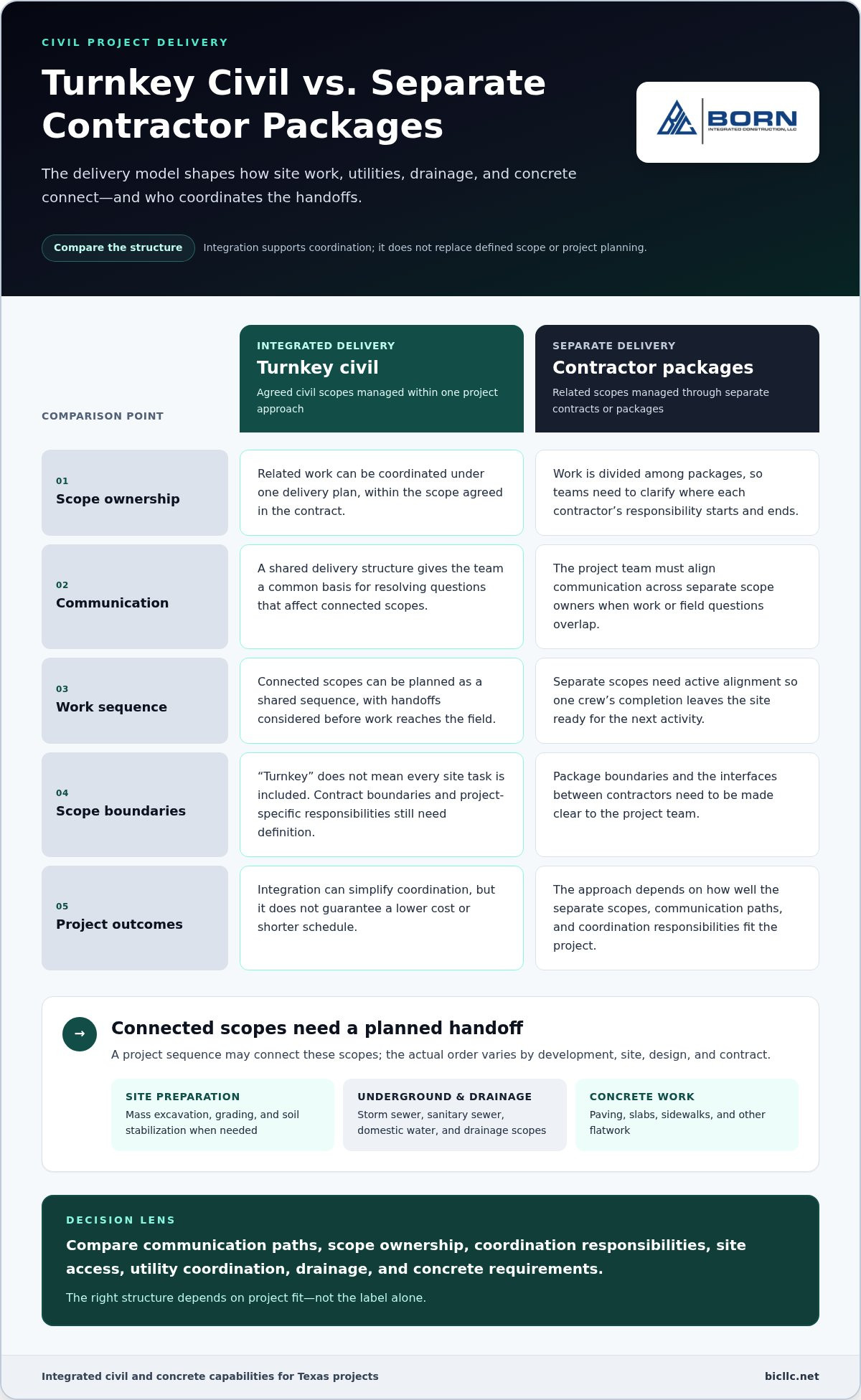
The delivery model shapes how excavation, utilities, drainage, and concrete scopes are coordinated. In a turnkey civil package, agreed scopes are managed within an integrated structure, which can provide a direct communication path and clearer ownership of interfaces. With separate contractor packages, the owner or construction manager coordinates communication and handoffs across individual agreements. Neither structure guarantees a lower cost or shorter schedule. The practical benefits of turn key civil construction depend on project scope, contract boundaries, and how the work packages connect.
| Consideration | Turnkey civil scope | Separate contractor packages |
|---|---|---|
| Coordination | Related civil scopes can be managed within a shared delivery structure. | The owner or construction manager coordinates across separate scopes. |
| Communication | Fewer contractual handoffs may provide a more direct path for civil coordination. | Communication paths follow the separate agreements and project structure. |
| Scope ownership | Responsibility for agreed work and interfaces can be defined within one package. | Responsibilities are divided among contractors and need clear boundaries. |
| Project fit | May suit connected scopes with interdependent sequencing. | May suit established procurement plans or distinct specialist scopes. |
Where an integrated civil scope may add value
Integration may be useful when excavation, utility installation, drainage, and concrete depend on coordinated sequencing. For a Texas commercial development, site access, underground work, and planned paved areas may need to be considered together. A defined civil scope can clarify who manages connected work and its interfaces. Fit depends on the project, not simply on the number of trades involved.
When separately managed scopes may make sense
Separate packages can align with owner-led procurement, pre-established contracts, or work requiring distinct specialist scopes. This structure gives the owner direct control over separate agreements, while also requiring deliberate coordination of boundaries and handoffs. Scope complexity and the existing contract structure should guide the decision. An integrated package isn’t automatically preferable, and separate contracts don’t inherently prevent effective coordination.
Use the comparison as a project-fit test: identify which scopes depend on one another, who will manage their interfaces, and how communication will flow when responsibilities meet. This helps owners choose a delivery structure based on the work and procurement plan, rather than assuming one model will always improve cost or schedule.
How to Evaluate Turnkey Civil Construction for a Texas Project
Evaluate the delivery approach against the project’s intended outcomes, site conditions, and procurement structure. The benefits of turn key civil construction matter most when connected scopes can be clearly defined and coordinated around shared project needs. Use this framework to make the assessment practical:
- Define the desired outcomes. Describe what the site must support, such as planned building areas, utility connections, drainage features, and concrete surfaces. Keep these outcomes distinct from the tasks used to achieve them.
- Map the scopes. Identify the activities included in the civil package, such as excavation, soil stabilization, utility work, drainage, and paving or other concrete. Set clear boundaries around each responsibility.
- Identify the interfaces. Note where scopes meet, such as utility routes crossing future paved areas or grading affecting drainage and site access. Clarify who is responsible for coordinating each connection.
- Align the sequence. Consider project phasing, available access, underground work, drainage needs, and planned concrete placement together. Compare these coordination needs with the owner’s procurement approach and existing contracts.
Define scope boundaries and project interfaces
Start with the intended result, then identify the work needed to deliver it. For example, “prepare the site for planned construction” is an outcome; excavation, stabilization, utility installation, and paving are activities that may contribute to it. Mapping where these activities connect helps establish who is responsible for each handoff and what needs to be coordinated before work advances.
Assess delivery against site and procurement conditions
Site access, project phasing, utility coordination, drainage, and concrete requirements all inform the delivery decision. A Houston site and an Austin site may involve different project conditions, so assess the specific layout, scope, and sequence rather than assume one standard approach applies everywhere. The owner’s procurement plan matters too. Existing agreements or distinct specialist packages may shape how civil responsibilities are organized.
Use the framework to judge whether an integrated scope supports the project’s coordination needs, not to assume it guarantees lower cost or a shorter schedule. Clear outcomes and boundaries give the team a sound basis for aligning execution while keeping project-specific decisions visible. For examples of related work, view concrete and civil project examples.
Born Integrated Construction’s Turnkey Civil Approach
Born Integrated Construction provides turnkey civil work alongside concrete construction, excavation, soil stabilization, detention pond construction, and underground utility installation. These capabilities can be coordinated when a Texas project needs related site scopes managed within an agreed delivery approach. Project requirements and contract boundaries establish which work is included and how responsibilities connect.
Civil and concrete capabilities that support connected scopes
Site preparation can include mass soil excavation and earthwork, with soil stabilization suited to project needs. Detention ponds and underground utilities are other civil scopes that may need to align with the site layout and planned construction. Considering these elements together helps the project team account for how one scope relates to another.
Concrete capabilities include paving, slabs on grade, sidewalks and flatwork, cast-in-place concrete, and structural concrete. When a development combines underground infrastructure with planned paved or built areas, the team can plan these scopes as connected parts of site delivery. The benefits of turn key civil construction are relevant when coordination clarifies the work sequence and responsibilities, while the scope remains specific to the project.
Safety, integrity, efficiency, quality, and attentive customer relationships guide Born Integrated Construction’s work. The company’s background and approach are described on its about the company page.
Next steps for a coordinated Texas civil project
Owners can prepare for a scope discussion by organizing intended site outcomes, known civil and concrete needs, and anticipated project phasing. It’s also useful to note how access, utilities, drainage, and surface construction relate. These details provide a practical starting point for defining responsibilities and planning the coordination of connected scopes.
Project conditions vary across Texas, so a development in Houston may have different site and sequencing considerations from one in Austin, Dallas, San Antonio, or Fort Worth. The scope should reflect the actual site and project requirements, not assume a uniform approach. Reviewing relevant work can also help owners understand the types of civil and concrete projects Born Integrated Construction undertakes.
Explore concrete and civil project examples to see relevant work and discuss how Born Integrated Construction’s turnkey civil and concrete capabilities can fit your development.
Build a Clear Path for Your Site Work
Turnkey civil construction can bring related site scopes into one coordinated approach, but its value depends on clear responsibilities, defined boundaries, and project-specific sequencing. Comparing that structure with separate contractor packages helps owners choose a delivery model that fits their procurement plan and the way civil work connects on site.
The benefits of turn key civil construction are especially relevant when civil site work and concrete construction need to be planned together. Born Integrated Construction provides both, with safety, integrity, efficiency, and quality guiding its work. Each Texas project still calls for planning that reflects its site and requirements.
Review Born Integrated Construction’s civil and concrete capabilities to see how they may fit your development. A well-defined scope is a sound starting point for coordinated site delivery.
Frequently Asked Questions
What are the main benefits of turnkey civil construction?
The main benefits of turn key civil construction can include coordinating connected scopes such as excavation, utilities, drainage, and concrete within one delivery approach. This may simplify communication and clarify responsibility where work packages meet. The practical value depends on the agreed scope, site conditions, and contract structure. Turnkey delivery doesn’t guarantee lower costs, faster completion, or fewer project risks, so assess it against the development’s specific coordination needs.
Is turnkey civil construction right for every project?
No single delivery model suits every project. Turnkey civil construction may fit developments where site preparation, underground utilities, drainage, and concrete work need close coordination. Separate packages may suit an owner with established procurement arrangements or distinct specialist scopes. Consider the project’s goals, scope boundaries, sequencing needs, and the owner’s preferred management approach. The right choice aligns responsibility and coordination with the work being planned.
What work can be included in turnkey civil construction?
Depending on the project’s agreed scope, turnkey civil work may include mass excavation, soil stabilization, detention ponds, underground storm sewer, sanitary lines, domestic water systems, and concrete paving. The actual work varies with site and project requirements. A clear scope description identifies what is included, who is responsible for each activity, and where civil work interfaces with later construction. This supports coordination without assuming every development requires the same services.
How does turnkey civil construction help coordinate utilities and concrete work?
Turnkey civil construction can bring utility installation and concrete work into a shared planning process. For example, teams can consider underground utility routes alongside planned paving or slab areas before surface construction proceeds. This helps identify sequencing questions and work interfaces. Coordination still relies on clear plans, defined responsibilities, project-specific decisions, and communication among stakeholders. An integrated delivery structure supports that process but doesn’t replace it.
Can turnkey civil construction help reduce project delays?
Coordinating connected scopes may help teams identify sequencing conflicts and interface questions earlier, supporting more orderly planning. It can’t guarantee a particular schedule or prevent every delay. Site conditions, design decisions, procurement, and other project factors can affect progress. For a Texas development, consider whether the delivery structure gives the team a clear way to coordinate excavation, utility installation, drainage, and concrete work as the project advances.
What should a Texas developer consider when planning turnkey civil work?
Start with project goals, site access, known utility needs, drainage requirements, soil conditions, and planned concrete work. Then map scope boundaries and identify where work packages connect. Conditions vary across Texas, from Houston and Austin to Dallas, Fort Worth, San Antonio, San Marcos, New Braunfels, Boerne, Beaumont, Conroe, The Woodlands, and Arlington. Keep planning specific to the site, project phasing, and agreed responsibilities.
What is the difference between turnkey civil construction and hiring separate contractors?
Turnkey civil construction groups agreed civil scopes within a coordinated delivery approach. Separate contractors divide the work into individual packages, with the owner or project team coordinating communication and interfaces across agreements. An integrated structure may consolidate coordination for connected scopes, while separate packages may align with established procurement plans or specialist work. Neither model is automatically preferable. Compare scope ownership, communication paths, sequencing needs, and the project’s contract structure.