Pavers can sink when the ground beneath them was poorly prepared or compacted, rather than because the surface material itself has failed. Paving stabilization services in Austin address soil and base conditions that affect pavement performance, helping create stronger support for paving and construction.
When pavers settle or shift, it makes sense to look for a lasting fix instead of focusing only on the visible surface. Soil strength, moisture, drainage, and compaction all affect how well the ground supports paving, so identifying the cause is an important first step.
This article explains how soil stabilization applies to projects around Austin, what commonly causes pavers to sink, and how soil assessment, compaction, and stabilization methods can support a more dependable foundation. It also covers how these principles apply to paving and construction, and when a concrete construction contractor can help address conditions beneath the surface.
Key Takeaways
- Learn how soil conditions influence paving projects across the Austin area and what to consider when assessing a site.
- Recognize how poor base preparation and insufficient compaction can contribute to sunken pavers.
- Explore how soil stabilization and compaction can strengthen support beneath paving and construction.
- Understand why soil composition, moisture, strength, and drainage matter when selecting a stabilization approach.
- See when paving stabilization may support a project and how Born Integrated Construction’s related concrete services fit into the work.
Soil stabilization service areas in Central Texas
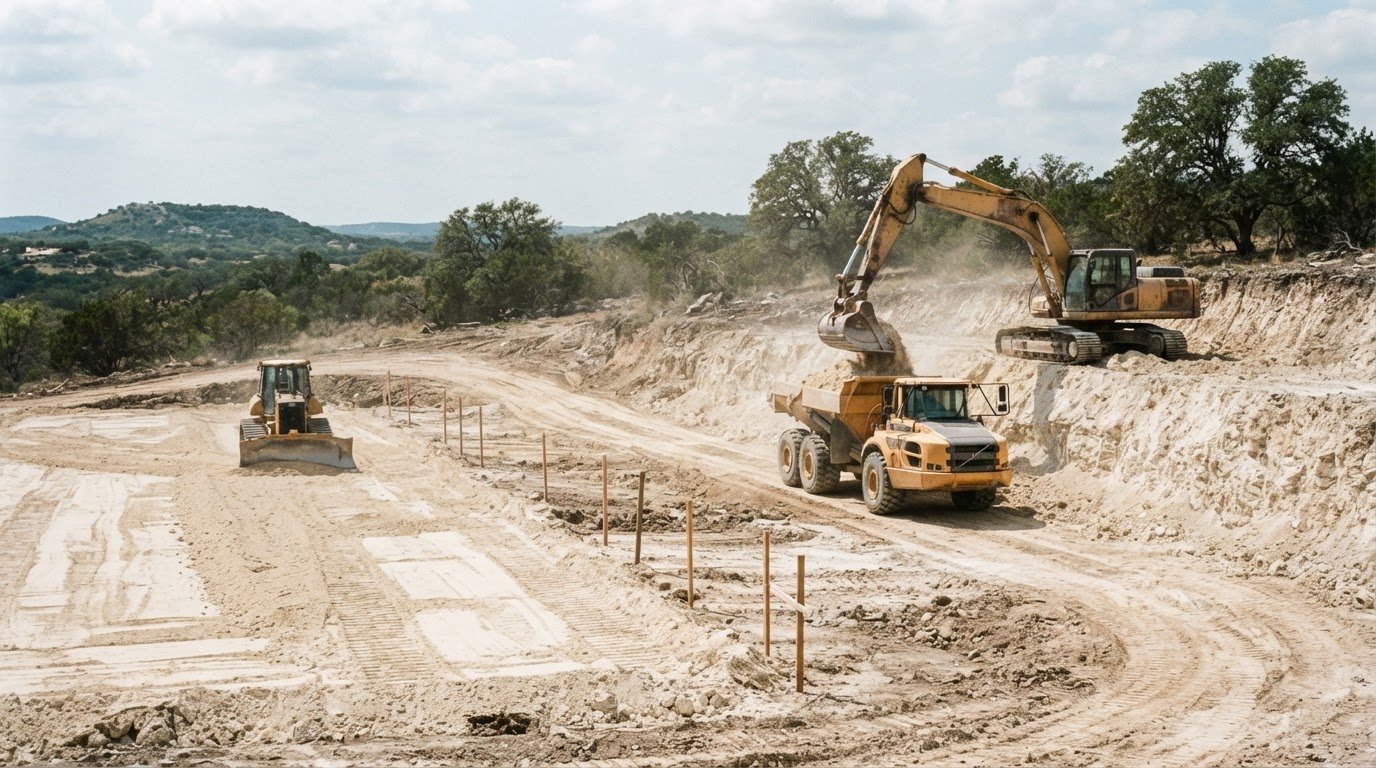
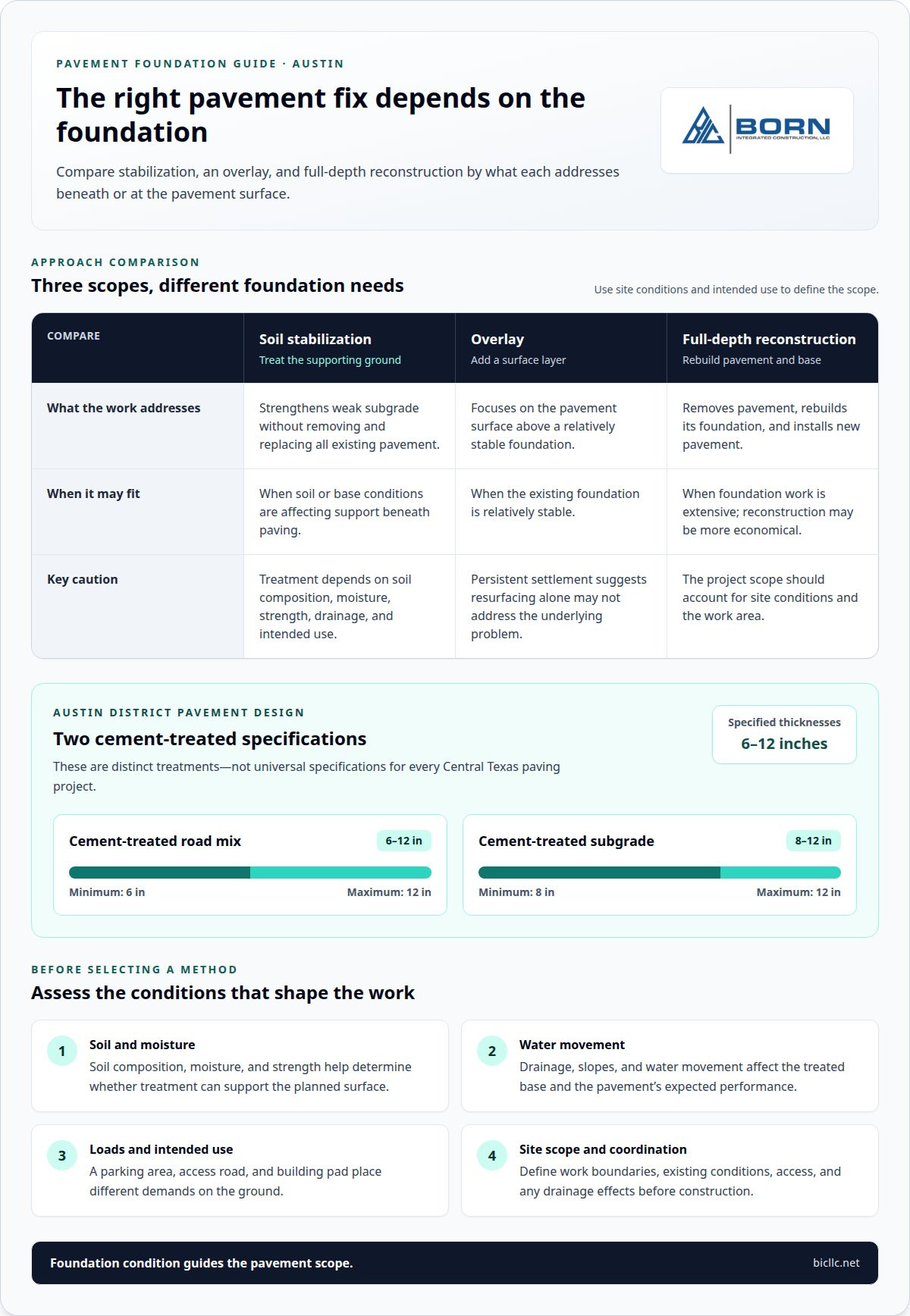
For Central Texas projects, stabilization depends on site conditions and the pavement’s intended use. In Austin, soil composition, moisture, strength, and drainage help determine whether treatment can support the planned surface. A parking area, access road, and building pad place different demands on the ground. Start by assessing the soil and defining the work area, expected loads, and water movement.
Stabilization can strengthen weak subgrade without removing and replacing all existing pavement. Full-depth reconstruction removes the pavement, rebuilds its foundation, and installs new pavement. An overlay is generally suited to pavement with a relatively stable foundation, while extensive foundation work can make reconstruction more economical. Persistent settlement, for example, suggests that resurfacing alone may not address the underlying problem.
Austin District pavement design provides specific treatment criteria for road work. Cement-treated road mix has a specified minimum thickness of 6 inches and maximum thickness of 12 inches. Cement-treated subgrade has a specified minimum thickness of 8 inches and maximum thickness of 12 inches. These figures describe distinct treatments, not a universal specification for every Central Texas paving project.
Permits and regulations in Austin and Travis County depend on the work’s location and scope. Work affecting a public right-of-way, drainage, or existing pavement may have different requirements from work contained entirely within private property. Before construction, the project plan should identify the site boundary, surface changes, and drainage effects.
Stabilization time and service life depend on treatment depth, soil moisture, material selection, compaction, and curing. A small, accessible area differs from a larger roadway that requires staged work. Longevity also depends on traffic loads and how effectively water drains away. These factors shape the construction sequence and the expected performance of the treated base.
Account for risks such as treating unsuitable soil, leaving drainage problems unresolved, or stabilizing an area where severe foundation failure calls for reconstruction. Asphalt, pavement markings, and striping may also need coordination around the work area. Inspections, warranties, and financing are contractual provisions, not inherent parts of stabilization. Review the project scope to understand what each provision covers and how it relates to the finished pavement.
Austin-area service locations
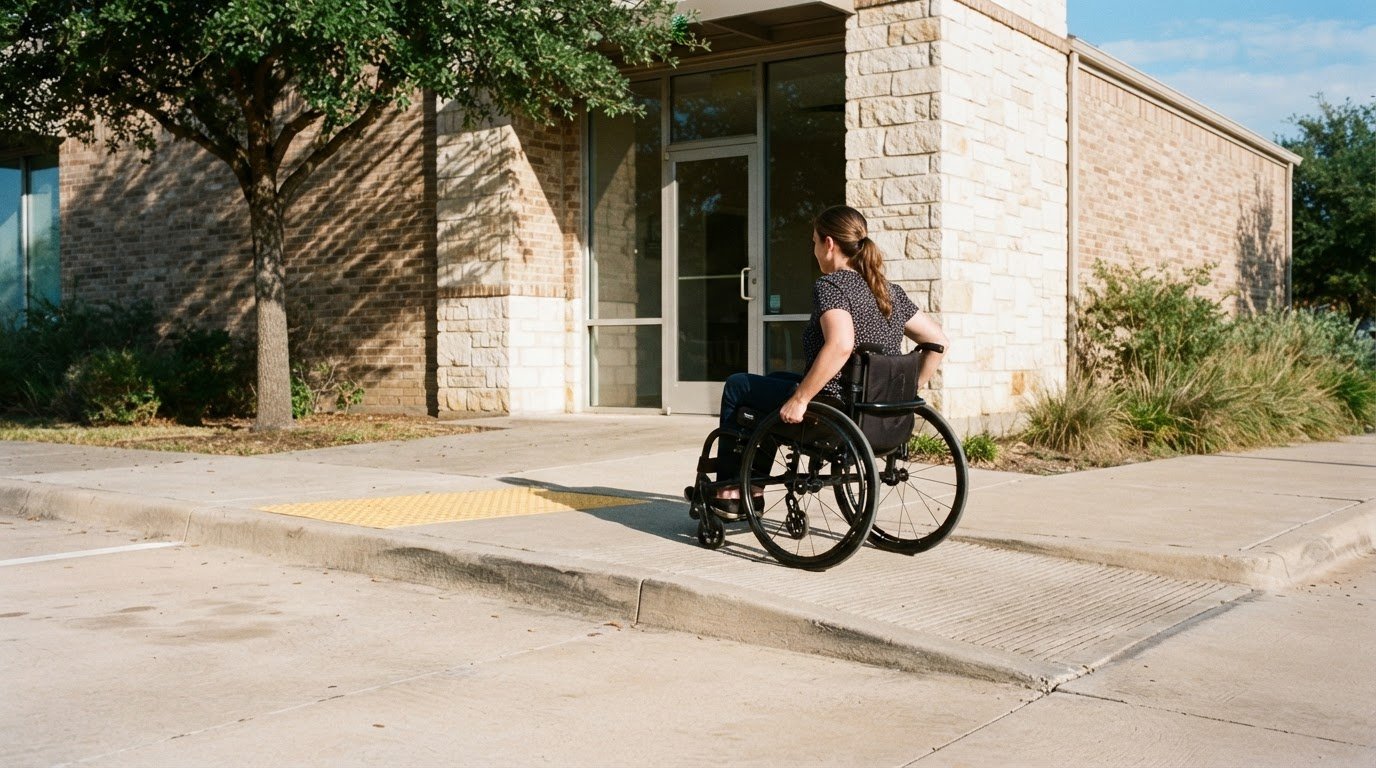
For an Austin project, choose a contractor whose scope addresses soil and pavement support, not just surface appearance. Soil stabilization may suit a commercial parking lot, access area, or construction site where ground conditions affect paving. The work area matters: a site on private property involves different coordination from pavement connected to public streets. Austin and Travis County provide useful location context, but the project boundary and purpose determine the scope.
Plan service locations by identifying where the work is and what surrounds it. An Austin parking lot beside a building, for example, may have entrances, drainage paths, and active vehicle routes to account for. Map these features before defining the stabilization area. This helps determine where equipment can operate, how traffic can move around the site, and how the paving will connect with existing surfaces.
Contractors specializing in pavement and soil stabilization focus on the ground beneath the surface. Their work may include assessing soil composition, moisture, and strength, then matching treatment and compaction to site needs. An asphalt contractor may instead focus on surface installation, repairs, or parking lot striping. These scopes serve different needs, so clarify whether the concern is the pavement surface, its supporting base, or both.
Location affects coordination, too. A site with a drainage channel or sloped parking area needs a plan for water movement. At a commercial property, the work sequence may need to preserve access to building entrances. Record these details in a location plan and define the scope with boundaries, existing conditions, and intended use. This helps clarify what the work needs to achieve.
An area name alone cannot determine whether a particular site suits a treatment. Two Austin properties may have different soil, drainage, traffic, and construction requirements. A parking lot used by delivery vehicles, for instance, has a different operating context from a lightly used paved courtyard. Before selecting the method and work sequence, connect each area’s use with its ground conditions.
To understand how completed construction work is organized across project types, review these construction project examples. For an Austin property, the practical next step is defining the work limits and identifying whether the issue lies below the pavement, at the surface, or across both layers. Clear scope supports coordination with drainage, access, and any later striping work.
Benefits of improving soil strength
Stronger soil gives paving a more dependable base for repeated loads. In a parking area, vehicles transfer pressure through their tires onto the surface and into the supporting soil. If the soil is weak or uneven, the pavement may settle in specific spots. Improving soil strength helps distribute loads across a more stable layer, supporting consistent performance beneath asphalt or concrete.
Soil stabilization addresses conditions that reduce ground support. Additives such as lime, cement, or fly ash can reduce excess moisture and improve load-bearing capacity. Treating moisture-sensitive soil beneath a paved access route, for example, can create firmer support for the pavement. The right additive depends on soil properties and project requirements, so treatment starts with understanding the material at the site.
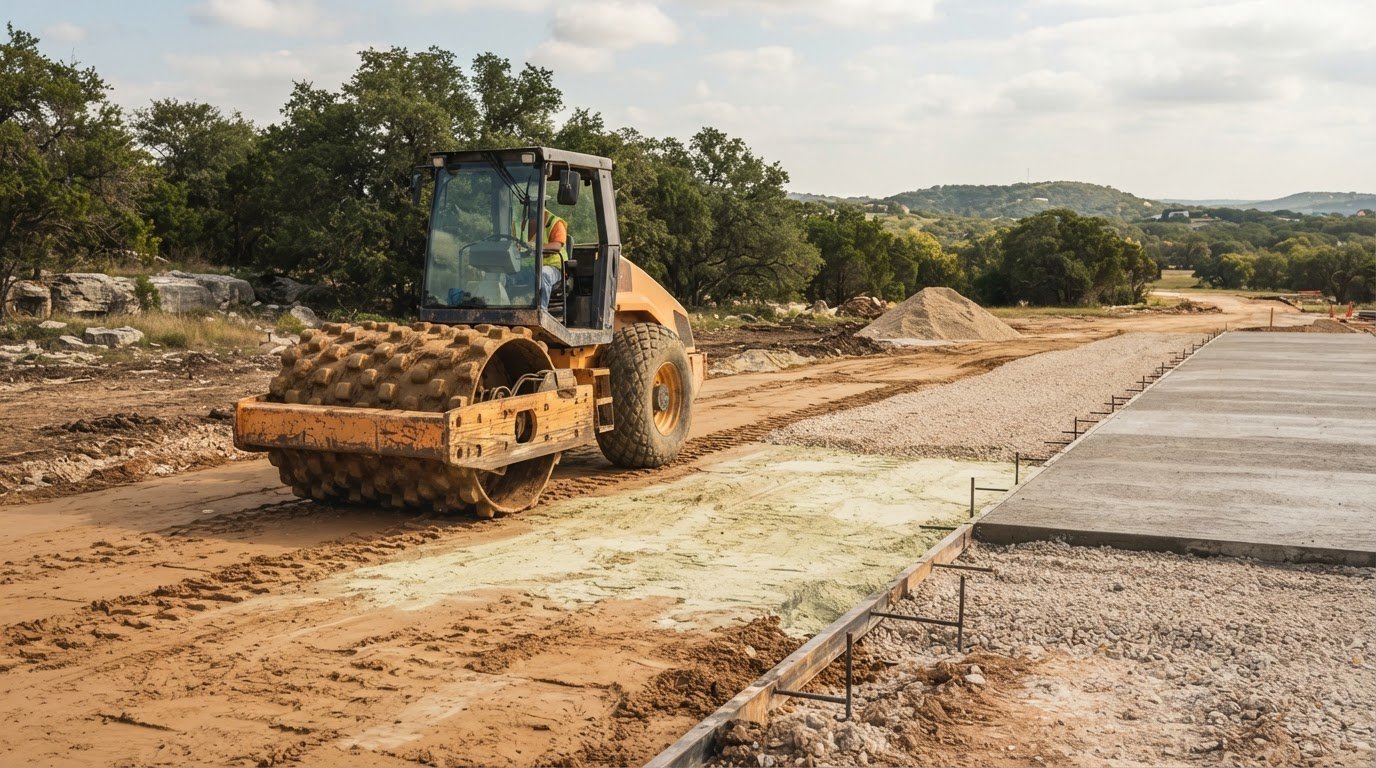
Compaction provides a separate benefit by increasing soil density and strength. A properly compacted base leaves less room for particles to shift under traffic or construction loads. This helps reduce settling before a parking surface or concrete slab is installed. Compaction also supports consistent grades, which matter where vehicles cross transitions between pavement, entrances, and loading areas.
Load support matters especially where different uses meet. A parking lot may carry cars in one area and heavier delivery vehicles near a service entrance. Stronger soil beneath these zones helps support the pavement system under varied demands. During planning, the design team considers intended use, soil condition, and proposed surface, then aligns ground preparation with those requirements.
Water management also affects pavement performance. Excess moisture can weaken soil and contribute to movement beneath paving. Stabilization that reduces excess moisture, combined with grading that directs water away from the surface, addresses both ground support and drainage. A low point beside a concrete walkway, for example, needs attention to water flow as well as the soil beneath it. Treating only the visible pavement leaves the drainage problem unresolved.
Good soil preparation also supports the installation process. A stable working platform gives construction crews a more consistent base for placing pavement materials and setting finished grades. On a parking project, that foundation helps coordinate the paved area with curbs, entrances, and drainage features. Construction can then follow the prepared ground conditions, rather than relying on later surface adjustments to compensate for an uneven base.
The benefit is more than a harder surface. It is a stronger relationship between the soil, base, drainage, and finished pavement. Matching soil treatment and compaction to intended use creates a more stable foundation for paving and construction. This preparation is especially valuable where settlement could disrupt access, create uneven transitions, or interfere with planned surface drainage.
Causes of sinking pavers
Poor base preparation and insufficient compaction commonly cause pavers to sink. If the bedding layer or soil below remains loose, repeated foot traffic or vehicle loads can press it downward. A paver near a frequently used driveway entrance, for example, may settle before the surrounding stones. The dip is visible at the surface, but the weakness often starts below it.
Uneven excavation can leave sections with different levels of support. A shallow, loose area beside a deeper, compacted section creates inconsistent bearing beneath the pavers. Once the installation carries weight, the weaker section compresses first. During repairs, lifting the affected pavers and examining the base helps distinguish a local bedding problem from movement across a larger area.
Water can also cause movement when it reaches the base and changes soil conditions. Poor drainage may leave water beneath pavers, while runoff concentrated at one edge can erode bedding material. A low spot beside a downspout, for instance, may keep losing support after heavy water flow. Correcting the water path matters as much as rebuilding the affected base.
Weak edge restraint allows pavers to spread outward under repeated loads. As the pattern opens, joints widen and individual units can shift or drop. This is especially noticeable at a parking area entrance, where turning tires push sideways against the paving. Resetting only the lowest pavers leaves the underlying movement unresolved if the perimeter still allows the paved area to spread.
Some settlement follows changes in the ground beneath the prepared base. Excavated or filled areas can settle differently from undisturbed soil, creating a gradual dip across a paver walkway or parking surface. During a repair assessment, trace the affected area and compare its edges, joints, and surrounding grades. This helps establish whether movement is isolated or follows a broader ground transition.
Surface treatments cannot fix a failing base. Asphalt sealcoating, for example, applies a protective coating to asphalt; it does not rebuild support beneath sunken pavers. In Central Texas, distinguish surface wear from movement below the paving. A repair focused only on appearance may leave the cause active, while work on the base targets the source of settlement.
To identify the cause, inspect the movement pattern, nearby drainage, paver joints, and edge restraint. A single depressed stone beside a disturbed joint points to a different repair area than a broad dip crossing several rows. The extent and pattern guide the repair plan, including whether pavers can be reset locally or the supporting layers need wider reconstruction.
Soil stabilization for paving and construction
For paving and construction, soil stabilization strengthens the subgrade beneath the finished surface. The right method depends on soil conditions, planned loads, and drainage. Paving stabilization services in Austin can address weak ground before it supports new pavement or a structure, making site assessment a practical starting point.
Factors Affecting Project Cost
Project cost depends on the treatment area, soil condition, required depth, and selected materials. Site access, excavation, drainage adjustments, and connections to existing asphalt paving can also affect the scope. A paving contractor assesses these factors before defining the work. The price depends on the individual project and is provided after a quote request, with site conditions and required work shaping the estimate.
Available Stabilization Services
In Austin, stabilization work can include soil assessment, chemical treatment, compaction, and mechanical reinforcement. Assessment considers soil composition, moisture, and strength to guide the method. Stabilization can also be coordinated with grading and drainage to prepare the ground for the planned surface. A construction pad and an asphalt parking area, for example, may need different preparation because their uses and loads differ.
Stabilization Methods
Lime, cement, and fly ash can be used as soil additives to reduce excess moisture and improve load-bearing capacity. Compaction increases soil density, while geogrids reinforce soil through mechanical stabilization. Geotextiles are permeable fabrics used to reinforce, filter, and drain soil. A paving company considers soil composition and moisture when selecting a method, because each approach addresses different ground conditions.
Austin District pavement design sets distinct criteria for specific road treatments. Lime-treated subgrade used for construction purposes must be at least 8 inches thick. This design value does not apply universally to every private project. Treatment selection and dimensions should correspond to the project’s design criteria and soil conditions.
Project Sequence
A stabilization project typically starts with assessing soil composition, moisture, and strength. The team identifies weak areas and selects a suitable treatment, such as lime, cement, or geogrid reinforcement. Crews then prepare the subgrade, apply or install the selected material, and compact the treated layer. Final checks address the prepared grade, drainage direction, and suitability for the planned pavement or construction.
For projects seeking paving stabilization services in Austin, connecting ground preparation with the full construction scope helps clarify the work. Construction project examples show how site work can relate to finished structures.
Born Integrated Construction: Paving Stabilization
Born Integrated Construction provides Paving Stabilization for projects where ground support is essential to paving or construction. It is a relevant next step when site conditions call for work beneath the finished surface, rather than attention to appearance alone.
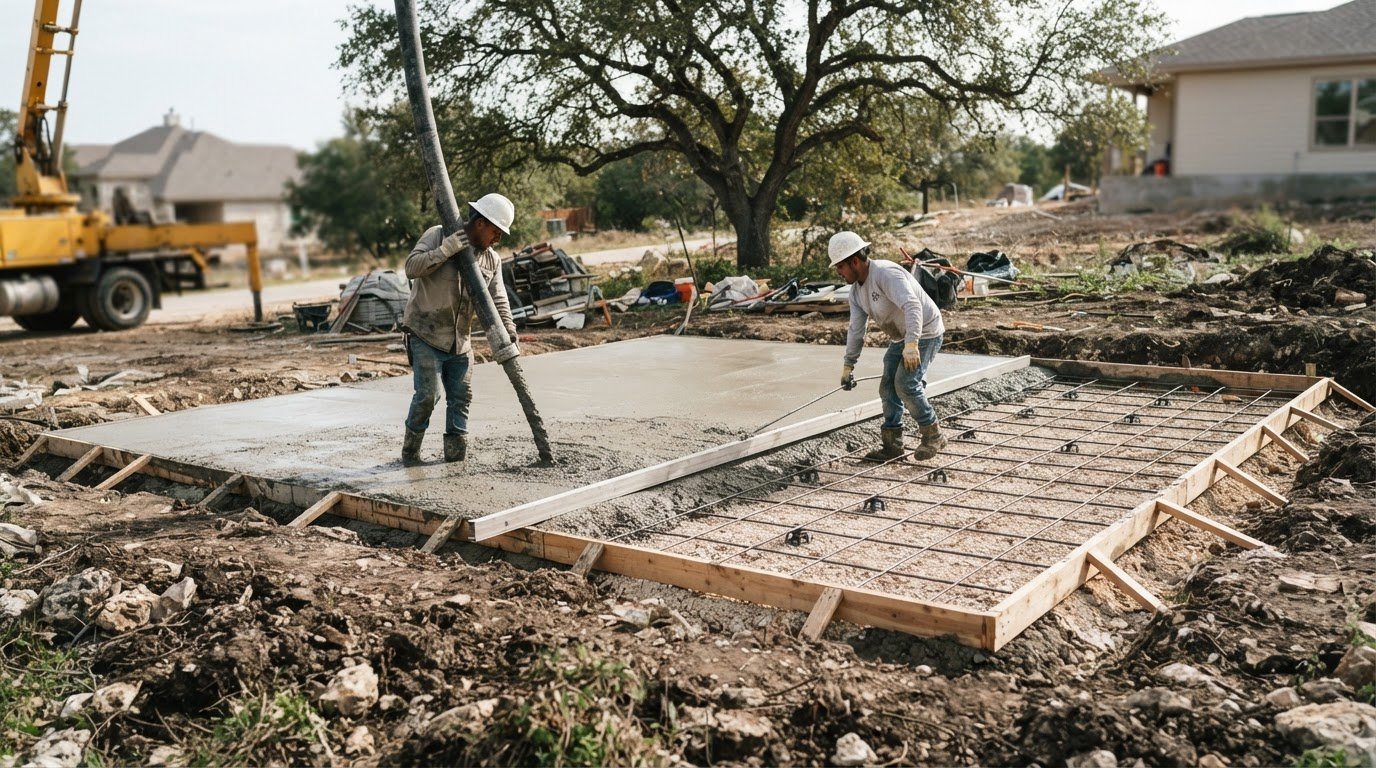
Related services include Concrete Paving, Slab on Grade, and Podium Slabs. Considering these needs together can help align ground preparation with the planned concrete work and overall project scope. The right approach depends on the site and construction requirements.
If your Austin project needs paving stabilization or related concrete work, contact Born Integrated Construction to discuss the project.
Set the Direction for Your Next Project
Start by defining what the site must support and how the finished area will function. For a planned project, outline its intended use, work limits, surface type, and any observed movement or drainage concerns. These details help frame a useful discussion about the ground beneath the pavement and the construction approach suited to the project.
Connections between adjoining structures, access routes, existing grades, and new work can also shape the scope. Clarifying these relationships early helps align the stabilization decision with the broader construction plan. A clearly stated project objective gives the discussion a practical starting point, especially when paving is one part of a larger build.
For projects seeking paving stabilization services in Austin, focus on site conditions to connect the stabilization decision with the larger build. This also gives the project team a clearer basis for coordinating paving with adjoining construction.
Contact Born Integrated Construction to discuss how paving stabilization may fit your project. With relevant site details ready, you can move forward with greater clarity and a defined path for the work.
Frequently Asked Questions
What is Soil Stabilization?
Soil stabilization is the deliberate treatment or reinforcement of soil to help it support planned construction. For pavement work, this can mean modifying the soil itself or mechanically reinforcing it, rather than simply adding a finish layer above it. The design considers how the ground will be loaded, such as beneath a loading area versus a pedestrian route. In Texas, the intended surface and site drainage also inform the specification.
What signs indicate a driveway or parking lot in Austin needs stabilization?
Signs include recurring dips, pavers that rock or separate, cracks that return after surface repairs, and ponding that persists in the same area. Look for patterns rather than a single mark: a depression along a vehicle path or a low strip beside an entrance can point to support problems below. In Austin, note whether the issue returns after rain or resetting; that history helps distinguish surface wear from movement in the supporting ground.
What permits or regulations apply to pavement stabilization in Austin and Travis County?
Requirements depend on the work’s location and scope. Work affecting a public right-of-way, drainage, or existing pavement may have different requirements from work entirely within private property. Before construction, identify the site boundary, surface changes, and drainage effects.