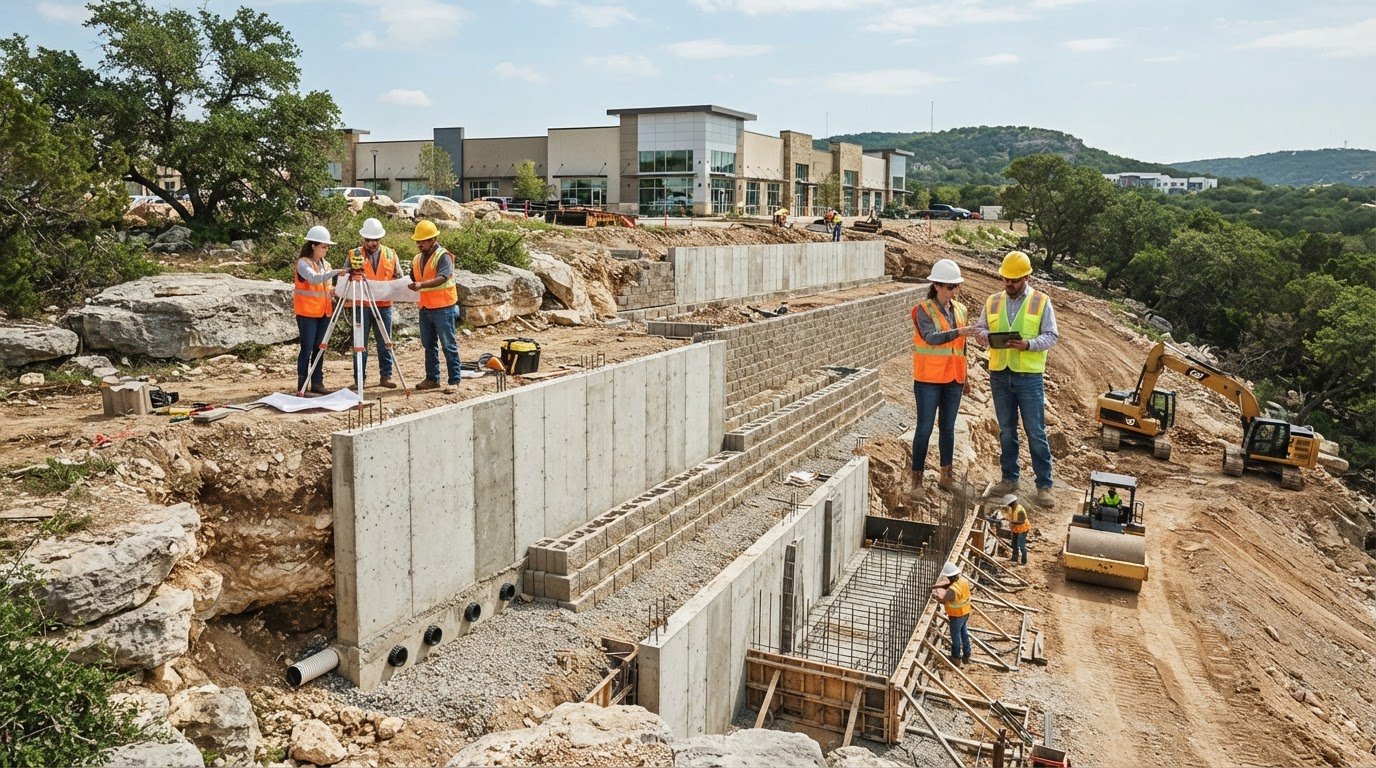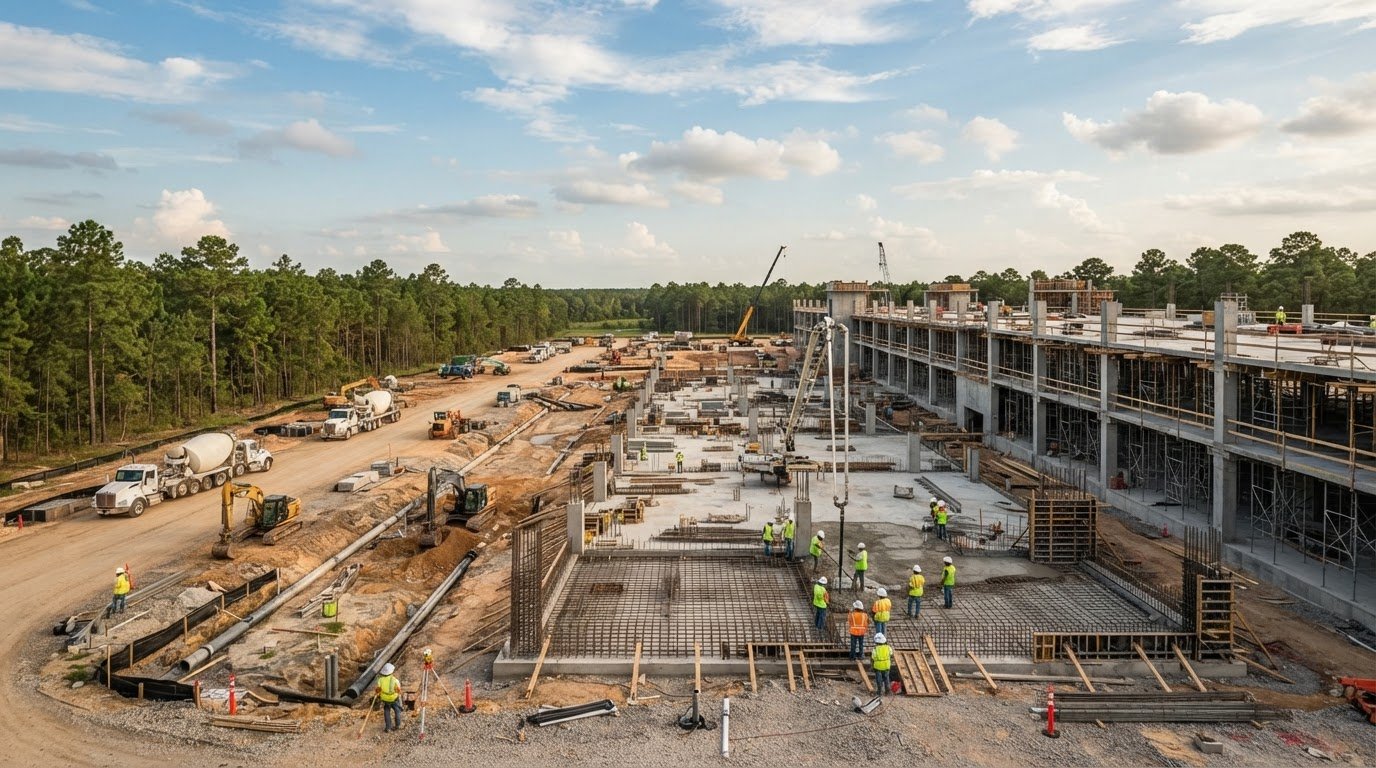
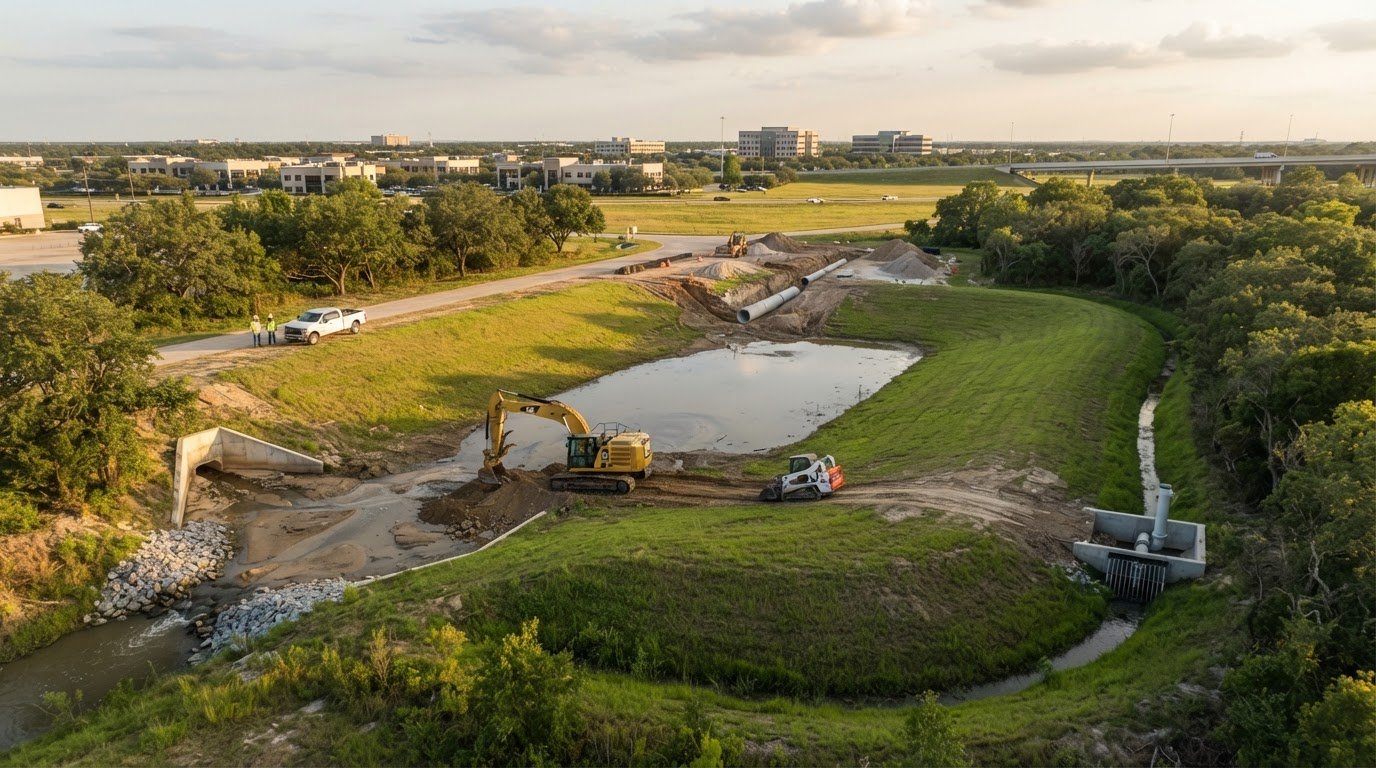
What if the work your detention pond needs is less obvious than a buildup of sediment or a visible drainage issue? Choosing a detention pond contractor Houston property owners can rely on starts with understanding how the pond and its connected drainage features fit into the site. A clear scope helps keep important conditions from being overlooked.
It’s reasonable to want confidence that project work addresses the pond’s actual condition, not just its most visible concern. This guide explains how to document signs of sediment buildup and drainage problems, define a practical scope, and plan a Houston-area project with clear expectations.
You’ll also see how pond work can connect with mass soil excavation and underground storm-sewer systems as part of coordinated civil site work. By reviewing site conditions, defining the scope, and planning work interfaces, you can compare project needs more clearly and prepare for the next step.
Key Takeaways
- Document visible concerns and consider how surrounding site conditions may affect the work required.
- Define the project scope around the pond’s connected features, including grading and nearby storm sewers.
- Compare a detention pond contractor Houston project by scope clarity, relevant site-work capabilities, safety approach, and communication.
- Gather available site plans, drainage records, and maintenance notes to support practical project planning.
- Coordinate pond work with excavation, storm-sewer, or soil-stabilization work when the site scope calls for it.
Detention Pond Maintenance in Houston: Identify the Site Problem First
Visible concerns don’t always show the full extent of work a detention pond may need. Sediment, standing water, or an obstructed opening can be useful clues, but appearance alone doesn’t establish the cause or define the right scope. Start by recording conditions and locating the pond within the site’s drainage layout.
A detention pond temporarily holds stormwater runoff and releases it as part of a broader drainage system. Its inlets, outlets, grading, and connections to nearby storm sewers all contribute to how the site is arranged. The detention basin overview explains the general purpose of these facilities. For a specific commercial property, available plans and site records provide more relevant context than a general description.
That distinction makes early discussions with a detention pond contractor Houston teams can rely on more productive. Document what you can observe, keep assumptions separate, and identify questions for the project team to review.
What to observe around a Houston-area detention pond
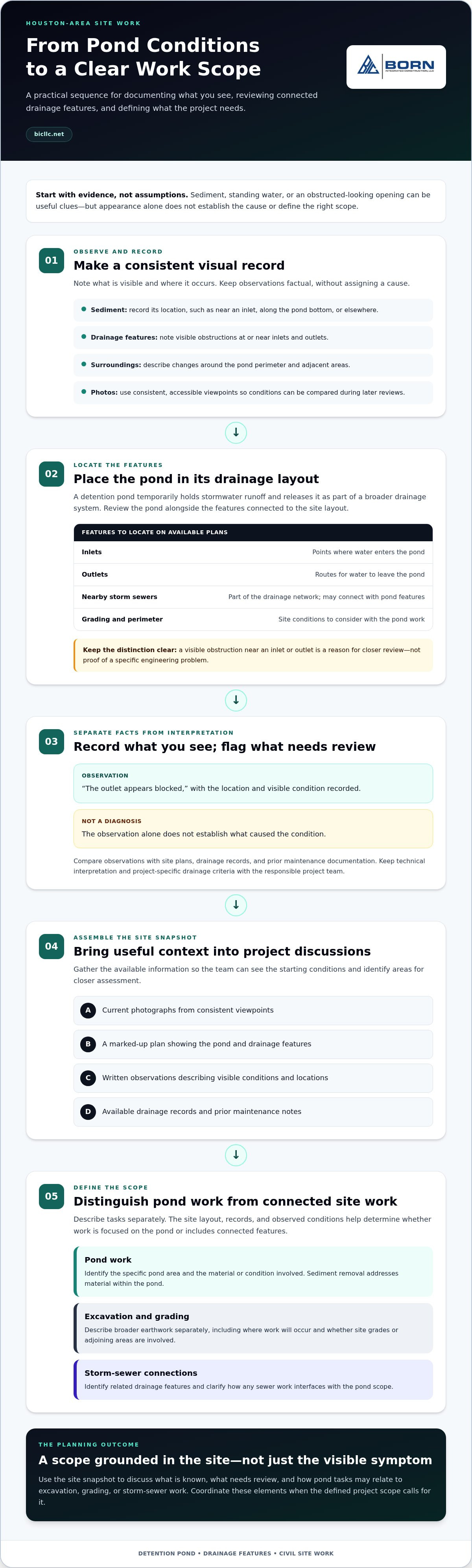
Make a consistent visual record before defining the work. Note where each condition occurs, not just what it looks like. For example, record whether sediment is concentrated near an inlet, along the pond bottom, or elsewhere. Mark visible obstructions and changes around the perimeter, such as areas where the ground appears altered. Use available plans to locate inlets, outlets, and storm-sewer connections.
- Record visible sediment accumulation and its location.
- Note drainage obstructions at or near inlets and outlets.
- Describe changes around the pond perimeter and adjacent areas.
- Photograph conditions from consistent, accessible viewpoints.
- Mark relevant features on available site plans.
Keep observations factual and dated in your project notes, without assigning a cause. Repeatable viewpoints make it easier to compare conditions during later site reviews.
Separate observed conditions from assumptions
A blocked-looking outlet is an observation; deciding what caused the blockage is a diagnosis. Record the visible condition and its location, then compare it with available site plans, drainage records, and prior maintenance documentation. These records can give the responsible project team context about the intended layout and help identify details that need review.
Site conditions vary, so don’t treat a visual checklist as a design assessment or a substitute for project-specific drainage criteria. Flag those criteria for review by the responsible project team. This keeps the initial scope grounded in what is known while leaving technical interpretation to the appropriate project process.
Before contractor selection, assemble a concise site snapshot: current photographs, a marked-up plan showing the pond and drainage features, written observations, and relevant maintenance notes. This gives the project team a clear starting point for deciding which areas need closer assessment and how pond work may relate to surrounding site conditions.
How Detention Pond Features Connect to Maintenance and Site Work
Detention pond work is site work shaped by the pond’s condition and its connected drainage features. A visible issue in one location may be part of a broader scope, or it may call for focused work. The distinction depends on the site layout, available records, and what is required to address the observed condition.
Assess the pond and its connected drainage features together because they are parts of the same site layout for stormwater movement. This does not establish a cause or predict performance; it provides a sound basis for deciding what needs closer review.
Why inlets, outlets, and storm sewers matter
Inlets are points where water enters the pond, while outlets provide a route for water to leave. Nearby storm sewers form part of the drainage network and may connect with these features. Sediment or a visible obstruction near an inlet or outlet is a reason to examine the feature and its relationship to the surrounding layout, not proof of a particular engineering problem.
For Houston-area projects, site-specific criteria and records should guide technical review. The Harris County Flood Control District technical manuals provide reference material for project teams working with drainage design. The applicable documents and criteria depend on the project and should be considered by the responsible team.
When pond work overlaps with excavation
Routine observations or a focused cleanout differ in scope from excavation or construction. Sediment removal addresses material within the pond; broader earthwork may involve changes to site grades or other work defined by the project. Describe these tasks separately so the scope identifies what is being removed, where the work will occur, and whether grading or related site features are involved.
Grading and soil conditions matter in relation to the particular site. For example, work near a pond perimeter may need to be considered alongside adjoining grades and drainage connections. Assess that relationship using project records and field conditions rather than assuming it from the property’s location in Houston.
Born Integrated Construction provides civil site work that includes detention ponds, mass soil excavation, and storm-sewer systems. When a project calls for more than isolated pond work, coordinating these elements within a defined scope can clarify work interfaces and sequencing. A detention pond contractor Houston project team benefits from distinguishing the pond task from connected excavation or drainage work before finalizing the scope.
- Pond work: Identify the specific pond area or feature involved.
- Excavation: Define the limits and purpose of any earthwork separately.
- Drainage connections: Note related inlets, outlets, and storm-sewer interfaces.
- Grading: Describe any surrounding site work as part of the project scope.
For a view of how civil site work is coordinated across projects, explore Born Integrated Construction project work.
How to Compare Detention Pond Contractors in Houston
A general description such as “pond maintenance” tells you the category of work, but not what will happen at a particular commercial site. A project-specific scope identifies the pond areas involved, the work to be completed, and any related site interfaces. That detail makes it easier to compare proposals based on the work itself rather than broad service labels.
Contractor fit depends on the documented work scope, not a broad service label. Compare a detention pond contractor Houston project in relation to the site’s actual needs, including whether excavation, drainage, or other civil work belongs in the project.
Compare scope, coordination, and project documentation
Review how clearly each scope describes the pond features and work areas, then check whether related tasks are listed separately or as coordinated parts of the project. If excavation, storm-sewer work, or stabilization is relevant, the scope should make those interfaces understandable. Clear boundaries help the project team see what is included and where coordination is needed.
| Comparison area | What to look for |
|---|---|
| Scope clarity | Defined pond areas, features, and work activities rather than a generic maintenance label. |
| Site-work capabilities | Relevant capabilities in detention ponds and, where the project calls for it, excavation, storm sewers, or stabilization. |
| Safety approach | Evidence that site access, work sequencing, and safety considerations are part of project planning. |
| Communication | Clear description of project responsibilities, work interfaces, and how scope details will be coordinated. |
Use the same criteria for each option. A detailed scope may distinguish pond work from mass excavation, for example, while showing how both relate to a wider civil construction project. If documents use different terms or levels of detail, compare the actual activities and boundaries rather than assuming the scopes are equivalent.
Evaluate safety and execution approach
Site access, work sequencing, and safety planning belong in project discussions because they influence how work is organized around the property and its other activities. The scope should make relevant work areas and interfaces clear, while project communication should support a shared understanding of responsibilities. These are practical signs of a disciplined execution approach, not promises about a particular outcome.
Born Integrated Construction approaches civil site work with stated priorities of safety, integrity, efficiency, and quality. Its detention pond, mass soil excavation, and storm-sewer capabilities can be coordinated within a defined scope when those elements are required. Reviewing a construction project portfolio can help put relevant work examples in context, while the project’s own scope remains the basis for comparison.
For a commercial project, use a comparison framework that reflects the actual work: specific pond tasks, related site construction, defined interfaces, and a clear execution approach. This keeps contractor selection tied to project requirements rather than a broad label alone.
Plan a Houston Detention Pond Maintenance Project Step by Step
A defined preparation process helps a commercial project team move from an observed concern to a coordinated scope. Gather the information already available, describe the intended outcome, and identify site interfaces that may affect planning. Houston-area criteria are site-specific, so the responsible project team should establish which jurisdictional requirements and project documents apply.
Prepare the site information and project objectives
Start with a concise record of the concern and its location. Note what was observed, where it occurs, and what the project needs to accomplish. Then assemble relevant drawings, drainage information, and prior maintenance records where available. These materials give the project team context without turning initial observations into assumptions about cause or remedy.
Use this preparation sequence to organize the discussion:
- Describe the concern. Record the location, visible condition, and desired project outcome in clear terms.
- Gather available records. Collect site plans, drainage information, and prior maintenance notes or documentation.
- Map the work area. Identify access routes, adjacent uses, known utilities, and other site constraints that may affect planning.
- Establish applicable criteria. Have the responsible project team identify the Houston-area jurisdictional criteria and project requirements relevant to the site.
Keep the materials organized by source and location. A marked-up plan can distinguish the pond area from adjacent uses or utility corridors, while a written objective keeps discussions focused on the result the project is intended to achieve. If records are incomplete, note what is available rather than filling gaps with assumptions.
Coordinate scope, sequencing, and closeout
Once the project team has assembled its information, discuss pond tasks separately from connected storm-sewer or broader earthwork activities. The work may be coordinated, but listing it distinctly helps clarify responsibilities, interfaces, and the information needed to plan each activity. This is especially useful when multiple site-work elements affect the same area.
Next, align sequencing with site access and adjacent activity. Identify areas that must remain accessible, constraints around utilities, and points where one task affects another. A detention pond contractor Houston project team can use this information to develop a scope that reflects the commercial site rather than relying on a generic task description.
Before work begins, define what the project requires for closeout documentation. Appropriate records depend on the project scope and its governing criteria, so establish them with the responsible project team rather than assuming a universal format. Clear expectations support an orderly handoff and make the completed work easier to document.
For civil work involving a detention pond and related site construction, review pond and civil site-work project examples as you plan the scope and interfaces.
Work With Born Integrated Construction on Houston-Area Pond Site Work
Detention pond work can be one part of a larger civil construction scope. Born Integrated Construction provides civil site work for residential, commercial, and infrastructure developments, including detention ponds. When project conditions call for it, pond construction can be coordinated with mass soil excavation, underground storm-sewer systems, or soil stabilization. The scope should reflect the site’s actual needs, with each related activity clearly identified.
How pond work fits into a broader civil scope
Construction scope differs from general recurring maintenance advice. A project may involve shaping or constructing pond areas alongside earthwork or underground drainage, while a maintenance discussion may focus on observed pond conditions. The relevant work depends on project objectives and site layout. Learn more about Born Integrated Construction’s company background and civil construction focus.
Coordinating related work can help project teams define interfaces: where pond work meets excavation, how storm-sewer activities relate to the site plan, and whether soil stabilization belongs in the overall scope. These elements aren’t automatic additions to every pond project. Include them when project requirements and site conditions call for them.
For project teams evaluating a detention pond contractor Houston commercial development can rely on, the central consideration is how the pond work fits within the broader civil scope. A clearly defined approach connects relevant capabilities to the project’s objectives without assuming that every site needs the same combination of services.
Discuss the project scope and next steps
Houston-area owners and project teams can prepare for a focused discussion by outlining the site, construction objectives, and any known connections to excavation, storm sewers, or soil stabilization. Available plans and drainage information can help frame the scope. The project team can then clarify which activities belong together and how they relate to other site work.
Born Integrated Construction’s approach is grounded in safety, integrity, efficiency, and quality. These commitments inform how the company undertakes civil site work, while the project’s specific scope determines which activities need coordination. For construction involving pond features and related site work, clear objectives provide a sound starting point for defining responsibilities and interfaces.
Born Integrated Construction provides civil site work across Texas, including Houston, Austin, San Antonio, Dallas, Fort Worth, San Marcos, New Braunfels, Boerne, Beaumont, Conroe, the Woodlands, and Arlington. Share your site and construction objectives to discuss relevant civil site-work needs. Discuss your Houston-area project.
Turn Your Site Findings Into a Clear Next Step
A useful next step is to turn the project team’s observations into a concise decision brief. Identify questions that still need review, the work areas that matter most, and any interfaces that could affect planning. This gives stakeholders a shared reference before scope and sequencing are finalized. It also keeps early discussions focused on the property’s actual needs rather than assumptions based on a general service description.
As you prepare, consider who needs to contribute to the project discussion and what information will help them make decisions. A detention pond contractor Houston teams can coordinate with should be considered in the context of a defined scope and the site’s broader construction objectives. Clear priorities make it easier to move from initial observations to a practical project conversation.
Born Integrated Construction works with commercial and infrastructure teams on civil site-work projects. Start a conversation about your Houston-area project and take the next step with a clear understanding of the work to be discussed.
With a disciplined plan and open communication, your team can approach the work with greater confidence.
Frequently Asked Questions
How often should a detention pond be inspected in Houston?
For a property covered by a Houston Stormwater Quality Permit, annual inspections are required to maintain the permit, according to available local guidance. The site’s applicable criteria may also shape inspection needs. Keep inspection and maintenance records together, and document notable changes after work or drainage concerns arise. This history can help the project team identify recurring observations and decide whether a closer site assessment is appropriate.
What is the difference between a detention pond and a retention pond?
A detention pond is generally designed to hold stormwater temporarily and release it, while a retention pond generally keeps a permanent pool of water. The terms can be used differently across projects, so site plans and design documents are the best guide to a specific facility. Confirming how the pond is intended to function helps prevent maintenance discussions from relying on labels alone.
What are common signs that a detention pond may need attention?
Visible sediment buildup, debris near an inlet or outlet, unusual standing water, and changes to the pond perimeter can signal a need for closer review. These observations don’t establish the cause by themselves. Record where and when each condition appears, and compare it with earlier site photos if available. A change that persists or recurs is useful information for the project team assessing the next step.
Can sediment removal affect a detention pond’s drainage features?
It can affect how nearby drainage features are accessed or handled during the work, depending on the site layout and removal limits. Before sediment removal begins, identify the locations of inlets, outlets, and connected structures on available plans. Define the work area clearly so these features are considered in planning. The project team should assess any observed obstruction or damage rather than assume sediment is its cause.
Does detention pond maintenance require a permit in Houston?
Permit obligations depend on the property, applicable stormwater requirements, and the work being planned. Available local guidance states that Houston property owners are required to maintain a Stormwater Quality Permit, with annual renewal tied to inspection and maintenance of stormwater quality features. Don’t assume every maintenance task has identical approval requirements. Have the responsible project team establish which criteria and approvals apply to the site and proposed work.
What information should I provide when planning detention pond work?
Provide the site address, a brief description of the concern, its location, and the outcome the project needs to achieve. Include available site plans, drainage records, prior maintenance notes, and photographs that show relevant areas. For a Houston project, a detention pond contractor can use this material to understand the site context and discuss the work scope. Note access routes, adjacent uses, and known utilities as well.
Can pond work be coordinated with excavation or storm-sewer construction?
Yes, pond work can be coordinated with excavation or storm-sewer construction when those activities are part of the project scope. For example, a project team may need to align pond-area work with nearby underground utility work to clarify access, sequencing, and work boundaries. Treat each activity distinctly in planning, even when coordinated. The site layout and project objectives determine which interfaces matter and how the work should be organized.