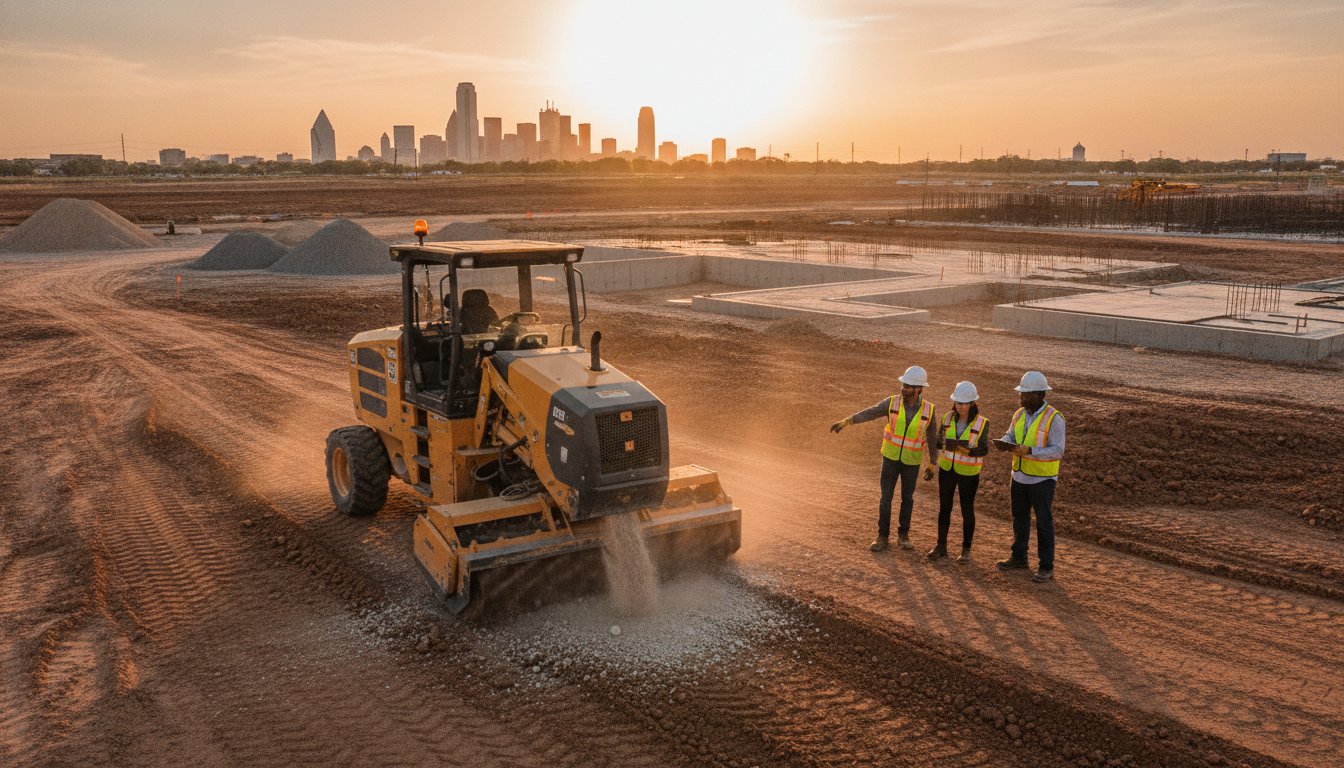
In North Texas, a concrete paving project is only as reliable as the chemical composition of the dirt beneath it. You've likely experienced the frustration of watching a newly poured surface fail because the aggressive Dallas clay began its inevitable cycle of expansion and contraction. It's a reality that leads to high maintenance costs and the persistent threat of failed subgrade inspections. We understand that for a commercial project to be successful, the foundation must be treated as a permanent structural element rather than a variable.
By implementing advanced paving stabilization solutions Dallas developers can neutralize the volatility of local soils and ensure long-term structural integrity. This article provides a technical overview of how professional soil stabilization protects your investment from expansive clay damage. We'll examine the 2026 Dallas construction standards and the specific chemical treatments required to help you pass geotechnical density tests on the first attempt. You'll discover how a disciplined approach to site preparation creates predictable construction timelines and delivers a paving surface designed to last twenty years or more.
Key Takeaways
- Understand how chemical modification through ion exchange neutralizes expansive clay to prevent subgrade failure in North Texas.
- Evaluate the specific applications of lime, cement, and hybrid additives to determine the optimal treatment for your site's geological profile.
- Learn why geotechnical testing and lab-verified mix designs are the primary safeguards against failed subgrade inspections and project delays.
- Discover how professional paving stabilization solutions Dallas contractors utilize precise soil excavation and additive integration to ensure a 20-year paving lifecycle.
- Align your project with the 2026 Dallas construction standards by prioritizing foundational integrity and disciplined site preparation.
Understanding Paving Stabilization Solutions for Dallas Infrastructure
Soil stabilization is the process of chemically or mechanically modifying subgrade properties to improve their engineering performance. For commercial developers in North Texas, this isn't merely a preliminary site step; it's a structural necessity. By utilizing professional paving stabilization solutions Dallas projects gain a foundation capable of resisting the region's unique geological pressures. This modification increases the California Bearing Ratio (CBR), a critical measure of the subgrade's ability to support heavy-duty loads from commercial concrete paving and large-scale civil infrastructure. A stabilized base ensures that the weight of heavy machinery and constant vehicle traffic is distributed evenly, preventing the localized failures that lead to costly repairs.
The Dallas Clay Challenge: Blackland Prairie Soils
Dallas is situated within the Blackland Prairie, a region defined by its deep, dark, and highly expansive clay soils. Geologists specifically identify the Houston Black and Heiden clay series as the primary culprits behind local pavement instability. These soils possess a high plasticity index, meaning they undergo extreme volume changes based on moisture levels. During the intense North Texas rains, these clays swell with immense force; during the subsequent droughts, they shrink and crack. This relentless "shrink-swell" cycle creates a moving target for any structure built upon it. Without proper paving stabilization solutions Dallas parking lots and access roads will inevitably succumb to these subterranean shifts, resulting in jagged cracks and uneven surfaces within just a few years of completion.
Economic Benefits of Early-Stage Stabilization
Prioritizing subgrade integrity during the initial earthwork phase provides a clear path to long-term fiscal stability. When a subgrade's modulus is enhanced through chemical treatment, it allows for a more efficient design of the surface layers. Engineers can often specify a thinner concrete slab because the underlying soil provides consistent, rigid support, which directly reduces the volume of concrete required for the project. Beyond the initial savings on materials, stabilization drastically lowers lifecycle maintenance costs by eliminating the root cause of subgrade-related failure. Paving stabilization is the foundational insurance policy for any North Texas commercial development. It's a disciplined investment that protects the structural integrity of the site against the unpredictable local climate, ensuring the asset remains viable well into 2026 and beyond.
The Engineering Behind Soil Stabilization: Preventing Paving Failure
Mechanical compaction is a standard practice in site preparation, yet it's often insufficient for the volatile clays of the Blackland Prairie. While heavy rollers can increase soil density, they don't alter the fundamental mineralogy of the clay. Without chemical intervention, the soil retains its thirst for water and its capacity to expand. True structural stability requires a molecular shift. Professional paving stabilization solutions Dallas engineers utilize rely on calcium-based additives to initiate a two-stage chemical transformation that permanently modifies the earth.
The first stage of this transformation is ion exchange. When lime or cement is introduced, calcium ions replace the weaker sodium and potassium ions on the surface of the clay particles. This reaction immediately reduces the soil's affinity for water, causing the particles to flocculate and clump together. As detailed in the U.S. Department of Transportation guide on Soil Stabilization in Pavement Structures, this process is essential for creating a predictable subgrade. Following this initial shift, a pozzolanic reaction begins. This is a slower, long-term hardening process where silica and alumina in the clay react with the calcium to form a permanent cementitious matrix. This creates a rock-like foundation that won't revert to a plastic state when wet. Implementing the right paving stabilization solutions Dallas projects require ensures the subgrade meets rigorous geotechnical standards before a single yard of concrete is poured.
Moisture Control and Soil Plasticity
Stabilization effectively alters the Atterberg limits of the soil, which are the moisture thresholds that define when soil transitions from a solid to a plastic or liquid state. By lowering the plasticity index, we convert heavy, unworkable clay into a friable material that's easy to grade and compact. A critical component of this process is the "mellowing period." This time allows the chemical reaction to complete before final compaction, ensuring the soil's properties are fully modified. Rushing this stage can lead to uneven results and subgrade failure, undermining the integrity of the entire project.
Structural Integrity for Heavy Loads
A stabilized subgrade acts as a semi-rigid platform that distributes load stress across a much wider area than raw soil. This protection is vital for the longevity of the concrete surface, particularly in high-traffic industrial corridors where heavy-duty vehicles are the norm. Our experience in commercial concrete paving in Conroe demonstrates how an engineered base prevents the rutting and fatigue cracking that plague poorly prepared sites. For developers seeking to secure their project's future, partnering with a disciplined contractor for turn key civil services ensures these engineering principles are applied with precision and consistency.
Lime vs. Cement Stabilization: Selecting the Right Solution
Choosing between lime and cement is a technical decision driven by the specific chemical profile of the subgrade. It's not a matter of preference but of engineering alignment. The primary metric for this selection is the Plasticity Index (PI), which measures the degree of expansiveness in the soil. For the heavy, high-plasticity clays common in the Dallas basin, lime is the standard additive. Conversely, for silty or sandy soils with a low PI, cement provides the necessary binding strength. Selecting the correct paving stabilization solutions Dallas sites demand involves a detailed cost-efficiency analysis to match the additive to the existing site chemistry.
In certain North Texas geological pockets, we encounter soil blends that require a more nuanced approach. A "Lime-Fly Ash" hybrid is often utilized when the soil contains enough clay to warrant lime but also requires the supplemental pozzolanic boost of fly ash to achieve the desired density. This hybrid method ensures a stable base in transitional zones where soil properties are inconsistent. The percentage of additive is never guessed; it's determined through laboratory testing of the specific soil samples to ensure the resulting subgrade meets the 2026 Dallas construction standards.
When to Use Lime Stabilization
Lime is the essential solution for soils with a Plasticity Index greater than 20. It excels at drying out saturated sites after the heavy North Texas spring rains, allowing construction to proceed without long delays caused by mud. The calcium in the lime reacts with the clay minerals to permanently reduce their water-holding capacity. This treatment provides long-term durability for both commercial and residential developments, creating a subgrade that remains stable through decades of seasonal moisture fluctuations.
The Case for Cement Stabilization
Cement stabilization is the preferred method for low-plasticity soils or when working with recycled base materials. It's particularly effective for projects with tight construction schedules because cement achieves rapid strength gain compared to the slower curing process of lime. However, this method requires precise application. If the cement content is too high, it can lead to shrinkage cracking in the base layer, which may eventually reflect through the concrete paving. We manage this risk through rigorous mix design and controlled moisture application during the mixing process.

The Stabilization Process: From Testing to Final Grade
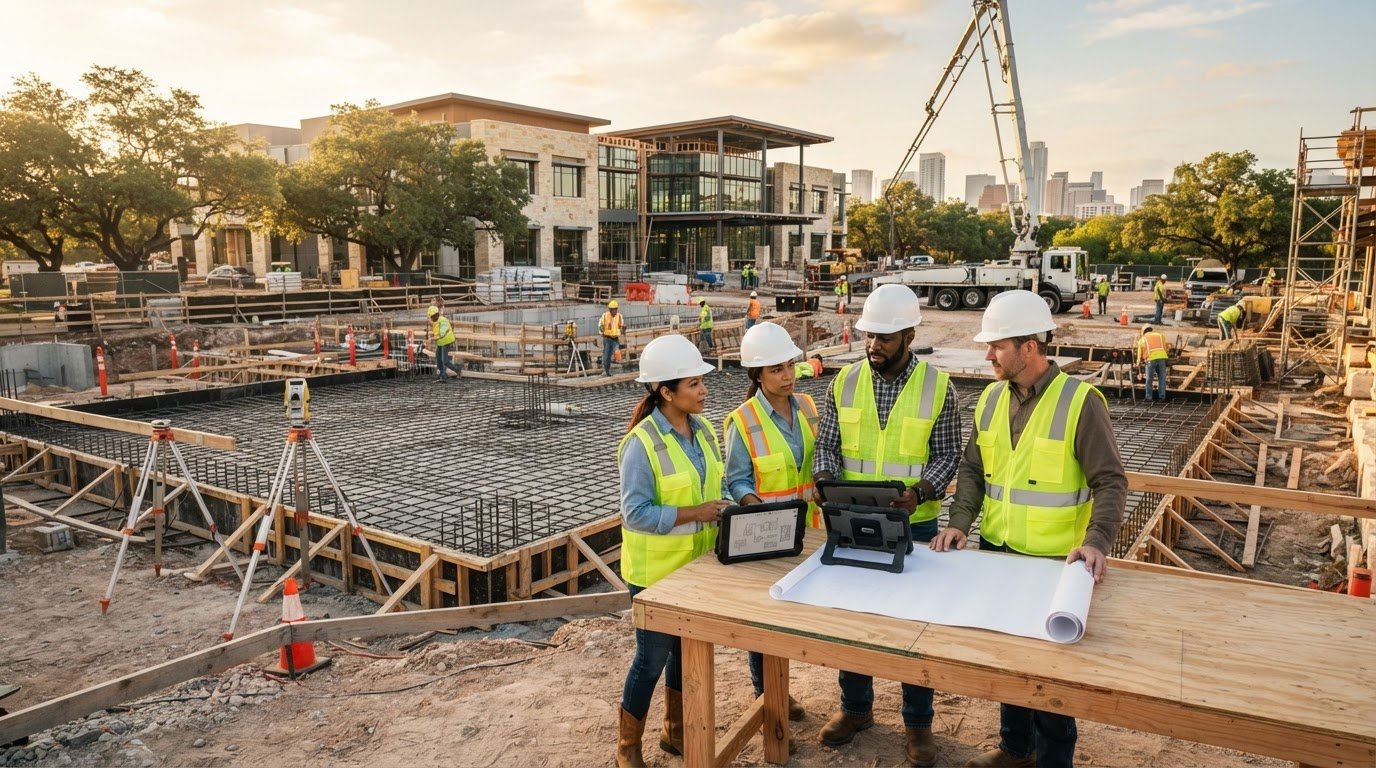
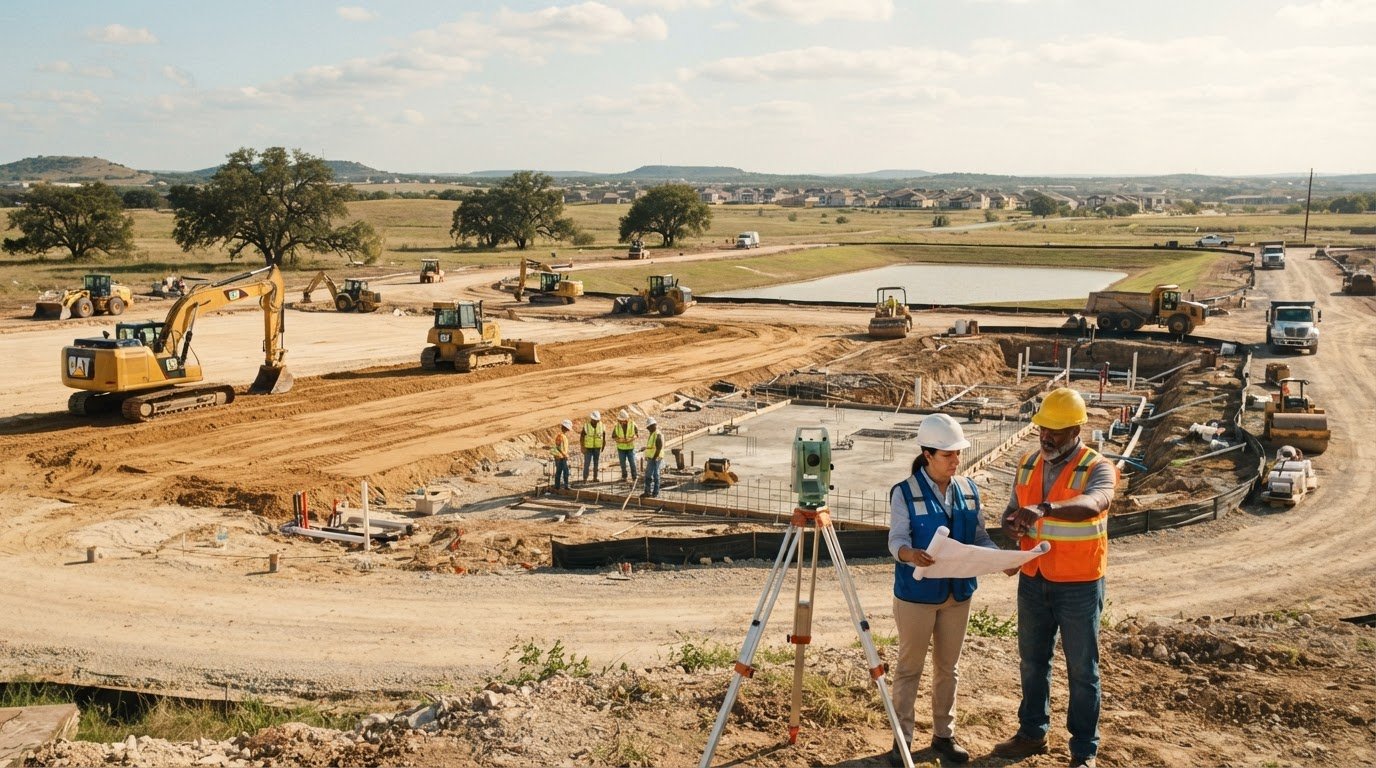
The successful implementation of paving stabilization solutions Dallas relies on a strict adherence to geotechnical specifications. This process doesn't begin in the field; it starts in the laboratory. Geotechnical engineers conduct thorough testing of the site's soil to establish a lab-verified mix design. This design dictates the precise percentage of chemical additive required to achieve the necessary structural properties. Once this roadmap is established, we begin the physical site preparation. This stage often involves mass soil excavation to reach the target subgrade elevation, ensuring that the base material is uniform and free of organic debris before the stabilization agents are introduced.
Field execution requires operational precision and specialized equipment. Modern pulvimixers are utilized to blend the lime or cement into the soil at a controlled depth, typically six to eight inches depending on the engineering requirements. These machines ensure that the additive is distributed evenly, creating a consistent chemical reaction across the entire project area. After the initial mixing, the soil is brought to its optimum moisture content and compacted using heavy vibratory rollers. This methodical approach is the only way to meet the rigorous Dallas municipal codes and ensure the subgrade is ready for the final paving layers.
Coordinating with Underground Utilities
Subgrade stabilization must be carefully coordinated with the installation of critical infrastructure like storm sewers and sanitary lines. It's essential to ensure soil stability around these underground utilities without compromising their structural integrity. During the high-pressure mixing process, our crews maintain a safe distance from sensitive lines to prevent displacement or damage. Sequencing the civil site work is equally important. We schedule the stabilization phase to occur after deep utility installation but before the final grading of the surface. This careful planning prevents the need to re-excavate stabilized areas, which would otherwise destroy the newly formed cementitious matrix and weaken the foundation.
Quality Control and Density Testing
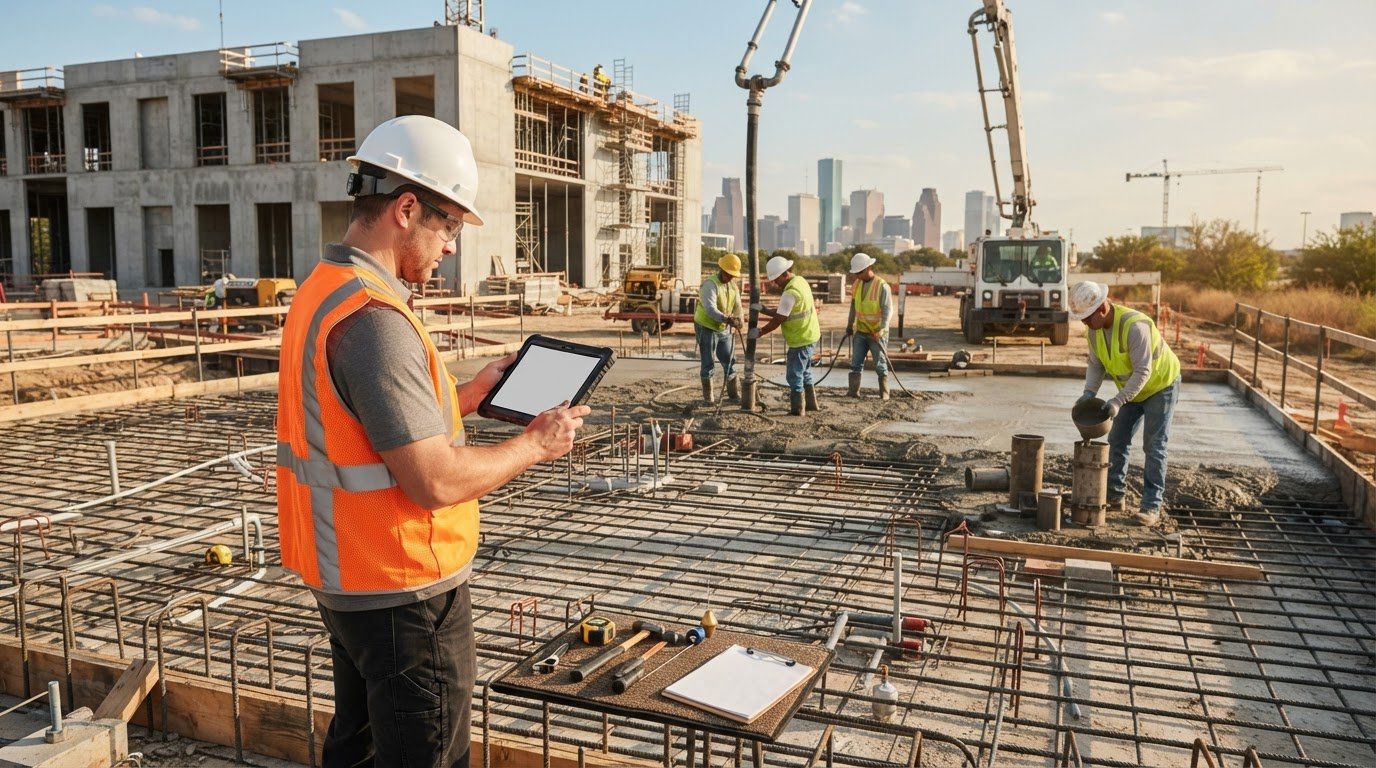
Maintaining high standards requires constant verification through third-party laboratories. These experts conduct moisture-density relationship tests, commonly known as Proctor tests, to confirm that the field compaction meets the engineered design. 95% standard Proctor density is the industry benchmark for stabilized subgrades in Texas. Achieving this level of density ensures that the subgrade can support heavy commercial loads without shifting. We maintain detailed documentation of all test results, providing the necessary records for project closeout and long-term warranty validation. For developers seeking a partner who prioritizes this level of technical proficiency, our paving stabilization services deliver the reliability required for complex civil projects.
Steadfast Paving Stabilization by Born Integrated Construction
Born Integrated Construction approaches every project with a deep-rooted commitment to professional stability. We don't just move dirt. We establish the structural viability of your development through disciplined execution and technical proficiency. Our team brings extensive expertise to complex civil site work, managing everything from detention ponds and retaining walls to the intricate foundations required for high-rise structures. By prioritizing the specific paving stabilization solutions Dallas developers require, we ensure that every yard of soil we treat meets our uncompromising standards for durability. We believe that a project's success is defined by the strength of its foundation, both literally and figuratively.
A safety-first culture is central to our operational philosophy. We maintain rigorous standards to ensure that project sites remain secure and efficient, which protects both our crews and your investment. This disciplined approach allows us to build long-term relationships with vendors and customers based on unwavering consistency. We believe that reliable performance is the only way to earn the confidence of the industry. We take great pride in the enduring nature of our professional output, viewing every project as a reflection of our craftsmanship and our duty to deliver consistent value to our partners.
Integrated Civil and Concrete Solutions
Our methodology focuses on a seamless transition between the various phases of site development. By combining mass soil excavation with advanced stabilization techniques, we eliminate the logistical friction often found when managing multiple contractors. This integrated approach is particularly valuable for complex projects involving multi-level structures and specialized concrete requirements. Our experience with expert podium slab construction demonstrates our capability to handle demanding structural CIP solutions. We provide project-based fees that are both cost-effective and transparent, allowing for predictable management from the initial bid to the final project closeout.
Your Partner for North Texas Development
We serve Dallas, Fort Worth, and the surrounding municipalities with a focus on execution and safety. The North Texas climate presents specific challenges that require a seasoned hand to navigate successfully. Our methods are designed to produce results that stand up to the test of time, resisting the moisture fluctuations that often compromise lesser foundations. We aren't looking for shortcuts; we're looking to build lasting foundations. If you're planning a commercial development for 2026, you need a partner who understands the meticulous management of details. Contact our team today to review your site plans and engineer a stabilization strategy that secures your project's long-term integrity.
Securing the Structural Integrity of Your 2026 Development
The long-term viability of any North Texas development depends on a subgrade that remains stable through the region's extreme moisture cycles. We've examined how professional paving stabilization solutions Dallas engineers utilize to transform volatile clay into a permanent, rock-like structural platform. By selecting the correct additive based on the Plasticity Index and adhering to rigorous compaction benchmarks, you protect your concrete investment from the inevitable cycles of expansion and contraction. Success in this environment requires a disciplined approach that prioritizes foundational strength over surface-level speed.
Born Integrated Construction provides the comprehensive civil site work expertise needed to navigate these geological challenges. Our proven track record with structural concrete for high-rise developments and multi-level parking structures demonstrates our ability to manage the most demanding site requirements. From mass excavation to utility installation, we maintain an unwavering focus on safety and integrity in every contract. We invite you to Request a Consultation for Your Dallas Paving Project to ensure your site is built on a foundation of reliability and professional excellence. Let's build a future that stands the test of time.
Frequently Asked Questions
Is soil stabilization required for all commercial paving in Dallas?
Soil stabilization is a standard requirement for the majority of commercial developments in Dallas to comply with geotechnical recommendations and municipal right-of-way standards. Given the volatility of the Houston Black clay series, engineers rarely approve a paving design that doesn't include a chemically treated subgrade. This ensures the pavement meets density requirements and maintains its structural integrity against the local climate.
How long does the lime stabilization process take to cure?
The lime stabilization process requires a mellowing period that typically lasts between 24 and 72 hours. This duration allows the calcium ions to react fully with the clay particles before final mixing and compaction. While the subgrade becomes workable quickly, the full pozzolanic hardening continues for several weeks, creating a durable foundation that supports heavy construction traffic during the building phase.
Can stabilization be performed during the rainy season in North Texas?
Stabilization can be performed during the rainy season, and lime is frequently utilized as a drying agent to make saturated sites workable. While light rain doesn't halt the process, excessive moisture can prevent the precise mixing of additives. We carefully monitor North Texas weather patterns to ensure the soil reaches its optimum moisture content before final compaction occurs.
What is the difference between soil stabilization and soil modification?
Soil modification is a temporary improvement in workability, while soil stabilization involves a permanent chemical change to the soil's structure. Modification simply makes the soil easier to grade or compact for a short duration. Professional paving stabilization solutions Dallas contractors provide create a lasting cementitious matrix that won't revert to its original plastic state even when exposed to future moisture fluctuations.
How much does paving stabilization cost per square yard?
The investment required for stabilization varies based on the soil's chemical profile and the specific percentage of additives dictated by the geotechnical report. Factors such as the treatment depth and the current market availability of lime or cement influence the final project budget. We recommend a thorough review of your site's lab-verified mix design to determine the precise application rate needed for your geological conditions.
Will stabilized soil affect the growth of landscaping near the paving?
Stabilized soil is localized beneath the pavement and shouldn't impact distant landscaping, though it can influence the pH of soil in the immediate construction area. During the mixing process, crews take precautions to prevent lime dust or runoff from entering designated green spaces. Once the concrete is poured and the site is finished, the stabilized base remains contained and inert.
Does stabilization help with drainage issues on a commercial site?
Stabilization assists with drainage by maintaining a rigid, uniform surface that prevents subgrade settlement and subsequent ponding. When a subgrade fails and the pavement sinks, it creates low spots where water collects and accelerates surface deterioration. By ensuring the foundation remains level, these paving stabilization solutions Dallas projects rely on help the site's drainage systems function as they were originally engineered.
How do I know if my site needs lime or cement stabilization?
Determining the correct additive requires a laboratory analysis to find the soil's Plasticity Index (PI). Soils with a high PI, typically greater than 20, are best treated with lime to neutralize their expansive properties. Low-plasticity soils or recycled base materials respond better to cement stabilization, which provides the rapid strength gain necessary for a stable and predictable paving base.