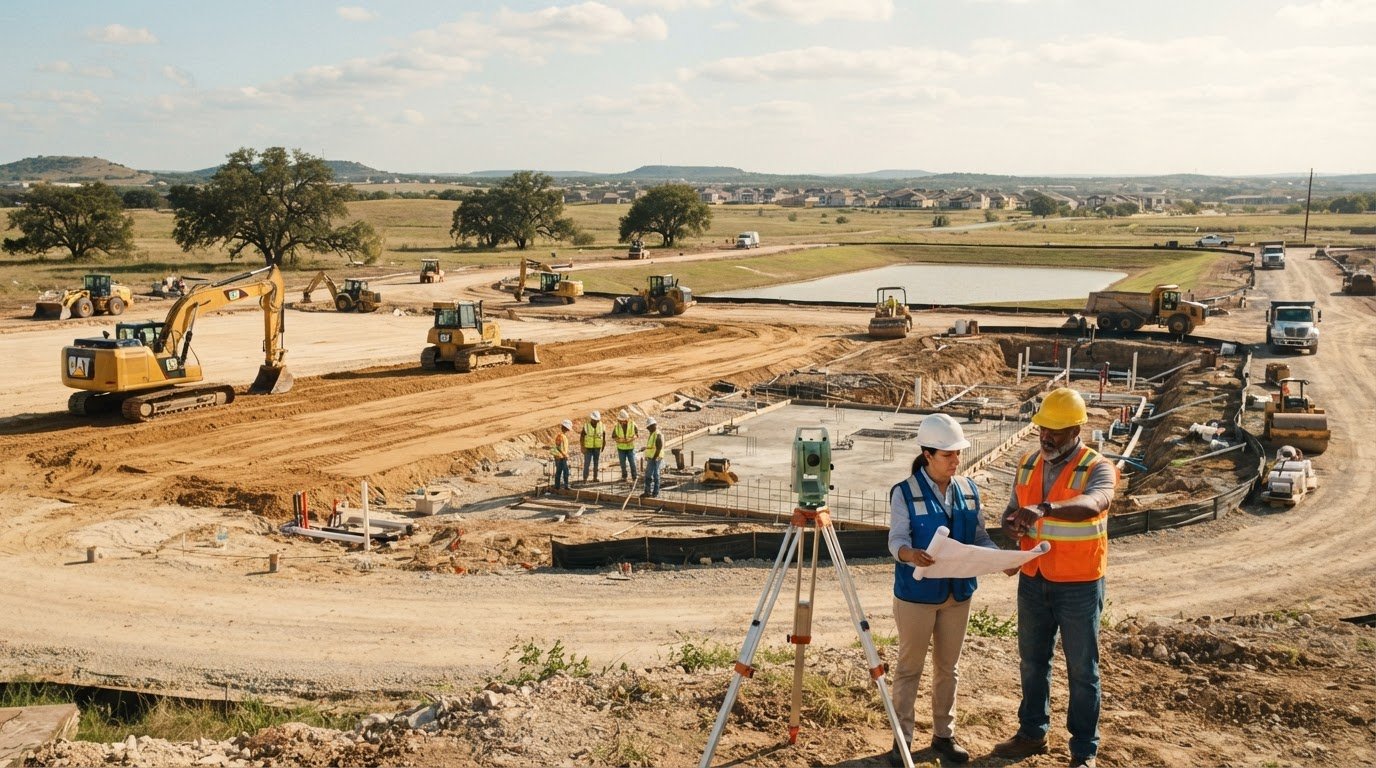
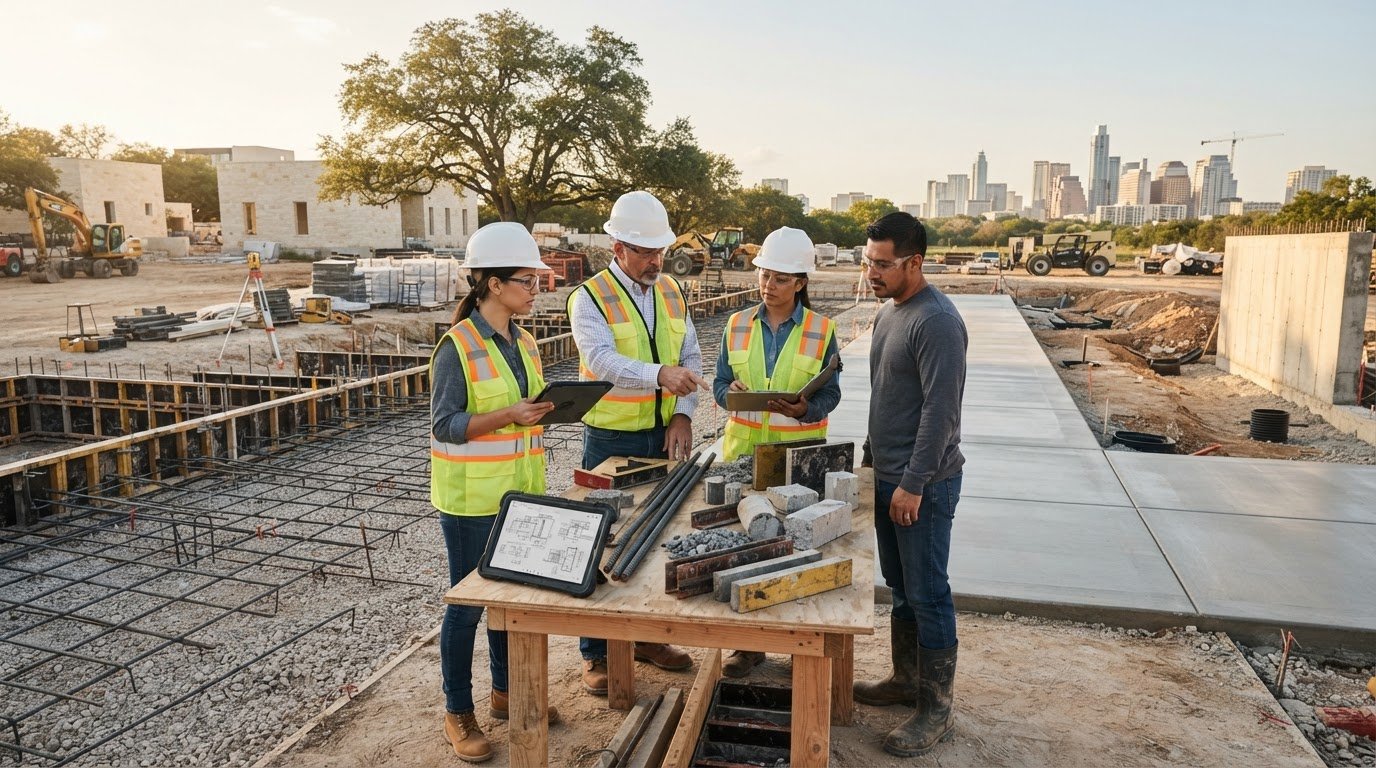
The lowest concrete bid can become the costliest choice if it shifts risk into construction or shortens the service life of the work. Value engineering in concrete construction isn’t simply a search for lower upfront costs. It’s a disciplined comparison of options against project requirements, constructability, and long-term performance.
It’s reasonable to question whether a proposed cost reduction could affect durability, scope, or field execution. A sound review makes those trade-offs visible before decisions are made, rather than treating design and construction as separate concerns. The goal is to preserve the required function while finding practical ways to improve how the work is delivered.
This guide explains a structured value-engineering process for concrete projects, including how to compare materials, systems, sequencing, and life-cycle considerations. It also explains why concrete scope and civil site work should be considered together when they affect coordination and execution planning. With an integrated view, project teams can assess alternatives on more than initial price and make decisions grounded in performance, safety, and quality.
Key Takeaways
- Use value engineering in concrete construction to assess alternatives against required function and project constraints, not simply to remove scope.
- Establish owner requirements, design intent, and project interfaces before generating or evaluating options.
- Compare alternatives across scope, constructability, sequencing, maintenance, and cost inputs to understand trade-offs beyond first cost.
- Assess site access, utilities, design conditions, and sequencing based on project-specific information when considering concrete options in Texas.
- Consider concrete work and civil site work together, with safety, integrity, efficiency, and quality guiding execution planning.
Value Engineering in Concrete: What It Is and Isn't
Value engineering in concrete construction is a structured review of a project’s required functions, available options, and constraints to identify ways to deliver the intended result without compromising owner requirements or design intent. It examines how proposed choices affect the project as a whole, rather than treating a lower initial price as proof of greater value. The Value engineering overview describes the broader methodology. On a concrete project, practical decisions depend on the approved documents and project-specific criteria.
How value engineering differs from cost cutting
Cost cutting starts with a reduction target. Value engineering starts with function: what must the concrete element do, and what constraints must the project respect? Removing scope, changing materials, or reducing quality controls without evaluating those questions can shift risk rather than improve value.
A useful comparison accounts for more than first cost. For each option, teams should consider whether it:
- Preserves the stated function, scope, and design intent.
- Can be constructed within site and sequencing constraints.
- Changes coordination needs or affects the project schedule.
- Alters maintenance needs or other life-cycle considerations.
These factors help explain trade-offs, but they don’t establish savings or improved performance on their own. Those conclusions require project-specific evaluation and approval.
Why concrete projects benefit from early option review
Reviewing options before field execution gives the project team an opportunity to identify interfaces between concrete work and adjacent scopes. For example, paving may need coordination with civil site work and access. A slab’s requirements and connections differ from those of paving, while structural concrete must be considered in relation to the building systems and design intent it supports. These are distinct applications, not interchangeable alternatives.
Early coordination can clarify scope boundaries, sequencing assumptions, and information needs while there is still an opportunity to assess them. It can also surface whether a proposed change affects another trade or project interface. Keep the review anchored to documented owner requirements and design criteria, and obtain design-team approval for changes that affect the approved design.
Value engineering is not authority to revise requirements unilaterally. It is a disciplined way to develop and assess options, record their implications, and support informed decisions. This distinction allows project teams to examine efficiency while maintaining control of scope, constructability, and intended function.
A Step-by-Step Value Engineering Process for Concrete Projects
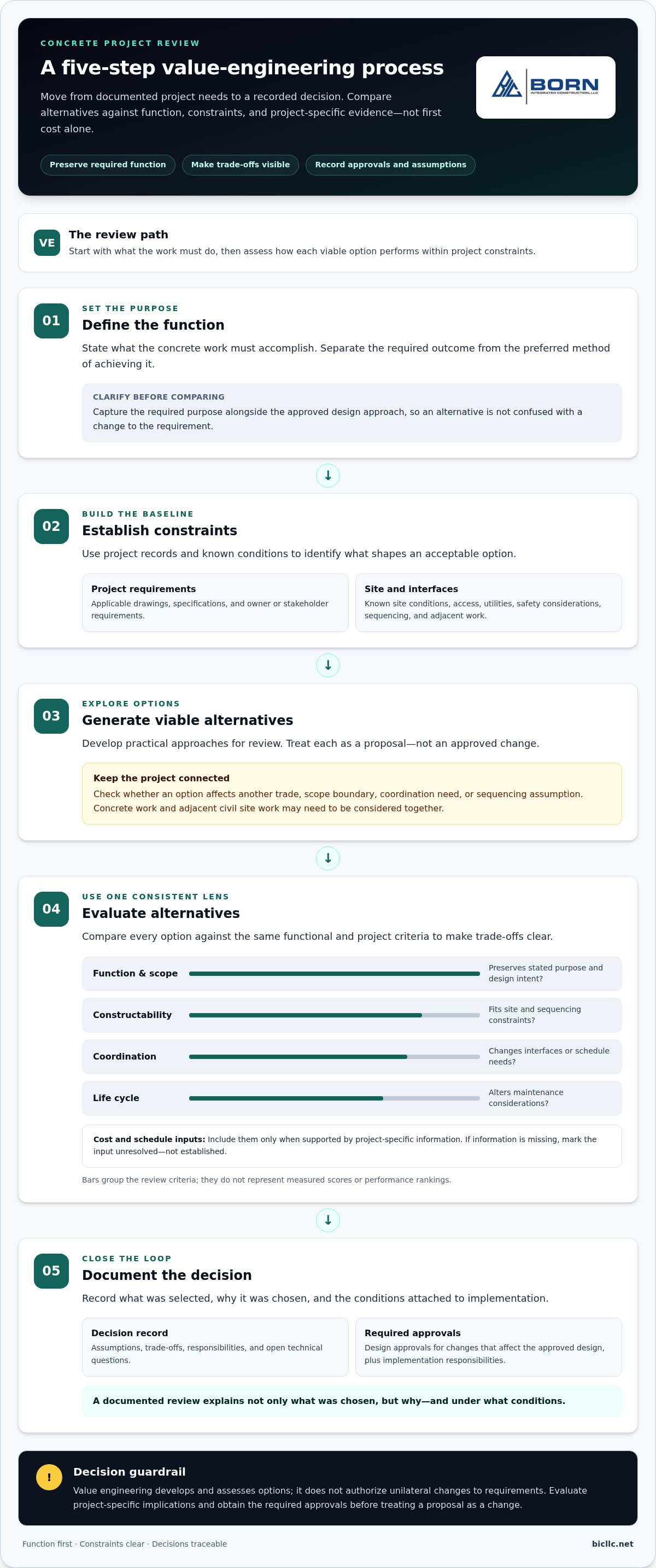
A consistent review gives project teams a clear basis for comparing alternatives and tracing how a decision was reached. For value engineering in concrete construction, begin with documented owner requirements and design intent, then move through options, evaluation, and approval. This keeps proposed changes grounded in project needs rather than assumptions.
Five steps provide a practical starting point:
- 1. Define the function. State what the concrete work must accomplish.
- 2. Establish constraints. Record requirements, interfaces, and site conditions that shape acceptable options.
- 3. Generate alternatives. Develop viable approaches without treating them as approved changes.
- 4. Evaluate consistently. Compare each option against the same functional and project criteria.
- 5. Document the decision. Record assumptions, approvals, trade-offs, responsibilities, and open questions.
Start with project functions, requirements, and constraints
Separate the required outcome from the preferred method of achieving it. A project may require a concrete element to serve a defined purpose, while drawings and specifications establish how the approved design currently delivers that function. Capture both so an alternative is not mistaken for a change in the requirement itself.
Build the baseline from applicable drawings, specifications, owner and stakeholder requirements, and known site conditions. Identify interfaces that need project-team review, including safety considerations, access, sequencing, utilities, and adjacent work. Clear records at this stage help reveal whether an option is feasible within the broader project, not just within an isolated concrete scope.
Evaluate alternatives and document the decision
For each option, use the same comparison criteria and record the assumptions. Include cost or schedule inputs only when project-specific information supports them. Otherwise, identify them as unresolved rather than presenting estimates as established facts. The federal Value Engineering-Construction clause provides a formal reference for value engineering in applicable government construction contracts, though project requirements and contract terms determine its relevance.
Document the selected approach, its trade-offs, required design approvals, implementation responsibilities, and remaining technical questions. A decision record helps the team understand not just what was chosen, but why and under what conditions. For examples of concrete and civil project scopes, review completed project work as context for the coordination involved.
How to Compare Concrete Alternatives Without Losing Project Value
A fair comparison holds project requirements constant while examining what changes between options. Value engineering in concrete construction doesn’t automatically mean accepting lower quality. It means testing whether an alternative can meet the same documented function and constraints, then making its trade-offs visible. Lower first cost alone isn’t enough to establish better value.
Use the same comparison framework for every option:
| Comparison area | Questions to record |
|---|---|
| Function | Does the option meet the intended use and stated design requirements? |
| Scope | What work, interfaces, or responsibilities change? |
| Constructability | Can the work be executed within documented site and access conditions? |
| Sequencing | How might the option affect work order, coordination, or schedule inputs? |
| Maintenance | What access or upkeep considerations are supported by project information? |
| Cost inputs | What project-specific initial and life-cycle information is available, and what remains an assumption? |
Compare concrete scope by function and execution
Concrete paving serves a different purpose from a building slab-on-grade. Cast-in-place concrete and precast garage foundations also differ in how they are designed, produced, coordinated, and installed. Their functions and project interfaces matter, so they shouldn’t be treated as one-to-one substitutions based on a single cost input.
For each alternative, identify which drawings or requirements it affects, which adjacent scopes connect to it, and whether access or sequencing assumptions change. These questions help distinguish a genuine option from a proposal that shifts work or coordination elsewhere.
Include lifecycle and constructability in the comparison
Initial cost is one part of the evaluation. Life-cycle considerations may include maintenance access and other future needs, but a comparison is only as reliable as its project-specific assumptions and supporting inputs. The USACE VE Program offers a public-sector reference for considering value beyond an isolated first-cost decision.
Separate documented evidence from estimates, assumptions, and items requiring design review. Record schedule or cost effects only when project information supports them. This gives decision-makers a clearer view of trade-offs without implying unverified savings or performance gains. The appropriate choice is the one that satisfies the project’s approved function and constraints, with its implications understood.
Applying Value Engineering to Texas Concrete Project Conditions
In Texas, viable concrete alternatives depend on conditions documented for the specific site and project. Location alone doesn’t establish soil behavior, weather exposure, code requirements, or cost. A value review should use project information, including design documents, site access, utility locations, drainage needs, and planned sequencing, rather than relying on broad regional assumptions. This applies to projects in Houston, Austin, San Antonio, Dallas, Fort Worth, San Marcos, New Braunfels, Boerne, Beaumont, Conroe, The Woodlands, and Arlington.
Assess site conditions and trade interfaces
Before comparing options, identify which site records and design inputs govern the work and where additional review is needed. Consider how earthwork, paving stabilization, drainage, underground utilities, and concrete scope connect on the particular project. The timing of one activity may affect access or the sequence of another, so alternatives should account for these interfaces rather than treating each scope in isolation.
For a paving project, for example, review how the proposed work relates to adjacent civil work, utility coordination, and access needs. Base that review on the project’s drawings and site information, not assumptions about all Texas sites. Design-team input remains essential where an alternative could affect engineering requirements or approved plans.
Coordinate value decisions across project scope
Concrete and civil work often meet at practical boundaries: earthwork prepares areas for later activities, utility work may intersect planned concrete, and drainage needs can influence the relationship between site and paving scopes. Clarify sequencing, access, and responsibility at each interface. This makes comparisons more meaningful and can expose coordination questions before they become field decisions.
Born Integrated Construction provides concrete work, including paving, slabs, cast-in-place and structural concrete, alongside civil site work such as earthwork and paving stabilization. Considering related scopes together can support a more complete execution review, while project requirements and design approvals continue to govern any change. Explore integrated construction project examples to see the range of work delivered.
For Texas projects, value engineering in concrete construction is most useful when site-specific information and connected scopes are considered together. That gives the team a clearer basis for assessing alternatives, coordinating responsibilities, and planning execution without treating regional assumptions as project facts.
How Born Integrated Construction Supports Value-Focused Concrete Delivery
Value-focused delivery depends on understanding how concrete scope fits the wider project. Born Integrated Construction provides concrete paving, slab work, cast-in-place and structural concrete, precast garage foundations, and civil site work. Considering connected scopes together can help project teams identify interfaces, coordination needs, and execution questions when evaluating alternatives.
Integrate concrete work with project coordination
Paving, slabs, and structural concrete each serve different project functions. Their requirements and connections to adjacent work should guide any comparison. Where earthwork or other civil scope connects with concrete work, reviewing the relationship can clarify sequencing, access, and responsibilities. The goal is to make those considerations visible, not to assume one approach is suitable for every project.
Safety, integrity, efficiency, and quality are operating priorities at Born Integrated Construction, alongside attentive service and consistent performance. These principles inform how concrete and civil scopes are considered together, while owner requirements, design coordination, and documented site constraints remain the basis for project-specific decisions. Learn more about the company’s construction approach.
Move from evaluation to a documented project path
Before presenting a preferred option, summarize the required function, owner requirements, design intent, scope boundaries, and comparison criteria. Relevant information may include applicable drawings and specifications, known site conditions, access and utility interfaces, sequencing considerations, and project-specific cost or schedule inputs. Clearly identify unresolved technical questions and assumptions.
This record supports a measured discussion of what each alternative changes and what must remain in place. It also helps distinguish documented information from estimates or items requiring design-team review. Move an option forward through the appropriate project coordination and approval process, with implementation responsibilities made clear.
Every project has its own constraints. A project discussion should bring together the concrete scope, objectives, and relevant project information.
Make Your Next Concrete Decision with Confidence
Effective value engineering in concrete construction begins with the project’s required function, design intent, and constraints. A structured review helps teams compare alternatives consistently, considering constructability, sequencing, and life-cycle implications alongside initial cost. It also keeps proposed changes connected to documented requirements and appropriate design coordination.
Concrete and civil scopes can affect one another, so evaluating their interfaces together supports more informed execution planning. Born Integrated Construction provides concrete construction and civil site work, guided by its priorities of safety, integrity, efficiency, and quality.
Bring your project objectives and relevant scope information into the discussion to establish a practical path for evaluating options. Discuss your concrete project with Born Integrated Construction. With clear requirements and careful coordination, your team can move forward with greater confidence in its decisions.
Frequently Asked Questions
What is value engineering in concrete construction?
Value engineering in concrete construction is a structured review of a project’s required functions and possible ways to meet them within documented constraints. It differs from cost cutting because it doesn’t begin by removing scope or materials. Instead, project teams compare alternatives against owner requirements, design intent, constructability, and other relevant criteria. Any proposed change must be evaluated and approved through the project’s established design and decision process.
Does value engineering mean using less concrete?
No. Reducing concrete quantity may be considered as one possible change, but it doesn’t define value engineering or establish that an option is suitable. The review must first consider the element’s required function, approved design intent, project constraints, and constructability. Any material or scope adjustment needs appropriate technical evaluation and design approval. Without that review, using less concrete could alter the intended work rather than improve project value.
When should value engineering be considered on a concrete project?
Consider value engineering early enough for the team to evaluate options before execution decisions become difficult to change. Early review may help identify scope interfaces, coordination needs, or questions that affect design and construction planning. The appropriate timing depends on the project schedule, design milestones, and availability of reliable information. A later review may still be useful, but viable options will depend on the decisions and work already completed.
How do you compare concrete construction alternatives?
Compare alternatives using the same criteria: required function, scope, constructability, sequencing, maintenance considerations, and supported cost inputs. A consistent approach helps reveal trade-offs without giving one option an advantage through different assumptions. Record the information used, distinguish estimates from documented facts, and note unresolved technical questions. Document design-team decisions and approvals so the project record clearly shows why an alternative was accepted or set aside.
Can value engineering reduce concrete project costs without compromising quality?
It may identify a cost-conscious alternative, but results depend on the project, available options, and supporting evidence. Savings aren’t guaranteed, and quality isn’t preserved automatically by labeling a change value engineering. Start with documented requirements and design intent, then assess whether an alternative meets them while considering constructability and other project effects. Appropriate design and project-team approvals are essential before implementing a change that affects the work.
What project information is needed for a concrete value-engineering review?
The review typically draws on owner requirements, applicable drawings and specifications, known site conditions, scope interfaces, schedule constraints, and available project-specific cost inputs. The relevant information varies by project and by the alternative under consideration. For Texas projects in Houston, Austin, San Antonio, Dallas, Fort Worth, San Marcos, New Braunfels, Boerne, Beaumont, Conroe, The Woodlands, or Arlington, use information specific to the project location rather than regional assumptions.
How can value engineering apply to concrete paving and structural concrete?
Value engineering applies by assessing each concrete scope against its own function and project requirements. Paving, slabs, cast-in-place structural work, and precast garage foundations serve distinct purposes, so they shouldn’t be assumed to be interchangeable. Compare relevant design criteria, scope, interfaces, constructability, and sequencing for each option. Any proposal affecting approved design intent requires appropriate design-team review, with assumptions and decisions documented for the project.