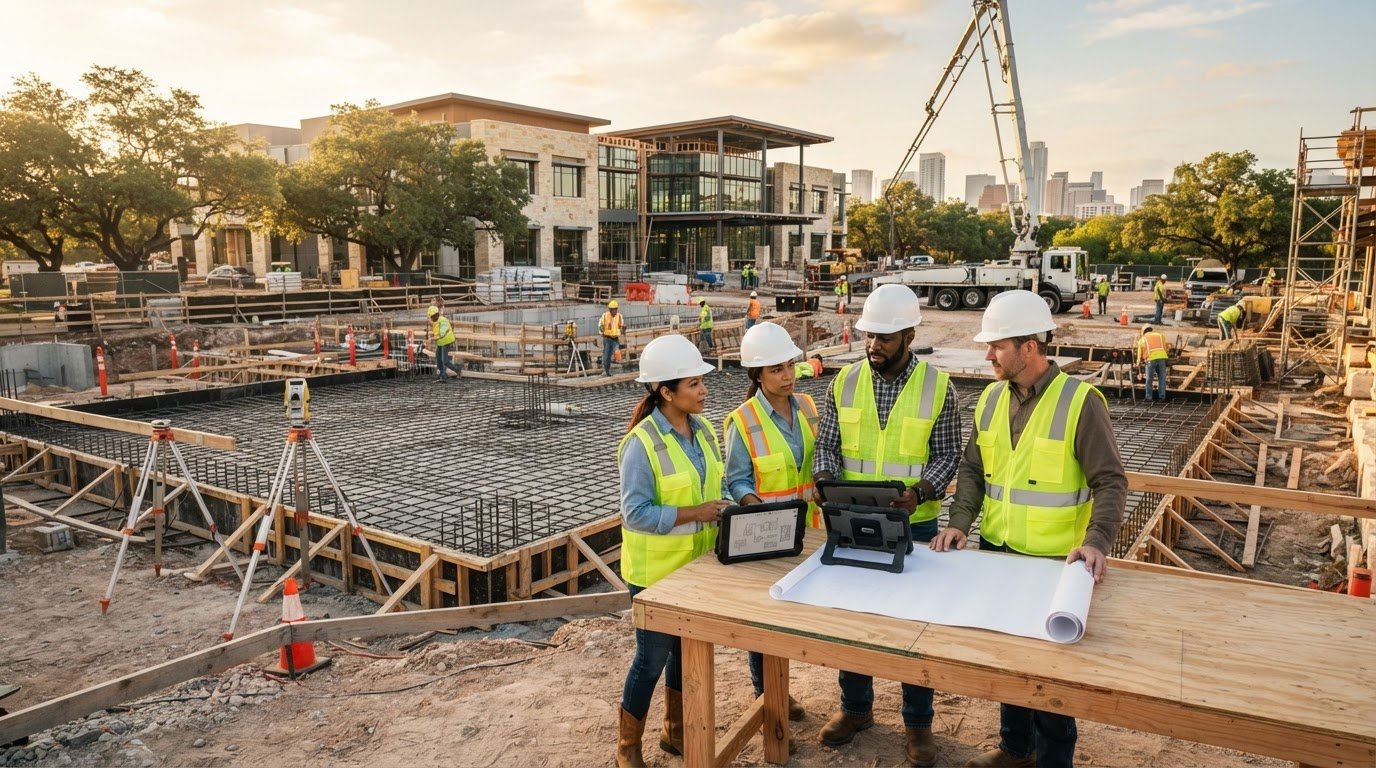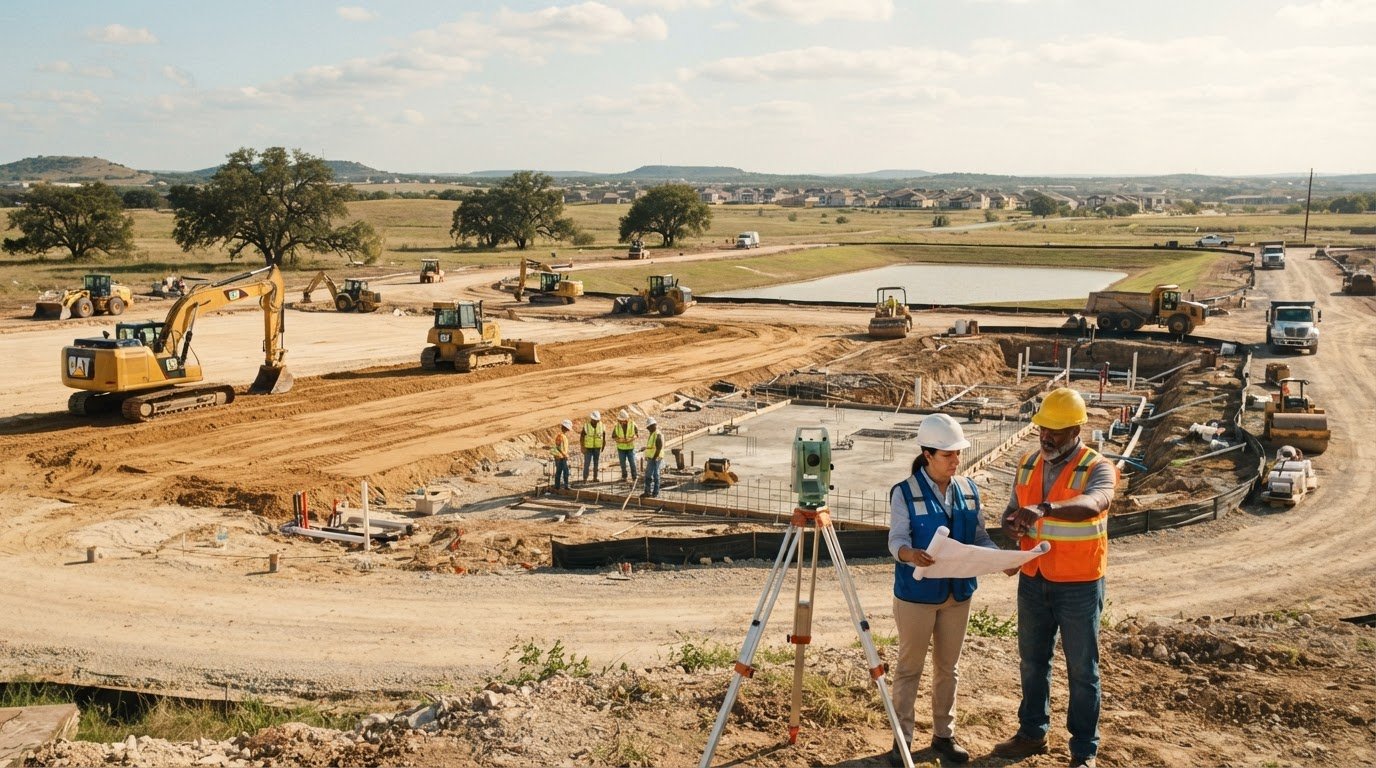
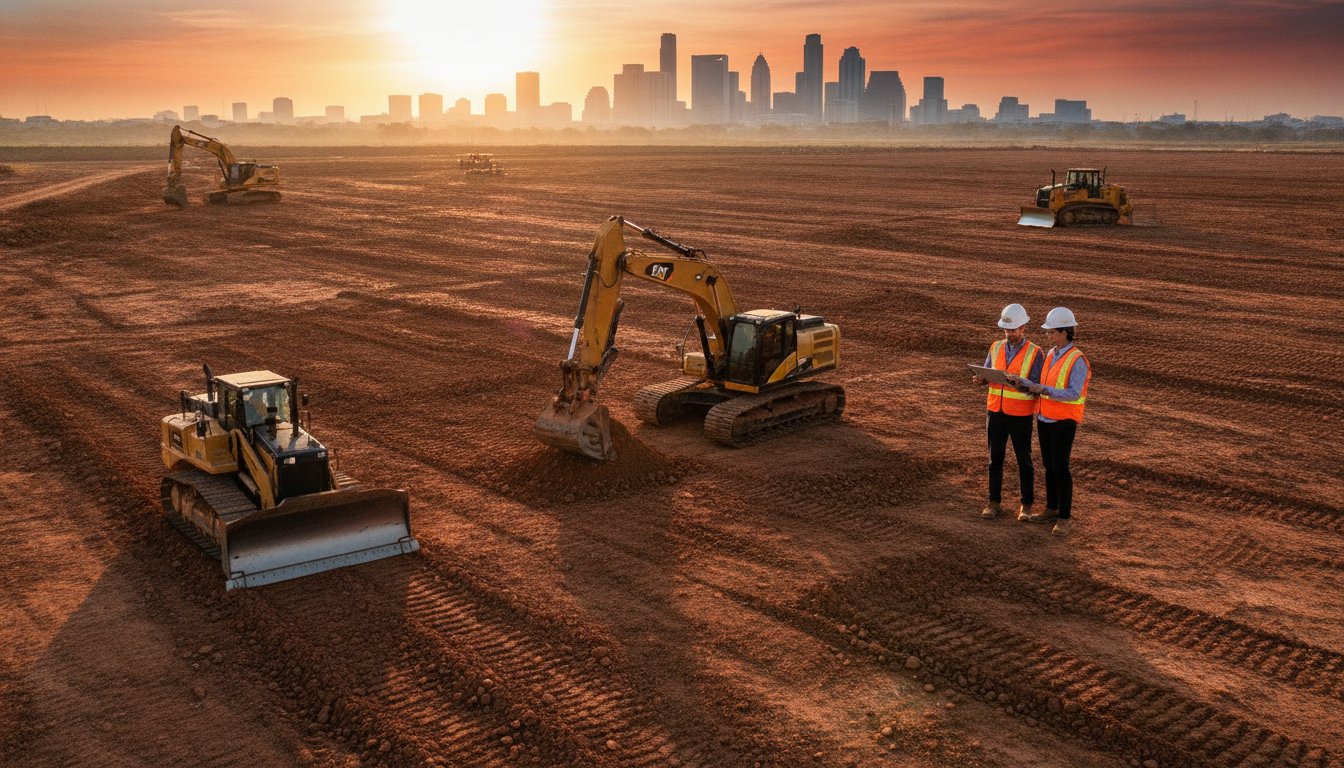
The structural integrity of a 2026 Texas commercial development is established the moment the first bucket of earth is moved. For developers, partnering with a reliable mass soil excavation contractor Texas offers is a strategic decision to avoid the foundation cracks and drainage failures that plague poorly prepared sites. In a region where expansive clay and rocky caliche formations can compromise long-term durability, treating earthwork as a standalone task rather than an integrated engineering phase is a risk that seasoned professionals do not take. Precision at this stage is the only way to ensure the long-term viability of the final structure.
You likely recognize that project delays often stem from a lack of coordination between excavation teams and utility subcontractors or a reliance on third-party equipment rentals. This article explores how professional mass excavation and integrated civil services provide the essential structural foundation for commercial success across the state. We'll examine proven methods for stabilizing volatile soil to ensure paving durability, strategies for compressing project timelines through efficient earthmoving, and the specific TxDOT drainage regulations that will govern 2026 developments. This methodical approach ensures your site is graded to plan and prepared for the next phase of construction.
Key Takeaways
- Understand why large-scale earthwork serves as the critical structural foundation for commercial longevity in the unique soil conditions found across Texas.
- Selecting a specialized mass soil excavation contractor Texas trusts ensures that complex site clearing and precision elevation control are executed to exact engineering specifications.
- Discover the integrated civil advantage of coordinating mass grading with underground utilities and concrete paving to eliminate costly subcontractor scheduling gaps.
- Learn the essential 2026 requirements for SWPPP implementation and erosion control to maintain environmental compliance and protect the surrounding habitat.
- Identify how professional site work partnerships in major Texas hubs like Houston, Austin, and Dallas provide the operational stability needed for large-scale developments.
Understanding Mass Soil Excavation for Texas Commercial Sites
Mass soil excavation serves as the definitive starting point for any large-scale development. It involves the methodical removal, movement, or addition of vast quantities of earth to achieve a precise sub-grade elevation. Unlike standard residential grading, which often focuses on surface aesthetics and basic drainage, industrial earthwork requires rigorous adherence to engineering specifications. Engaging an experienced mass soil excavation contractor Texas developers can rely on ensures that the site's geological profile is managed before any concrete is poured. This process is rooted in the principles of Earthworks (engineering), where the focus remains on creating a stable platform that supports the weight of commercial infrastructure for decades.
The success of a project depends on identifying subsurface risks early. Large-scale industrial excavation handles thousands of cubic yards of material; a single oversight in soil density or moisture content can lead to catastrophic foundation settlement or drainage failures later. By treating the soil as a structural component rather than just dirt, contractors protect the long-term ROI of the asset. It's the quiet leader of the construction process, providing the necessary stability that allows every subsequent trade to succeed.
The Challenge of Texas Soils: From Clay to Limestone
Texas presents a diverse and often hostile geological landscape. In the Houston area and Coastal Plains, developers face "Houston Gumbo," a term for highly expansive clays that swell and shrink with moisture changes. This movement can easily crack a parking lot or shift a building foundation if the mass excavation isn't handled with precision. Conversely, the Rocky Hill Country requires specialized equipment to carve through limestone and caliche. Soil testing before the first bucket hits the ground isn't a recommendation; it's a requirement for stability. A mass soil excavation contractor Texas builders trust will adjust their strategy based on these regional variations to ensure a uniform, non-reactive base.
Mass Excavation as a Structural Precursor
Mass grading establishes the critical path for the entire project schedule, dictating when utility crews and paving teams can begin their work. If the sub-grade isn't prepared correctly, the subsequent commercial concrete paving will inevitably fail, regardless of the concrete's quality. Precise sub-grade preparation is non-negotiable for high-traffic environments. Improper compaction leads to voids and shifting, which results in costly repairs and safety hazards. By prioritizing operational precision during the excavation phase, developers secure the enduring nature of their professional output and avoid the delays that stem from site instability.
The Mass Grading and Earthwork Process: A 2026 Standard
A disciplined sequence of operations defines the modern standard for site preparation. For a mass soil excavation contractor Texas project managers trust, the work begins with a comprehensive site clearing and the demolition of any existing obstructions. This initial phase removes vegetation, old foundations, and debris that could compromise the integrity of the new build. Following clearing, precision surveying establishes the corner benchmarks that govern every elevation on the site. These benchmarks are critical; they ensure the project aligns with engineered plans and local drainage requirements.
The process is governed by strict safety standards, including OSHA Specific Excavation Requirements, which ensure that structural stability is maintained from the first cut. Once benchmarks are set, the execution of the cut-and-fill plan begins. This phase focuses on balancing the site’s soil volume to reach the desired sub-grade. Sub-grade stabilization and moisture-controlled compaction follow, creating a dense, unyielding platform. The final step involves fine grading, a meticulous process that prepares the surface for underground utilities or concrete paving. Partnering with a firm that provides turn-key civil solutions ensures these steps are handled by a single, accountable entity.
Cut-and-Fill Optimization
Efficient site balancing is a hallmark of professional earthwork. By utilizing 3D modeling during the planning phase, a contractor can accurately calculate the volume of earth to be moved. This optimization minimizes the need for expensive off-site soil transport and reduces the project's carbon footprint. Managing soil stockpiles is equally important. Strategic placement of these materials maintains site accessibility for other trades, preventing the logistical bottlenecks that often stall complex developments. It's a matter of operational precision that directly affects the project's bottom line.
Compaction and Soil Stabilization
Long-term durability depends on the quality of the sub-grade. In high-plasticity Texas soils, moisture control alone is rarely enough to prevent future shifting. Professional paving stabilization techniques, such as the injection of lime or cement, are often employed to modify the soil's chemical properties. This process reduces the expansion potential of clay and increases the load-bearing capacity of the ground. Rigorous testing protocols ensure that the sub-grade meets engineering PSI requirements before any structural work begins. This commitment to thoroughness is what separates a standard mass soil excavation contractor Texas developers might hire from a partner focused on enduring results.
The Integrated Civil Advantage: Excavation to Concrete
The transition from earthwork to structural surfacing is where many projects lose momentum. By utilizing a single mass soil excavation contractor Texas developers can eliminate the "sub-gap" delays that occur when separate companies hand off responsibility. When the team performing the initial cut also manages the final concrete paving, the sub-grade is prepared with the specific requirements of the slab in mind. This foresight prevents the common issue of a paving crew arriving only to find the site isn't actually ready for their equipment. It ensures that the structural foundation is built as a single, cohesive unit rather than a series of disconnected tasks.
Structural concrete knowledge informs better excavation decisions at every stage. A contractor who understands the loads a podium slab or heavy-duty road must carry will prioritize compaction density differently than a general dirt mover. This unified management also significantly reduces the risk of utility strikes and trench failures. Because the same site leads oversee both the grading and the utility installation, there's no confusion about where lines are buried or how they must be protected during heavy equipment maneuvers. This level of coordination is a staple of professional stability, creating a safer work environment and a more reliable end result.
Streamlining the Project Timeline
The Turn Key Civil model represents a commitment to operational efficiency. BIC manages the entire progression from raw dirt to a finished, structural slab, ensuring that no time is wasted between phases. This approach eliminates the finger-pointing that often occurs between separate earthwork and concrete crews when schedules slip or site conditions change. For large-scale residential and infrastructure developments, this integrated workflow provides a cost-effective solution by reducing mobilization fees and administrative overhead. It's about maintaining a steady, unhurried rhythm that delivers consistent value from the first day on-site.
Managing Underground Infrastructure
Coordinating storm sewer and sanitary line installation during the grading phase is essential for site longevity. Effective site drainage often hinges on the precise execution of detention pond construction, which must be integrated into the broader earthwork plan to manage runoff effectively. Protecting domestic water systems during heavy equipment maneuvers requires constant vigilance and clear communication among all teams. By centralizing these responsibilities, developers ensure that underground infrastructure isn't just installed, but is actively protected until the site is fully stabilized. This meticulous management of details is what allows a project to remain on the critical path without compromising quality.
Compliance and Site Readiness Checklist for Texas Developers
Compliance is not a secondary concern; it's a primary pillar of professional site management. A mass soil excavation contractor Texas developers partner with must prioritize the Stormwater Pollution Prevention Plan (SWPPP) from the first day of mobilization. This plan serves as the operational roadmap for protecting the site and the surrounding habitat from sediment runoff. Erosion control measures, such as silt fencing and stabilized construction exits, are essential for maintaining site integrity during heavy rainfall. These practices ensure the project remains in good standing with local authorities while preventing the loss of valuable select fill. Selecting a mass soil excavation contractor Texas trusts means prioritizing this regulatory adherence alongside physical earthmoving.
The transition from grading to structural work requires a formal verification of site readiness. This phase involves a meticulous review of all soil stabilization efforts and moisture-controlled compaction results. Ensuring the site is fully compliant before the first concrete truck arrives prevents the costly rework that stems from regulatory holds or structural failures. It's a matter of professional stability that protects both the developer and the eventual occupants of the structure.
Environmental and Drainage Standards
Texas storm events require detention and retention basins that are engineered for high-volume capacity. Meeting Texas Commission on Environmental Quality (TCEQ) requirements involves more than just moving dirt; it requires precise volume calculations and structural stabilization of basin walls to prevent slope failure. For 2026 developments, sustainable soil management practices are becoming a standard expectation for responsible site work. This includes the strategic reuse of on-site materials to minimize environmental impact and reduce logistical overhead. To ensure your development meets every regulatory benchmark, consult with BIC regarding our Turn Key Civil solutions.
Safety and Quality Assurance
BIC maintains a steadfast commitment to safety in deep excavation and trenching, adhering to rigorous internal protocols that exceed basic regulatory requirements. Daily site inspections are mandatory to verify the condition of shoring systems and the stability of soil stockpiles. Equipment maintenance is performed with disciplined regularity to prevent mechanical failures that could lead to delays or safety incidents. Before moving to the structural concrete phase, every developer should utilize a final readiness checklist:
- Permitting: SWPPP permits are active and all required signage is clearly posted at site entrances.
- Erosion Control: Silt fencing, hay wattles, and inlet protection are installed and maintained per the plan.
- Basin Verification: Detention basin volumes have been verified against the approved engineering drawings.
- Geotechnical Approval: All compaction testing reports have been signed off by the third-party geotechnical engineer.
- Elevation Control: The final fine grade elevation has been confirmed via GPS surveying to ensure a seamless transition to concrete.
Born Integrated Construction: Your Texas Site Work Partner
Professional stability in the construction industry is built on a foundation of proven results and unwavering consistency. As a premier mass soil excavation contractor Texas developers rely on, Born Integrated Construction (BIC) delivers a level of operational precision that secures the long-term viability of every project. We operate with a grounded and steadfast approach, prioritizing reliability and ethical conduct in every cubic yard of earth we move. Our team understands that for 2026 developments, the margin for error is non-existent. We provide the disciplined management required to transition a site from raw land to a structurally sound platform ready for vertical progress.
Our commitment to quality is reflected in our modern fleet of heavy equipment, which is managed exclusively by seasoned Texas professionals. These experts possess a deep-rooted understanding of the state's diverse geological profile, from the expansive clays of the coast to the limestone of the interior. By maintaining full control over our equipment and personnel, we eliminate the scheduling uncertainties and performance gaps that often occur when relying on third-party rentals or uncoordinated subcontractors. This internal strength allows us to act as a dependable partner for general contractors who value substance over style.
Our Proven Performance in Texas
BIC serves the major hubs of Houston, Austin, San Antonio, and Dallas with localized expertise that accounts for regional drainage and environmental regulations. We have established a reputation for delivering reliable results on complex projects, including high-rise foundations and heavy-duty commercial roads. In a volatile market, our attentive service and consistent performance provide developers with the security they need to stay on the critical path. General contractors trust BIC because we don't just move dirt; we prepare sites with a comprehensive understanding of the structural concrete and underground infrastructure that will follow. This integrated perspective ensures that every grading task supports the enduring nature of the final professional output.
Get Started with Your Site Evaluation
Initiating a project with BIC begins with a thorough site evaluation and a transparent bidding process. We approach project-based concrete and civil construction fees with a focus on long-term value rather than short-term shortcuts. Our team is available to discuss site preparation requirements in Conroe, The Woodlands, and across the major Texas corridors. We provide the technical proficiency and operational stability needed to manage the transition from mass grading to a finished structural slab. When you choose to work with us, you're choosing a quiet leader focused on execution, safety, and the meticulous management of details. Partner with Born Integrated Construction for your next Texas project.
Establishing a Permanent Foundation for 2026 Projects
Successful 2026 developments require more than just earthmoving; they demand a strategic alignment between initial grading and final structural requirements. By selecting a specialized mass soil excavation contractor Texas developers ensure their sites are prepared to withstand regional geological challenges while meeting strict drainage regulations. This integrated approach minimizes logistical delays and protects the long-term integrity of the investment. It's the most reliable way to bridge the gap between raw land and a finished, structural slab.
Born Integrated Construction provides the operational stability and technical proficiency needed to manage complex site work across all major Texas corridors. Our safety-first culture and Integrated Civil expertise ensure that every project is executed with precision and discipline. We invite you to Request a Turn-Key Civil Bid from Born Integrated Construction for your next commercial project. We look forward to establishing a lasting foundation for your success.
Frequently Asked Questions
What is the difference between mass grading and site excavation?
Mass grading is the large-scale movement of earth to achieve broad elevation goals across an entire development. Site excavation usually refers to more localized digging for specific foundations, footings, or utility trenches. Mass grading focuses on balancing the site’s cut-and-fill requirements to create a uniform sub-grade before specific structural work begins.
How does Texas soil affect mass excavation costs?
Texas soil variety significantly impacts the operational speed and equipment requirements of a project. Rocky terrain in the Hill Country requires heavy-duty rippers and specialized attachments, while the coastal plains often deal with expansive clays. These conditions dictate the complexity of the earthwork and the specific stabilization methods needed to establish a permanent foundation.
Why is soil stabilization necessary after mass excavation?
Soil stabilization is required to mitigate the swelling and shrinking of high-plasticity clays common throughout the state. By injecting lime or cement into the sub-grade, a mass soil excavation contractor Texas developers trust can create a non-reactive platform. This process ensures the long-term durability of subsequent concrete paving and prevents structural settlement or foundation cracks.
Does BIC handle detention pond construction alongside mass grading?
Yes, BIC handles detention pond construction as a core component of our turn-key civil services. We integrate basin excavation into the broader site grading plan to ensure proper drainage and regulatory compliance. This coordination allows us to utilize excavated material as select fill elsewhere on the site, which optimizes the project's soil balance and efficiency.
How long does a typical mass soil excavation project take in Texas?
The duration of a project depends on the specific acreage and the geological composition of the site. Large-scale developments typically require several weeks or months to reach final sub-grade elevations. Factors such as the depth of the cut and the volume of fill required influence the schedule. We maintain a methodical pace to ensure each layer of soil meets density requirements.
What is an "integrated" civil contractor and why does it matter?
An integrated civil contractor manages multiple phases of site work under a single point of accountability. This model eliminates the communication gaps and scheduling conflicts that occur when multiple subcontractors are used for grading, utilities, and paving. It ensures the earthwork phase is perfectly aligned with the needs of the underground infrastructure and structural concrete that follow.
How do you manage erosion control during large-scale excavation?
We manage erosion control through a comprehensive Stormwater Pollution Prevention Plan (SWPPP) that includes silt fencing and stabilized construction exits. These measures are monitored daily to prevent sediment runoff into local drainage systems. Professional erosion control maintains site integrity during storm events and ensures compliance with Texas Commission on Environmental Quality (TCEQ) standards.
Does BIC provide mass excavation for residential developments?
BIC provides mass soil excavation and turn-key civil solutions for large-scale residential developments and master-planned communities. We don't perform individual residential driveway repairs or small-scale asphalt work. Our resources are dedicated to the high-volume earthmoving and structural stability required for expansive multi-family infrastructure and commercial sites.