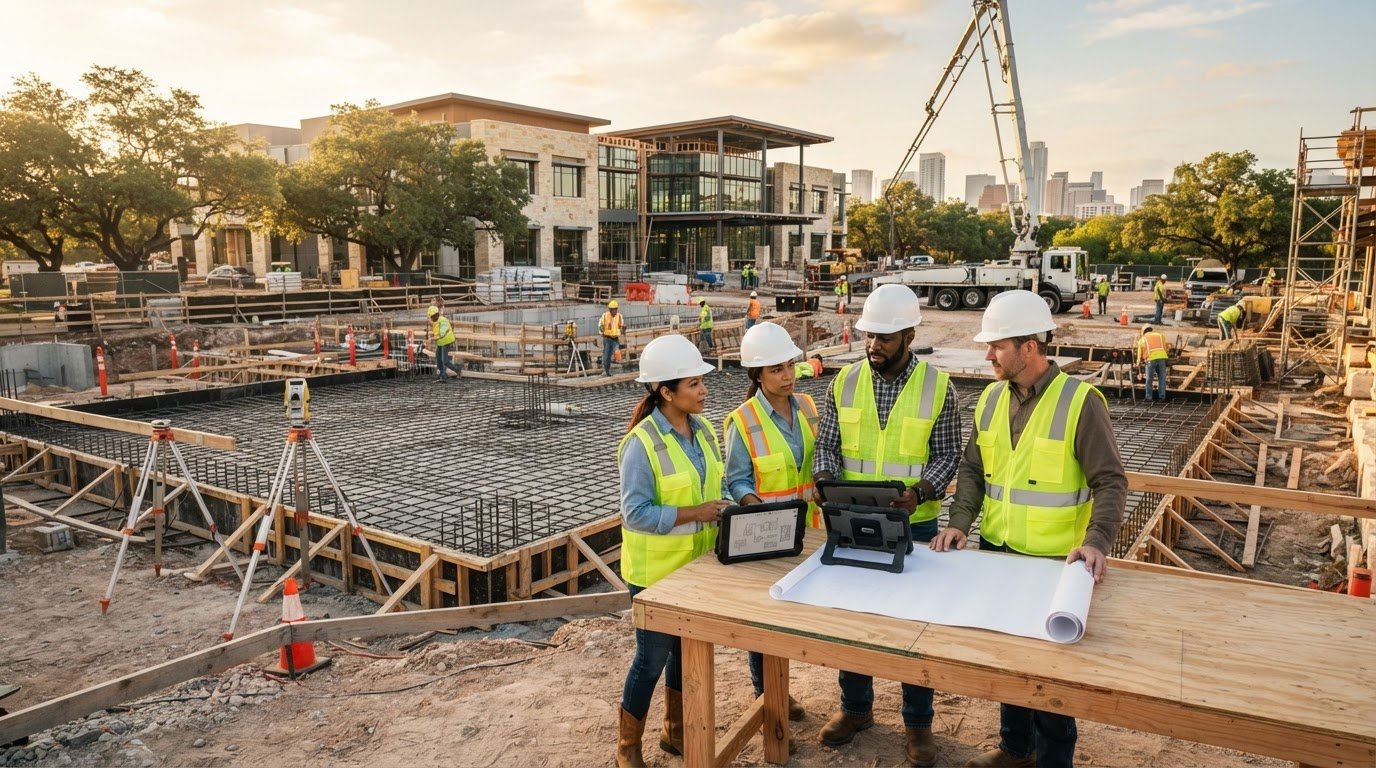
In the high-stakes environment of Texas construction, a foundation is more than just a base; it's the critical interface where precision engineering meets the volatile reality of expansive clay. You know that even a minor misalignment in anchor bolt placement or a slight deviation from PCI tolerances can derail a multi-million dollar project before the first panel arrives. Finding a partner who understands this balance is essential. As a specialized precast garage foundation contractor in Texas, we recognize that structural success depends on bridging the gap between the precaster's rigid requirements and the site's shifting conditions.
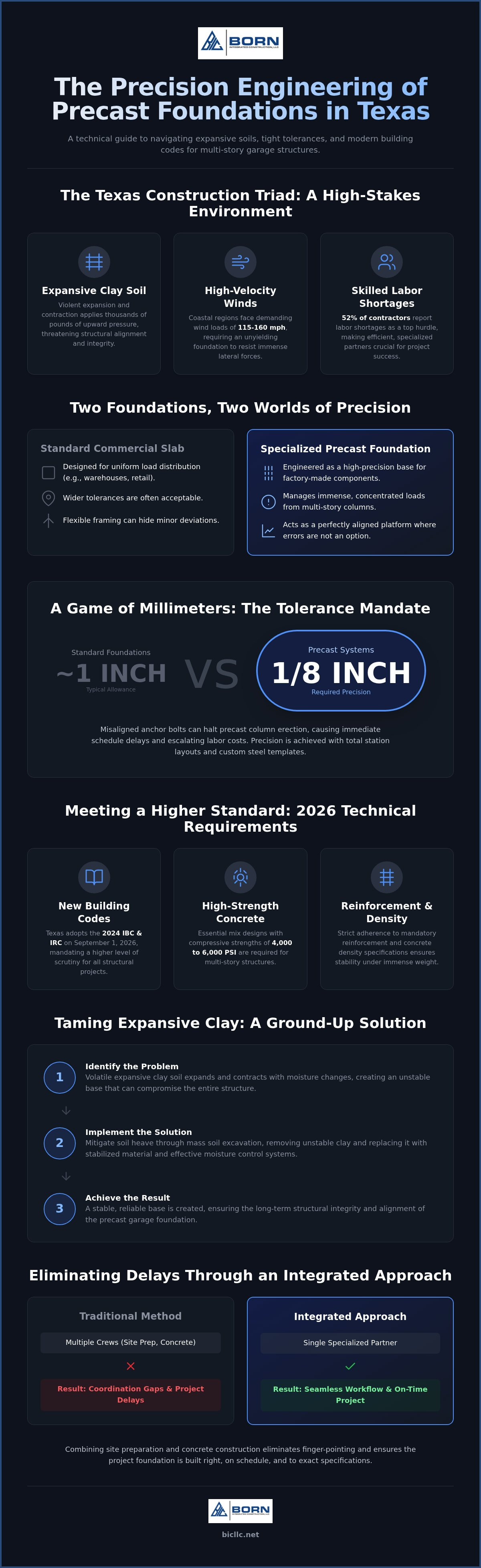
Managing the complexities of soil movement while maintaining strict alignment is a significant challenge. It's frustrating when coordination gaps lead to delays, especially as 52% of contractors report skilled labor shortages as their leading hurdle in 2026. You deserve a foundation that's built to last and a process managed with discipline. This guide details the technical requirements for specialized foundations designed for Texas soil. We'll examine how integrated site prep, soil stabilization, and adherence to the latest building code updates ensure your project remains on schedule and structurally sound.
Key Takeaways
- Understand how precast foundations differ from standard slabs by acting as high-precision structural bases designed specifically for factory-made components.
- Learn the rigorous tolerances, often within 1/8 inch, that a qualified precast garage foundation contractor in Texas must maintain to ensure proper anchor bolt and embed alignment.
- Evaluate the strategic advantages of precast systems over cast-in-place options, focusing on accelerated construction timelines and efficient site turnover.
- Discover why mitigating Texas's expansive clay through mass soil excavation and moisture control is the first step in ensuring long-term structural integrity.
- See how an integrated approach to site preparation and concrete construction eliminates coordination gaps between crews and reduces project delays.
What is a Precast Garage Foundation and Why is it Specialized?
A precast garage foundation serves as a high-precision structural base, engineered specifically to receive factory-made Precast Concrete components. Unlike a standard slab-on-grade for a retail shell or a warehouse, this foundation must act as a rigid, perfectly aligned platform for a complex assembly of columns, beams, and double-tees. The foundation is the interface where civil engineering meets structural precision.
A standard commercial slab often allows for wider tolerances because the framing is flexible or the finishes can hide minor deviations. In a precast system, the foundation must facilitate the immediate and accurate transfer of loads from heavy vertical columns directly into the footings. There's no room for error. If the footing isn't perfectly level or the anchor bolts are off by a fraction, the entire multi-story structure's integrity is compromised. Selecting a qualified precast garage foundation contractor in Texas ensures that these structural interfaces are managed with the discipline required for long-term stability.
The Structural Role of the Foundation in Precast Systems
The foundation does more than just hold the garage up. It supports immense vertical loads from multi-level decks and must resist significant lateral forces. In Texas, this includes high-velocity wind loads, which can reach speeds of 115 to 160 mph in coastal regions. Because precast components are rigid, the foundation must be equally steadfast. "Near enough" is not an acceptable standard for alignment; every column base must meet exact engineering specifications to ensure the structural joints function as intended. Precision at the ground level prevents structural misalignment as the building rises.
Texas Soil: The Invisible Variable
The primary challenge for any precast garage foundation contractor in Texas is the state's notorious expansive clay. Cities like Houston, Dallas, and San Antonio sit on soil that expands and contracts violently with moisture changes. This soil heave can apply thousands of pounds of upward pressure, potentially lifting footings and compromising structural joints. A foundation failure in a precast garage isn't just a crack in the floor; it's a threat to the alignment of the entire building. Success requires a contractor who understands both the mechanics of mass soil excavation and the meticulous nature of structural concrete. You can see how we manage these complex site conditions on our projects page.
Technical Requirements for Precast Garage Foundations in 2026
Texas is set to adopt the 2024 International Residential Code and International Building Code on September 1, 2026. This transition mandates a higher level of scrutiny for all structural concrete projects. As a specialized precast garage foundation contractor in Texas, we've aligned our processes with these updated standards to ensure every project meets the rigorous load-bearing requirements of modern parking structures. The foundation must manage concentrated loads at specific column points, a significant departure from the uniform distribution found in standard commercial slabs.
High-strength concrete mix designs are essential for these structures. We typically utilize mixes with PSI ratings of 4,000 to 6,000 to provide the necessary compressive strength for multi-story precast decks. Beyond the mix itself, the International Residential Code for Foundations details mandatory requirements for reinforcement and concrete density that must be strictly followed. These technical specifications ensure that the base of the garage remains stable even under the immense weight of factory-cast components.
Precision Placement of Embeds and Anchor Bolts
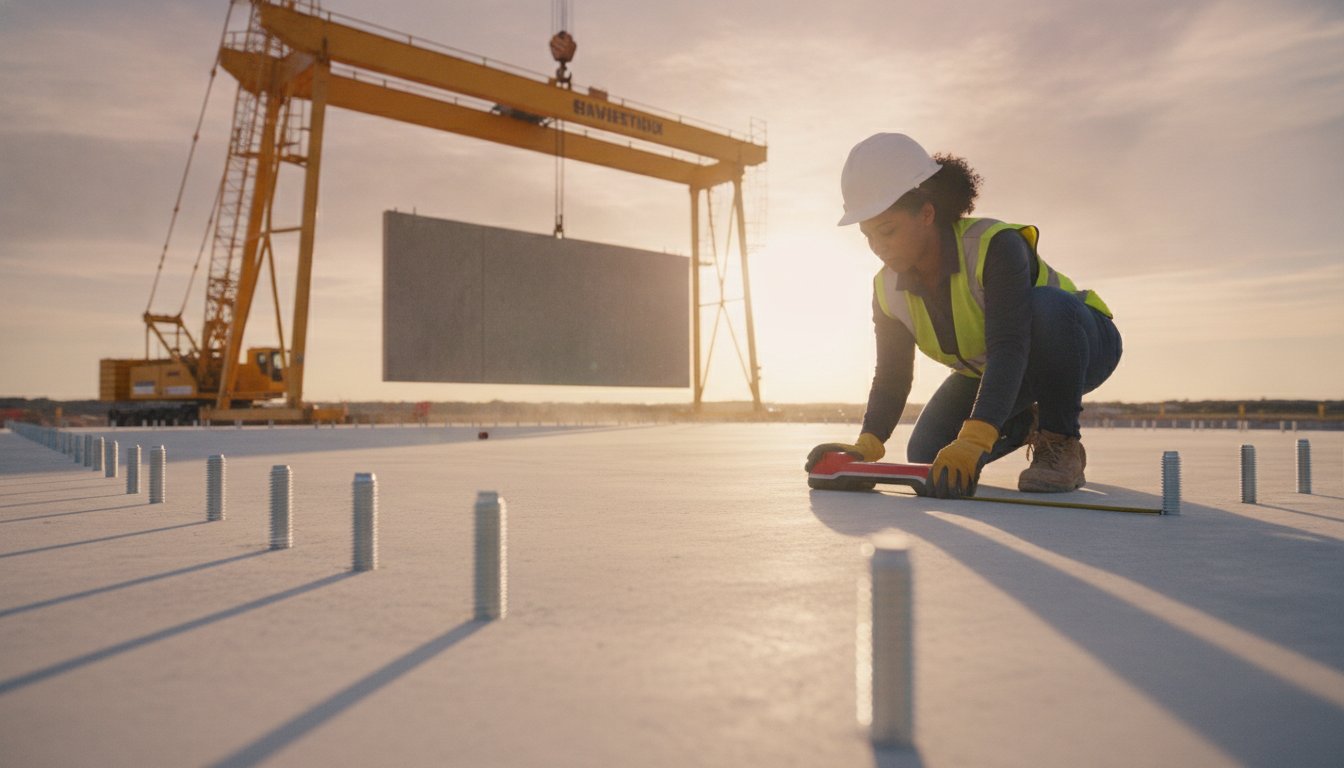
Precast erection relies on millimetre-perfect alignment. While standard foundations might allow for an inch of variance, precast systems typically demand anchor bolt placement within 1/8 inch of the center. If a bolt is misaligned, the precast column cannot be set, causing immediate delays in the erection schedule and increasing labor costs. We utilize total station layout technology and custom steel templates to secure embeds and steel plates before the concrete is discharged. This level of operational precision is what separates a seasoned partner from a general concrete crew.
Load-Bearing Footings and Grade Beams
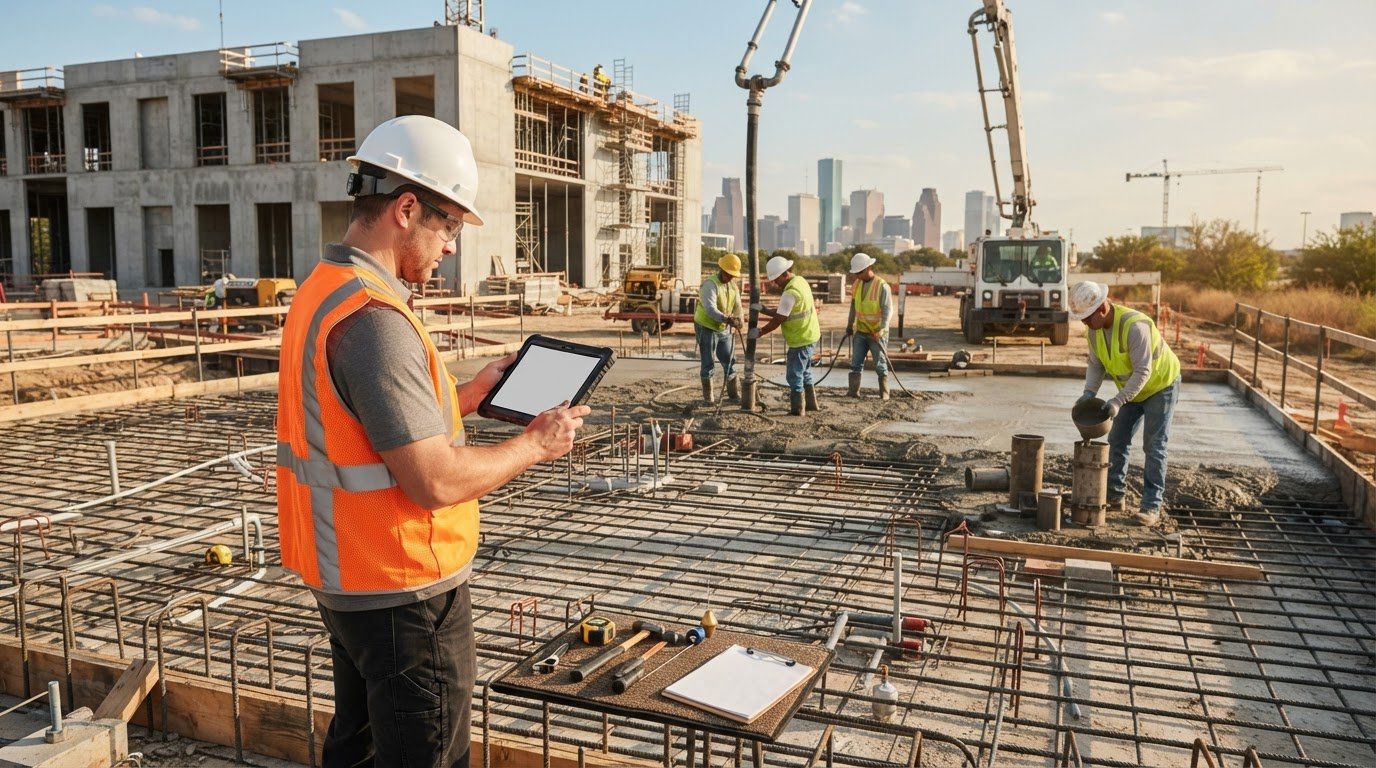
Precast garages transfer massive weight through specific points rather than spreading it across a wide area. This necessitates heavily reinforced footings and robust grade beams that bridge the gaps between piers. In regions with volatile clay, such as Dallas or Houston, we often implement deep pier and beam systems to reach stable soil layers. These systems prevent the differential settlement that would otherwise snap structural joints in a rigid precast assembly. We monitor concrete density throughout the pour to ensure no voids exist near critical reinforcement steel. If you're planning a complex parking structure, it's worth reviewing how an integrated contractor can streamline your site prep and foundation phases to avoid these technical pitfalls.
Precast vs. Cast-in-Place (CIP) Foundations: Choosing the Right Path
Choosing between a cast-in-place (CIP) structure and a precast system often comes down to the specific constraints of the site and the developer's timeline. While CIP provides a traditional approach with high flexibility, a precast garage foundation contractor in Texas often recommends precast systems for projects requiring rapid deployment. The decision involves weighing the Pros and Cons of Precast Concrete against the specific needs of the local soil and urban density. For many Texas developments, the speed of erection and reduced on-site footprint make precast the only logical choice for high-traffic commercial zones.
Speed and Efficiency in Texas Developments
Precast systems significantly reduce on-site labor requirements, which is a critical advantage given that 52% of contractors cite a skilled labor shortage as their leading challenge in 2026. By shifting much of the structural work to a controlled factory environment, the site remains clear for other trades. The foundation contractor's role is to maintain the critical path by ensuring the base is ready for "just-in-time" delivery of the precast components. This coordination eliminates the long curing times associated with multi-level CIP pours, allowing for faster site turnover and earlier occupancy. Weather-related delays, which can be frequent in coastal or North Texas regions, have a much smaller impact on a project when the primary structural elements are already cast and waiting.
Cost Analysis and Long-Term Value
The initial capital expenditure for a precast foundation may differ from a standard slab, but the lifecycle value is where the investment pays off. Precision during the foundation phase prevents expensive field fixes during the erection of the garage decks. If the footings are perfectly aligned, the assembly moves quickly and safely. Over a 50-year profile, both precast and CIP systems offer high durability, but precast components often feature higher concrete density and controlled finishing that can reduce long-term maintenance costs. For projects where site constraints or height requirements favor traditional methods, it's helpful to Learn about our structural CIP solutions to determine which path best suits your specific engineering goals. Regardless of the system chosen, the focus remains on operational precision and the enduring nature of the finished structure.
The Critical Role of Site Preparation and Soil Stabilization
Structural integrity doesn't begin with the first concrete discharge. It starts with a comprehensive understanding of the site's geology and a disciplined approach to earthwork. A precast foundation is only as stable as the soil beneath its deepest footing. For a precast garage foundation contractor in Texas, managing the interface between the earth and the structure is a primary responsibility that requires technical proficiency in mass soil excavation and moisture control. Without a stable base, even the most precisely engineered concrete components will eventually succumb to the pressure of shifting ground.
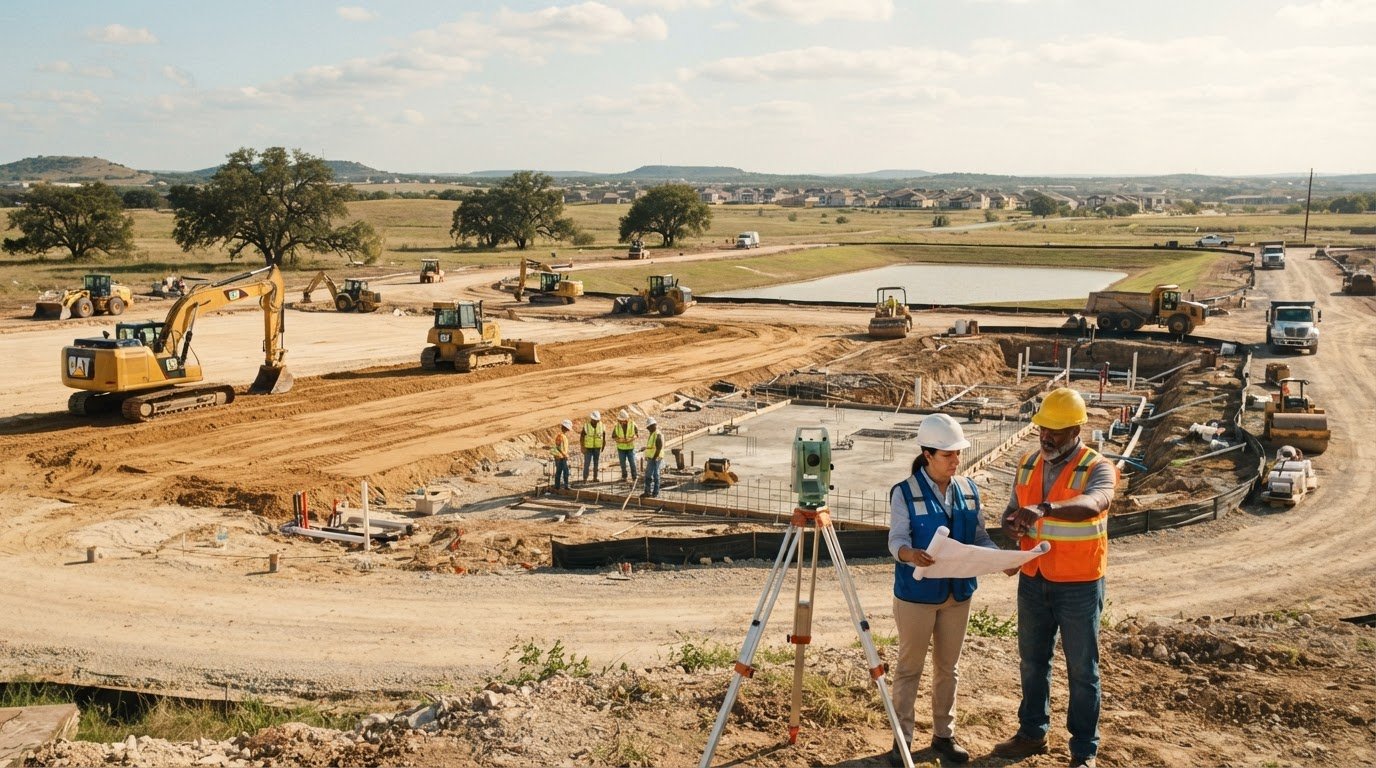
Proper site preparation also involves the strategic management of water. We integrate detention ponds and sophisticated drainage systems early in the civil phase to protect the structural footings from water infiltration. Standing water can soften the sub-grade and lead to differential settlement, which is particularly dangerous for rigid precast assemblies. By establishing a dry, well-drained site, we ensure the long-term viability of the foundation and the multi-level structure it supports.
Mass Excavation and Site Grading
Precast erection requires the use of massive mobile cranes that exert extreme ground pressure during the assembly process. If the site grading and compaction aren't handled with precision, the crane pads can shift, creating significant safety hazards and halting the erection schedule. We prioritize deep compaction and precise grading to create a safe, level environment for all heavy machinery. Understanding the importance of paving stabilization in Texas soil is vital for developers who want to avoid early pavement failure or structural settlement during and after construction.
Chemical Soil Stabilization Strategies
Texas's notorious expansive clay requires more than just physical compaction; it requires a chemical change to the soil's structure. We frequently implement chemical stabilization using lime or cement to neutralize the soil's reactive properties. This process transforms volatile clay into a rigid, non-expansive sub-base that limits the shrink-swell cycle typical of major Texas metros. By ensuring the sub-grade meets the specific PSI requirements for heavy-duty garage traffic, we create a durable platform that resists rutting and cracking. If you're looking for a partner who manages the entire process from earthwork to structural completion, contact our team to discuss your project's specific site conditions.
Why Born Integrated Construction is the Preferred Texas Partner
Born Integrated Construction (BIC) operates on a philosophy of total project ownership. Selecting a precast garage foundation contractor in Texas often involves the difficult task of managing multiple subcontractors for excavation, soil stabilization, and structural concrete placement. We eliminate this fragmentation by providing an integrated civil and structural solution. Our team manages the entire technical scope from mass soil excavation to the final structural pour. This model ensures that the site's sub-grade is perfectly prepared to support the rigid tolerances required for a multi-level precast garage without the coordination gaps that typically plague large-scale developments.
Delivering consistent results across major Texas metros like Houston, Austin, San Antonio, and DFW requires a deep understanding of local soil profiles and regional building codes. We bring this specialized expertise to every site, ensuring that the transition from dirt work to foundation is seamless and disciplined. By acting as a single point of contact, we reduce the risk of communication errors that often lead to delays in the erection schedule. Our focus remains on the enduring nature of our work and the professional stability we provide to our development partners.
A Proven Track Record in Texas Commercial Developments
Our experience spans a diverse range of high-stakes environments, including multi-family residential complexes, retail centers, and critical infrastructure projects. We understand that a parking structure is a vital asset for any commercial development, and its longevity depends on the quality of its base. Our commitment to high-register professional standards ensures that every project is executed with a focus on long-term viability. You can view the visual proof of our craftsmanship and technical execution on our BIC Projects Page, which showcases our work across various structural concrete applications.
Integrity and Efficiency in Every Pour
The success of a precast project depends heavily on the relationship between the foundation crew and the precast manufacturer. We prioritize proactive coordination with precasters to ensure that every anchor bolt and steel embed is positioned with absolute accuracy. This meticulous alignment allows for efficient delivery and immediate erection, keeping the project on its critical path despite the current labor shortages affecting the industry. We don't just pour concrete; we manage the details that protect your investment and ensure site safety. To discuss how our integrated approach can benefit your next development, contact Born Integrated Construction for an authoritative partner in structural concrete.
Building a Foundation for Long-Term Structural Success
The success of a precast parking structure depends on the meticulous coordination of civil engineering and structural precision. Texas soil conditions demand a disciplined approach to moisture control and soil stabilization to prevent the movement that compromises rigid joints. By selecting an experienced precast garage foundation contractor in Texas, you ensure that every anchor bolt and footing meets the exact tolerances required for a seamless erection process. Our integrated model manages the entire scope from mass soil excavation to the final structural pour, providing a single point of accountability for your project's stability.
We take pride in our localized expertise in Texas expansive clay and our unwavering commitment to PCI and ASTM standards. This steadfast focus on operational precision allows us to deliver results that stand the test of time. If you're planning a development that requires professional stability and proven technical proficiency, we're ready to partner with you. Request a Consultation for Your Precast Garage Foundation today. We look forward to establishing a reliable base for your next commercial achievement.
Frequently Asked Questions
What is the difference between a precast and a cast-in-place garage foundation?
Precast garage foundations are high-precision bases designed to receive factory-made components, while cast-in-place foundations involve pouring the entire structural frame on the job site. Precast systems prioritize construction speed and reduced on-site labor. Cast-in-place methods offer more flexibility for unique architectural geometries but require longer curing times and more extensive on-site coordination between trades.
Why is soil stabilization necessary for garage foundations in Texas?
Soil stabilization is essential to neutralize the expansive clay found across major Texas metros, which can shift and damage rigid structural joints. Chemical treatments like lime or cement create a non-expansive sub-base that limits the natural shrink-swell cycle of the earth. This process ensures the foundation remains level, protecting the structural integrity of the parking garage against soil heave and settlement.
How long does it typically take to complete a precast garage foundation?
Completion timelines vary based on the project's scale, but precast foundations often allow for faster site turnover than traditional methods. Because the primary structural elements are cast off-site, the foundation phase focuses on excavation, stabilization, and precise anchor bolt placement. This streamlined approach reduces the time spent on-site and helps developers maintain a strict critical path for project delivery.
What tolerances are required for anchor bolts in precast foundations?
Anchor bolts for precast systems typically require placement within 1/8 inch of the center to ensure precise alignment with factory-cast columns. Maintaining these strict standards is vital for a successful erection process. A specialized precast garage foundation contractor in Texas uses advanced layout technology and steel templates to ensure every bolt is positioned with the accuracy required for structural safety.
Can Born Integrated Construction handle both the excavation and the concrete work?
Born Integrated Construction provides a single point of contact by managing both mass soil excavation and structural concrete construction. Our integrated model eliminates the coordination gaps that often occur between separate dirt and concrete crews. This comprehensive approach ensures that site preparation and foundation work are perfectly aligned, which reduces the risk of technical errors or costly project delays.
What areas of Texas does Born Integrated Construction serve?
BIC provides comprehensive concrete and civil services across all major Texas metropolitan areas, including Houston, Dallas, Austin, and San Antonio. We understand the regional variations in soil profiles and local building codes from the Gulf Coast to the Hill Country. Our team is equipped to manage large-scale commercial developments and infrastructure projects throughout the state with consistent professional results.
How do you ensure the foundation can handle the weight of a multi-level precast garage?
We utilize high-strength concrete mix designs and reinforced grade beams to manage the concentrated vertical loads of a multi-level structure. Engineering specifications dictate the depth and reinforcement of footings to prevent differential settlement over time. This meticulous planning ensures the base remains steadfast under the immense weight of multi-story precast decks and heavy vehicle traffic.
What happens if the foundation embeds are misaligned?
Misaligned embeds can halt the erection schedule because precast columns cannot be safely secured to a base that doesn't meet engineering tolerances. Correcting these errors in the field is expensive and often requires significant structural modifications. We prevent these issues through proactive coordination with the precaster and the use of rigid steel templates to secure all plates before the concrete is discharged.