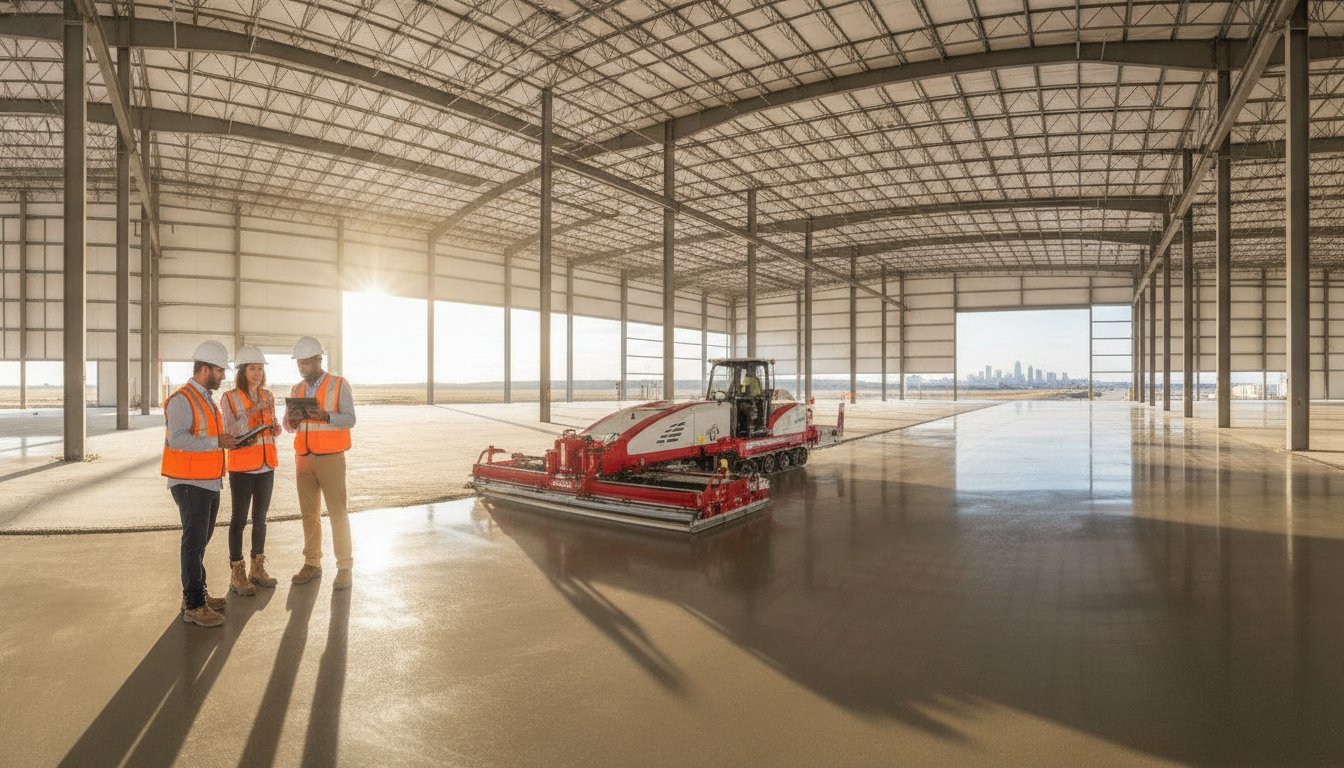
A warehouse slab in North Texas faces a constant battle against expansive clay soils that swell and shrink with the seasons, often leading to structural compromise before the first lease expires. As the Dallas-Fort Worth area continues to lead the state in industrial construction volume, the demand for a warehouse slab on grade contractor Fort Worth developers can trust has never been higher. You likely recognize that substandard floor flatness (FF) and levelness (FL) don't just complicate logistics; they actively disrupt the automated systems that modern facilities depend on. It's a common concern that site preparation delays or poor soil stabilization will threaten your project's 2026 completion date and long-term viability.
This article details how specialized slab on grade engineering and meticulous site preparation ensure the long-term durability of your industrial facility. You'll discover the critical role of integrated civil and concrete services in achieving a crack-resistant, high-performance floor that meets strict industrial specifications. We'll explore the latest soil stabilization technologies and the technical standards required to maintain operational precision in an increasingly automated environment. This overview provides a clear path toward establishing a foundation that is as disciplined and reliable as the operations it supports.
Key Takeaways
- Understand why slab on grade construction remains the foundational standard for modern industrial facilities facing the unique environmental demands of North Texas.
- Evaluate the structural specifications, including optimized PSI levels and reinforcement choices, that are necessary to support the heavy-duty loads of 2026 warehouse operations.
- Discover why selecting a warehouse slab on grade contractor Fort Worth trusts for integrated soil stabilization is the most effective way to mitigate risks posed by expansive clay.
- Identify the specialized equipment and technical proficiencies, such as laser screed technology, required to achieve the strict floor flatness and levelness standards of automated warehouses.
- Recognize the operational advantages of a turnkey civil approach that aligns mass excavation with concrete construction to maintain project schedules and ensure structural integrity.
What is Slab on Grade Construction for Fort Worth Warehouses?
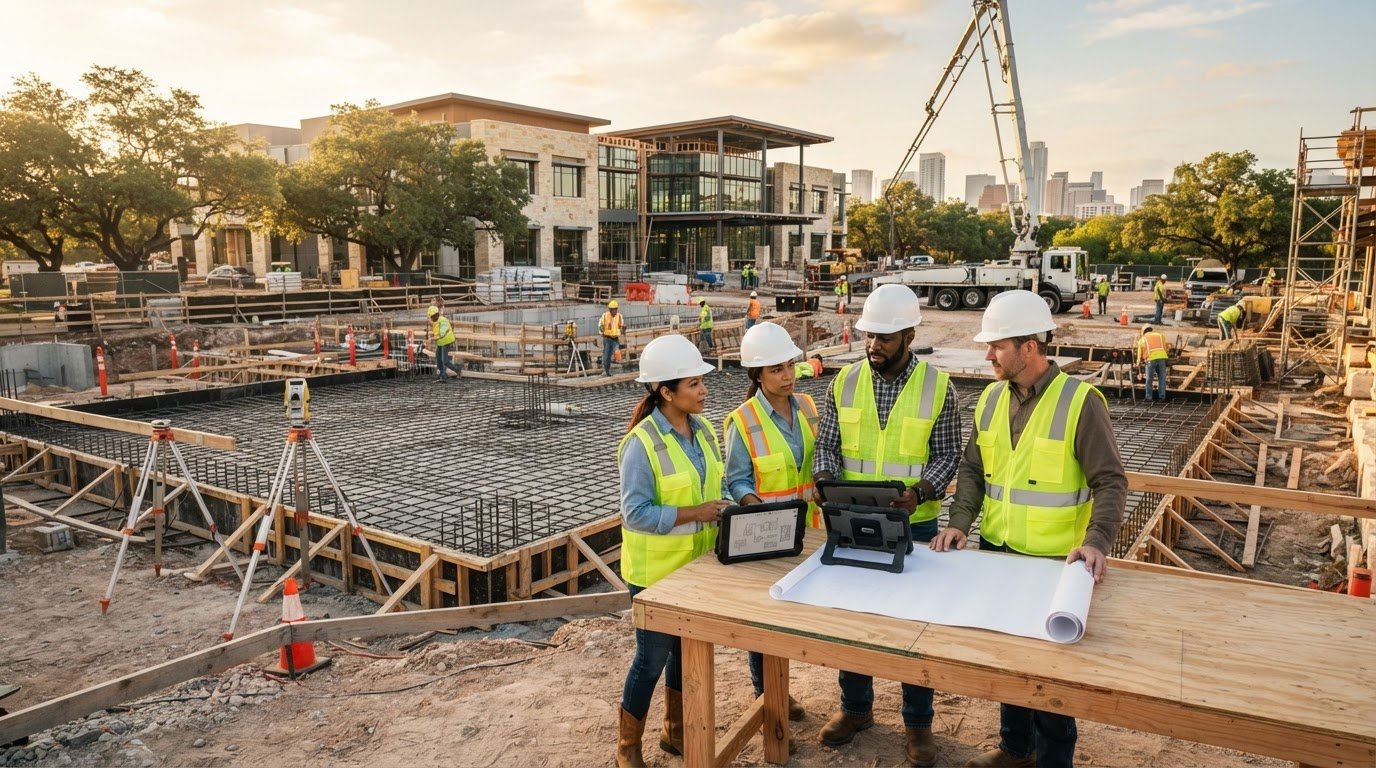
A slab-on-grade foundation is a structural concrete engineering method where the concrete is poured directly onto a subgrade that has been meticulously prepared and stabilized. This system provides a rigid, monolithic surface that functions as both the building's foundation and its primary operational floor. For industrial facilities in North Texas, this method is the established standard because it offers the most stable and cost-effective solution for buildings with expansive footprints. As a dedicated warehouse slab on grade contractor Fort Worth organizations trust, we focus on the precision of this installation to ensure it withstands the rigorous demands of modern logistics.
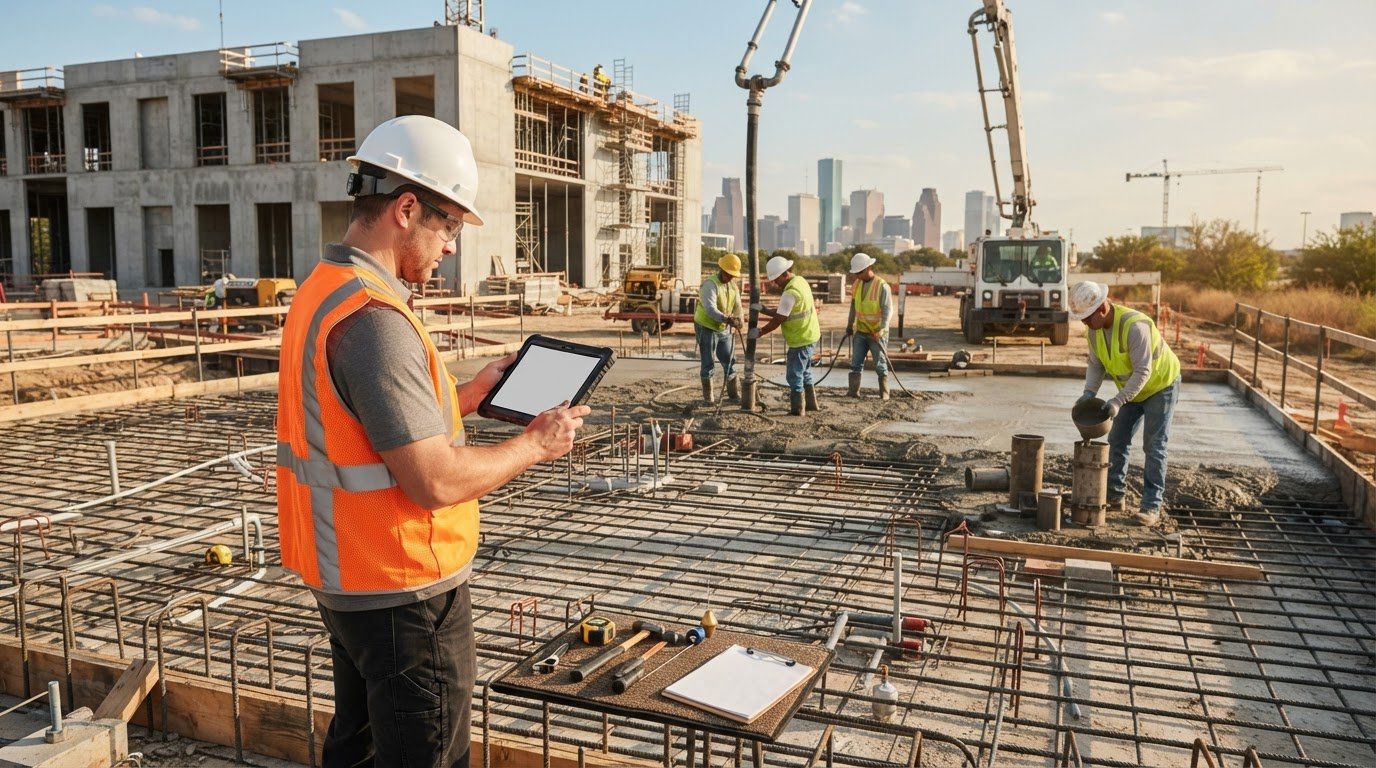
The role of the slab has evolved as facilities grow larger and more complex. In 2026, Fort Worth's logistics sector is seeing a rise in high-density storage requirements. A properly engineered slab must support massive static loads from racking systems and dynamic loads from heavy forklift traffic. Without a robust slab, the underlying soil cannot distribute these weights evenly, leading to structural failure or operational downtime. Modern industrial slabs are typically designed with thicknesses ranging from 6 to 10 inches, depending on the specific load-bearing requirements of the tenant.
The Importance of Floor Flatness (FF) and Levelness (FL)
Precision in the finishing process is defined by FF (Floor Flatness) and FL (Floor Levelness) numbers. FF measures the bumpiness of the floor surface, while FL measures the tilt or pitch of the slab over a distance. These metrics are vital for high-bay racking systems where a slight deviation at the floor level can result in a significant lean at the top of a 40-foot rack. Additionally, for facilities employing Automated Guided Vehicles (AGVs), FF/FL precision is a non-negotiable requirement; automated systems rely on a consistent surface to maintain sensor calibration and operational speed. High-tolerance finishing prevents long-term maintenance costs and ensures the facility remains attractive to top-tier tenants.
Slab on Grade vs. Podium Slabs for Industrial Use
Choosing between slab on grade and podium slabs depends on the facility's design and site constraints. Slab on grade is the preferred choice for traditional, ground-level logistics where the earth provides the primary support for heavy loads. However, as land becomes more scarce, some developers explore multi-level solutions. If your project involves elevated structural decks, consulting an Expert Podium Slab Contractor in Houston or Fort Worth can help you understand the weight-bearing differences. While podium slabs allow for multi-story functionality, slab on grade remains the most durable and economical foundation for high-tonnage industrial operations.
Engineering for Durability: Structural Specifications for Industrial Floors
Industrial flooring is a precision science where every component must work in unison. Achieving a high-performance floor starts long before the concrete truck arrives; it requires a rigorous focus on engineering for durability to ensure the slab can withstand decades of abrasive wear and heavy racking. A seasoned warehouse slab on grade contractor Fort Worth developers rely on will prioritize a concrete mix design optimized for high compressive strength. We typically target 4,000 to 5,000 PSI while maintaining a low water-to-cement ratio to reduce the risk of shrinkage. This technical balance is essential for preventing curling at the joints, a common issue in the variable humidity of North Texas.
We also install high-performance vapor barriers directly beneath the slab. This layer is critical for protecting sensitive warehouse inventory from moisture vapor transmission and preventing the delamination of floor coatings. If you're looking for a partner who understands these structural nuances, Born Integrated Construction delivers the steadfast reliability your project demands. Our approach ensures that every square foot of concrete is engineered for long-term operational stability.
Reinforcement Options for Fort Worth Industrial Projects
Structural integrity is maintained through strategic reinforcement tailored to the building's end-use. Traditional rebar mats remain the gold standard for managing massive static loads from high-bay racking systems. However, macro-synthetic fibers have gained ground as an efficient way to provide three-dimensional crack control and enhanced impact resistance across the entire slab surface. For developers seeking the highest level of performance, post-tension (PT) slabs offer a sophisticated alternative by creating large-span, jointless floors. This reduces the number of expansion joints, which are traditionally the weakest points in any industrial floor.
Joint Design and Maintenance Minimization
Joint stability is the primary maintenance concern for warehouse managers in Fort Worth. Our regional climate fluctuations cause significant thermal movement, making precise saw-cutting patterns and joint placement mandatory. Designing these systems correctly requires an experienced warehouse slab on grade contractor Fort Worth firms can trust to manage the technical complexities of North Texas soil and weather. We utilize load transfer devices, such as plate dowels, to ensure that weight is distributed evenly as vehicles move across joints. In high-traffic loading docks, armored joints protect the concrete edges from spalling under the constant impact of heavy machinery. Proper jointing ensures that thermal movement doesn't turn into a structural defect over time.
Soil Stabilization: The Foundation of a Fort Worth Warehouse
In the DFW Metroplex, the ground beneath a facility is rarely a passive participant in the building's longevity. The expansive North Texas clay, known for its high plasticity, presents a significant risk to structural integrity. As a warehouse slab on grade contractor Fort Worth teams depend on, we recognize that soil stabilization isn't merely a preliminary step; it's the most critical phase of the construction process. Without proper treatment, the soil's volume changes can exert thousands of pounds of pressure per square foot, leading to slab heaving and structural cracking. Establishing a uniform subgrade is the only way to ensure the concrete performs as designed.
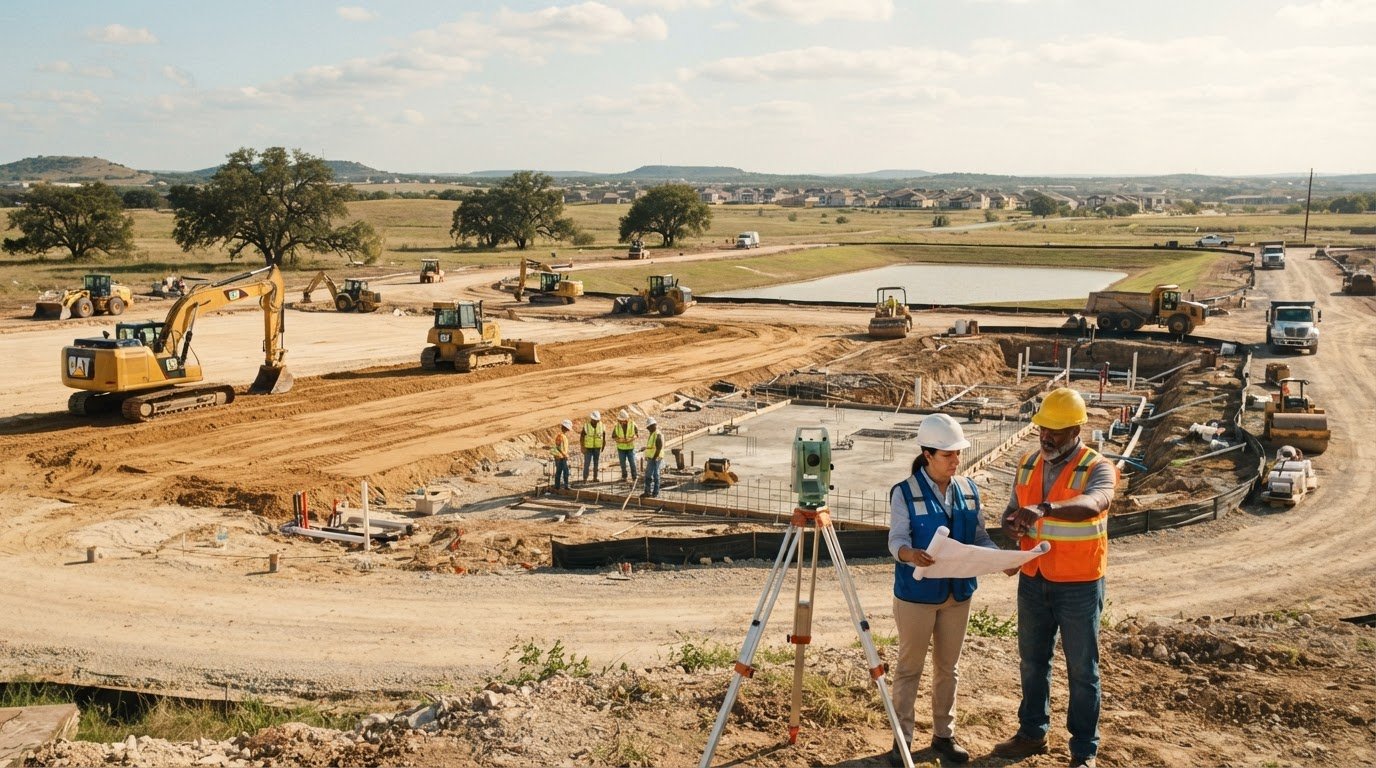
Our approach prioritizes Turn Key Civil services to eliminate the communication gaps between earthwork and concrete teams. This integration allows for a seamless transition from mass soil excavation to the final pour. When following the design of concrete floor slabs on grade, we evaluate whether mechanical compaction or chemical stabilization is the most appropriate path. Chemical injection, often utilizing lime or cement, alters the soil's molecular structure to reduce its affinity for water. This process creates a stable, non-expansive platform that remains consistent regardless of seasonal moisture fluctuations.
Managing Expansive Clay in the DFW Metroplex
The science of soil swelling is a matter of moisture equilibrium. Born Integrated Construction utilizes paving stabilization techniques to ensure the subgrade maintains a constant volume. Moisture control during site preparation is non-negotiable; if the soil is too dry during the pour, it will eventually absorb water and expand. Managing these variables requires the expertise of a warehouse slab on grade contractor Fort Worth developers can rely on for technical precision and seasoned field oversight.
Integrated Civil Work and Detention Pond Construction
A stable slab also depends on effective water management across the entire site. Integrating storm sewer and sanitary line installation with the foundation work prevents future settlement issues. Professional detention pond construction protects the slab from hydrostatic pressure by directing runoff away from the building's footprint. Coordinating these underground utilities before the mass excavation phase ensures that slab penetrations are precisely placed, which maintains the structural continuity of the floor and prevents moisture migration from beneath the building.

Selecting the Right Slab on Grade Contractor in Fort Worth
Selecting a warehouse slab on grade contractor Fort Worth developers can rely on involves evaluating more than just labor capacity. Large-scale industrial pours exceeding 100,000 square feet demand a level of logistical coordination that general commercial teams often lack. You need a partner with the established financial stability and bonding capacity required for 2026 infrastructure projects. This ensures the work remains on schedule and within technical tolerances, even when material supply chains fluctuate. A disciplined contractor prioritizes safety by adhering to strict OSHA standards and Texas-specific site regulations, protecting both the workforce and your project's timeline.
Operational precision is the hallmark of a seasoned professional. When you evaluate potential partners, look for those who maintain a deep-rooted commitment to high standards and long-term viability. If you are preparing for a high-stakes industrial project, contact Born Integrated Construction to ensure your foundation is built with the steadfast quality your investment requires.
Evaluating Technical Proficiency and Equipment
Modern industrial floor requirements have moved beyond manual finishing methods. Automated laser screeds are now mandatory for meeting the strict FF/FL numbers required for high-bay racking and automated guided vehicles. A capable contractor must also possess a deep understanding of structural concrete framing to ensure the slab integrates perfectly with the building's overall skeletal system. When interviewing potential partners, ask detailed questions about their internal quality control testing and how they adjust mix designs in real-time to account for North Texas humidity. A reliable partner will provide a transparent overview of their technical scope before the first yard of concrete is ordered.
The Value of Local Expertise in the Alliance Corridor
Local expertise is particularly valuable in high-growth zones like the Alliance Corridor. Understanding the City of Fort Worth's adoption of the 2021 International Building Code (IBC) and its specific local amendments is essential for smooth permitting and inspections. Proximity to local vendors also ensures that material delivery remains consistent during massive, continuous pours where timing is everything. For developers expanding operations across the state, understanding Commercial Concrete Paving in Conroe can provide useful comparisons for regional paving standards and heavy-duty road engineering. This local knowledge prevents delays and ensures your facility meets all municipal requirements from day one.
Why Born Integrated Construction is Your Fort Worth Partner
Born Integrated Construction stands as a steadfast partner for developers and general contractors navigating the technical complexities of North Texas industrial growth. Our identity is rooted in the word "integrated," representing a seamless fusion of mass soil excavation, earthwork, and precision concrete construction. As a warehouse slab on grade contractor Fort Worth firms trust, we eliminate the traditional friction between civil site prep and structural finishing. This unified approach ensures that the project's foundation is established with a single point of accountability, maintaining both the schedule and the structural integrity of the facility.
We prioritize professional stability and operational precision in every phase of our work. Our commitment to integrity means we don't just deliver a product; we establish a lasting asset designed for the heavy-duty requirements of 2026 logistics. By managing the transition from paving stabilization to high-tolerance slab finishing internally, we provide a level of quality control that fragmented teams cannot match. This consistency is essential for building long-term relationships with high-stakes developers who value substance and proven results over superficial claims.
A Steadfast Approach to Industrial Concrete
Our methodology is characterized by a disciplined focus on execution and safety. We recognize that a warehouse foundation is a high-stakes environment where the smallest oversight in joint placement or mix design can lead to years of operational disruption. Our grounded tone reflects a professional persona that values substance and the meticulous management of technical details. This seasoned expertise allows us to anticipate the challenges of Fort Worth's expansive soils and volatile climate, providing our partners with a sense of security and confidence. We lead through unwavering consistency, ensuring that every pour meets the strict industrial specifications required for modern, automated warehouse operations.
Ready for Your Next Fort Worth Project?
Establishing a durable industrial facility requires a partner who understands the deep-rooted commitment necessary for long-term viability. We invite you to review our portfolio of structural concrete, turnkey civil work, and detention pond construction to see the results of our disciplined craftsmanship. Whether you're planning a massive logistics center in the Alliance Corridor or a specialized cold storage facility, our team is equipped to manage the technical scope from the first excavation to the final screed. We're ready to provide a thorough consultation on your upcoming slab on grade requirements to ensure your project starts on a reliable foundation. Take the next step in your project's development and partner with Born Integrated Construction for your next development.
Securing the Future of Fort Worth Industrial Infrastructure
Establishing a durable industrial facility in North Texas requires a sophisticated understanding of how expansive clay soils interact with structural concrete. Success in 2026 depends on the precise integration of soil stabilization and high-tolerance finishing to support heavy racking and automated systems. By choosing a warehouse slab on grade contractor Fort Worth developers trust, you ensure that your facility remains operationally sound for decades to come. We prioritize the meticulous management of technical details to deliver a foundation that is as stable as it is precise.
Born Integrated Construction offers specialized expertise in high-tolerance industrial slabs along with turnkey civil and structural concrete capabilities. Our steadfast commitment to safety and project integrity provides the reliability you need for high-stakes developments. We invite you to Request a Professional Consultation for Your Fort Worth Warehouse Slab to review your project's technical scope. We look forward to establishing a foundation built on proven results and professional stability.
Frequently Asked Questions
What is the typical thickness of a warehouse slab on grade in Fort Worth?
Standard warehouse slabs in the North Texas region typically range from 6 inches for light storage to 8 or 10 inches for heavy-duty industrial applications. The specific thickness is dictated by the anticipated static loads from racking systems and the dynamic loads generated by material handling equipment. A warehouse slab on grade contractor Fort Worth developers trust will calculate these requirements based on the facility's intended operational use to ensure long-term durability.
How long does it take for a commercial concrete slab to cure before racking can be installed?
A commercial concrete slab generally requires 28 days to reach its full design compressive strength before the installation of heavy racking systems should begin. While the surface may support light foot traffic sooner, the internal chemical hydration process must be allowed to complete to ensure that floor anchors hold securely. Rushing this timeline can lead to anchor failure or localized cracking when the slab is subjected to its full operational load.
Why is soil stabilization so important for North Texas industrial projects?
Soil stabilization is critical because of the expansive clay prevalent in the Fort Worth area, which swells significantly when wet and shrinks when dry. This constant movement can exert thousands of pounds of pressure on a foundation, causing the slab to heave or crack. We utilize techniques like paving stabilization and chemical injection to alter the soil's molecular structure, creating a non-expansive and reliable platform for the building.
What are FF and FL numbers, and why should I care about them?
FF (Floor Flatness) and FL (Floor Levelness) are statistical measurements used to evaluate the surface profile and horizontal pitch of a concrete slab. High FF/FL numbers are mandatory for modern facilities employing high-bay racking or automated guided vehicles, as even minor deviations can cause equipment sensor errors or rack leaning. Achieving these tolerances requires the use of automated laser screeds and disciplined finishing techniques.
Can Born Integrated Construction handle both the earthwork and the concrete pour?
Yes, we provide turnkey civil and concrete services that encompass everything from mass soil excavation to the final structural pour. Our integrated model eliminates the traditional friction between separate earthwork and concrete subcontractors, ensuring the subgrade is perfectly prepared for the slab. This streamlined approach improves project efficiency and provides a single point of accountability for the entire foundation system.
What is the difference between rebar and fiber reinforcement in warehouse floors?
Traditional rebar mats provide high tensile strength and are the established standard for supporting massive static loads under racking uprights. Macro-synthetic fibers offer three-dimensional reinforcement throughout the entire concrete matrix, which is highly effective for controlling shrinkage cracks and increasing impact resistance. An expert warehouse slab on grade contractor Fort Worth firms rely on will often recommend a hybrid approach to maximize the benefits of both materials.
How do you prevent cracking in large-scale industrial concrete slabs?
Preventing cracks requires a combination of optimized concrete mix designs, low water-to-cement ratios, and precise saw-cut joint patterns. We also employ high-performance vapor barriers and thorough subgrade stabilization to address the environmental factors that contribute to shrinkage. Managing the curing process carefully is equally important to control the thermal expansion and contraction caused by the North Texas climate.
Does Born Integrated Construction provide services in the Alliance Airport area?
We provide comprehensive concrete and civil site work services throughout the Alliance Airport area and the broader high-growth corridors of Fort Worth. Our team is familiar with the specific municipal building codes and geological challenges unique to this region's industrial developments. We maintain the logistical capacity and specialized equipment necessary to execute large-scale pours for major logistics and distribution centers in the area.