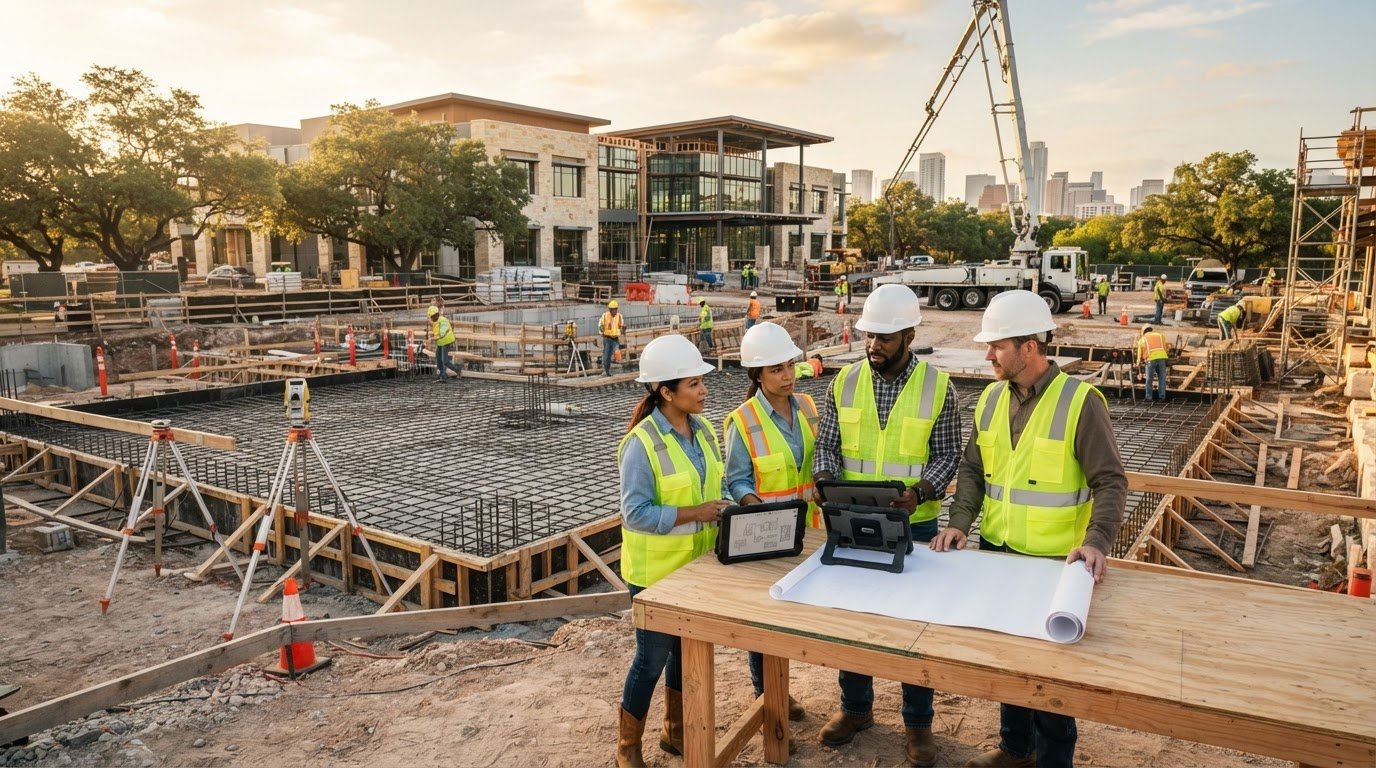
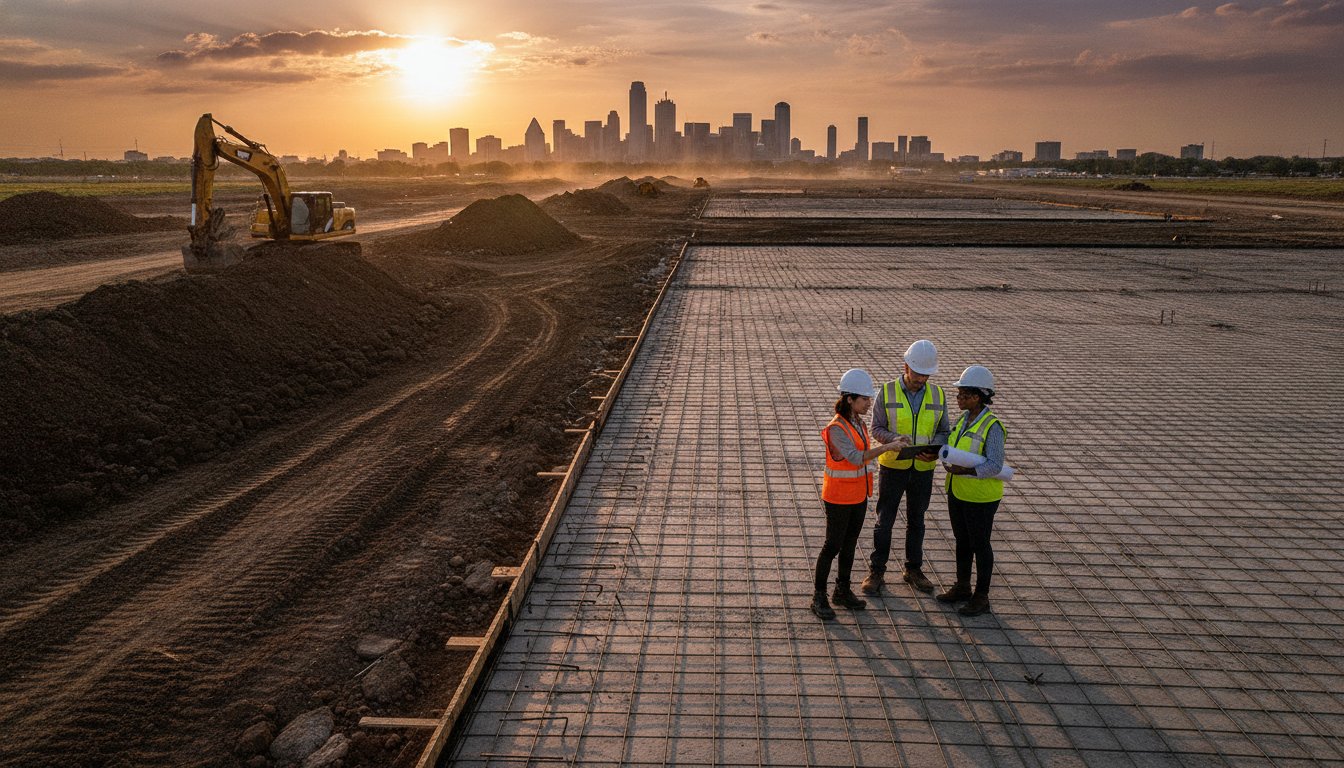
The structural integrity of a Dallas retail development is often compromised long before the foundation is poured, typically during the overlooked transition between mass excavation and paving. You likely understand the frustration of watching North Texas "black gumbo" clay soils undermine a project's slab on grade, or the logistical friction when civil excavators and concrete pavers aren't in sync. These coordination gaps lead to cracking and delays that a 2026 timeline can't afford. Selecting the right retail development concrete services Dallas depends on finding a partner who manages the entire scope from earthwork to structural podium slabs.
This buying guide provides an expert-led framework to help you secure a project's long-term viability while adhering to the 2021 International Building Code and local Dallas amendments. We'll explore how turn-key civil and concrete coordination prevents structural failures and ensures compliance with 2026 drainage and accessibility standards. You'll gain a clear roadmap for integrating CIP garages and high-traffic flatwork into a seamless, durable development that stands up to the unique demands of the Dallas soil and climate.
Key Takeaways
- Understand the impact of 2026 Dallas building codes on structural concrete design for high-traffic retail environments.
- Learn how to manage expansive North Texas soils through the strategic application of post-tension slabs and specialized site preparation.
- Evaluate the efficiency of podium slabs and cast-in-place (CIP) parking structures for modern urban mixed-use projects.
- Identify the operational benefits of coordinating mass soil excavation and detention pond construction with professional retail development concrete services Dallas.
- Establish a decision-making framework based on technical proficiency and ethical conduct to ensure the enduring stability of your commercial infrastructure.
Retail Development Concrete Standards in Dallas (2026)
The landscape of Dallas retail construction has moved past simple, single-tenant structures. Today's commercial developments require an integrated approach to structural concrete that accounts for multi-level loads and high-density usage. Developers must look beyond basic pours to find comprehensive Concrete solutions that meet the load-bearing demands of mixed-use architecture. The adoption of the 2021 International Building Code with local Dallas amendments means that every project requires meticulous planning and execution to ensure long-term stability. Reliability in this sector is built on a foundation of technical proficiency and a steadfast commitment to professional standards.
Retail development concrete services Dallas are now governed by more stringent review processes and updated municipal fees. Developers can't rely on general labor that treats concrete as a commodity. Success requires a partner who prioritizes structural precision and adheres to the 2021 International Building Code. This disciplined approach includes managing complex stormwater pollution prevention plans (SWPPP) and ensuring every square foot of flatwork meets Texas Accessibility Standards (TAS). In an environment where labor is often diverted to large-scale data center projects, securing a dependable partner who maintains high operational standards is essential for project continuity.
The Evolution of Retail Foundations
Retail architecture in North Texas has evolved from simple strip malls to dense, multi-story urban centers. This transition requires foundations capable of supporting significant vertical loads while maintaining the flexibility for future tenant build-outs. Heavy-duty loading zones now demand high-performance concrete with specific compressive strengths to prevent premature degradation. Compliance with 2026 structural engineering codes ensures that these foundations remain resilient against the specific environmental stressors of the region. Meticulous attention to detail during the initial pour prevents the structural settling that can plague modern mixed-use hubs.
Dallas Soil Volatility and Concrete Integrity
The "black gumbo" expansive clay soils prevalent in the Dallas-Fort Worth area present a constant threat to structural integrity. These soils expand and contract with moisture changes, exerting immense pressure on foundations. Foundational failure remains the primary risk for developers, often resulting in costly slab cracking or structural shifts. Mitigating this risk requires professional paving stabilization and precision site preparation. By addressing soil volatility during the civil phase, developers can protect their investment and ensure the enduring viability of the retail center. Consistent results are achieved through proven engineering methods rather than shortcuts.
Structural Concrete Foundations: Slabs and Site Prep
The foundation of a retail center serves as more than a physical base; it is the primary safeguard against the shifting North Texas terrain. For large-scale footprints, selecting the appropriate foundation system is a technical decision that dictates the facility's long-term maintenance costs. While conventionally reinforced concrete remains a standard for many, the use of post-tension slabs has become increasingly prevalent in the DFW market. These slabs utilize high-strength steel tendons that are tensioned after the concrete has cured, providing superior resistance to the expansive clay soils that cause traditional slabs to heave or crack. Professional retail development concrete services Dallas must evaluate these options based on the specific load requirements of the retail anchor and the geotechnical data provided for the site.
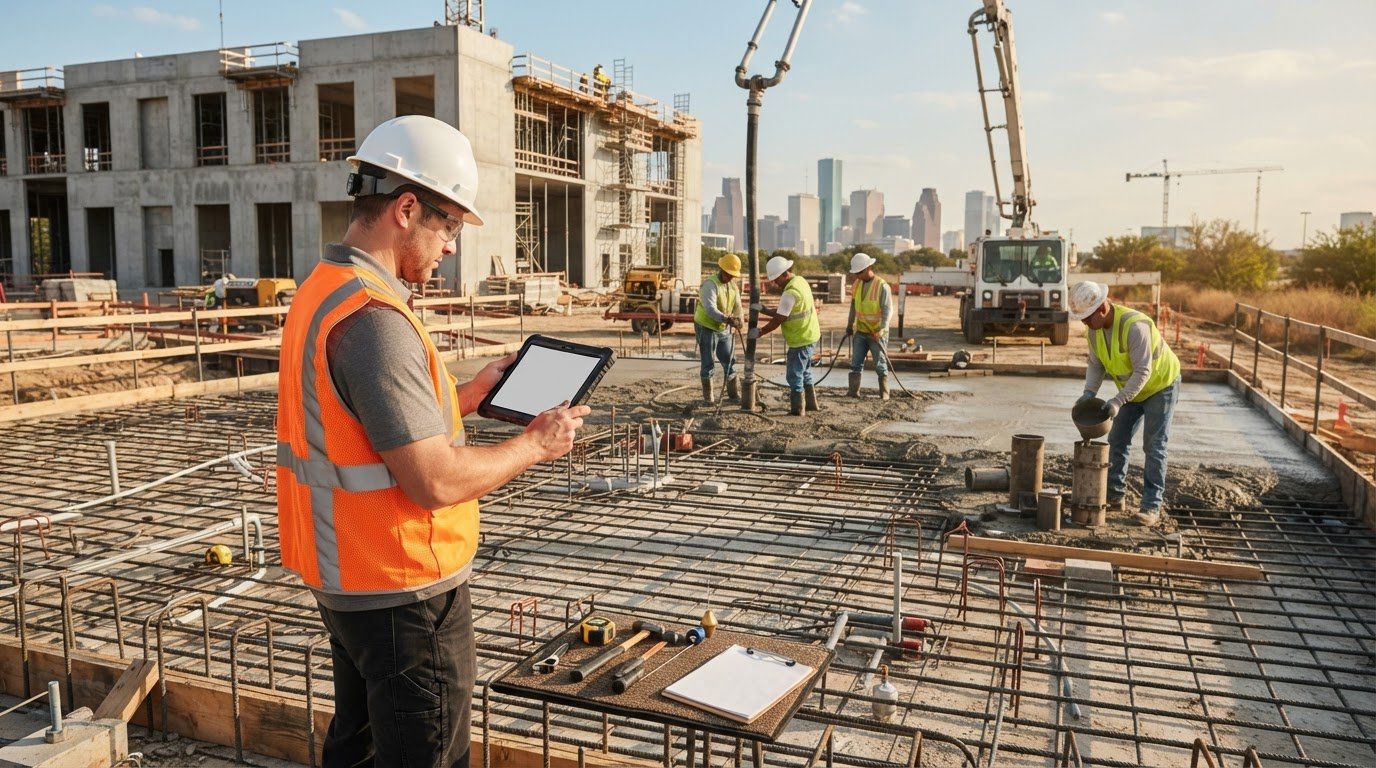
A reliable foundation also depends on what lies beneath the concrete. High-performance vapor barriers and meticulous sub-base preparation are essential to prevent moisture migration, which can ruin interior flooring and compromise structural integrity. Integrating structural concrete with underground utility systems requires a disciplined sequence of events. Domestic water lines, fire mains, and electrical conduits must be accurately placed and protected before any pour begins. This level of operational precision ensures that the slab remains a solid, monolithic structure without the need for invasive post-pour corrections. Developers benefit from a partner who views the earthwork and foundation as a single, cohesive phase of construction.
Slab on Grade for Retail Anchors
Retail environments with heavy shelving and high-density inventory require slabs with high-tolerance floor flatness and levelness, often referred to as FF/FL numbers. Achieving these targets requires specialized finishing equipment and a steadfast attention to detail during the pour. To maintain a durable surface, we utilize specific reinforcement strategies and joint layout designs that control where cracking occurs. This methodical approach prevents uncontrolled fractures in large, open retail spaces, ensuring a clean aesthetic and a safe environment for high-traffic commerce. Consistency in these technical standards is the hallmark of a disciplined concrete partner.
Structural Earthwork and Site Readiness
The success of any foundation is determined during the mass soil excavation phase. Removing unstable material and replacing it with engineered fill creates the stable platform necessary for structural concrete. During this stage, maintaining a compliant Stormwater Pollution Prevention Plan (SWP3) is not just a regulatory hurdle but a critical part of site stabilization. Managing drainage early protects the concrete lifecycle by preventing water from pooling near the foundation. Developers seeking a partner for turn-key civil and concrete coordination can ensure these phases remain integrated, reducing the risk of coordination gaps that lead to project delays.
Multi-Level Retail: Podium Slabs and Structured Parking
Urban densification in North Texas has made multi-level retail structures a necessity rather than an option. High-density corridors in Dallas now frequently utilize podium slabs to separate ground-level or subterranean parking from the retail spaces above. This architectural shift requires a heightened level of structural expertise, as the concrete must support not only the building's weight but also the dynamic loads of high-traffic commercial activity. Professional retail development concrete services Dallas are essential for managing these complex load-bearing requirements. Utilizing thin shell cast-in-place concrete provides the necessary strength for these spans while allowing for the modern, open-concept aesthetics that define 2026 retail design.
Choosing between CIP (Cast-in-Place) garages and precast garage foundations is a critical decision for any developer. CIP structures offer unmatched durability and a monolithic foundation that integrates seamlessly with the rest of the site's structural concrete. While precast systems can offer speed, they require extreme precision during the foundation preparation stage. Any deviation in the footers or slab levelness can cause significant alignment issues during the assembly of manufactured components. Developers rely on retail development concrete services Dallas to navigate these multi-level complexities with a steadfast commitment to operational precision. This ensures that regardless of the system chosen, the structural integrity of the parking facility is never in question.
Podium Slabs for Mixed-Use Retail
Engineering podium decks for retail use involves more than just calculating static weight. These slabs must withstand the concentrated loads of retail shelving and the constant movement of pedestrian traffic. Effective waterproofing and drainage systems are equally vital; any moisture penetration can lead to long-term structural degradation and damage to the parking levels below. Developers often look to established benchmarks, such as the standards set by a podium slab contractor Houston, to ensure their Dallas projects meet the highest levels of performance. This disciplined approach to elevated slabs protects the asset's value for decades.
Structured Parking Foundations
Multi-level CIP garages require deep foundation systems to transfer massive loads to stable soil strata. This process often involves the installation of drilled piers or specialized footings that account for the unique soil conditions mentioned previously. Retaining walls also play a crucial role in these developments, especially when managing the elevation changes common in urban Dallas sites. These walls must be engineered for both structural stability and aesthetic consistency with the main building. Meticulous management of these details during the early structural phase prevents the settling and drainage issues that can compromise a multi-level development.

Civil Site Work and Stormwater Management
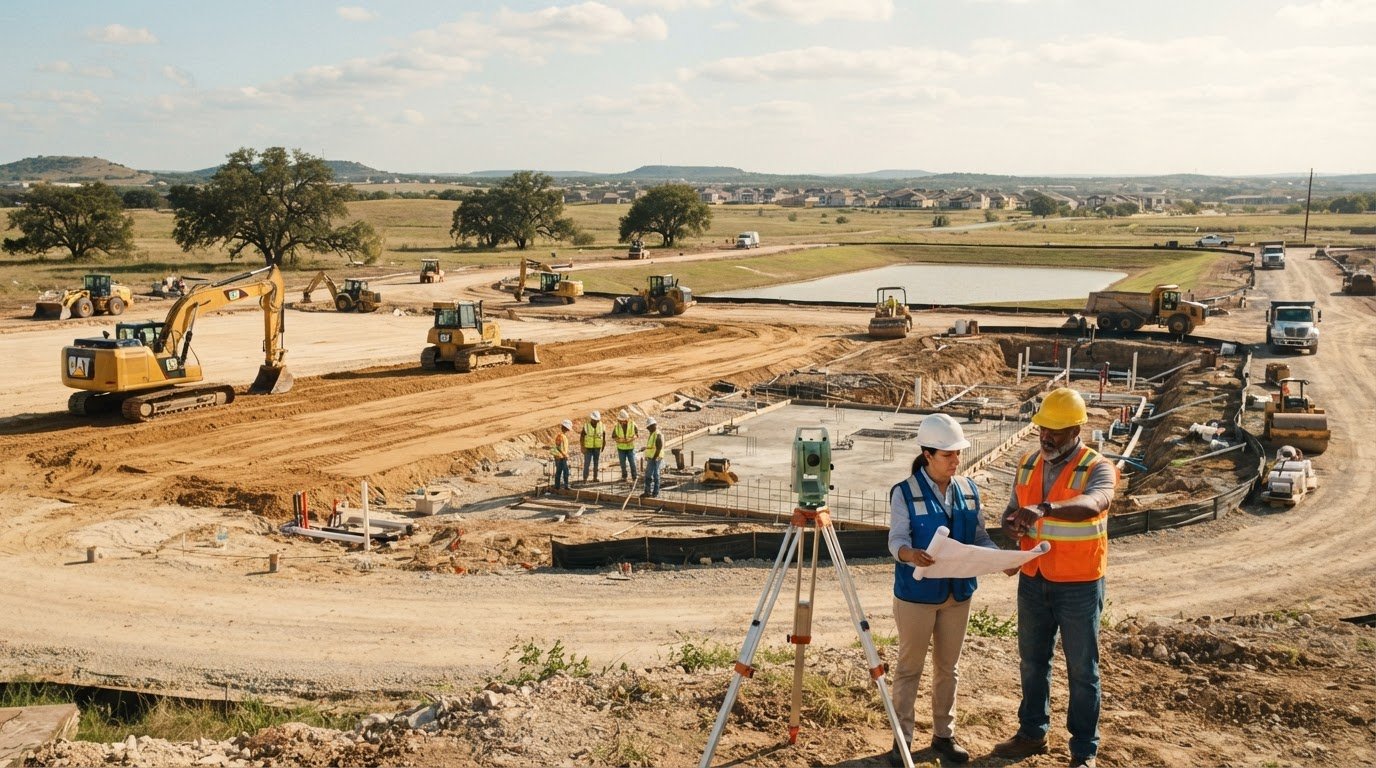
The transition from raw land to a buildable retail site requires a disciplined approach to civil infrastructure. In the high-density corridors of Dallas, the logistics of mass soil excavation must be managed with extreme precision to avoid disrupting adjacent properties or municipal right-of-ways. This phase is the bridge between initial site preparation and the final concrete finish. Retail development concrete services Dallas that integrate civil site work provide a more reliable path to project completion. By centralizing the management of earthwork, utility installation, and paving stabilization, developers reduce the risks associated with coordination gaps between separate contractors.
Success in this phase is measured by the stability of the sub-base and the efficiency of the site's drainage systems. The expansive clay soils discussed in previous sections require more than just simple grading; they demand a steadfast commitment to proper moisture control and compaction standards. When civil work is handled by a seasoned expert, the resulting site is ready to support heavy-duty retail traffic without the threat of future settlement. This methodical progression from excavation to utility placement ensures that the structural integrity of the entire development is maintained from the ground up.
Detention Ponds and Site Drainage
Large retail developments feature extensive impervious surfaces, such as parking lots and rooftops, which generate significant stormwater runoff. Managing this volume requires the construction of detention ponds that comply with the 2026 Dallas municipal drainage regulations. Designing these basins involves specific excavation techniques to maximize water retention while preserving as much buildable land as possible. Proper basin design prevents erosion and protects the surrounding concrete infrastructure from hydraulic pressure. A disciplined contractor ensures these ponds are integrated into the site's overall drainage plan, providing a long-term solution for stormwater management.
Integrated Civil Utility Services
Coordinating the installation of domestic water, fire mains, and sanitary lines with the building's foundation is a critical operational task. If soil stability around utility trenches isn't maintained through proper backfilling and compaction, the resulting voids can lead to slab sinking or pipe failure. Utilizing a partner for turn-key civil and concrete services allows for a more accelerated retail timeline. This integrated approach ensures that utility stubs are accurately placed and that the earthwork phase supports the structural requirements of the upcoming concrete pours. Centralized accountability during this phase is the most effective way to maintain high standards of safety and integrity on the job site.
Paving stabilization acts as the final preparation step before concrete paving begins. This process chemically or mechanically treats the sub-grade to create a rigid platform that resists the movement of the underlying North Texas clay. It is the essential link that ensures the enduring nature of the retail center's exterior flatwork. By prioritizing these civil details, developers establish a foundation of reliability for the entire project.
Selecting Your Dallas Retail Concrete Partner
Selecting the right partner for retail development concrete services Dallas requires a shift in perspective from viewing concrete as a commodity to treating it as a foundational structural asset. The complexity of 2026 commercial projects demands a focus on technical proficiency rather than the lowest labor bid. A steadfast commitment to operational precision ensures that project timelines are met without sacrificing the long-term integrity of the build. It's vital to look beyond simple square-footage costs; the true value of a contractor lies in their ability to manage the intersection of civil earthwork and structural concrete with a disciplined, professional approach.
Operational precision is non-negotiable in the current Dallas market. With labor resources frequently diverted to large-scale infrastructure projects, you need a partner who maintains a deep-rooted focus on execution and safety. A grounded and steadfast contractor acts as a dependable partner, ensuring that every phase of the project, from mass soil excavation to the final podium slab pour, is managed with meticulous attention to detail. This level of substance over style is what prevents the coordination gaps that lead to structural failure or municipal non-compliance.
Key Criteria for Retail Developers
When reviewing a potential partner, their history with complex CIP midrise and high-rise projects is the most reliable indicator of future performance. Retail developments often share the same structural requirements as midrise buildings, particularly when integrating multi-level parking or podium decks. You should verify that the contractor has the specialized equipment and personnel to handle high-tolerance floor flatness and complex reinforcement strategies without external assistance.
Safety records and equipment reliability are equally essential metrics. A disciplined professional prioritizes the safety of the job site as a core value, which translates to fewer delays and a more predictable construction schedule. Furthermore, the contractor must demonstrate a proven capacity for large-scale mass excavation and earthwork. The ability to manage the civil and structural phases under one roof is a significant advantage that reduces the logistical friction often found in fragmented retail builds.
The Born Integrated Standard
Born Integrated Construction operates as a quiet leader in the Dallas market, focusing on proven results and unwavering consistency. Our approach merges structural CIP expertise with comprehensive civil site work, providing a seamless transition from excavation to vertical construction. This integrated model is designed to deliver cost-effective solutions for Dallas infrastructure by eliminating the coordination gaps between separate civil and concrete teams. We take pride in our craftsmanship and our commitment to the enduring nature of every project we touch.
Reliability is built through substance and a strong sense of duty to the developer’s vision. By maintaining high standards of ethical conduct and technical proficiency, we ensure that your retail development stands as a testament to quality and professional stability. Developers ready to establish a lasting foundation for their next project can move forward with confidence in our disciplined execution.
Developers seeking a partner who values long-term viability should reach out to discuss their specific project requirements. We invite you to contact us for a project-based concrete construction fee estimate to see how our integrated civil and structural services can secure your 2026 development.
Securing the Future of Your Dallas Retail Project
Developing a retail center in North Texas requires a disciplined approach that respects the local environment while adhering to 2026 building standards. Success is found in the meticulous coordination of mass soil excavation, specialized paving stabilization, and high-performance structural concrete. By prioritizing technical proficiency over the lowest bid, you ensure that your investment withstands the challenges of expansive clay soils and high-traffic demands. It's essential to choose a partner that offers both structural CIP expertise and comprehensive civil services to eliminate the logistical gaps that often derail complex commercial projects.
Born Integrated Construction serves as a steadfast partner, bringing decades of experience in structural CIP and high-rise foundations to every job site. Our focus on safety, integrity, and operational efficiency allows us to deliver results that meet the highest standards of professional stability. We provide comprehensive Turn Key Civil and underground utility services to ensure your project remains on schedule and within regulatory compliance. When you require reliable retail development concrete services Dallas, our team provides the proven results necessary for long-term viability. Partner with Born Integrated Construction for your next Dallas retail development. We look forward to helping you establish a durable foundation for your next commercial success.
Frequently Asked Questions
What is the average timeline for retail concrete foundation work in Dallas?
The timeline for retail concrete foundations in Dallas varies based on the total square footage and complexity of the site preparation. Typically, the transition from mass excavation to a finished slab on grade for a medium sized retail anchor takes between four to eight weeks. This schedule accounts for mandatory geotechnical testing and the precise installation of underground utilities before the pour begins.
How does Dallas clay soil affect the design of retail parking lots?
Expansive "black gumbo" clay soils in North Texas exert significant vertical pressure on parking lot surfaces. This movement can lead to premature cracking and drainage failure if the sub-grade isn't properly addressed. Design strategies often include paving stabilization or the use of post-tension slabs to ensure the retail development concrete services Dallas provide a surface that remains level and durable over time.
What are the benefits of using a podium slab for mixed-use retail?
Podium slabs provide a robust structural transition between ground-level parking and upper-level retail or residential spaces. They allow for increased density in urban Dallas corridors while offering superior fire resistance and sound dampening compared to wood-frame alternatives. A well-engineered podium deck supports the heavy static loads of retail inventory and the dynamic loads of constant pedestrian traffic.
Do I need a separate contractor for detention pond excavation and concrete paving?
You don't need separate contractors if you partner with a firm that provides Turn Key Civil services. Managing detention pond construction and concrete paving under a single contract eliminates the coordination gaps that often lead to project delays. This integrated approach ensures that site drainage and final flatwork are engineered as a cohesive system, improving overall operational efficiency.
What is the difference between CIP and precast garage foundations for retail?
Cast-in-place (CIP) garage foundations are poured on-site to create a monolithic structure, while precast foundations involve assembling manufactured components. CIP offers greater flexibility for unique site footprints and creates a seamless structural connection. Precast can be faster for standard designs, but it requires extreme precision during the foundation preparation stage to ensure the manufactured pieces align perfectly.
Why is soil stabilization necessary before pouring commercial concrete?
Soil stabilization is necessary to create a rigid, moisture-resistant platform for the concrete paving. By treating the native clay with chemical or mechanical agents, contractors reduce the soil's potential for expansion and contraction. This step is a non-negotiable requirement for commercial projects in Dallas to prevent the sub-grade movement that undermines the long-term integrity of high-traffic retail areas.
What safety standards should a Dallas commercial concrete contractor meet in 2026?
In 2026, contractors must adhere to the 2021 International Building Code (IBC) with local Dallas amendments and Texas Accessibility Standards (TAS). Compliance with the Texas Commission on Environmental Quality (TCEQ) for stormwater management is also mandatory for sites disturbing one acre or more. A professional contractor maintains documented safety programs and equipment inspection logs to ensure a secure and efficient job site.
Can Born Integrated Construction handle both mass excavation and structural concrete?
Born Integrated Construction provides a comprehensive suite of services that includes both mass soil excavation and structural concrete. Our Turn Key Civil approach allows us to manage the entire site life cycle, from detention pond construction to the final podium slab pour. This integrated model provides developers with a single point of accountability. It ensures that the civil and structural phases are executed with unwavering consistency.