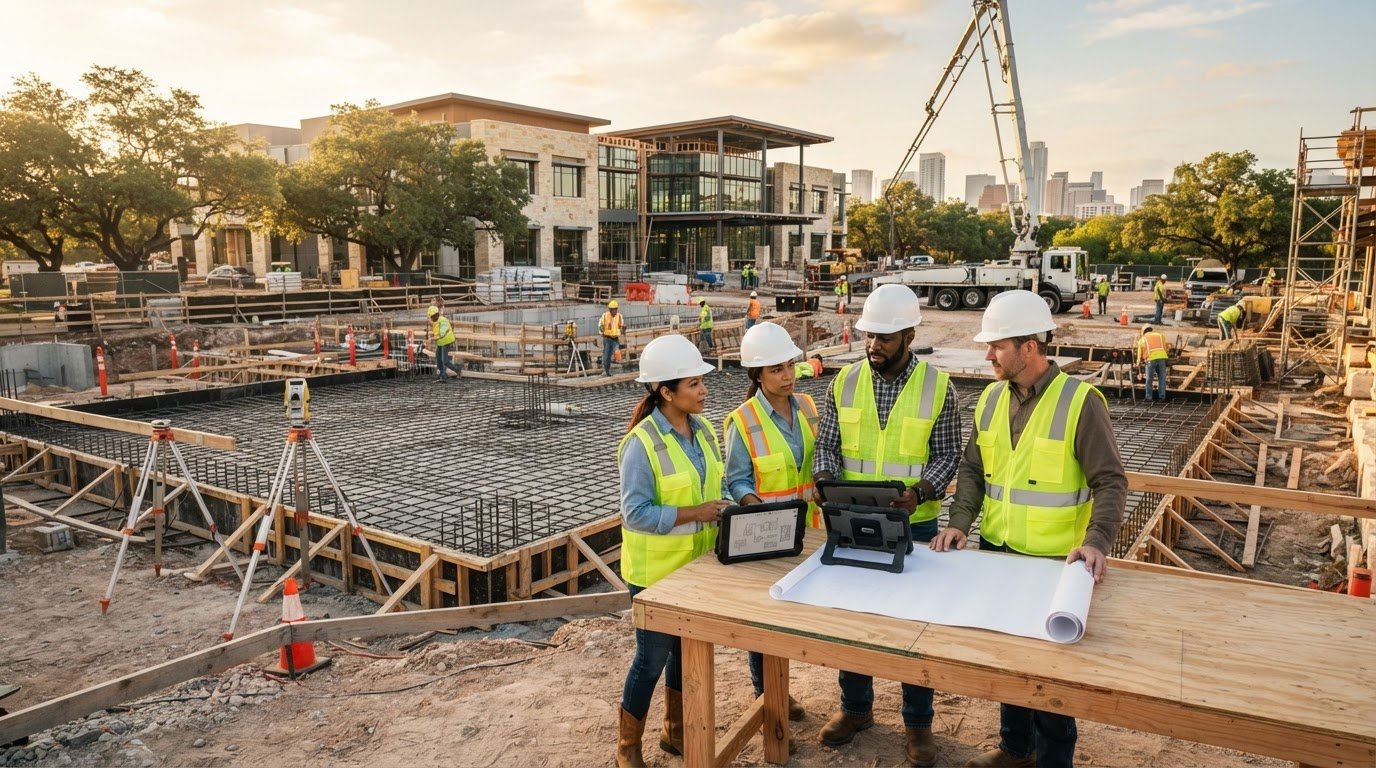
A hotel's long-term viability is rarely secured by its architectural finishes, but rather by the silence and structural permanence of its core. In a competitive market like Dallas, which currently leads the nation with 184 projects in the construction pipeline, the choice of cast-in-place concrete for hotel construction is often the deciding factor between a high-value asset and one plagued by guest complaints. You likely recognize that poor acoustic isolation and the unpredictability of expansive Texas soils can jeopardize both your reputation and your bottom line. It's essential to deliver a facility that meets rigorous standards, such as the 2024 International Building Code adopted in Austin and San Antonio, while maintaining a predictable schedule.
This strategic guide demonstrates how cast-in-place concrete provides the structural integrity and superior STC scores necessary for modern hospitality standards. You'll discover how a monolithic structural system offers the floor plan flexibility and fire resistance that discerning developers require. We will explore the technical advantages of this method and how partnering with a contractor who manages both civil site work and structural concrete can mitigate the risks of labor shortages and soil volatility across the Texas landscape.
Key Takeaways
- Understand how the monolithic nature of cast-in-place concrete for hotel construction creates a seamless, durable structure that enhances long-term asset value.
- Learn how to achieve superior Sound Transmission Class (STC) ratings and fire safety without the need for additional, costly materials.
- Compare the logistical benefits of on-site pouring against the lead-time risks and rigidity associated with precast or wood-frame alternatives.
- Discover technical strategies for managing volatile Texas soils and extreme summer temperatures to ensure a precise, high-quality hydration process.
- Identify the advantages of partnering with an integrated contractor who manages both civil site work and structural concrete for a streamlined project timeline.
The Strategic Role of Cast-in-Place Concrete in Modern Hotel Construction
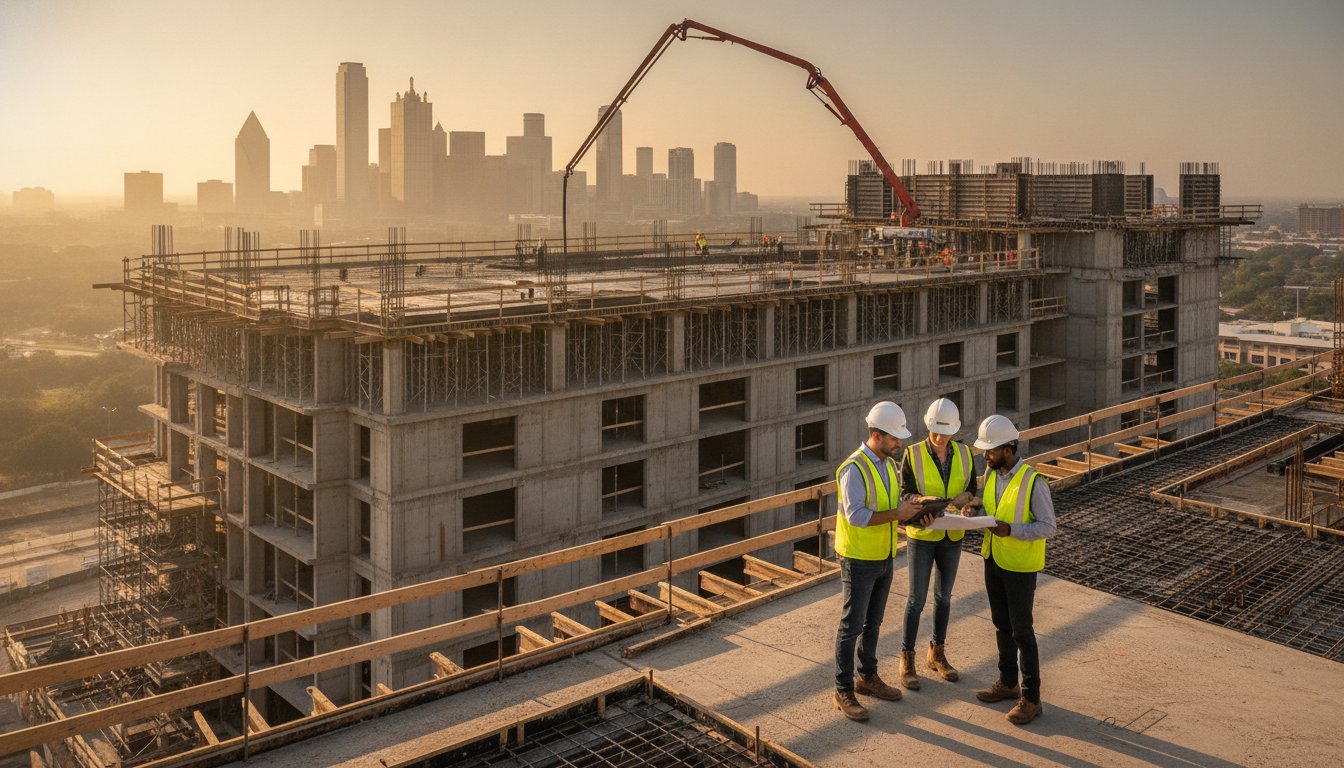
Cast-in-place (CIP) concrete is a structural methodology where concrete is poured into custom-built formwork directly on the project site. This approach allows for the creation of a single, seamless structural unit that extends from the foundation through every floor to the roof. For developers, choosing cast-in-place concrete for hotel construction represents a commitment to long-term asset stability and operational reliability. Unlike modular or wood-frame systems, CIP provides the superior load-bearing capacity required for the midrise and high-rise hospitality developments currently defining the Texas skyline. It's a proven method for projects that demand both scale and precision.
The versatility of this method supports complex architectural designs that other systems struggle to accommodate. It's particularly effective for achieving the thin-shell cast-in-place concrete residential aesthetics that modern luxury guests expect. By utilizing reinforced concrete, engineers can design thinner slabs and more open floor plans without sacrificing the building's structural safety or performance. This flexibility allows architects to create signature facades and sprawling lobby spaces that would be cost-prohibitive or structurally impossible with precast alternatives.
Defining Monolithic Structural Integrity
The "monolithic" advantage refers to the chemical bonding process that occurs during continuous pours. This creates a structure with minimal joints, which significantly reduces long-term maintenance costs for owners by preventing water ingress and structural shifting. These systems function as rigid lateral force-resisting units, providing essential stability against wind loads and soil movement. A unified structure is simply more dependable over a fifty-year lifecycle than one composed of disparate parts fastened together with mechanical connectors. It's this lack of internal weak points that defines a premium hospitality asset.
Hospitality-Specific Structural Requirements
Hotels present unique engineering challenges, particularly regarding the integration of heavy mechanical, electrical, and plumbing (MEP) systems. CIP slabs allow for these systems to be precisely embedded or accommodated within the structure itself. Additionally, the high-density nature of concrete is necessary for the rigid foundations that support multi-story elevator cores and heavy rooftop amenities. As we move through 2026, developers are increasingly moving away from wood-frame construction for luxury assets. The shift is driven by the need for better fire ratings, superior acoustic isolation, and the inherent durability that only cast-in-place concrete for hotel construction provides. Investors recognize that a concrete core protects the asset's valuation against the rising costs of insurance and future renovations.
Performance Advantages: Acoustics, Fire Safety, and Vibration Control
The long-term asset value of a hospitality property is inextricably linked to the guest experience, which relies heavily on environmental control. Selecting cast-in-place concrete for hotel construction allows developers to address the primary drivers of guest dissatisfaction: noise and safety. By utilizing a monolithic structural system, you're not just building a frame; you're creating a high-performance envelope that naturally mitigates the most common operational challenges in the industry. These inherent benefits provide a sense of security and professional stability that lightweight alternatives cannot replicate.
The Science of Silent Rooms (STC Ratings)
Acoustic isolation is a critical metric for any luxury or select-service brand. Concrete slabs possess significantly more mass than lightweight floor-ceiling assemblies, which is the fundamental requirement for blocking low-frequency sound. While precast systems often suffer from "flanking" noise—where sound leaks through the joints between panels—cast-in-place concrete for hotel construction creates a seamless barrier that eliminates these vulnerabilities. This continuity ensures that mechanical vibrations and guest activity remain contained within their respective zones. Industry standards typically require a minimum Sound Transmission Class (STC) rating of 50 for 4-star hotels and 60 for 5-star luxury properties to ensure a quiet guest experience. Achieving these scores with concrete is straightforward and requires fewer expensive acoustic add-ons during the finish-out phase.
Vibration control is equally vital, particularly for hotels located near high-traffic corridors or those with rooftop mechanical equipment. The rigidity of a CIP structure dampens the transfer of energy from elevators, HVAC units, and external traffic. This structural stability is complemented by the material's thermal mass. In the extreme Texas climate, concrete slabs act as a thermal battery, absorbing heat during the day and releasing it slowly. This regulation reduces the peak cooling load on HVAC systems, providing a consistent internal temperature that enhances guest comfort while lowering utility expenses.
Passive Fire Protection for Multi-Story Hotels
Safety is a non-negotiable pillar of hospitality development. Concrete is inherently non-combustible and serves as a natural fire barrier that requires no additional chemical treatments or sprays to meet code. This high level of structural fire resistance design ensures that the building remains stable during high-occupancy evacuation scenarios, providing critical time for guests and first responders. For commercial developers in Texas, this performance often translates into lower insurance premiums, as the risk of total loss is significantly reduced compared to wood-frame structures. Ensuring your foundation and site preparation are equally resilient is a vital first step, often requiring specialized paving stabilization to support the weight of these high-performance structures.
CIP vs. Precast and Wood-Frame: A Developer's Comparison
Selecting the structural framework for a new hospitality project requires a balance between immediate capital expenditure and the total cost of ownership. While wood-frame systems offer a lower entry price, they often fall short in the midrise and high-rise sectors due to strict fire codes and limited acoustic performance. Cast-in-place concrete for hotel construction remains the industry benchmark because it provides a level of on-site adaptability that pre-manufactured systems simply cannot match. If a design adjustment is necessary during the early stages of a build, a cast-in-place system allows for immediate modifications to formwork. Precast components, by contrast, are fabricated weeks or months in advance, making late-stage changes both difficult and expensive.
Logistical reliability is another critical factor for projects scheduled through 2026. Many developers are currently facing significant supply chain delays at precast plants, where production backlogs can stall a project before the first column is even set. By utilizing cast-in-place methods, you bypass these external manufacturing bottlenecks. The materials required—primarily rebar and locally sourced concrete—are readily available, allowing for a more predictable construction schedule. For projects featuring complex ground-floor requirements, such as expansive lobbies or retail spaces, many developers utilize podium slab construction. This hybrid approach provides a rigid structural base that supports a variety of framing options above, maximizing both utility and architectural freedom.
Comparing Structural Systems for Midrise Hotels
The weight of the structure dictates the complexity of your foundation. While precast panels are exceptionally heavy and require substantial footings and specialized heavy-lift cranes, CIP systems allow for a more distributed load. In the Texas market, the availability of experienced CIP crews provides a distinct advantage over the specialized labor required for precast assembly. This availability ensures that your project isn't held hostage by a shortage of niche technicians. Furthermore, the ability to create unique geometric footprints and exposed concrete finishes gives developers the aesthetic edge needed in the competitive luxury market.
Addressing the Speed Myth
A common misconception is that precast is always faster than on-site pouring. While the assembly of pre-manufactured parts is quick, the total project timeline must include the lengthy lead times for design, shop drawings, and fabrication. Modern techniques like post-tensioning significantly accelerate the CIP cycle by allowing for faster stripping and shoring. In dense urban environments like Houston or Dallas, site-access constraints often make the delivery of massive precast members impractical. Casting on-site reduces the need for oversized transport permits and large staging areas, keeping the job site organized and moving efficiently. It's a methodical approach that prioritizes long-term asset value over the illusion of a shortcut.

Navigating Texas Logistics: Soil, Heat, and Hydration
Successful project delivery in the Texas market requires more than just structural expertise; it demands a deep understanding of the local environment. The logistical hurdles of soil volatility and extreme temperatures can compromise the integrity of cast-in-place concrete for hotel construction if not managed with professional precision. Developers must account for these variables during the pre-construction phase to ensure the building's core remains steadfast against the elements. It's a matter of establishing a stable foundation long before the first slab is poured.
Foundations in Expansive Texas Soils
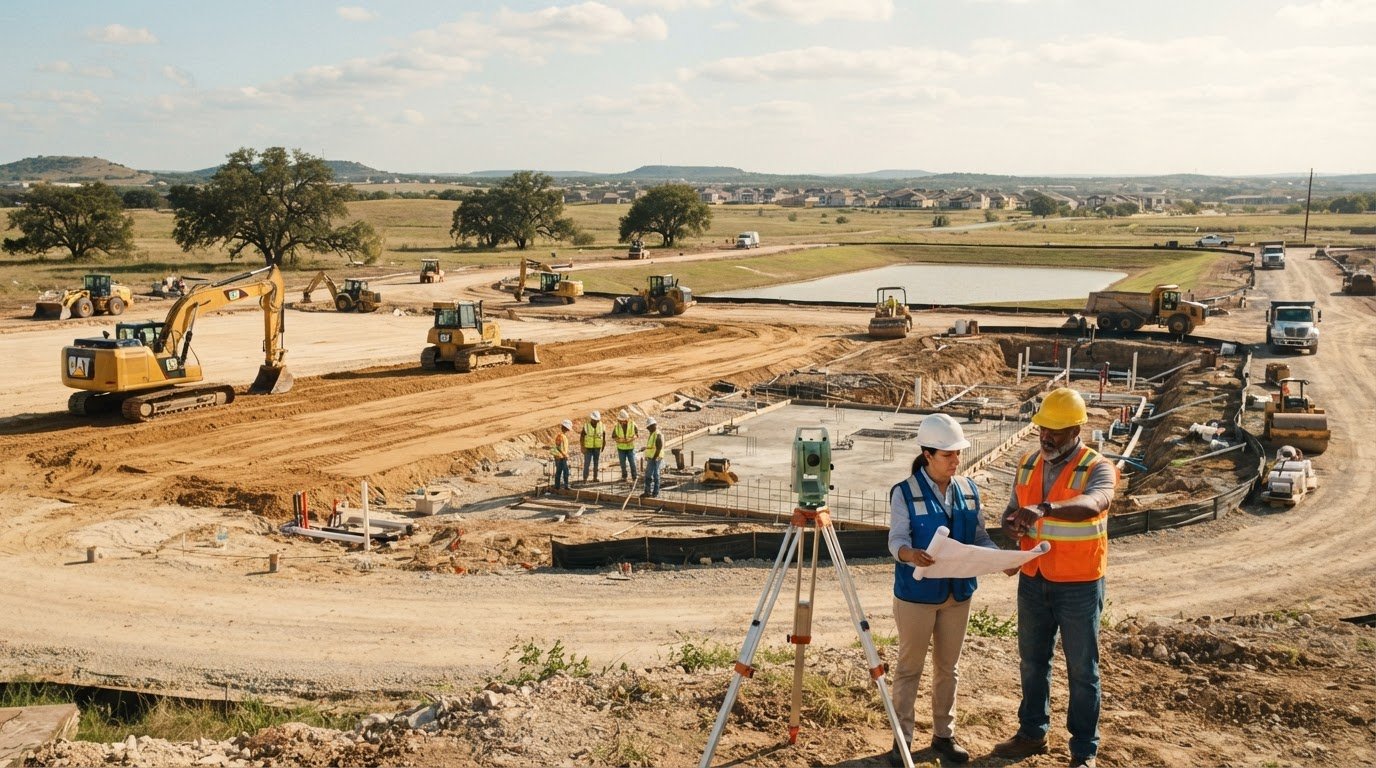
The Blackland Prairie and Gulf Coast regions are characterized by expansive clays that undergo dramatic volume changes based on moisture levels. For high-occupancy hospitality assets, this movement poses a significant risk to structural longevity. Developers must address these conditions early through mass soil excavation and the strategic integration of detention ponds to ensure proper site drainage. Implementing paving stabilization is a foundational requirement, as it creates a chemically altered soil base that resists swelling. When you consolidate the earthwork and structural concrete contracts, you eliminate the communication gaps that often lead to foundation failures in volatile Texas soils.
Hydration Control and Hot Weather Pours
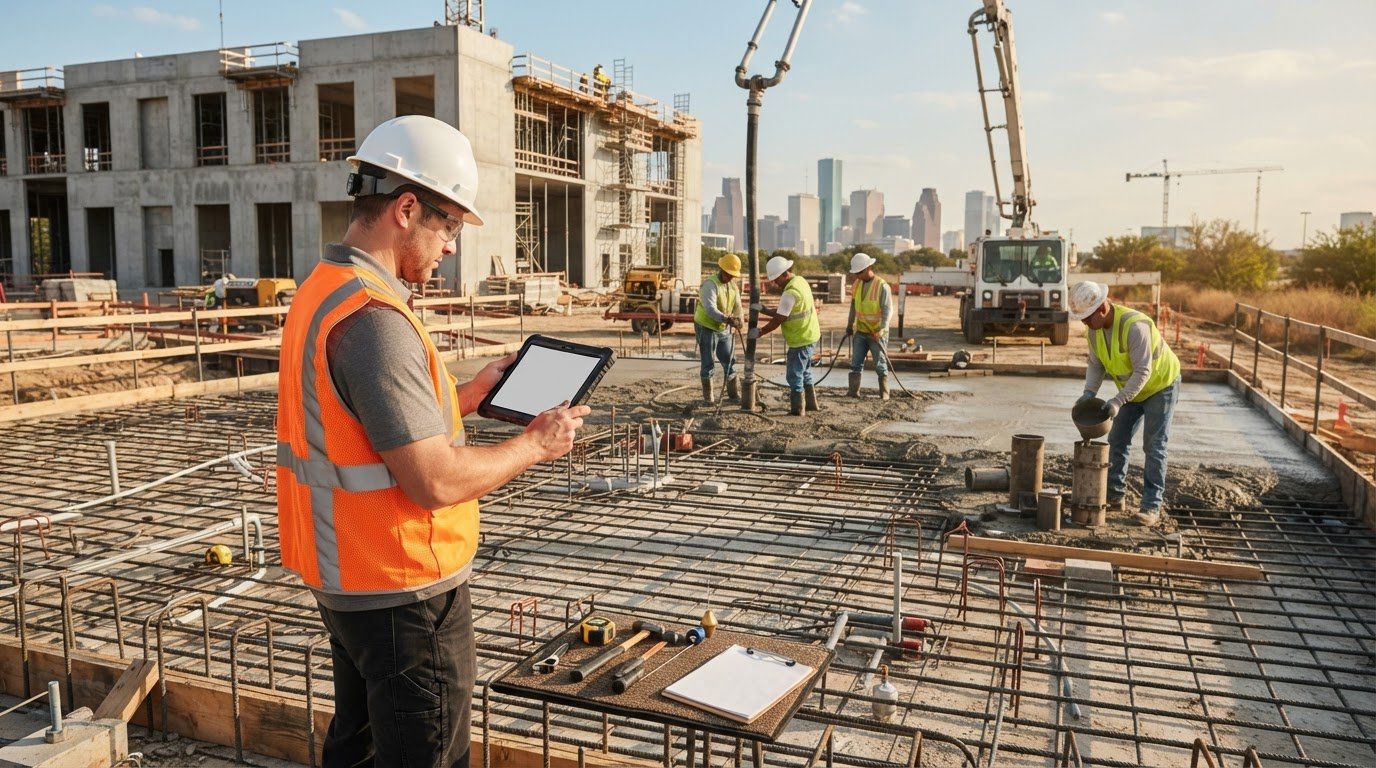
Managing the hydration of cast-in-place concrete for hotel construction during a Texas summer requires a disciplined technical strategy. When ambient temperatures rise above 100°F, the evaporation of mix water happens too quickly, which can lead to shrinkage cracks and reduced ultimate strength. We mitigate these risks by using chilled water during the mixing process or incorporating fly ash to lower the heat of hydration. Specialized retarding admixtures are also used to maintain the concrete's plasticity, ensuring that the finishing crews have sufficient time to produce a level, professional surface.
Scheduling pours for the early morning or overnight hours is a standard practice to avoid peak solar radiation and maintain structural integrity. A cold joint forms when the intense heat causes the initial layer of concrete to set before the subsequent pour can be placed, creating a structural vulnerability that compromises the building's monolithic integrity. Ensuring a continuous, well-timed pour is vital for maintaining the durability discussed throughout this guide. For developers seeking a partner capable of managing these complex logistical variables, Born Integrated Construction provides the operational precision and earthwork expertise required for large-scale Texas hospitality projects.
Born Integrated Construction: Leading CIP Hotel Structures in Texas
Born Integrated Construction (BIC) understands that a successful hospitality project is built on more than just materials; it requires a disciplined execution of the entire site lifecycle. By merging civil site work with structural concrete expertise, we provide a unified approach to cast-in-place concrete for hotel construction that mitigates the risks discussed throughout this guide. Our commitment to professional stability and technical proficiency ensures that every midrise and high-rise project we undertake is delivered with the long-term viability that developers expect. We serve the primary Texas hubs, including Houston, Austin, San Antonio, and the DFW Metroplex, bringing a seasoned perspective to the unique challenges of the region. This regional focus allows us to navigate local building codes and soil conditions with unwavering consistency.
Integrated Civil and Structural Solutions
Our "Turn Key Civil" methodology is designed to reduce vendor friction and eliminate the scheduling conflicts that often arise when separate contractors handle site prep and structural framing. Managing underground utilities, storm sewers, and detention ponds in tandem with the primary structure allows for a more fluid progression of work. This integration means you have a single point of contact responsible for the transition from mass soil excavation to the finished structural concrete. It's an organized system that prioritizes transparency and ensures the critical path remains unobstructed.
Commitment to Quality and Performance
Safety and integrity are the organizational pillars that guide our work on active commercial sites. We adhere to rigorous safety standards to protect both our craftsmen and your investment. Our proven results are evident in the complex execution of CIP garages, podium decks, and multi-story structural framing. Whether your project requires thin-shell cast-in-place concrete residential buildings or large-scale cast in place concrete hotel structures, BIC delivers consistent value through meticulous management. We focus on building lasting foundations that secure the asset's value for decades to come.
The complexity of 2026 hospitality developments requires a partner who values substance over style and execution over innovation. We provide the technical precision needed to manage the hydration cycles and soil stabilization requirements unique to the Texas landscape. By consolidating the civil and structural phases, we offer a level of operational precision that protects your timeline and your reputation. Contact Born Integrated Construction to discuss the technical requirements and logistical strategies for your upcoming hotel development.
Securing the Future of Texas Hospitality Developments
The long-term success of a hospitality asset depends on the fundamental quality of its structure. A monolithic core provides the acoustic privacy and fire safety that modern guests demand. By managing the complexities of Texas soils and summer temperatures through disciplined technical strategies, developers can avoid the delays associated with less adaptable systems. The decision to utilize cast-in-place concrete for hotel construction is an investment in durability that pays dividends throughout the building's lifecycle. It's about establishing a standard of excellence that remains consistent from the initial soil stabilization to the final structural pour.
Born Integrated Construction offers the specialized expertise required for complex CIP midrise and highrise structures. Our turnkey civil and structural capabilities streamline the transition from mass excavation to finished slabs, maintaining active projects across Houston, Austin, and San Antonio. We invite you to partner with Born Integrated Construction for your next Texas hotel project to ensure your development is built on a foundation of professional stability and technical excellence. Your project deserves a structure that is as enduring as your commitment to high standards.
Frequently Asked Questions
What is the primary benefit of cast-in-place concrete for hotel acoustics?
The primary benefit is the material's high density and monolithic structure, which naturally blocks sound transmission between rooms. Unlike modular or precast systems, the lack of joints in a cast-in-place frame prevents noise from leaking through gaps, allowing developers to achieve superior Sound Transmission Class (STC) ratings without expensive secondary treatments.
How long does it take for a CIP concrete hotel floor to cure before moving to the next level?
A standard CIP concrete floor typically requires three to seven days of curing to reach the structural strength necessary for vertical progression. While the full hydration process takes longer, using high-early-strength mix designs and post-tensioning techniques can significantly accelerate the shoring and stripping cycle to maintain a fast-paced construction schedule.
Is CIP concrete more expensive than precast for a typical midrise hotel?
Initial material costs for CIP may be higher in some markets, but it's often more cost-effective when considering the total project lifecycle and logistical savings. On-site pouring eliminates the high transport costs and heavy crane requirements associated with precast panels. It also provides the flexibility to make architectural adjustments on-site, which avoids the expensive change orders common with pre-manufactured components.
Does cast-in-place concrete help with a hotel's LEED or sustainability rating?
Yes, cast-in-place concrete for hotel construction contributes to LEED credits by utilizing locally sourced aggregates and recycled materials like fly ash or slag. The inherent thermal mass of the concrete also improves the building's energy performance by regulating internal temperatures, which reduces the long-term energy demand for heating and cooling in the Texas climate.
What are the specific foundation requirements for CIP hotels in Houston's clay soil?
Foundations in Houston require deep-drilled piers or bell-bottom footings to reach stable soil strata beneath the expansive surface clays. This process often necessitates specialized soil stabilization and mass excavation to ensure the heavy structural load is distributed safely. A rigid foundation is essential for preventing the settlement cracks that can occur in volatile Gulf Coast soils.
Can CIP concrete be used for both the hotel guest rooms and the parking garage?
CIP concrete is frequently used for both guest room towers and integrated parking structures to create a uniform, monolithic system. This approach simplifies the structural transition at the podium level and ensures that the entire facility benefits from the same high standards of fire resistance and durability. It also streamlines the coordination of underground utilities across the site.
How does hot weather in Texas affect the quality of a cast-in-place pour?
Extreme heat accelerates the hydration process, which can lead to thermal cracking and reduced ultimate strength if the mix isn't properly managed. Maintaining the quality of cast-in-place concrete for hotel construction in Texas requires using chilled water, ice, or liquid nitrogen to lower the mix temperature. Finishers also use retarding admixtures to maintain plasticity during the pour.
Why is post-tensioning often used in CIP hotel slab construction?
Post-tensioning allows for thinner slabs and longer spans, which maximizes the interior clear heights and provides architects with more floor plan flexibility. This technique reduces the overall weight of the building and the volume of concrete required. It's a disciplined structural choice that enhances the efficiency of the framing while providing the rigidity needed for multi-story hospitality assets.