Texas leads the nation with nearly $90 billion in annual commercial construction spending, yet a significant portion of that investment remains at the mercy of the state's notoriously unpredictable expansive clay soils. For any developer, securing a reliable mass excavation contractor Texas projects require is the first step in ensuring these capital investments don't disappear into subgrade delays. You likely already know that the gap between moving the first yard of dirt and pouring the first slab on grade is where the most expensive schedule slips occur. When earthwork and concrete subcontractors operate in silos, the lack of coordination frequently leads to unforeseen costs and safety risks on high-traffic commercial sites.
We'll demonstrate how integrated site readiness, which combines mass soil excavation with structural concrete expertise, safeguards your project's critical path for 2026. This article outlines the methods for achieving accurate grading that minimizes material waste while maintaining strict compliance with TxDOT and local municipal standards. You'll discover how a unified approach to civil construction delivers a site that's ready for vertical construction on schedule and built with professional precision.
Key Takeaways
- Mitigate the structural risks posed by expansive Texas soils through professional paving stabilization and precise mass soil excavation.
- Recognize how an integrated civil approach eliminates the scheduling conflicts typically found between siloed earthwork and concrete subcontractors.
- Identify the critical reliability indicators when evaluating a mass excavation contractor Texas projects require, specifically regarding fleet ownership and GPS-guided grading technology.
- Secure the critical path of your 2026 developments by transitioning seamlessly from site preparation to structural concrete foundations.
- Ensure long-term site viability and regulatory compliance by adhering to TxDOT standards and methodical safety management during heavy-duty grading operations.
The Strategic Role of Mass Excavation in Texas Site Development
Mass excavation represents the heavy duty removal and grading of large soil volumes. It's the fundamental first phase of any major commercial development. In a state where commercial construction spending reaches nearly $90 billion annually, the sheer scale of projects demands a specialized approach that standard grading services cannot provide. A professional excavation strategy ensures the terrain is prepared to support the immense structural loads of midrise buildings, distribution centers, and data centers. The primary objective is to transform raw land into a stable, engineered environment that's ready for the next phase of construction.
Precision in cut and fill operations is vital for project viability. By balancing the soil moved from high points to low points, a mass excavation contractor Texas developers trust can minimize the need for costly material exports or imports. This methodical management of site materials isn't just about efficiency; it's about establishing a predictable cost structure from the outset. When soil volumes are calculated with technical proficiency, material waste is reduced and the site's natural topography is leveraged to its fullest potential.
Defining the Scope of Commercial Earthwork
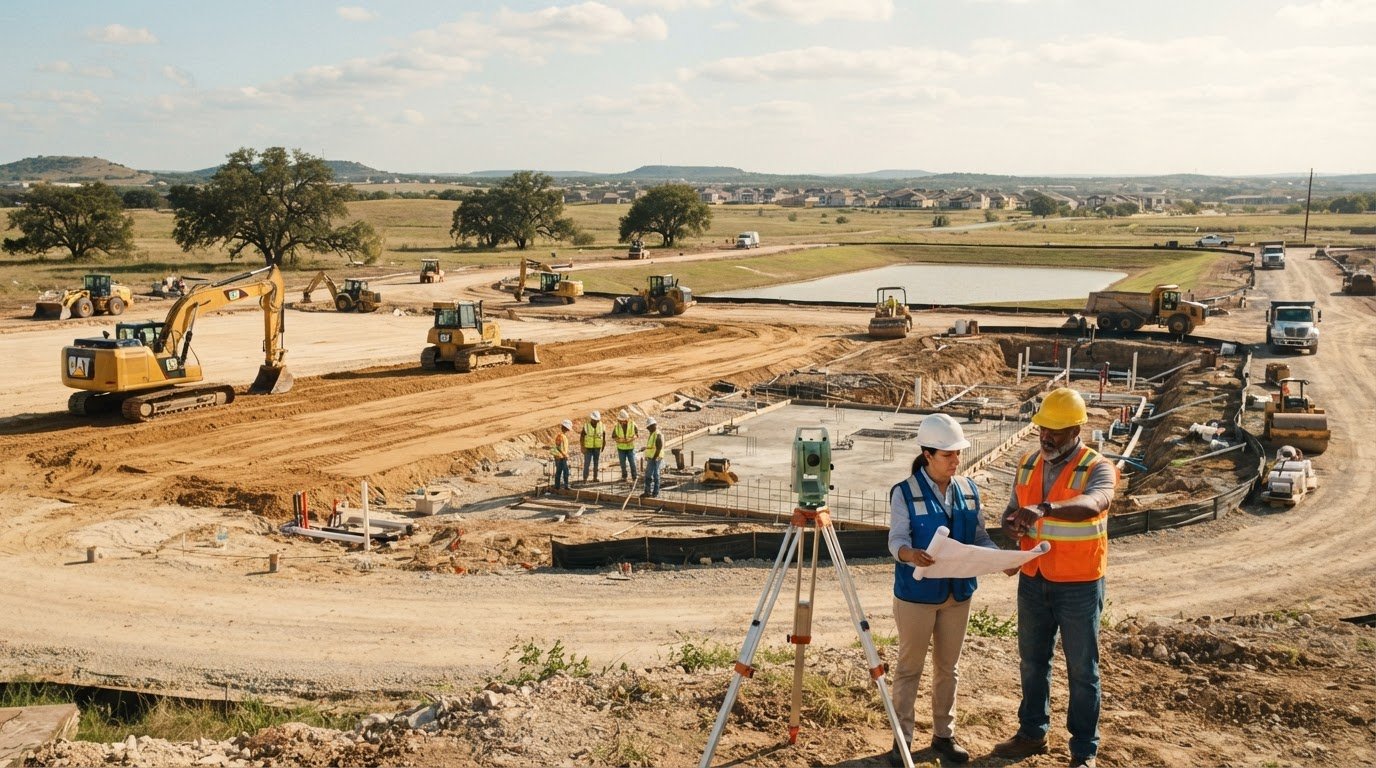
Commercial earthwork is a multi layered discipline that requires a clear hierarchy of operations. It begins with site clearing and moves into the mass grading phase, where the primary landscape is shaped. Fine grading follows, creating the precise elevations required for commercial pads. Modern Texas projects utilize topographic modeling to create a digital representation of the site. This technology allows for a level of operational precision that ensures building pads, access roads, and drainage basins are placed with absolute accuracy. These deliverables form the skeletal structure of the entire development, providing the necessary stability for all future vertical construction.
Why Schedule Certainty Starts with the Dirt
Mass excavation resides firmly on the critical path for vertical construction. If the initial earthwork is delayed or performed with poor coordination, every subsequent trade faces a bottleneck. Fragmented contracting often leads to friction; when the dirt crews and concrete crews operate in silos, the lack of communication often results in grade errors or utility conflicts. Choosing a partner who understands the transition from earthwork to structural foundations eliminates these hurdles. It creates a seamless flow that protects the timeline and instills a sense of security for the project stakeholders.
Site readiness is the foundation of project efficiency.
Navigating Texas Soil Challenges: Stabilization and Grading
Texas soil isn't just a surface; it's a structural variable that dictates the longevity of every commercial asset. In regions like Houston and North Texas, the presence of expansive "Fat Clays" poses a constant threat to foundation integrity. These soils swell significantly when wet and shrink during dry spells, creating a cycle of movement that can tear through unreinforced concrete. A seasoned mass excavation contractor Texas developers rely on understands that excavation is not merely about moving earth. It's about fundamentally altering the soil's behavior to create a predictable, stable platform for construction.
Managing Expansive Clay and Moisture
Chemical stabilization is the primary defense against soil movement. By integrating lime or fly ash into the sub-grade, we chemically alter the clay's molecular structure, significantly reducing its plasticity. This process is essential to prevent "heave," a condition where the soil pushes upward with enough force to crack heavy-duty slabs. Moisture control is equally vital, especially in the humid coastal climates of Texas. Methodical discing and aeration techniques ensure that the soil reaches its optimum moisture content before compaction begins. For developers, the most critical step occurs before the first shovel hits the ground: securing a comprehensive geotechnical report. This data allows for the precise calculation of chemical ratios, ensuring the stabilization effort is both effective and permanent. Adhering to Excavation and Trenching Best Practices during these early phases protects both the project timeline and the safety of the workforce.
Paving Stabilization for Heavy-Duty Infrastructure
The success of commercial concrete paving in Conroe and other high-growth areas depends entirely on the precision of the underlying excavation. Road base preparation requires a disciplined, layer-by-layer approach to compaction. Each lift must be tested to ensure it meets TxDOT standards for density, providing a rigid foundation that can withstand the repetitive stress of heavy freight traffic. Beyond compaction, the grading must be exact to facilitate proper drainage. Even minor deviations in the final grade can lead to water ponding, which eventually saturates the sub-base and leads to premature pavement failure. We focus on delivering a level of accuracy that prevents these issues before they start. If you're planning a large-scale development, choosing a partner who provides turn key civil solutions ensures that your soil stabilization and paving work are perfectly synchronized for long-term durability.
The Integrated Civil Advantage: From Dirt to Structural Concrete
Traditionally, Texas developers manage separate contracts for earthwork and structural concrete. This fragmented model creates a high risk for miscommunication. When one team handles the mass soil excavation and another handles the foundation, the transition point becomes a site of potential conflict. An integrated civil model replaces these silos with a unified strategy. By utilizing a single mass excavation contractor Texas teams rely on for both dirt work and structural concrete, developers eliminate the friction that typically derails the critical path. One point of contact for underground utilities and earthwork ensures that stub-outs and conduits align perfectly with the foundation plans, preventing the administrative delays that plague siloed projects.
Bridging the Gap Between Site Prep and Foundations
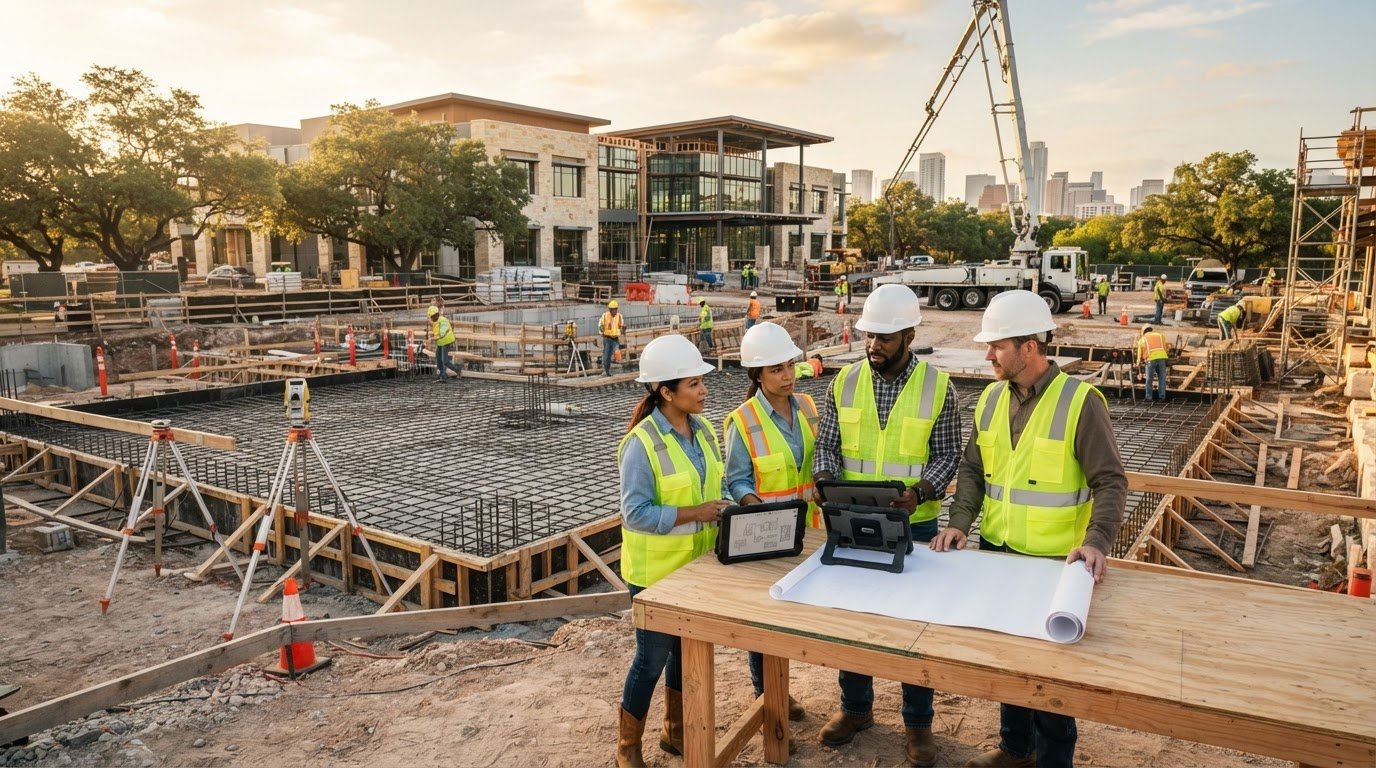
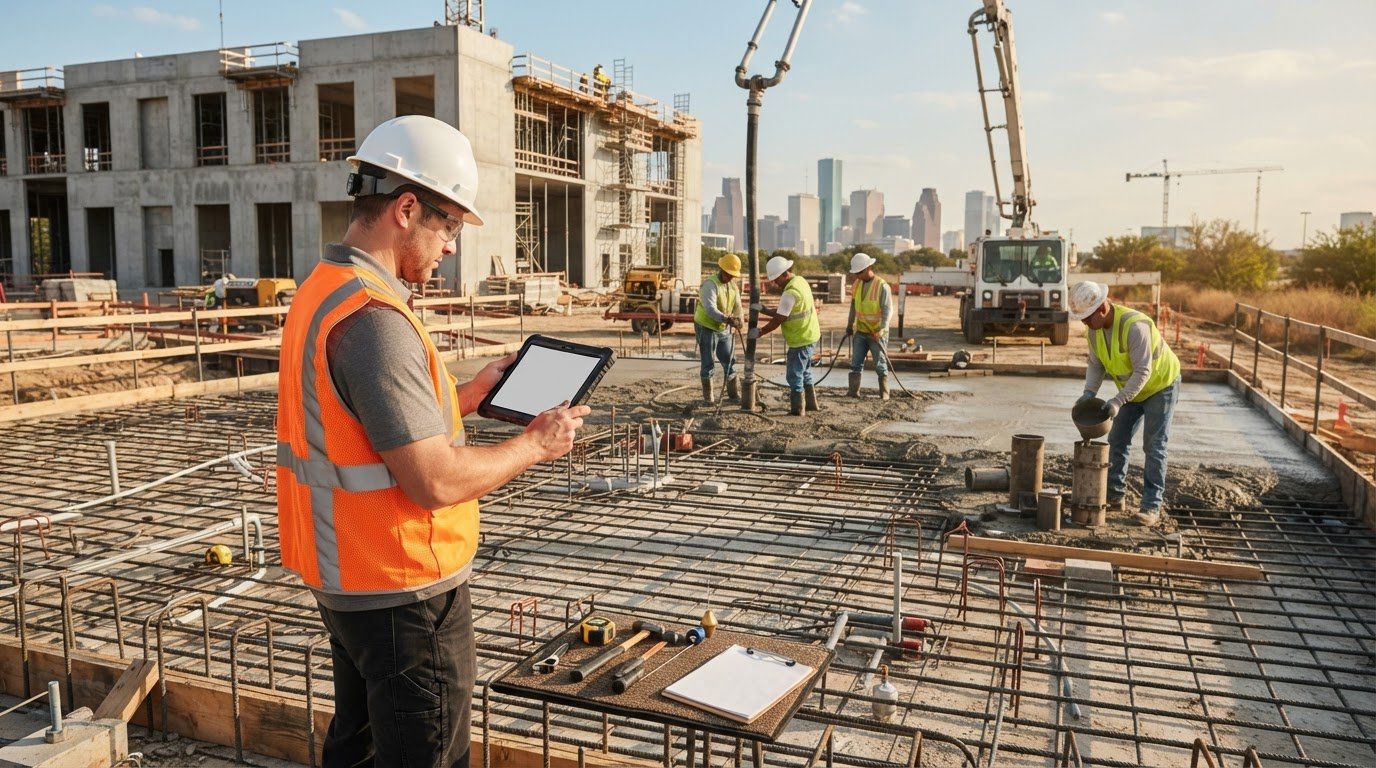
Precision in the early stages of site preparation directly dictates the quality of the vertical build. For instance, the accuracy of a building pad's elevation determines the efficiency of pouring expert podium slabs in Houston. If the grade is off by even an inch, the concrete team must either spend extra on material or perform costly re-grading. Integrated crews understand the requirements of the next phase. They prepare the site with the final structural slab in mind. This coordination is equally vital for precast garage foundations, where tolerances are exceptionally tight. Integrated teams manage the transition seamlessly, preventing the "re-work" that often occurs when separate crews fail to communicate grade changes or utility placements.
Stormwater Management and Detention Ponds
Integrated site readiness also encompasses the complex requirements of Texas stormwater management. Detention pond construction isn't a standalone task; it's a core component of the mass grading plan. These basins must be engineered to handle high-volume runoff while meeting strict municipal erosion control standards. A Turn Key Civil approach allows for the simultaneous installation of storm sewer systems and the excavation of detention basins. This ensures that the drainage infrastructure is functional before the site is fully stabilized. It protects the investment from heavy rain events during construction and ensures the project remains in compliance with environmental regulations from day one. Choosing an experienced mass excavation contractor Texas firms trust for comprehensive site readiness provides a level of professional stability that single-scope contractors simply cannot match.

Evaluating a Mass Excavation Contractor: Tech, Safety, and Fleet
Selecting a partner for large-scale earthwork requires a rigorous assessment of their operational infrastructure. In the demanding environment of 2026, reliability isn't just a claim; it's a measurable outcome of a contractor's investment in technology, safety, and fleet management. A mass excavation contractor Texas developers trust should prioritize owned equipment over rental dependency. Owning a fleet ensures that machinery is maintained to exacting standards and is available precisely when the project timeline requires it. This self-reliance serves as a primary indicator of a firm's long-term viability and professional stability.
Technology and Precision in Modern Earthwork
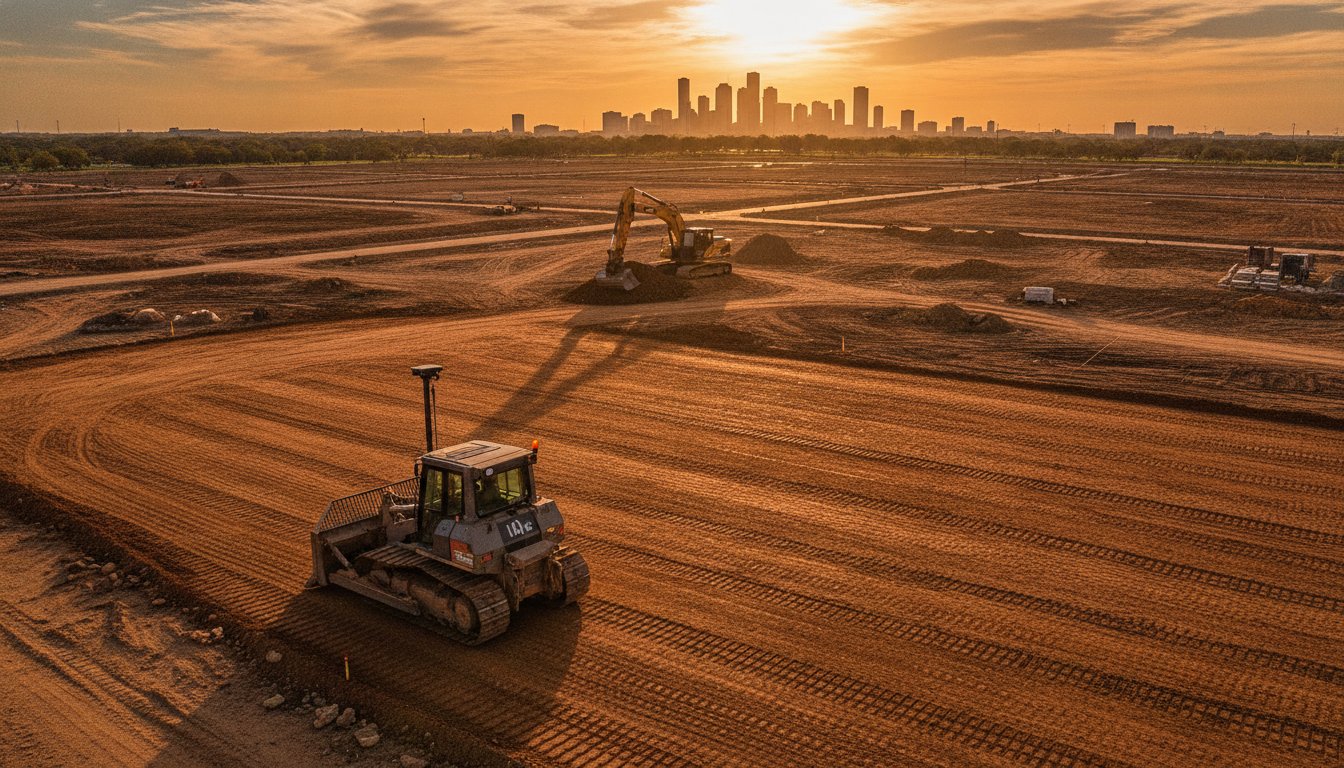
Modern earthwork is defined by digital precision. GPS-guided dozers now achieve tolerances within fractions of an inch, ensuring that building pads and drainage basins match the engineered plans with absolute fidelity. This technology removes the variability of manual staking and allows for a more disciplined approach to grading. Complementing this, drone topography provides real-time data for cut-and-fill operations. By capturing aerial imagery and converting it into 3D models, we generate accurate volume calculations that track progress with methodical transparency. Tech-driven excavation reduces material waste and cost by eliminating the guesswork inherent in traditional grading methods. These tools allow for a level of operational precision that was previously unattainable, providing stakeholders with a clear view of site conditions at every phase.
Safety Standards and Professional Integrity
Safety is a core operational pillar that protects both human lives and project capital. A contractor's Experience Modification Rate (EMR) provides a clear window into their safety culture, especially in high-risk environments like high-rise developments or high-traffic commercial sites. Strict adherence to OSHA standards, supported by dedicated on-site safety officers, ensures that every trench and excavation meets federal guidelines. This disciplined approach to safety reflects a deeper commitment to professional integrity and ethical conduct. A grounded, serious tone in communication is not merely a stylistic choice; it's a reflection of the operational stability required to deliver consistent results across major markets like Houston, Austin, and Dallas. When a contractor prioritizes transparency in their reporting and consistency in their execution, they build the long-term trust necessary for complex infrastructure projects. If you're seeking a partner who values substance and meticulous management, explore our Turn Key Civil solutions for your next Texas development.
Partnering with Born Integrated Construction for Texas Infrastructure
Born Integrated Construction operates with a deep rooted commitment to the enduring nature of Texas infrastructure. As a seasoned mass excavation contractor Texas developers rely on, we provide the technical proficiency required for the state's most complex commercial developments. Our operational reach extends across Houston, San Antonio, Austin, and the DFW metroplex; this geographic breadth ensures that we bring localized expertise to every site we stabilize. We don't just move earth. We establish the physical and structural foundations that define the long term viability of every project we touch. Every cubic yard of soil moved is managed with a focus on safety, efficiency, and the meticulous management of details.
Comprehensive Civil and Structural Solutions
The core of our value proposition lies in the synergy between our mass soil excavation and structural concrete capabilities. This integrated approach is essential for the successful delivery of CIP garages, midrise structures, and complex residential developments. Our Turn Key Civil solutions eliminate the administrative friction and operational gaps that typically arise when managing separate earthwork and foundation subcontractors. By overseeing the entire scope, from the initial grading and detention ponds to the final slab on grade, we maintain absolute control over the project's critical path. This focus on professional stability ensures that the transition from a raw site to a structural foundation is seamless and predictable. Our commitment to high standards is reflected in our ability to deliver durable, code compliant results that meet the rigorous demands of Texas infrastructure projects.
Start Your Project with a Solid Foundation
Planning for a 2026 commercial project pipeline requires a partner who values substance and leads through proven results. We invite general contractors and developers to discuss their upcoming developments with a team that prioritizes reliability and ethical conduct. Our approach is methodical and deliberate; we believe that attentive service and consistent performance are the only ways to build lasting professional partnerships. We understand the pressures of Texas's high traffic commercial sites and the necessity of maintaining a disciplined safety culture throughout the build. We're ready to provide the operational precision your next project deserves. Partner with Born Integrated Construction for your next Texas project.
Securing the Critical Path of Your 2026 Development
Successful commercial projects in Texas require more than just heavy equipment; they demand a disciplined coordination between earthwork and foundation engineering. By integrating mass soil excavation with structural concrete expertise, developers can eliminate the schedule conflicts that often arise from fragmented contracting. This unified approach ensures that expansive soil challenges are addressed before they impact the structural integrity of your build. Whether you're managing a high-rise project or a complex distribution center, the precision of your site preparation dictates the efficiency of every subsequent trade.
Born Integrated Construction provides the operational stability necessary for large-scale infrastructure. We specialize in CIP and precast garage foundations, delivering consistent value across Houston, Austin, San Antonio, and DFW. Our focus on safety, integrity, and efficiency allows us to act as a dependable partner throughout the project lifecycle. When you select the mass excavation contractor Texas developers trust for technical proficiency, you're investing in the long-term viability of your asset. We invite you to Request a Bid from Born Integrated Construction to see how our steadfast approach can safeguard your upcoming project. We look forward to building a lasting foundation together.
Frequently Asked Questions
What is the difference between mass excavation and standard site grading?
Mass excavation involves the heavy duty removal and grading of large soil volumes to prepare a site for significant structural loads. Standard site grading usually focuses on surface level adjustments for minor drainage or landscaping. A mass excavation contractor Texas developers partner with utilizes larger fleets and advanced topographic modeling to balance vast amounts of earth. This process ensures the site's skeletal structure is stable enough to support midrise buildings and industrial facilities.
Why is soil stabilization so important for commercial projects in Houston and Dallas?
Soil stabilization is critical because Houston and Dallas are known for expansive clays that shift with moisture changes. Without chemical stabilization using lime or fly ash, these soils swell and shrink, causing foundations to heave and crack. This methodical process alters the soil's molecular structure to create a rigid, predictable platform. It's a necessary step to protect long term investments in heavy duty commercial infrastructure across North and Southeast Texas.
How does GPS technology improve the accuracy of mass excavation?
GPS technology allows machinery to achieve grading tolerances within fractions of an inch by following digital engineered plans. This system eliminates the variability and human error associated with traditional manual staking. Real time data ensures that every building pad and access road is placed with absolute fidelity. By using GPS guided dozers, we maintain a disciplined approach to earthwork that minimizes material waste and ensures the site is ready for structural foundations.
What are the benefits of hiring an integrated civil and concrete contractor?
Hiring an integrated contractor eliminates the traditional silos that often cause delays between site preparation and foundation pouring. One point of contact manages the transition from dirt work to structural concrete, ensuring that utility conduits and grade elevations align perfectly. This model reduces administrative friction and prevents the costly re-work that occurs when separate crews fail to coordinate. It provides a seamless flow that safeguards the project's critical path.
Does Born Integrated Construction handle underground utility installation?
We provide comprehensive underground utility installation as part of our Turn Key Civil solutions. This integration ensures that storm sewers, water lines, and electrical conduits are placed precisely where they need to be before the structural slabs are poured. Managing utilities alongside mass soil excavation allows for a more organized site and prevents the utility conflicts that often derail commercial project timelines during the early phases of construction.
What safety certifications should I look for in a Texas excavation contractor?
You should prioritize contractors with low Experience Modification Rate (EMR) ratings and documented OSHA compliance. A serious safety culture is reflected in the presence of dedicated safety officers and regular on-site inspections. These indicators suggest a disciplined professional who values operational stability over speed. In Texas, where federal OSHA standards apply directly to the private sector, verifying these credentials is a vital step in mitigating project risk.
How long does a typical mass excavation phase take for a mid-rise development?
The duration of a mass excavation phase varies significantly based on site acreage, soil moisture, and local weather patterns. A typical midrise development may require several weeks to several months for the earthwork to be finalized. Factors such as the volume of soil to be moved and the complexity of the detention pond design will influence the schedule. We prioritize methodical execution to ensure the site is truly ready for vertical construction.
Can you handle detention pond construction alongside mass grading?
Detention pond construction is a standard component of our mass soil excavation services. We engineer these basins concurrently with the primary site grading to ensure immediate stormwater management and erosion control. This approach protects the site during heavy rain events and ensures that the drainage infrastructure is fully functional before we finalize the building pads. It is an essential part of maintaining regulatory compliance and site stability throughout the build.