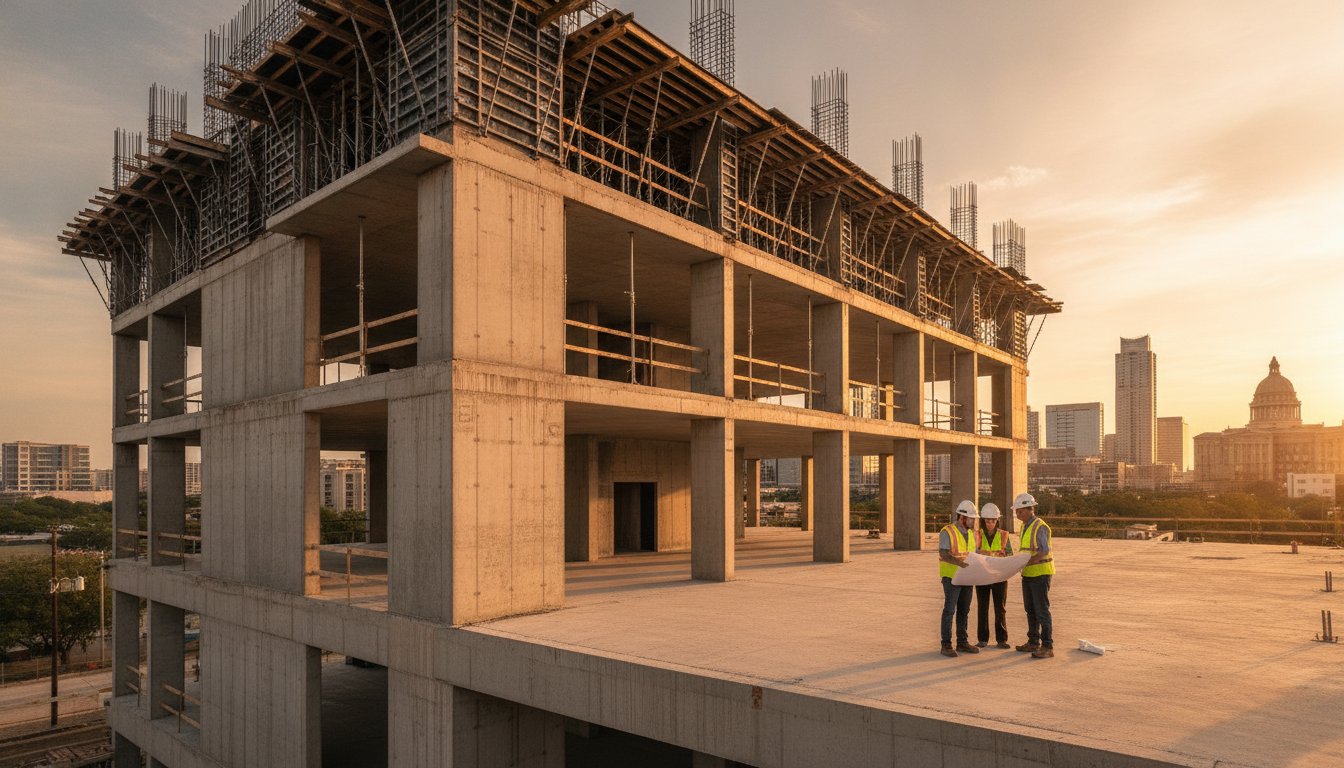
In the volatile expansive clay soils common across North Texas and the Gulf Coast, a structure's foundation is only as reliable as its lack of seams. Choosing a monolithic approach isn't just a design preference; it's a commitment to long-term stability in an environment that constantly tests structural limits. You likely recognize that every joint in a precast assembly represents a potential point of vulnerability and an unnecessary logistical burden. When you factor in the high transportation costs of moving heavy manufactured components, the cast-in-place concrete advantages become clear for any serious commercial project.
This article demonstrates why cast-in-place concrete remains the gold standard for structural integrity, design flexibility, and durability in Texas construction. We will examine how this method provides the freedom to execute complex footprints while reducing the logistics costs associated with heavy structural elements. From meeting the latest 2021 International Building Code requirements to navigating Austin's new Environmental Product Declaration mandates, we provide the technical insights necessary to ensure your next mid-rise or high-rise project stands on a foundation of uncompromising quality. Discover how site-specific execution delivers the permanent reliability your stakeholders expect.
Key Takeaways
- Understand how monolithic construction eliminates the structural vulnerabilities of joints, creating a single, cohesive unit that withstands the shifting Texas landscape.
- Explore how cast-in-place methods provide the necessary flexibility to accommodate complex architectural footprints and allow for precise on-site adjustments.
- Learn about the specific performance benefits of thermal mass and wind resistance that make this material ideal for coastal and high-heat regions.
- Identify the significant cast-in-place concrete advantages regarding project logistics, including the elimination of oversized transport risks and the utilization of local material sources.
- See how a disciplined approach to execution ensures that high-rise foundations and podium slabs meet the most rigorous standards for safety and operational precision.
The Core Advantages of Cast-in-Place Concrete Construction
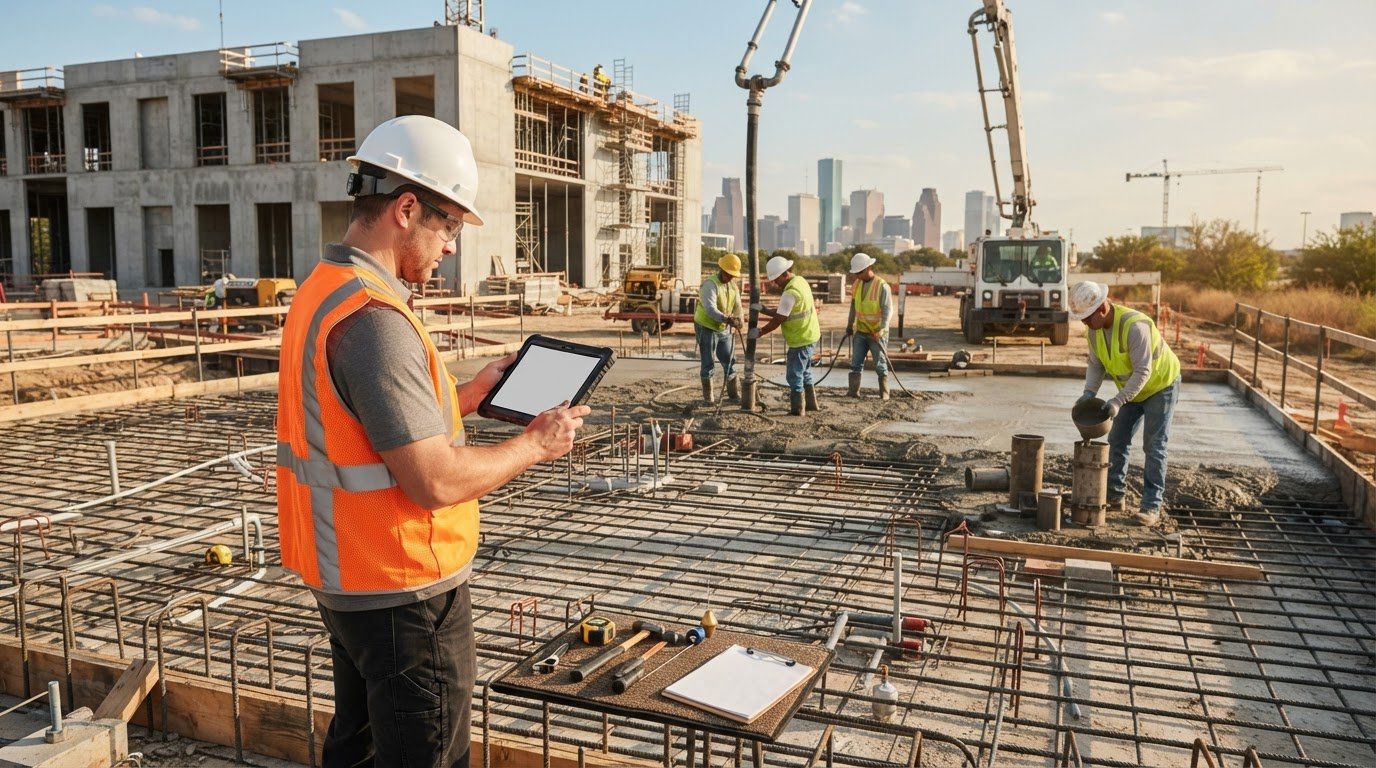
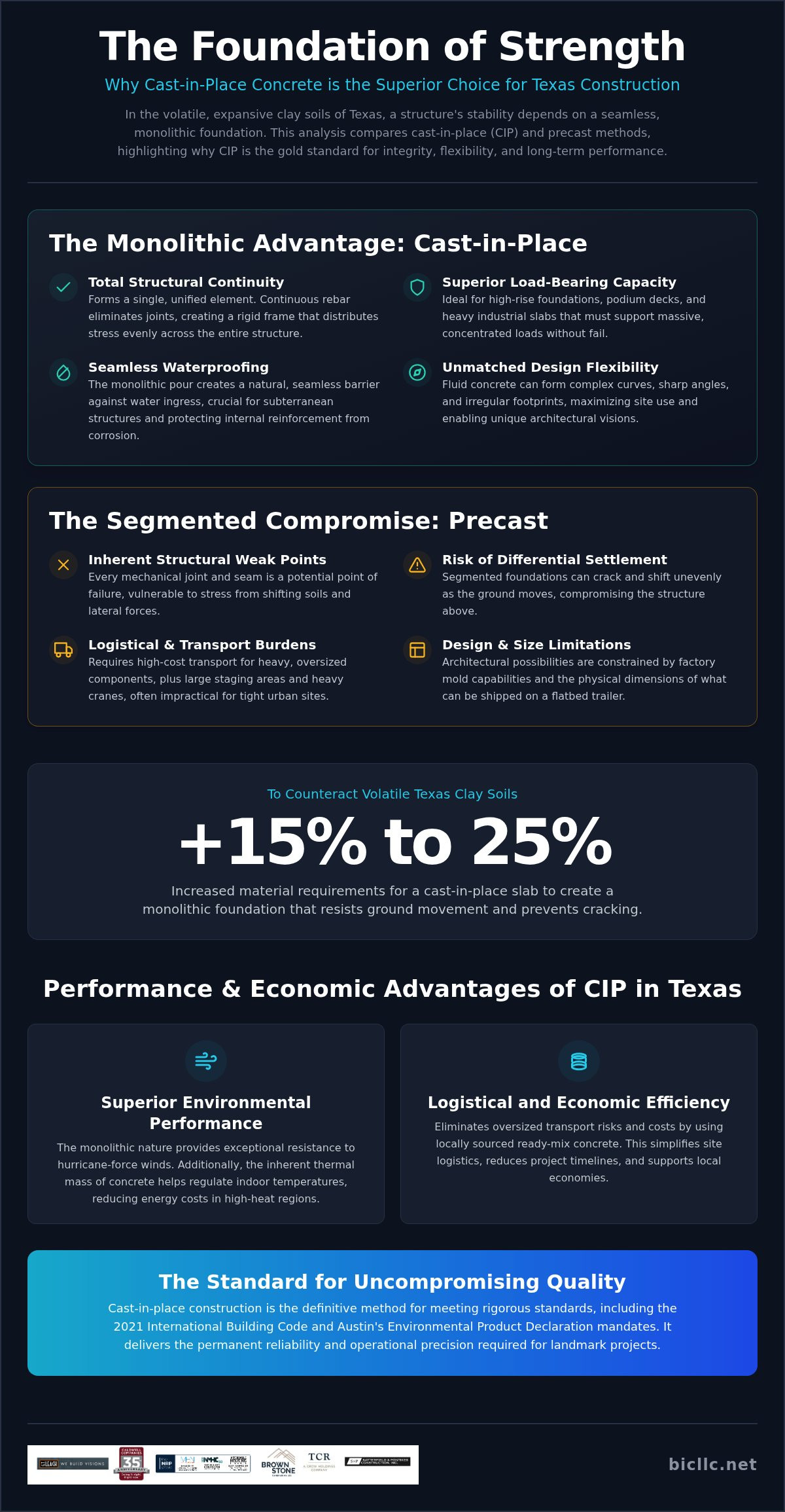
Cast-in-place (CIP) concrete serves as the structural foundation for the most demanding commercial projects across Texas. At its core, this method involves pouring ready-mix concrete into on-site formwork, resulting in a monolithic structure that functions as a single, unified element. When evaluating cast-in-place concrete advantages, the primary focus is the absence of assembly seams. Unlike modular systems that rely on mechanical connections, a single pour ensures that foundations, columns, and slabs operate with total structural continuity. This is particularly vital in the Texas landscape, where expansive clay soils can increase the material requirements for a slab by 15% to 25% to account for ground movement.
The technical distinction in cast-in-place vs. precast concrete lies in how the structural load is managed. In a CIP system, the entire building acts as a rigid frame rather than a collection of parts. This monolithic nature provides superior load-bearing capacity for mid-rise and high-rise developments. It's the standard choice for podium decks and heavy industrial foundations that must support massive equipment or high-density residential units without compromising stability over time.
Monolithic Integrity and Structural Continuity
Continuous reinforcement is the primary driver of CIP's long-term reliability. By running rebar through the entire pour without the interruption of assembly joints, the structure eliminates traditional weak points. This continuity is essential for resisting lateral forces, such as the hurricane-force winds common in coastal Texas regions. In heavy commercial buildings, it minimizes the risk of differential settlement. When the ground shifts beneath a large footprint, a monolithic slab distributes that stress across the entire unit, preventing the localized cracking that often occurs in segmented foundations.
Superior Waterproofing and Joint Management
Water ingress remains a primary concern for subterranean structures like parking garages and basements. One of the most significant cast-in-place concrete advantages is the drastic reduction of joints. Every seam in a building is a potential leak point. While precast components rely on sealants and gaskets at every assembly point, a CIP pour creates a seamless barrier. We manage cold joints with professional precision, ensuring that the interface between separate pours remains watertight. This level of moisture protection is critical for protecting post-tension cables and internal reinforcement from corrosion, ensuring the structure maintains its integrity for decades.
Unmatched Design Flexibility and Architectural Freedom
Architectural vision shouldn't be constrained by the dimensions of a flatbed trailer or the rigid limitations of a factory mold. One of the most significant cast-in-place concrete advantages is the ability to adapt to complex geometries and irregular building footprints. Because the concrete remains fluid until it is poured into its final position on-site, it can be molded into curved lines, sharp angles, and intricate textures that are often cost-prohibitive or physically impossible with off-site manufacturing. This versatility allows developers to maximize the usable space of a site, especially when dealing with non-rectangular parcels or high-density urban environments.
The structural behavior of these custom shapes is well-documented. According to Syracuse University research on concrete structures, the on-site nature of cast-in-place systems allows for a high degree of customization that supports diverse architectural expressions while maintaining structural integrity. This flexibility extends to the finish of the building itself. By selecting specific formwork materials or liners, teams can achieve sophisticated aesthetic textures directly on the structural surface, eliminating the need for secondary cladding or decorative layers.
Catering to Unique Building Footprints
In the dense corridors of Houston or Austin, site access is often the primary bottleneck for construction timelines. Cast-in-place concrete excels in these tight urban environments because it doesn't require the massive staging areas or heavy-duty cranes necessary to maneuver oversized precast panels. It allows for the execution of mixed-use developments where floor plans may vary significantly from one level to the next. This adaptability ensures that the structural frame follows the architect's intent precisely, rather than forcing the design to conform to a limited catalog of pre-manufactured parts.
On-Site Versatility and Coordination
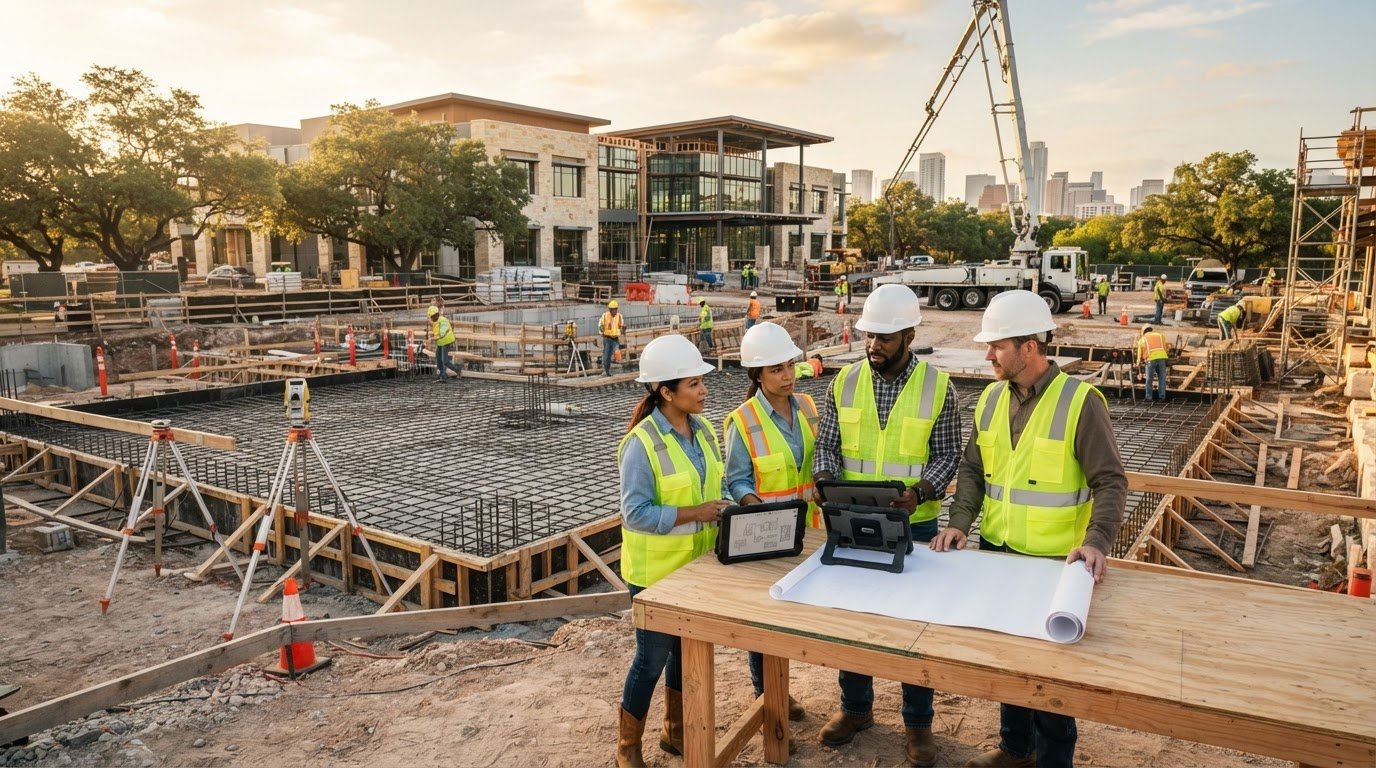
Precision in modern construction depends on the seamless integration of mechanical, electrical, and plumbing (MEP) systems. During the pour, crews can manage the placement of embeds, conduits, and sleeves with extreme accuracy. This reduces the risk of costly post-pour drilling or structural modifications. Professional podium slab contractor Houston teams utilize this flexibility to coordinate complex utility layouts within the slab itself. This methodical approach to on-site coordination minimizes delays and ensures that every structural element is prepared for the next phase of the build. If your project requires this level of detailed execution, partnering with an experienced team at bicllc.net can ensure your structural foundation is both versatile and steadfast.
Performance Advantages in the Texas Environment
Texas presents a demanding environment for structural engineering. From the relentless summer heat in Austin to the volatile soil in Dallas and the coastal moisture of Houston, building materials must be selected for long-term regional resilience. One of the key cast-in-place concrete advantages is the ability to tailor mix designs and structural depth to these specific environmental stressors. Unlike generic components, site-poured concrete allows engineers to account for the exact geological and climatic conditions of the project location.
The durability of these structures is a result of meticulous planning and material selection. According to the American Cement Association, the versatility of ready-mixed concrete makes it the primary choice for applications requiring high strength and resistance to environmental degradation. In Texas, this means utilizing mixes that can withstand rapid temperature fluctuations without losing structural integrity or developing the surface scaling often seen in lesser materials.
Navigating Expansive Soil and Foundation Stability
Expansive clay soils, prevalent in North and Southeast Texas, undergo significant volume changes during wet and dry cycles. These shifts can exert immense pressure on a building's footprint. A monolithic cast-in-place slab acts as a rigid raft, distributing loads evenly to prevent localized structural failure. Before the pour, we prioritize integrated soil stabilization, often involving lime or chemical treatments to prepare the ground. This creates a stable platform that resists the heaving and settling that frequently compromises segmented foundation systems in Houston’s soft soil profiles.
Durability Against Extreme Weather and Humidity
Coastal regions face the dual threat of high humidity and salt air, which can accelerate the corrosion of internal steel reinforcement. Cast-in-place systems allow for greater control over concrete cover and the use of specialized admixtures that reduce permeability, shielding the internal rebar from moisture. This is vital for maintaining the lifespan of structures near the Gulf Coast. During high-wind events, the sheer weight and unified nature of a CIP structure provide superior stability compared to assembled components that rely on mechanical connection points.
Energy efficiency is another critical factor in the Texas climate. For 2026 building standards, the thermal mass effect of cast-in-place concrete refers to the material's ability to absorb and store heat during the peak of the day and release it slowly at night, which significantly reduces the cooling load on HVAC systems. This inherent energy performance provides a steady internal temperature, ensuring both operational efficiency and occupant comfort throughout the year.
Logistical and Economic Benefits for Large-Scale Projects
Financial viability for major Texas developments often depends on the efficiency of the supply chain. While modular options might appear to offer speed, the hidden costs of heavy-haul logistics for precast components often erode project budgets. One of the primary cast-in-place concrete advantages is the total elimination of these transportation risks. By producing the material on-site using local ready-mix suppliers, developers avoid the premiums associated with oversized loads and the inherent risk of structural damage during transit. This reliance on local sourcing doesn't just lower costs; it also reduces the project's carbon footprint by minimizing the miles traveled by heavy freight.
The economic logic of site-poured concrete is particularly evident in high-volume commercial builds. When you aren't paying for specialized trailers or the permits required for massive precast sections, those savings can be reinvested into higher-grade finishes or more robust reinforcement. It's a matter-of-fact approach to budgeting that prioritizes the substance of the building over the logistics of moving it. This method also ensures that the project remains independent of off-site fabrication plant schedules, which are frequently prone to delays and backlogs.
Reducing Transportation and Heavy-Haul Costs
On-site production is consistently more cost-effective for high-volume concrete needs. Local concrete supply chains in Texas are robust, providing a steady flow of material that supports major infrastructure without the lead times of a distant factory. This proximity allows for a more responsive construction schedule. If a project requires a sudden adjustment in the pour volume, the local ready-mix plant can respond in hours, whereas a precast facility might require weeks to manufacture and ship a new component. This agility is a cornerstone of professional stability on a busy job site.
Efficiency in Turn Key Civil Integration
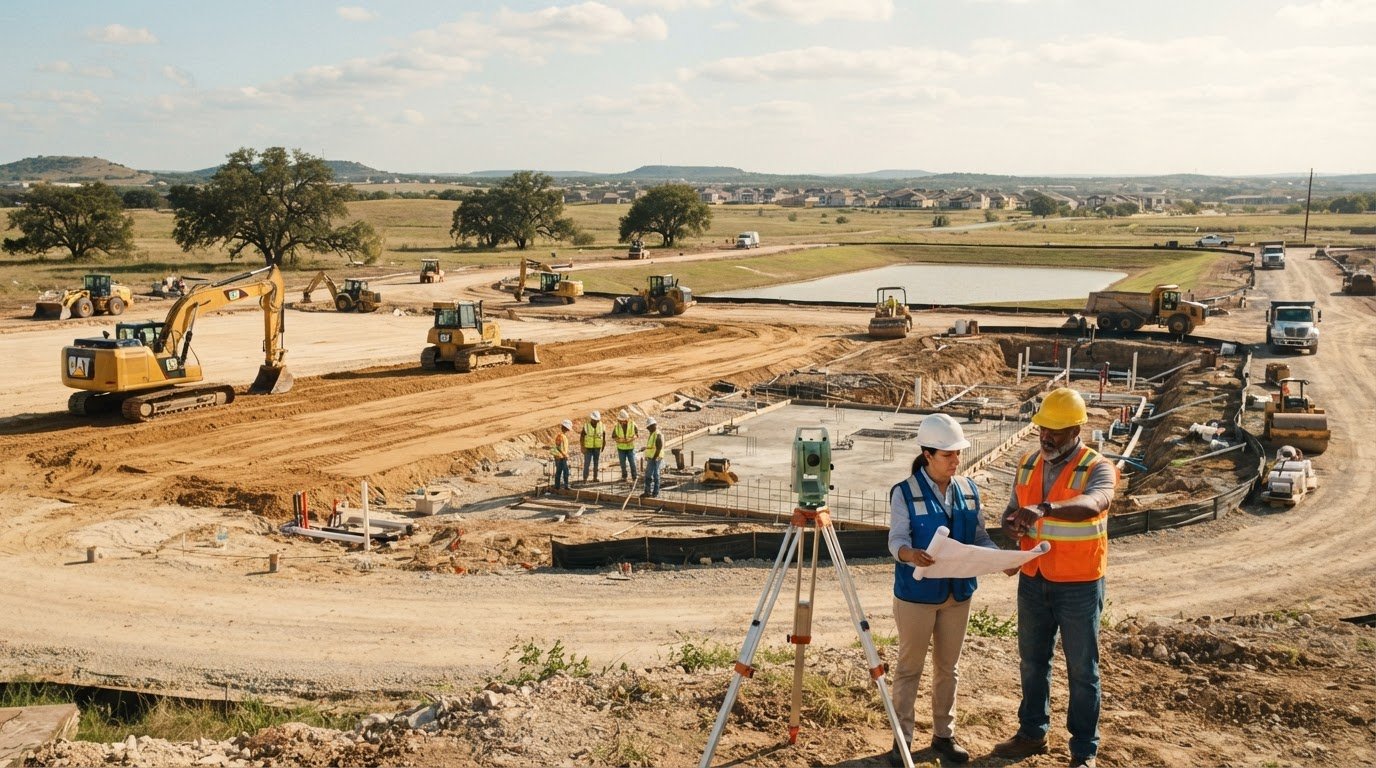
Operational efficiency is maximized when earthwork and structural pouring are synchronized under a single management framework. This integration allows for a seamless transition from mass soil excavation and the creation of detention ponds to the immediate setup of formwork for foundations. Site downtime is minimized because the grading and the pour are coordinated by the same entity. When a single contractor handles both commercial concrete paving Conroe and the building's structural podium slabs, coordination errors are virtually eliminated. This methodical approach ensures that paving stabilization and foundation work happen in a logical, rapid sequence, maintaining the momentum of the build. If you're planning a complex commercial project, you can partner with Born Integrated Construction to streamline your civil site work and structural execution through a unified, turn-key approach.
Implementing CIP Solutions with Born Integrated Construction
Born Integrated Construction (BIC) translates the technical benefits of site-poured structures into tangible project outcomes. Our approach is defined by a commitment to reliability and professional stability. We specialize in complex CIP garages, mid-rise foundations, and high-rise structures that require a disciplined hand. By applying our "Safety, Integrity, Efficiency" framework to every pour, we ensure the structural frame meets the highest standards of performance. This steadfast focus on execution allows our partners to realize the full scope of cast-in-place concrete advantages in their commercial developments.
Our methodology prioritizes a deep-rooted commitment to high standards and long-term viability. We don't just pour concrete; we establish the structural backbone of the Texas skyline. This involves a meticulous management of details that begins long before the first truck arrives. By integrating our expertise in Turn Key Civil work with structural concrete construction, we provide a seamless transition from the ground up. This continuity is essential for maintaining the integrity of the project's schedule and budget.
A Proven Process for Structural Concrete
Quality is not a byproduct; it's a deliberate result of our structured protocols. We implement rigorous on-site testing to verify the strength and consistency of every ready-mix delivery. Our teams are seasoned in managing intricate formwork and the precision required for post-tensioning high-performance slabs. This technical proficiency ensures podium slabs and multi-level structures remain resilient against the environmental stressors previously discussed. We prioritize attentive service and consistent performance to build lasting foundations for our clients' investments.
Your Partner for Integrated Texas Construction
BIC provides a comprehensive service model that spans from mass soil excavation to the final structural concrete. This integrated approach simplifies project management by reducing the number of interfaces between different trades. We maintain a strong presence across major Texas metros, including Houston, Austin, Dallas, and San Antonio. Whether your project involves a detention pond or a structured concrete parking garage, our team delivers the operational precision needed to maximize cast-in-place concrete advantages for your specific site. We focus on substance and proven results to ensure your development is both cost-effective and structurally sound. To begin your next project with a dependable partner, contact Born Integrated Construction for a CIP project quote and experience the difference of a truly integrated civil and structural solution.
Building for Longevity in the Texas Landscape
The decision to utilize cast-in-place concrete is a commitment to the long-term viability of a structure. By eliminating the vulnerabilities of assembly joints and the logistical burdens of off-site manufacturing, developers secure a foundation that's both resilient and adaptable. We've established how the core cast-in-place concrete advantages, specifically monolithic integrity and superior thermal mass, directly address the unique environmental demands of major Texas metropolitan areas. Success in large-scale commercial construction requires a partner who understands the vital intersection of civil site preparation and structural execution.
Born Integrated Construction provides this stability. We specialize in CIP midrise and highrise foundations across Houston, Austin, Dallas, and San Antonio. Our team meticulously manages every detail, from mass soil excavation to underground utility integration, ensuring your project begins on a steadfast foundation. When you're ready to secure a dependable partner for your next development, Request a Turn Key Civil and Concrete Proposal from our seasoned experts. We look forward to establishing a lasting professional partnership built on proven results and unwavering consistency.
Frequently Asked Questions
What are the primary benefits of cast-in-place concrete over precast?
The primary benefits include monolithic structural continuity and the ability to adapt to irregular architectural footprints on-site. These cast-in-place concrete advantages ensure that the entire building functions as a single, unified unit, which is superior for load distribution. Unlike precast, there are no assembly seams that could serve as moisture ingress points, making it a more reliable choice for long-term structural integrity in varied climates.
Is cast-in-place concrete more expensive for commercial projects?
Project costs for cast-in-place concrete are often competitive because they eliminate the high transportation and heavy-haul fees associated with precast elements. While on-site labor requirements are higher, the use of local ready-mix suppliers reduces the overall logistical burden. In major Texas metros, ready-mix prices average around $173.25 per cubic yard, providing a stable cost basis for high-volume commercial developments without the premium of factory manufacturing.
How does cast-in-place concrete handle the expansive soil in Texas?
Cast-in-place systems manage expansive clay soils by creating a rigid, monolithic raft that distributes the pressure of shifting ground evenly. In regions like North Texas, expansive soil can necessitate a 15% to 25% increase in material to ensure the slab remains stable. This monolithic approach prevents the localized cracking and differential settlement that often occur when segmented foundation systems are used in volatile soil conditions.
What is the typical curing time for a cast-in-place concrete slab?
A typical cast-in-place slab reaches its full design strength after 28 days of curing. However, structural teams often remove formwork or allow foot traffic much sooner, depending on the specific mix design and ambient temperature. Proper moisture retention during the first seven days is critical for ensuring the concrete achieves its intended durability and resistance to future surface scaling.
Can cast-in-place concrete be used for multi-level parking garages?
Cast-in-place concrete is the standard choice for multi-level parking garages and podium decks due to its superior waterproofing and load-bearing capacity. These structures benefit from the lack of assembly joints, which protects internal post-tensioning cables from moisture and corrosive salt air. The on-site nature of the pour also allows for the precise integration of complex drainage and MEP systems within the structural frame.
How does weather in Houston affect the cast-in-place pouring schedule?
Precipitation and high humidity in Houston require methodical planning to ensure the integrity of the pour. Excess moisture can compromise the water-to-cement ratio, so crews monitor local forecasts and use specialized admixtures to manage setting times. We prioritize operational precision to ensure that environmental factors don't impact the finished quality or the long-term durability of the structural element.
What is structural continuity and why does it matter for high-rises?
Structural continuity refers to the seamless transfer of loads through a unified concrete frame without the interruption of mechanical joints. This is vital for high-rise buildings because it provides superior resistance to lateral forces, such as high-wind events. A continuous structural unit distributes stress more efficiently, reducing the risk of fatigue at connection points and ensuring a more stable internal environment for occupants.
Does cast-in-place concrete require more on-site labor than precast?
While cast-in-place concrete requires more on-site labor for formwork and reinforcement placement, this investment provides greater control over the final result. On-site crews can make precise adjustments to accommodate MEP embeds or minor design changes that would be impossible with pre-manufactured components. This disciplined approach to execution ensures that the structural foundation is tailored exactly to the unique demands of the site.