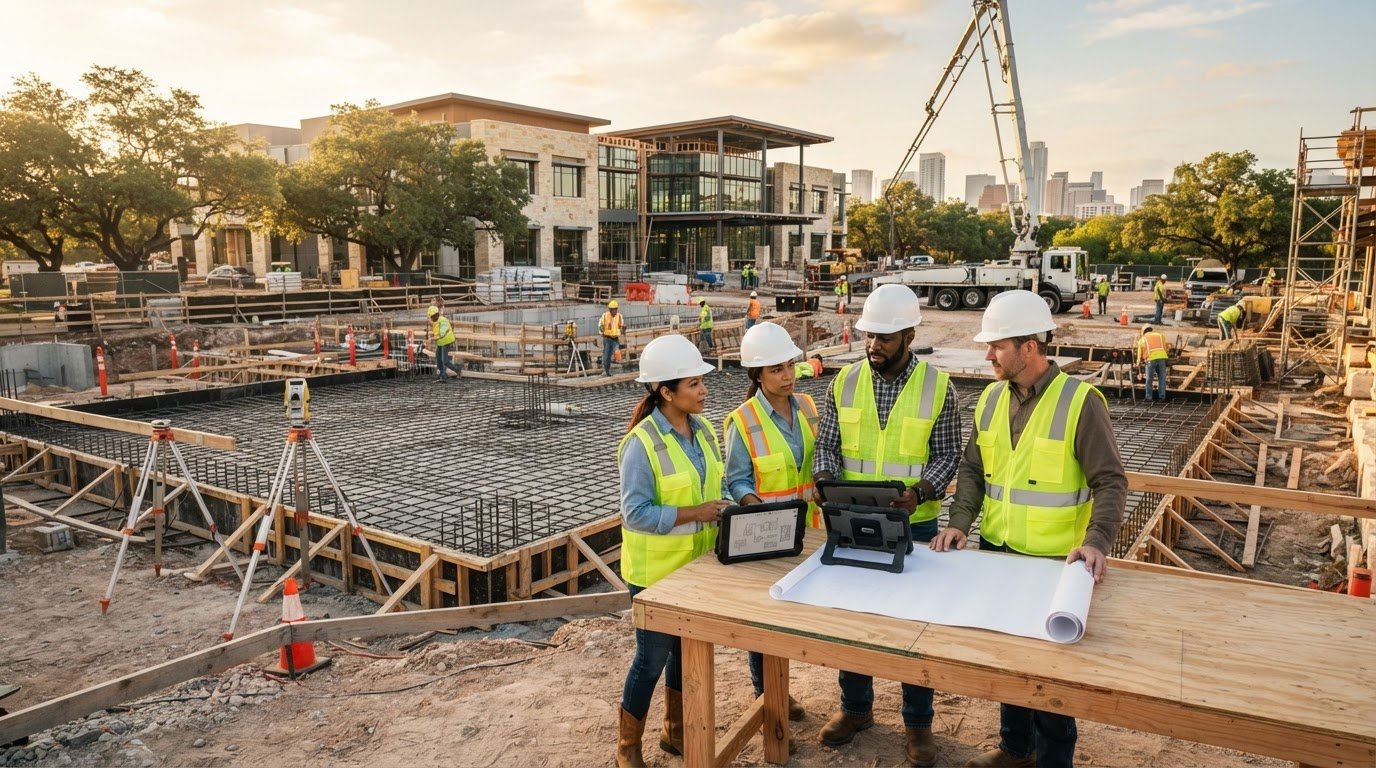
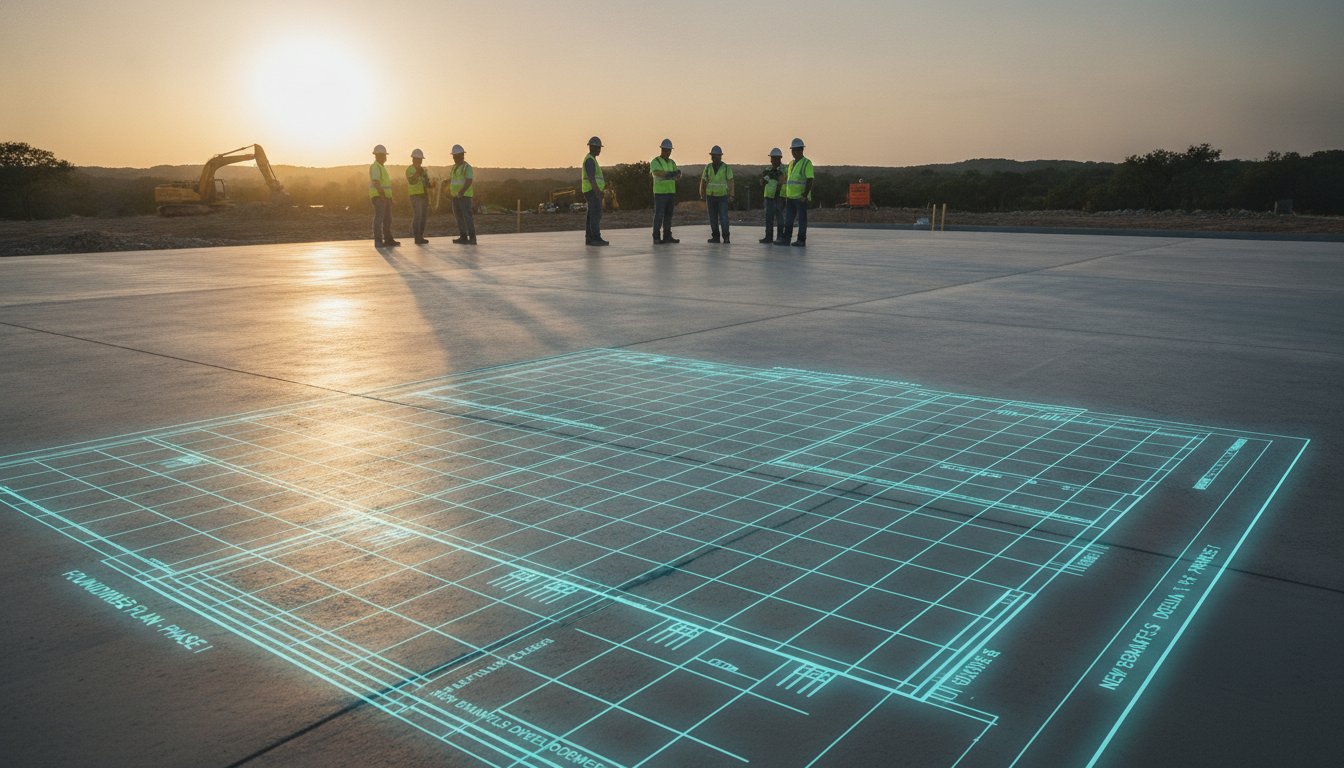
In a city that has grown by nearly 30% since 2020, the difference between a successful commercial development and a permanent structural liability often rests on the precision of the initial pour. You recognize that while the New Braunfels market offers immense opportunity, the region’s expansive clay soils and strict municipal codes leave no room for error. It's frustrating to manage contractors who overlook site stabilization or fail to meet ADA requirements; these oversights lead to costly delays and premature cracking. Securing a dependable partner for commercial concrete flatwork New Braunfels requires a focus on both technical proficiency and operational stability.
This guide will help you navigate the complexities of selecting a contractor who delivers high-durability surfaces while managing safety and city compliance autonomously. We'll explore the necessity of integrated civil work, the impact of 2026 building regulations, and the standards required to ensure your project remains a lasting asset. By prioritizing reliability and professional craftsmanship, you can establish a foundation that withstands both the environment and the test of time.
Key Takeaways
- Understand why commercial infrastructure requires higher durability standards than residential projects to withstand industrial loads and high traffic.
- Review the technical performance metrics for various horizontal surfaces, from ground-level paving to elevated podium decks.
- Discover how proper site preparation and soil stabilization prevent structural failure caused by the expansive clay soils in Central Texas.
- Identify the essential selection criteria for a commercial concrete flatwork New Braunfels partner, focusing on safety ratings and operational efficiency.
- Learn the advantages of an integrated civil and concrete approach for maintaining project timelines and ensuring municipal compliance.
Defining Commercial Concrete Flatwork Standards in New Braunfels
Commercial concrete flatwork encompasses any horizontal surface engineered to support high-traffic volumes or industrial loads. In a rapidly expanding market like New Braunfels, which has seen nearly 30% population growth since 2020, the infrastructure must meet rigorous performance standards to remain viable. Developers often find that residential-grade contractors lack the technical depth required for these high-stakes environments. While a residential driveway focuses on curb appeal, commercial concrete flatwork New Braunfels projects demand a focus on structural integrity and long-term durability.
Adhering to the 2026 municipal building codes is a non-negotiable aspect of modern development. The City of New Braunfels has implemented a "growth should pay for growth" policy, ensuring that new infrastructure is built to last and integrates seamlessly with existing city systems. This includes strict adherence to drainage requirements and load-bearing specifications that prevent premature failure. When you invest in a concrete slab for a commercial application, you aren't just buying a surface; you're commissioning a critical component of your property's structural health.
Flatwork is a structural system designed to distribute weight and resist environmental stressors rather than a mere cosmetic finish. In the Central Texas climate, where soil movement is a constant threat, this distinction is vital for protecting your capital investment.
The Scope of Commercial Flatwork
The applications for commercial-grade horizontal concrete are diverse, each requiring specific engineering considerations:
- Structural Slabs on Grade: These provide the foundation for retail centers and warehouse facilities, often requiring specialized finishes for industrial equipment.
- Heavy-Duty Concrete Paving: Designed for high-volume delivery routes, these surfaces must withstand the constant torque and weight of heavy freight.
- Pedestrian Thoroughfares: Durable sidewalks and ADA-compliant ramps are essential for public safety and municipal compliance in New Braunfels.
Why Commercial Specs Matter
Commercial specifications prioritize longevity through higher PSI (pounds per square inch) requirements, typically ranging from 4,000 to 5,000 PSI depending on the use case. This strength is necessary to resist the wear of heavy machinery and environmental fluctuations. Reinforcement standards also differ significantly from residential work. While some contractors may suggest fiber mesh alone, high-durability projects in Texas often require traditional rebar grids to manage the tension created by expansive clay soils. Proper reinforcement ensures that the concrete maintains its form even when the ground beneath it shifts, preventing the deep structural cracks that lead to costly repairs.
Evaluating Performance Specs: Slabs, Sidewalks, and Paving
Evaluating the performance specifications of your project is the first step in ensuring a long-term return on investment. In 2026, the metrics for success go beyond simple thickness. We measure performance through compressive strength, surface regularity, and moisture vapor emission rates. For developers executing commercial concrete flatwork New Braunfels, understanding the distinction between different structural applications is paramount. Each surface must be engineered to withstand the specific stressors of its intended use, whether it’s a high-traffic loading dock or a public pedestrian plaza.
A standard slab on grade rests directly on prepared soil, while multi-story podium slabs are structural elements that support additional levels of construction. Each requires a unique approach to reinforcement and load distribution. Regardless of the application, the management of expansion and contraction remains a primary concern. We utilize precision saw-cutting and strategic jointing to direct the inevitable stresses within the concrete. This prevents the uncontrolled cracking that can compromise the surface's integrity and lead to expensive maintenance cycles down the road.
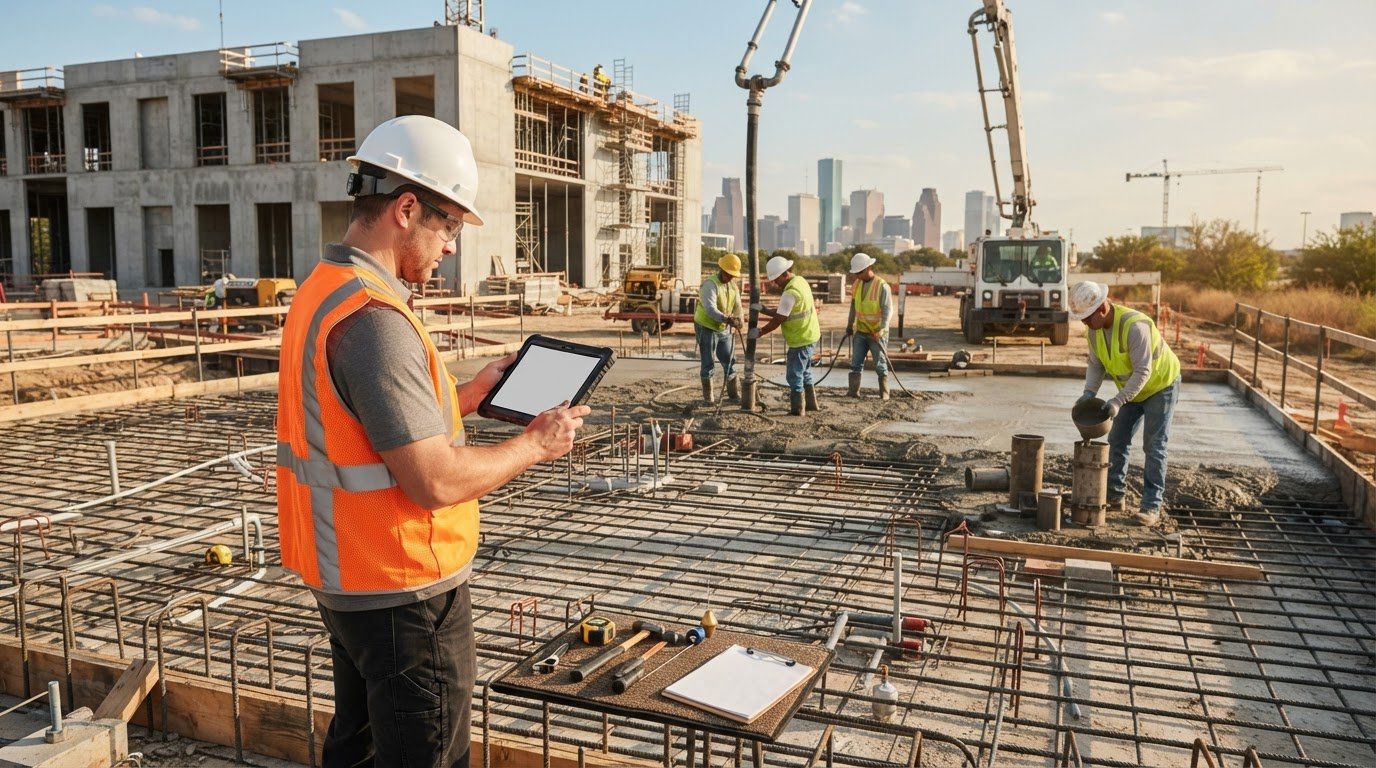
The final texture of the concrete also dictates its safety and longevity. A power trowel finish creates a dense, smooth surface ideal for industrial interiors and warehouses where easy cleaning and low rolling resistance are required. Conversely, exterior paving typically receives a broom finish. This technique provides the essential slip resistance needed for public safety, especially during the humid or rainy conditions common to the Texas Hill Country.
Slab on Grade for New Braunfels Facilities
When developing warehouse or retail facilities, optimizing the slab for heavy equipment loads is essential. We focus on high-density reinforcement and precise thickness to prevent settlement issues. A critical part of this process involves Soil stabilization to ensure the ground beneath provides a uniform bearing capacity. Additionally, installing a high-performance vapor barrier is a standard requirement to protect interior spaces from moisture migration. For those seeking specialized expertise, our Commercial Concrete Slab on Grade Services in Texas provide the structural foundation necessary for complex developments.
Commercial Sidewalks and Pedestrian Pathways
Pedestrian pathways in Comal County must meet strict ADA standards for slope and cross-slope. Achieving this requires meticulous grading and formwork to ensure compliance with the 2026 accessibility guidelines. These pathways often intersect with underground utilities and storm drainage systems, requiring a partner who understands how to integrate concrete work with civil infrastructure. Maintaining aesthetic consistency across large-scale developments is equally important, as it reflects the quality of the overall project. If you require a partner who prioritizes these technical details, consider how integrated concrete solutions can streamline your next project.
The Critical Role of Soil Stabilization in Comal County
The geography of Comal County presents a unique challenge known to local engineers as the "Texas Heave." This phenomenon occurs because of the highly expansive clay soils that characterize the region. These soils expand significantly when saturated and contract during the dry Texas summers, creating vertical movement that can easily shatter a standard slab. For commercial concrete flatwork New Braunfels, soil stabilization isn't an optional add-on; it's a foundational requirement for structural viability. When the ground moves, the concrete must either move with it or be strong enough to resist it, and without proper preparation, the latter is impossible.
Contractors who ignore these conditions often face catastrophic flatwork failure within 24 months of completion. To prevent this, we utilize both chemical and mechanical stabilization methods tailored to the specific geotechnical report of the site. Mechanical stabilization involves precise moisture control and compaction, while chemical methods often introduce lime or cement to alter the soil’s molecular structure and reduce its plasticity. Adhering to the ACI Guide to Concrete Floor and Slab Construction ensures that the subgrade is prepared to the highest industry standards before a single yard of concrete is poured. This disciplined approach to site preparation is what separates a long-term asset from a future liability.
Mass Excavation and Site Readiness
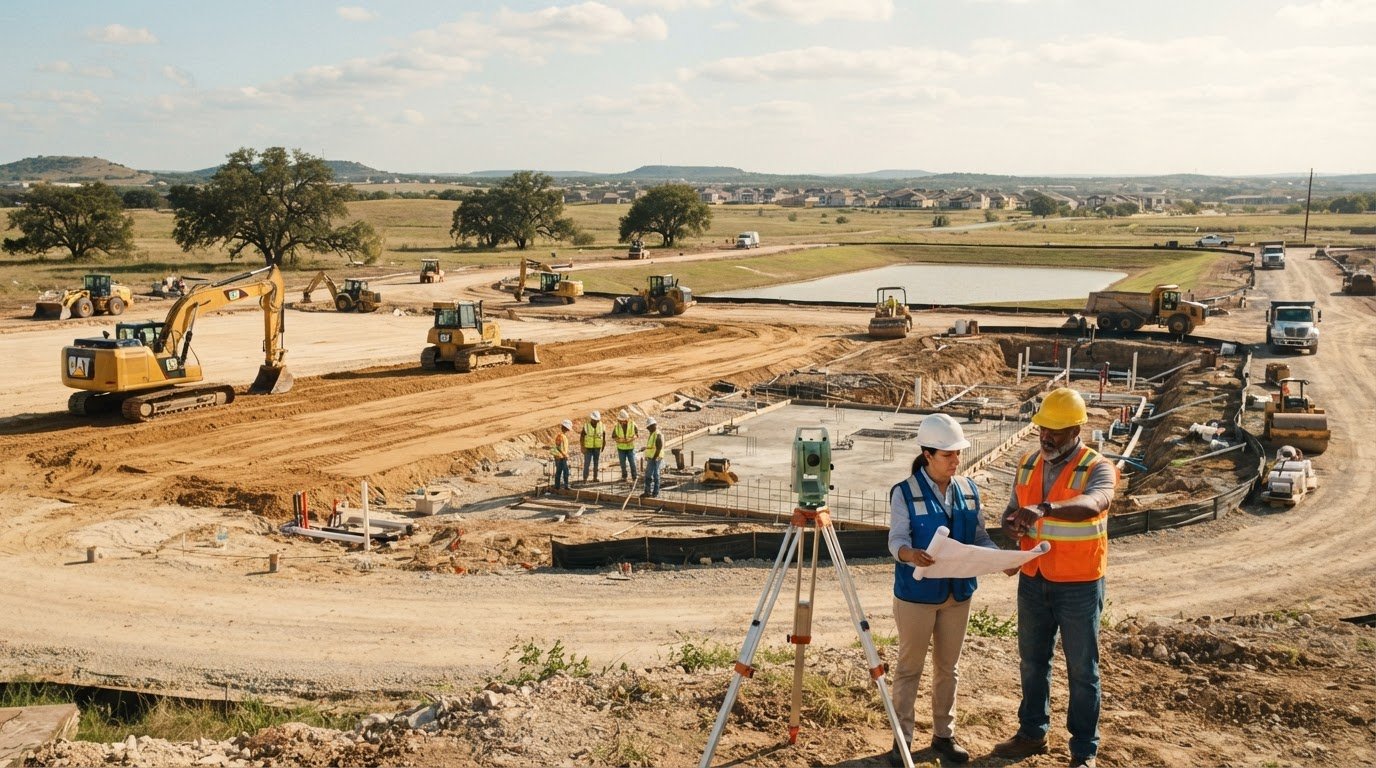
Preparing a site for a large-scale commercial footprint requires more than just clearing debris. Mass soil excavation involves the removal of unsuitable organic materials and the strategic leveling of the terrain to ensure uniform load distribution. During this phase, managing the moisture content of the subgrade is critical to prevent future shifting. It's a fundamental truth in construction that concrete is only as stable as the soil beneath it.
Detention Ponds and Drainage Integration
In New Braunfels, effective drainage is just as important as the concrete pour itself. Commercial flatwork must interface seamlessly with stormwater management systems to prevent water from pooling near the edges of slabs or paving perimeters. We integrate detention ponds and specialized drainage excavation into the site plan to manage runoff effectively. This protects the integrity of the soil stabilization and prevents the erosion that can lead to subgrade voids and structural collapse. Proper drainage ensures that your investment remains secure, regardless of the unpredictable Texas weather patterns.

Selection Criteria for Commercial Flatwork Contractors
Selecting a contractor for commercial concrete flatwork New Braunfels projects requires a rigorous evaluation of operational capacity. Developers often prioritize price; however, the hidden costs of poor coordination or equipment failure can quickly erode project margins. One of the most critical factors is the contractor's ability to self-perform the work. Companies that rely heavily on a network of subcontractors often lose control over the schedule and the consistency of the pour. A firm with a dedicated workforce and a well-maintained fleet of equipment provides the stability necessary for complex commercial developments.
Safety is a prerequisite for site access on any professional commercial project. You should verify a contractor's Experience Modification Rate (EMR) to gauge their safety performance over time. A low EMR indicates a disciplined approach to risk management, which translates to fewer delays and lower liability for the developer. Beyond safety, evaluate the breadth of the contractor’s services. A partner who manages mass soil excavation, underground utilities, and concrete construction under one roof reduces the number of handoffs and potential points of failure on the job site.
Integrity and Professional Reliability
Transparent scheduling is the lifeblood of a commercial project. You need a partner who provides realistic timelines and adheres to them with precision. Communication protocols between the concrete subcontractor and the general contractor must be established early to ensure that site readiness aligns with the pouring schedule. When vetting potential partners, evaluate a portfolio of local commercial projects in New Braunfels. This demonstrates not only their technical skill but also their familiarity with local municipal standards and the specific environmental challenges of Comal County.
Turnkey vs. Specialized Contracting
There are significant benefits to using a single source for both site work and flatwork. This turnkey approach reduces friction between trade transitions, such as the critical moment when the excavation team hands the site over to the concrete crew. If the same firm manages both, the accountability for subgrade moisture and compaction remains clear. This integrated model is similar to our approach for Commercial Concrete Paving in Conroe, where engineering heavy-duty roads requires a seamless transition from earthwork to final finish. Reducing these operational gaps is essential for maintaining the momentum of your development. Ensure your next project is built on a foundation of reliability by partnering with Born Integrated Construction for your civil and structural needs.
Partnering with Born Integrated Construction for New Braunfels Developments
Born Integrated Construction (BIC) operates with the understanding that project stability is the product of disciplined execution. We align our operations with the high-growth demands of the region, providing a reliable foundation for developers navigating the complexities of 2026 infrastructure requirements. When you engage BIC for commercial concrete flatwork New Braunfels, you're partnering with a team that values substance and precision over temporary shortcuts. Our approach is designed to instill confidence in our partners, ensuring that every phase of the concrete work meets our steadfast standards for durability and professional conduct.
Our commitment to excellence is reflected in our meticulous management of details, from the initial site assessment to the final curing process. We don't view concrete as a commodity; we treat it as a structural system that requires expert oversight to perform under industrial loads. By maintaining a disciplined workforce and a reliable fleet of equipment, we ensure that your project remains on schedule and within the established technical specifications. This focus on consistency allows us to act as a dependable partner that manages safety and operational efficiency autonomously on your behalf.
Integrated Civil and Concrete Capabilities
Our "Integrated" designation reflects a comprehensive service model that eliminates the fragmentation common in civil projects. We manage the entire lifecycle of the horizontal build, from mass soil excavation and stabilization to the final finishing of sidewalks and paving. This coordination ensures that underground utility installations are seamlessly integrated with the structural flatwork, preventing the scheduling conflicts that often delay large-scale developments. Our proven performance in Cast-in-Place (CIP) structures further supports our ability to deliver durable, load-bearing solutions for multi-story podiums and industrial slabs alike.
A Steadfast Partner for Comal County
The grounded tone of our communication mirrors the stability we bring to the job site. We recognize that in Comal County, the enduring nature of concrete craftsmanship is the only defense against the region's environmental stressors. Our focus remains on creating long-term value through meticulous attention to detail and an unwavering commitment to safety protocols. We establish the permanent infrastructure that supports the city's ongoing expansion, ensuring that your development stands as a testament to quality. Contact Born Integrated Construction for a Professional Consultation to secure a bid for your 2026 commercial project and ensure your foundation is built to last.
Establishing a Foundation for 2026 Development
Successful commercial projects in Central Texas rely on more than just a surface-level pour. The expansive clay soils of Comal County demand rigorous site stabilization and mass excavation before any concrete arrives on site. Choosing a partner who understands the deep integration of civil site work and structural concrete ensures your development meets the strict 2026 municipal standards while avoiding the pitfalls of trade friction. By prioritizing technical proficiency and operational stability, you protect your long-term investment from premature structural failure.
Born Integrated Construction brings specialized expertise in CIP and structural concrete to every project we undertake. Our steadfast commitment to safety and efficiency allows us to manage complex requirements autonomously; this gives you the freedom to focus on broader development goals. We take pride in our disciplined approach to commercial concrete flatwork New Braunfels, ensuring that every sidewalk, slab, and parking area is built to last. If you're ready to secure a reliable partner for your next project, Request a Commercial Bid from Born Integrated Construction. Your vision deserves a foundation that's as enduring as it is precise.
Frequently Asked Questions
What is the difference between residential and commercial flatwork?
Commercial flatwork is engineered for industrial loads and high traffic volumes, requiring superior compressive strength and robust reinforcement. While residential projects focus on aesthetic appeal for light use, commercial specifications prioritize structural endurance and strict municipal compliance. This distinction is vital for developers who must ensure their horizontal surfaces can withstand the torque and weight of freight vehicles without premature failure.
How does New Braunfels soil affect concrete durability?
The expansive clay soils found throughout Comal County undergo significant volume changes as moisture levels fluctuate. This movement, often called the "Texas Heave," puts extreme pressure on horizontal concrete, leading to structural cracks if the ground isn't properly treated. Successful projects require professional site preparation to mitigate these environmental stressors and maintain the long-term integrity of the concrete foundations.
Why is soil stabilization necessary for commercial parking lots?
Stabilization creates a uniform and predictable subgrade that prevents shifting soils from undermining heavy-duty paving. In high-traffic commercial parking lots, the constant weight of freight and delivery vehicles would quickly cause subgrade voids without this treatment. Chemical or mechanical stabilization ensures the ground provides a consistent bearing capacity, which is essential for protecting your capital investment from catastrophic structural failure.
Do you provide ADA-compliant sidewalk installation in New Braunfels?
We specialize in the installation of sidewalks and pedestrian pathways that strictly adhere to current ADA standards for slope and cross-slope. Our team ensures that all commercial concrete flatwork New Braunfels projects meet the 2026 municipal accessibility requirements to ensure public safety and legal compliance. This meticulous attention to detail prevents the need for costly corrections and ensures the development remains accessible for all users.
Can Born Integrated Construction handle both excavation and concrete?
We provide integrated civil solutions that encompass mass soil excavation, stabilization, and structural concrete construction under a single point of management. This turnkey approach eliminates the operational gaps between different trades, ensuring that site preparation is perfectly aligned with the technical requirements of the pour. By handling both excavation and concrete, we maintain clear accountability for the structural health of the entire project foundation.
What is the typical lifespan of a commercial concrete slab in Texas?
A professionally engineered commercial slab typically lasts 30 to 50 years when it's supported by proper soil stabilization and drainage systems. The actual lifespan depends heavily on the initial quality of the site work and the selection of high-strength concrete mixes. In the Texas Hill Country, managing moisture and soil movement is the most critical factor in ensuring the concrete remains a lasting asset for the property.
How do you ensure safety on large-scale commercial construction sites?
Safety is maintained through disciplined risk management and the strict enforcement of operational protocols on every commercial site. We prioritize a secure environment by utilizing a dedicated workforce and maintaining a modern, reliable fleet of equipment. Our commitment to safety is a core pillar of our professional stability, ensuring that large-scale projects proceed with minimal risk and maximum efficiency for our development partners.