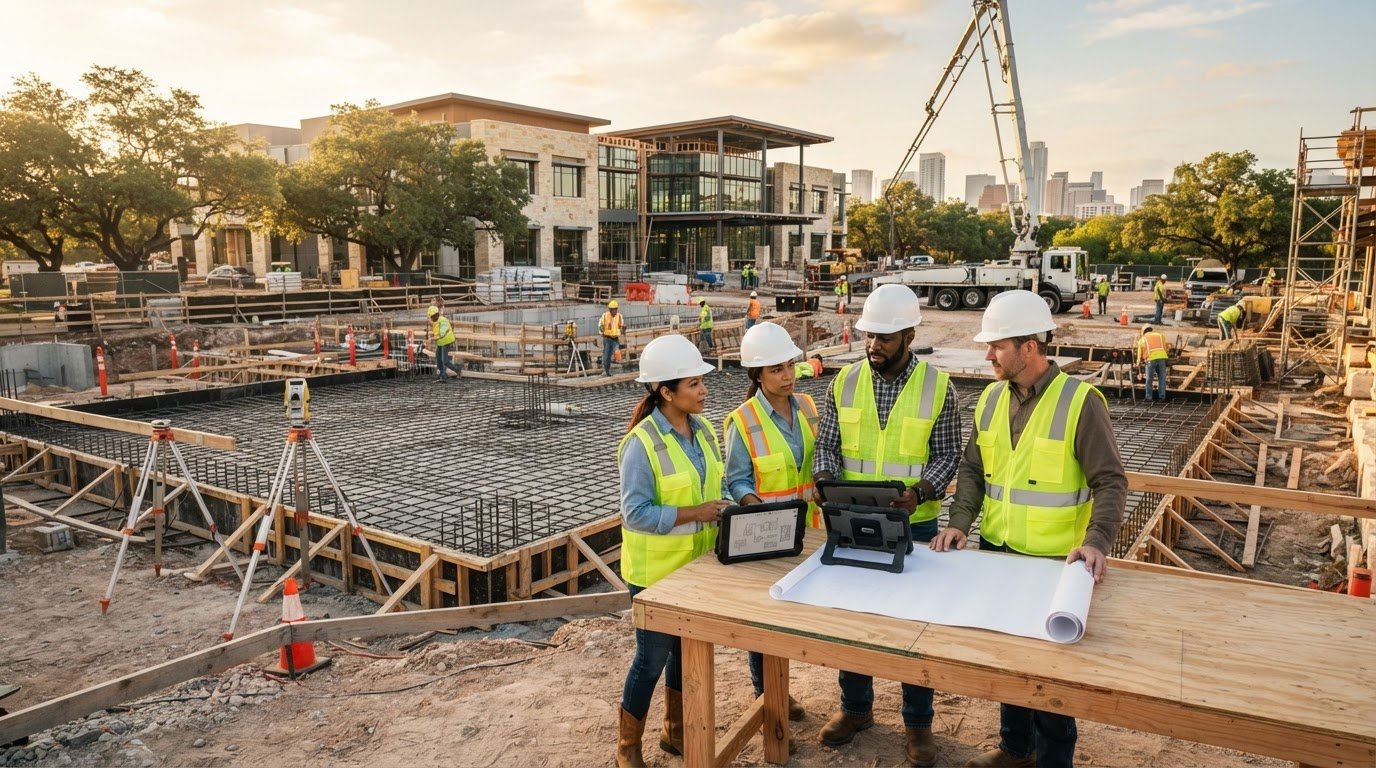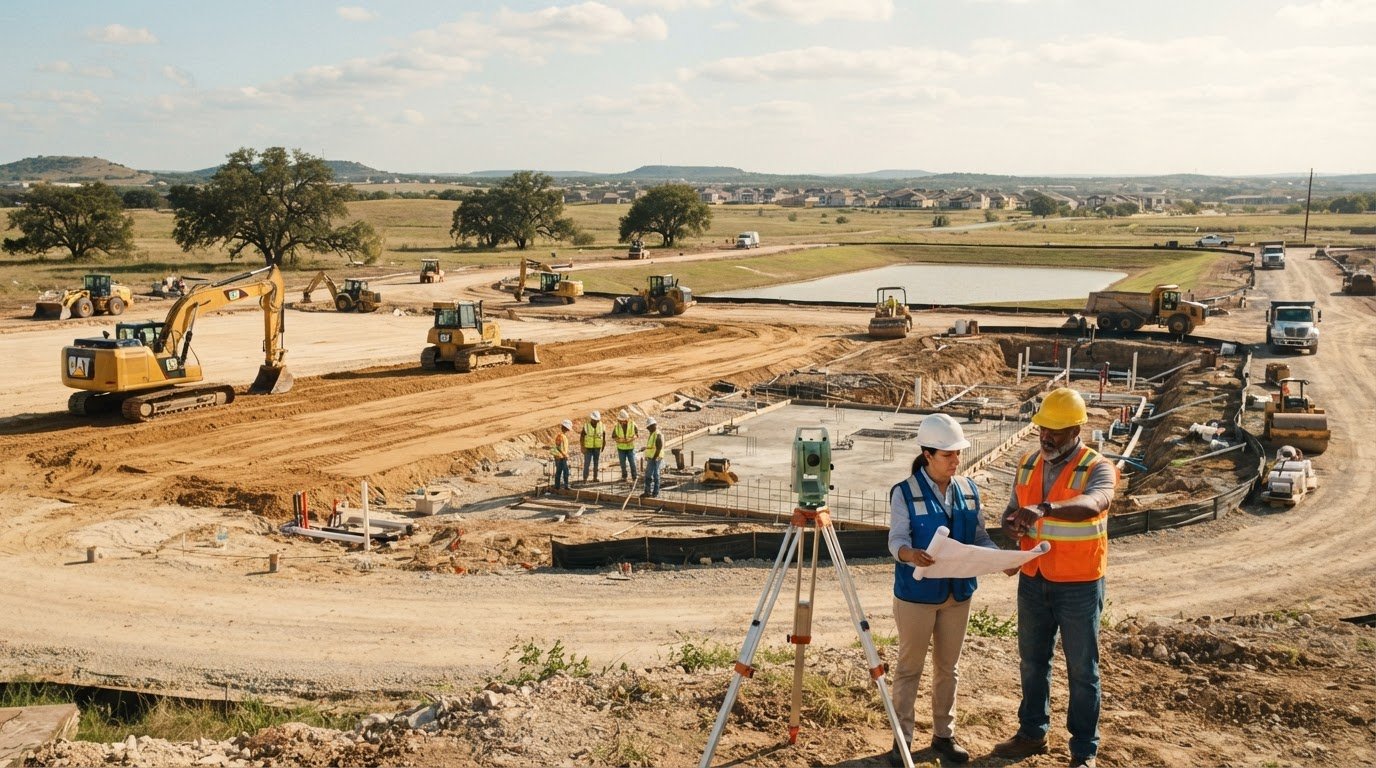
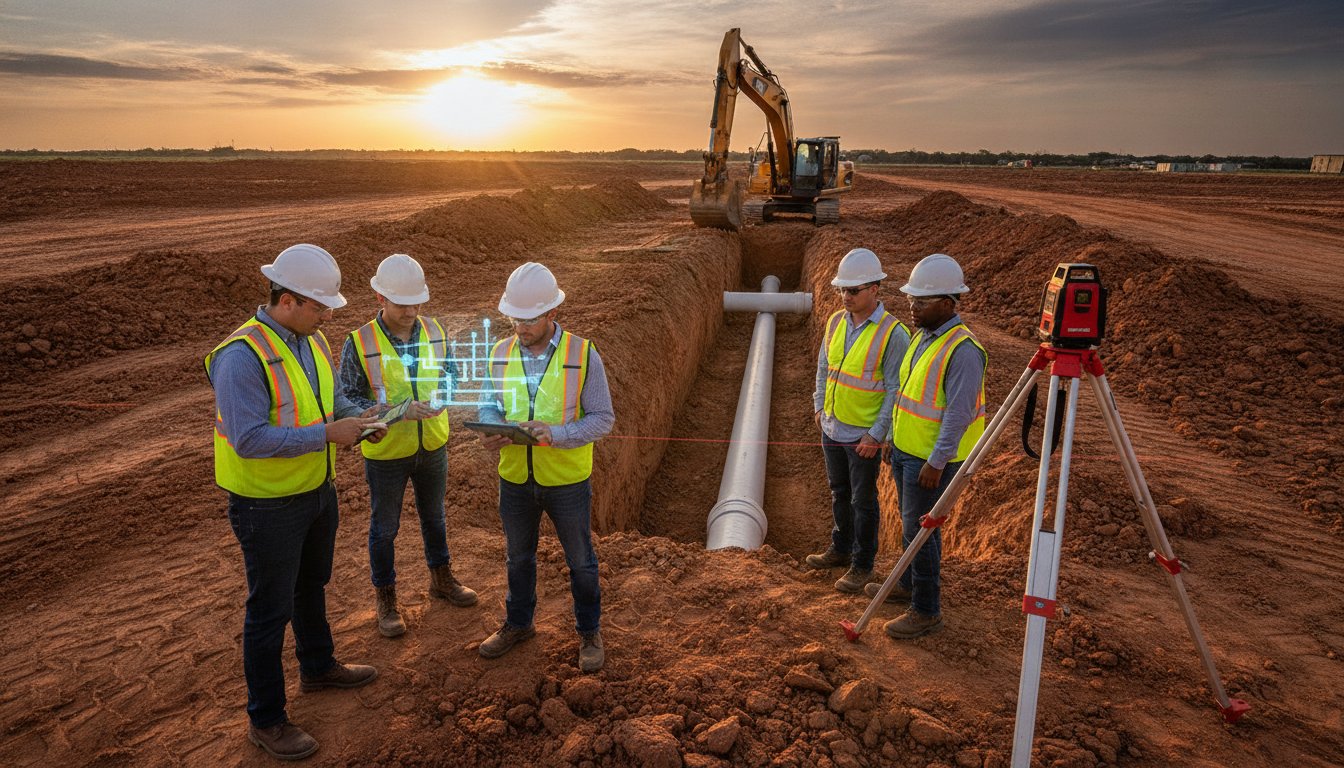
In the expansive clay of regions like Houston and Austin, a sanitary sewer line isn't just a utility; it's a structural liability if it isn't managed with absolute precision. You've likely seen projects stall because of failed municipal inspections or utility conflicts that could've been avoided during the mass excavation phase. It's a common frustration for developers to watch a timeline slip due to infrastructure that shifts or breaks before the first slab is even poured. Choosing an experienced sanitary sewer line installation contractor Texas relies on means securing a partner who understands the 2026 standards and the volatile soil mechanics of our region.
Reliability is the foundation of every successful development. This comprehensive guide will walk you through the complexities of large-scale sewer installation, from navigating 30 TAC Chapter 217 regulations to ensuring seamless integration with paving and earthwork. You'll learn how a disciplined approach to civil infrastructure leads to on-time utility acceptance and long-term viability for your site. By focusing on meticulous execution and safety, we help you build a foundation that lasts.
Key Takeaways
- Understand why laser-precise elevation and the correct choice of PVC or Ductile Iron are vital for gravity flow systems in expansive clay.
- Navigate the requirements of Texas Municipal Utility Districts and city codes to ensure your project's seamless infrastructure acceptance.
- Learn how integrating earthwork with utility installation prevents the logistical conflicts that don't just delay projects but risk site stability.
- Evaluate the safety and performance standards required when hiring a sanitary sewer line installation contractor Texas relies on for high-risk work.
- Discover strategies to protect your project timeline by managing utility conflicts during the initial mass soil excavation phase.
The Critical Role of Sanitary Sewer Infrastructure in Texas Developments
The success of a master-planned community or commercial hub begins long before the first slab is poured. It starts with the installation of robust underground utilities that dictate the site's long-term operational health. A professional sanitary sewer line installation contractor Texas developers rely on understands that these systems are the literal backbone of civil site readiness. Without a precisely engineered sewer network, the most impressive surface structures remain uninhabitable and legally non-compliant. Structural integrity isn't a concept reserved for the framing of a building; it's a fundamental requirement of the trenching, bedding, and piping that sit ten feet below the soil.
As infrastructure growth continues to accelerate into 2026, particularly in the Conroe and The Woodlands corridors, the demand for high-capacity utility systems has reached a critical point. If the underground phase is rushed or mismanaged, the resulting pipe shifts can compromise paving and lead to catastrophic failures. Site readiness depends on the seamless execution of earthwork and utility placement to ensure that every subsequent phase of construction stays on schedule and within regulatory bounds.
Wastewater vs. Stormwater: Understanding the Distinction
Developers must distinguish between the two primary water management systems on a site to avoid costly design errors. While storm drainage is designed to handle massive volumes of runoff during Texas thunderstorms, sanitary sewer infrastructure is built to safely transport contaminated wastewater to treatment facilities. This requires a closed system, often utilizing PVC (SDR-35) or HDPE pipes, to prevent environmental leaks. Preventing cross-contamination is a primary concern for Texas water districts, making the separate requirements for gravity mains and pressurized force mains a critical point of compliance for any new project.
Why Texas Geography Demands Specialized Installation
Texas presents some of the most challenging geological conditions in the United States. A sanitary sewer line installation contractor Texas teams hire must adapt their strategy based on the specific region of the state. Generic installation methods that work in sandy loam will fail when confronted with the unique soil mechanics found here. Several factors dictate the complexity of these installations:
- Gulf Coast Water Table: High saturation levels in coastal regions require constant dewatering and specialized trench shoring to maintain safety and pipe alignment during the install.
- Black Gumbo Clay: High-plasticity soils in Houston and Beaumont demand rigorous soil stabilization to prevent pipe shear or joint separation during seasonal wet-dry cycles.
- Central Texas Limestone: Rock excavation requires heavy-duty hydraulic hammers and precise bedding material to prevent point-loading on the pipe walls, which can lead to premature cracking.
Whether dealing with the coastal mud or the Hill Country rock, the goal remains the same: creating a durable, gravity-fed system that meets the rigorous standards of 2026 and beyond. By addressing these geographical challenges during the initial mass soil excavation phase, developers can avoid the delays caused by utility conflicts and failed municipal inspections.
Technical Standards for Sanitary Sewer Line Installation
Executing a high-performance wastewater system requires more than just digging a trench and laying pipe. It demands a rigorous adherence to technical standards that account for the unique geological pressures of the Texas landscape. A sanitary sewer line installation contractor Texas project managers trust must prioritize the physics of gravity flow. Because these systems typically rely on a precise slope to move waste without the aid of pumps, even a minor deviation in elevation can lead to sediment buildup or systemic backups. Achieving this level of accuracy requires the integration of advanced laser leveling and GPS-guided excavation equipment.
Material Selection for Longevity and Compliance
Selecting the correct material is the first step in ensuring a 50-year service life for underground infrastructure. While various options exist, three primary materials dominate the Texas market:
- PVC (SDR-35): This is the industry standard for most gravity sewer applications due to its exceptional corrosion resistance and smooth interior walls that facilitate flow.
- HDPE (High-Density Polyethylene): Often utilized for force mains or trenchless applications, HDPE offers flexibility and leak-proof fused joints that excel in areas prone to soil shifting.
- Ductile Iron: Reserved for areas with shallow cover or high external loads, such as under heavy-traffic roadways where structural rigidity is paramount.
Beyond the piping, the installation of precast concrete manhole structures must include high-grade seals and coatings to resist the corrosive effects of hydrogen sulfide gas commonly found in wastewater environments.
Precision Excavation and Bedding Protocols
The most significant threat to sewer integrity in Texas is the presence of "Black Gumbo" clay. This high-plasticity soil expands and contracts violently with moisture changes, which can easily snap or misalign poorly supported pipes. To mitigate this risk, a sanitary sewer line installation contractor Texas developers hire must implement strict bedding protocols. Instead of backfilling with native soil, we utilize a stabilized envelope of crushed stone or angular sand. This creates a "floating" foundation that allows the pipe to remain stable even as the surrounding clay moves.
Compaction is equally critical. Every layer of backfill must be mechanically compacted to specific densities to prevent future subsidence. Failure to achieve these standards often results in "dips" in the final paving or sidewalk flatwork. By maintaining a disciplined focus on these technical details, we ensure that the finished utility system meets all municipal codes and project specifications. For developers seeking a partner who understands these turnkey civil site solutions, operational precision is the only path to long-term viability.
Safety remains the overarching priority during these deep-trench operations. Utilizing trench boxes and hydraulic shoring isn't just a regulatory requirement; it's a core component of maintaining structural stability for the duration of the underground phase. This methodical approach ensures that the site remains secure for all trades involved in the development.
Navigating the Texas Regulatory Landscape: MUDs and Municipalities
Compliance in the Texas utility sector is a multi-layered process that requires more than technical skill; it demands a deep understanding of the administrative frameworks governing our land. A sanitary sewer line installation contractor Texas developers trust must act as a disciplined liaison between the project site and various governing bodies. Whether you're building within the strictly defined limits of the City of Houston or developing a master-planned community in a suburban district, the path to final acceptance is paved with specific permitting and inspection milestones. It's a process where technical proficiency meets bureaucratic precision, and the stakes for non-compliance include costly delays and failed municipal handovers.
MUD and Water District Coordination
Municipal Utility Districts (MUDs) are the primary engine for infrastructure growth in Texas, acting as political subdivisions that finance and manage utilities outside traditional city limits. For developers in Harris or Montgomery County, coordination with MUD engineers is a daily requirement. These districts often have their own sets of standards that may exceed state minimums. In 2026, combined water and sewer tap fees in these districts typically range from $5,000 to $12,000, with additional impact fees reaching up to $5,000 per connection. Managing these costs and timelines requires a contractor who treats district engineers as partners in the project's long-term viability.
Major municipalities follow their own distinct fee structures and permitting paths. In Houston, securing a Sanitary Sewer Tap Permit and a Road Bore permit costs approximately $30 each, with excavation permits ranging from $30 to $225. Austin requires a residential building sewer tap permit at $750 and an excavation permit of $400. Dallas permits for sewer line work generally range from $400 to $1,600. Navigating these regional variances is essential to maintain the momentum of the civil site work phase.
Testing and Acceptance Procedures
Municipal acceptance isn't granted until the system proves its integrity through a series of rigorous benchmarks. These tests aren't just formalities; they're the final verification of craftsmanship. A sanitary sewer line installation contractor Texas relies on will perform three critical evaluations before the project is considered complete:
- Air Pressure Testing: This ensures the entire network has zero-leakage integrity. The system must hold a specific pressure for a set duration to prove that every joint and seal is airtight.
- Mandrel Testing: For flexible piping like PVC, a mandrel is pulled through the line to check for deflection. This confirms that the pipe hasn't been crushed or misshapen by the weight of the backfill or expansive "Black Gumbo" clay.
- CCTV Inspection: A high-definition camera is sent through the lines to provide a visual record of the interior. This identifies any debris, standing water, or structural flaws that could hinder future flow.
The transition from construction to municipal maintenance is a formal transfer of liability. By adhering to these standards, we ensure that the infrastructure meets the 2026 TCEQ criteria and is ready for years of dependable service. A methodical approach to these final walkthroughs protects the developer's investment and ensures the site is ready for the next phase of vertical construction.

The Integrated Advantage: Combining Utilities with Civil Site Work
Fragmented project management is a primary driver of cost overruns in Texas civil construction. When a developer hires separate entities for earthwork and utility installation, they often inherit the logistical burden of mediating between conflicting crews. A single-source sanitary sewer line installation contractor Texas firms can rely on eliminates these friction points. By managing the entire scope from the initial cut to the final tap, we ensure that the underground systems are not just installed, but are perfectly synchronized with the broader site plan. This unified command structure reduces the risk of utility conflicts that frequently arise when grading crews and pipe crews operate under different leadership.
Coordinating Mass Excavation and Utility Corridors
Effective sequencing is the hallmark of a disciplined civil operation. We prioritize the optimization of earthwork to create clear, stable paths for pipe laying. This integrated planning allows for the simultaneous management of detention pond construction and sanitary main installation, ensuring that drainage and wastewater systems function in harmony from day one. By reducing the footprint of site disturbance through deliberate movement of heavy machinery, we minimize the environmental impact and lower the overall mobilization costs. Idle equipment time is virtually eliminated because the same team manages the transition from mass excavation to trenching. It's a methodical progression that prevents the "dig and re-dig" cycle that plagues uncoordinated sites.
Mitigating Paving Failures Through Utility Integrity
The long-term viability of a site's surface depends entirely on the stability of what lies beneath. Inconsistent utility backfill is a leading cause of "potholing" and premature cracks in finished surfaces, especially in regions with expansive clay. High-performance paving stabilization techniques are only as effective as the utility trenches they cover. If the trench isn't compacted to 95% or higher density, the soil will eventually settle, pulling the pavement down with it. We ensure that every manhole and cleanout is set with surgical precision, remaining perfectly flush with the future concrete paving. This integrated civil solution ensures that the infrastructure doesn't just meet 2026 standards at the time of inspection, but maintains its integrity for decades.
The "Born" approach is defined by a commitment to substance over style. We lead through proven results and the meticulous management of every site detail, ensuring that utility corridors never compromise the structural foundations of the development. This level of oversight provides developers with a sense of security, knowing that their investment is protected by a seasoned partner. For developers seeking a partner who values operational precision as much as they do, our turnkey civil site work provides a steadfast foundation for growth. Efficiency is not found in cutting corners, but in the seamless execution of a well-organized plan.
Choosing the Right Sanitary Sewer Contractor in Texas
Selecting a sanitary sewer line installation contractor Texas developers can trust is a decision that carries long-term financial and operational consequences. Because underground utilities are concealed once the project reaches completion, the quality of the work depends entirely on the internal standards and ethical conduct of the contractor. A developer must look beyond the initial bid to evaluate the underlying stability of the firm. This involves a rigorous assessment of safety records, the ability to self-perform critical tasks, and a demonstrated commitment to transparent communication. In an industry where subsurface surprises are common, having a steadfast partner is the only way to ensure project viability.
Safety and Integrity in the Field
Safety is not a mere checklist. It's a culture of discipline that ensures every team member returns home and every pipe is laid to exact specification. For high-risk underground work, a contractor's Experience Modification Rate (EMR) serves as a vital indicator of their operational maturity. Deep trenching in Texas requires absolute adherence to OSHA standards, including the mandatory use of trench boxes and hydraulic shoring systems. We believe that true efficiency never comes at the expense of infrastructure safety. A partner who leads with integrity will prioritize these protective measures, knowing that a single safety lapse can derail a project's timeline and reputation.
Integrity also manifests in the quality of the materials and the precision of the installation. Whether we're managing the challenges of "Black Gumbo" clay or navigating high water tables, our commitment to craftsmanship remains unwavering. We don't just aim for a passing grade on a municipal inspection; we aim for a system that functions flawlessly for decades. This focus on substance over style is what defines a quiet leader in the civil construction space. By maintaining a disciplined professional distance and focusing on proven results, we provide the security developers need to move forward with confidence.
Next Steps for Your Development Project
The transition from a raw site to a fully serviced development requires a partner who understands the integrated nature of civil work. Born Integrated Construction provides the expertise needed to manage complex utility systems alongside mass soil excavation and paving stabilization. We self-perform our underground utility installations to maintain total control over the schedule and quality of the output. This eliminates the uncertainty often associated with subcontracting and ensures that your project remains on a steady, predictable path toward municipal acceptance.
If you're planning a project in the Houston, Austin, or San Antonio markets, we're ready to provide a comprehensive utility scope review. Our team focuses on identifying potential conflicts early in the process to prevent delays before they occur. We invite you to experience the reliability of a partner who values professional stability and long-term viability as much as you do. To begin a consultation or to request a bid for your next development, contact Born Integrated Construction today. Let's build a foundation that lasts.
Securing Long-Term Viability for Your Texas Development
Establishing a durable wastewater network is an act of foresight that protects the long-term viability of your commercial or residential project. Successful site readiness depends on the seamless integration of mass soil excavation with precise utility placement. By addressing the challenges of expansive Texas clay and navigating the complexities of municipal acceptance early, you avoid the structural failures that plague uncoordinated developments. Choosing an experienced sanitary sewer line installation contractor Texas relies on for technical proficiency ensures that your infrastructure meets 2026 standards and beyond.
Born Integrated Construction remains a steadfast partner for developers in Houston, Austin, San Antonio, and Dallas-Fort Worth. Our commitment to safety, integrity, and turnkey civil site work provides the professional stability your project deserves. We focus on the meticulous management of details so you can focus on the growth of your enterprise. This disciplined approach to civil infrastructure creates a foundation that stands the test of time and seasonal soil movement.
Partner with Born Integrated Construction for Your Next Texas Infrastructure Project to ensure your site is built on a foundation of operational excellence. We look forward to delivering the consistent results and high standards your investment requires.
Frequently Asked Questions
What is the difference between a sanitary sewer and a storm sewer?
Sanitary sewers transport wastewater from plumbing fixtures to treatment plants; storm sewers manage rainwater runoff to prevent flooding. Sanitary systems are closed networks designed to prevent the leak of contaminated water into the environment. Storm systems are usually larger and lead to detention ponds or natural waterways. Choosing a skilled sanitary sewer line installation contractor Texas developers trust ensures these systems remain separate and compliant with all environmental codes.
Does Born Integrated Construction handle lift station installation?
Born Integrated Construction provides turnkey civil site work, which includes the installation of complex underground utility systems. While we focus on gravity-fed mains, our scope includes the structural components necessary for a fully operational wastewater network. We self-perform these installations to maintain a steadfast commitment to your project's timeline and structural integrity. Our team ensures that every component is integrated seamlessly with the broader site plan.
What are the most common causes of sewer line failure in Texas?
Soil movement is the leading cause of infrastructure failure in our region. The expansive "Black Gumbo" clay found in Houston and Beaumont exerts significant pressure on pipes as it swells and shrinks. If the bedding isn't properly stabilized with crushed stone, joints can separate or pipes can shear. Improper compaction during the backfill phase also leads to settling, which compromises both the utility and the paving above.
How long does a typical commercial sanitary sewer installation take?
The duration of an installation depends on the linear footage, trench depth, and specific soil conditions. For a typical commercial development, the utility phase is integrated with mass soil excavation and can span several weeks. We prioritize efficiency by managing these tasks under a single contract. This approach eliminates the scheduling conflicts that often occur when multiple contractors are working on the same site simultaneously.
What is a MUD, and why does it affect my sewer installation?
A Municipal Utility District (MUD) is a political subdivision of the state created to provide infrastructure and services like water and sewer. MUDs affect your installation because they govern the technical standards and collect the impact fees for your specific district. For a sanitary sewer line installation contractor Texas projects require, navigating these districts is essential to ensure that all underground work meets the rigid criteria for final municipal acceptance.
Can you install sanitary lines in high-density urban areas like Houston?
We have a proven track record in high-density markets like Houston, Austin, and San Antonio. Urban installations require meticulous management of road bore permits and existing utility conflicts. Our team is disciplined in executing these complex tie-ins while minimizing site disturbance. We ensure all work meets the specific 2026 municipal code updates for each city, maintaining a steady and predictable progress for your development.
How do you ensure sewer lines don't break in expansive Texas clay?
We use a stabilized envelope of angular sand or crushed stone to protect the pipe from soil movement. This bedding acts as a buffer against the shifting forces of expansive clay. By achieving 95% or higher compaction density in the backfill, we prevent the pipe from sagging or breaking over time. This methodical approach is a core part of our commitment to building lasting foundations for every project we manage.
What permits are required for sanitary sewer tie-ins in Texas?
Permitting requirements depend on your project's location. In Houston, you'll need a Sanitary Sewer Tap Permit and potentially a Road Bore Permit for connections under public streets. Austin and Dallas have their own fee structures and excavation requirements that must be met. We coordinate with these municipalities to ensure all permits are secured before trenching begins. This disciplined approach prevents the legal delays and fines that can stall a development.