With 61% of construction firms reporting project delays due to labor constraints in 2026, the margin for error in your concrete schedule has never been thinner. For a Texas developer, a single coordination failure between excavation and paving teams doesn't just stall a pour; it triggers a cascade of idle labor costs and missed delivery windows. Mastering how to avoid concrete construction delays is no longer just about weather monitoring; it requires a disciplined focus on the technical handoff between civil site work and structural execution.
You likely recognize that the most expensive hour on a job site is the one where nothing happens. We agree that predictability is the foundation of professional stability, especially when managing complex elements like slab on grade or post tension slabs. This guide provides professional strategies to streamline your concrete projects, from rigorous soil stabilization to integrated structural management, ensuring your development maintains its momentum. We will examine how a unified approach to earthwork and turnkey civil services creates a seamless transition to vertical construction, helping you lower contingency costs and secure long-term project viability through operational precision.
Key Takeaways
- Understand why concrete represents the critical path and learn how to avoid concrete construction delays by synchronizing specialized crews and equipment rentals.
- Recognize that project efficiency begins with earthwork, utilizing precision soil stabilization and mass excavation to create a reliable foundation for vertical progress.
- Develop proactive strategies for weather mitigation and vendor management to secure material lead times and maintain a predictable project timeline.
- Evaluate the technical advantages of Cast-in-Place (CIP) versus Precast foundations to determine the most efficient structural solution for your development’s speed-to-market requirements.
- Identify the benefits of a single point of accountability for both civil site work and structural concrete to eliminate friction during critical project handoffs.
Understanding the High Cost of Concrete Construction Delays
Concrete is the heartbeat of any commercial development. In 2026, it remains the critical path for almost every major project. If the slab isn't poured, the steel isn't erected and the envelope isn't sealed. A Construction delay at this stage is particularly damaging because it halts all vertical progress. Developers who understand how to avoid concrete construction delays recognize that every hour of downtime translates into tangible financial losses that extend far beyond the concrete crew's payroll.
The financial impact of a stall is rarely isolated to a single day's labor. You're paying for idle specialized crews, expensive pump rentals, and formwork that sits unused on the site. A two-day delay in a scheduled pour often ripples through the following three weeks of the project schedule. It forces you to reschedule MEP contractors and interior finishers who may have already moved on to other projects. This leave your site dormant while you wait for their next available window. Beyond the budget, there's a serious reputational risk. Investors and future tenants rely on steadfast delivery dates; missing these milestones suggests a lack of operational precision that can devalue a developer's professional standing.
The 'Concrete Clock': Why Timing is Non-Negotiable
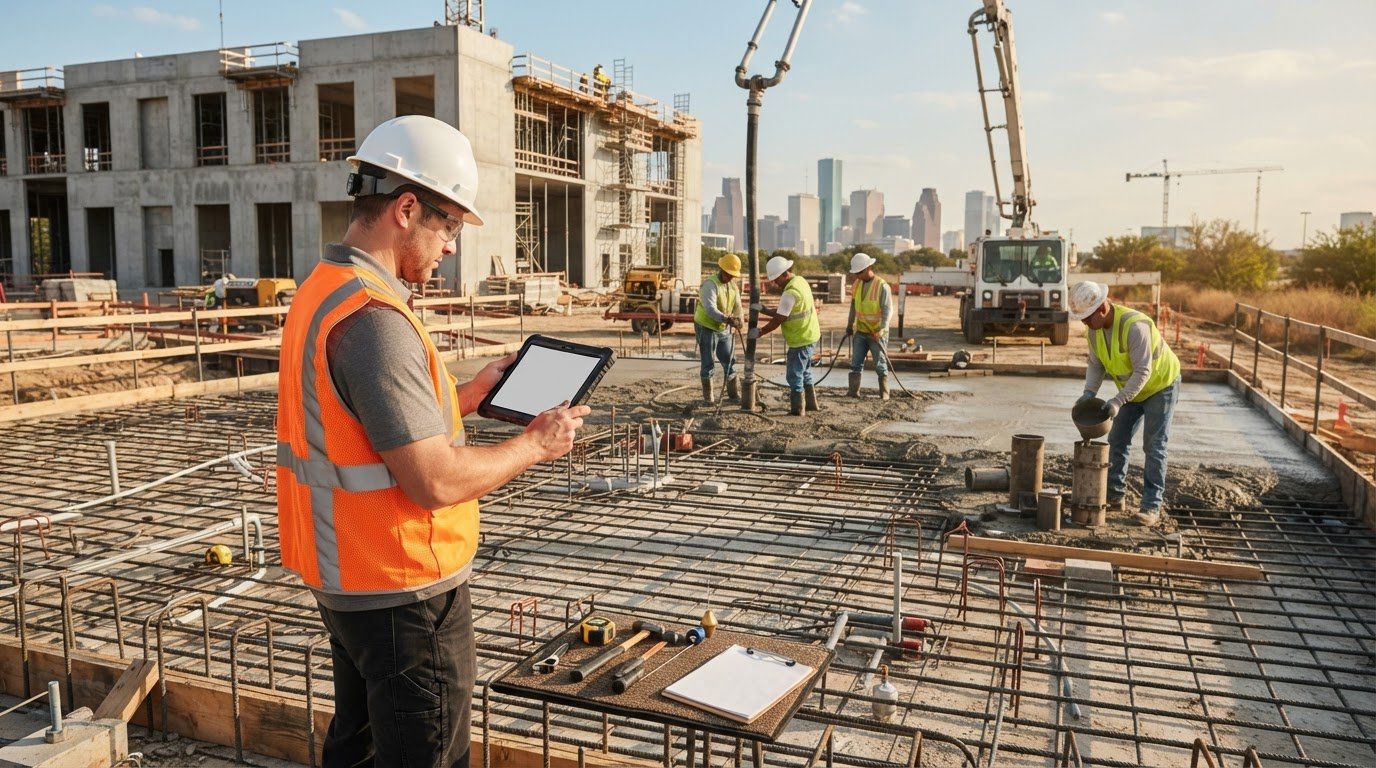
Wet concrete is a perishable material with a limited window for placement. Logistics must be precise to maintain the structural integrity of your mix from the batch plant to the forms. For multi-story CIP structures, curing requirements dictate the entire pace of the job. You can't rush the hydration process without compromising the load-bearing capacity of your podium slabs or high-rise floors. Additionally, missing a scheduled inspection window can push a pour back by several days. Municipal inspectors in busy regions often have calendars booked weeks in advance, making timing a non-negotiable pillar of project success.
Identifying Common Texas-Specific Bottlenecks
Texas developments face unique challenges that demand localized expertise. In fast-growing metros like Conroe and The Woodlands, permitting departments are often stretched thin, creating backlogs that stall site readiness. Supply chain fluctuations for specialized structural reinforcements also remain a factor in 2026. Beyond logistics, the 'Texas Heat Factor' is a serious operational constraint. High temperatures accelerate the setting time of concrete and necessitate strict labor productivity adjustments to ensure crew safety. Mastering how to avoid concrete construction delays in this environment requires a steadfast commitment to planning for these regional variables before the first truck ever arrives on site.
Step 1: Mastering Site Readiness and Soil Stabilization
The timeline for a successful pour doesn't begin when the mixer arrives; it starts months earlier with the first bucket of earth moved. Many developers focus on the timing logistics mentioned previously, but the primary strategy for how to avoid concrete construction delays is mastering site readiness. Mass soil excavation is the literal foundation of structural integrity. If the subgrade isn't prepared to precise technical specifications, the structural concrete above it will eventually fail. We've observed that underground utility installation errors are often the most significant cause of extended project pauses. A single misaligned pipe or an unmapped line strike can halt a project for weeks while repairs and re-inspections occur; this type of error often forces a complete rescheduling of the concrete pump and finishing crews.
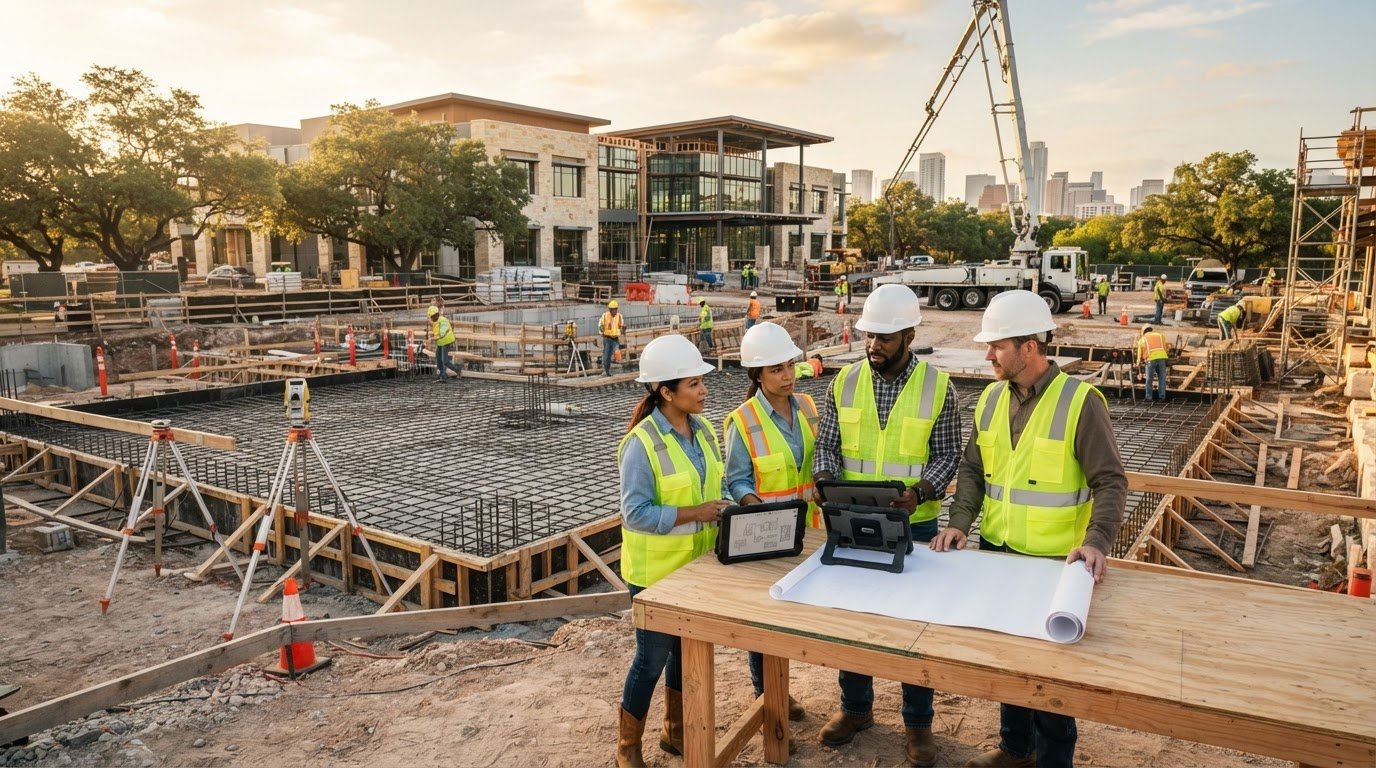
To maintain momentum, site supervisors should implement a 'Ready-to-Pour' checklist. This protocol includes verifying compaction results, confirming utility depths, and ensuring all subgrade stabilization is complete. Implementing a 'Ready-to-Pour' checklist is a fundamental step for those learning how to avoid concrete construction delays caused by inadequate site preparation. While some issues fall under the category of a Government Delay of Work, most site-level stalls are preventable through disciplined coordination and steadfast management of the early civil phases.
Why Paving Stabilization is the Foundation of Your Schedule
Texas soil is notorious for its expansive clays, which swell and shrink with moisture changes. Addressing these conditions through professional paving stabilization before paving begins is essential. Chemical stabilization techniques, such as lime or fly ash treatment, create a pozzolanic reaction that binds soil particles together. This process transforms unstable soil into a rigid platform, which significantly reduces the risk of slab cracking and prevents expensive rework later in the project lifecycle. By establishing a stable base early, you ensure the long-term viability of the finished flatwork.
Coordinating Mass Excavation and Underground Utilities
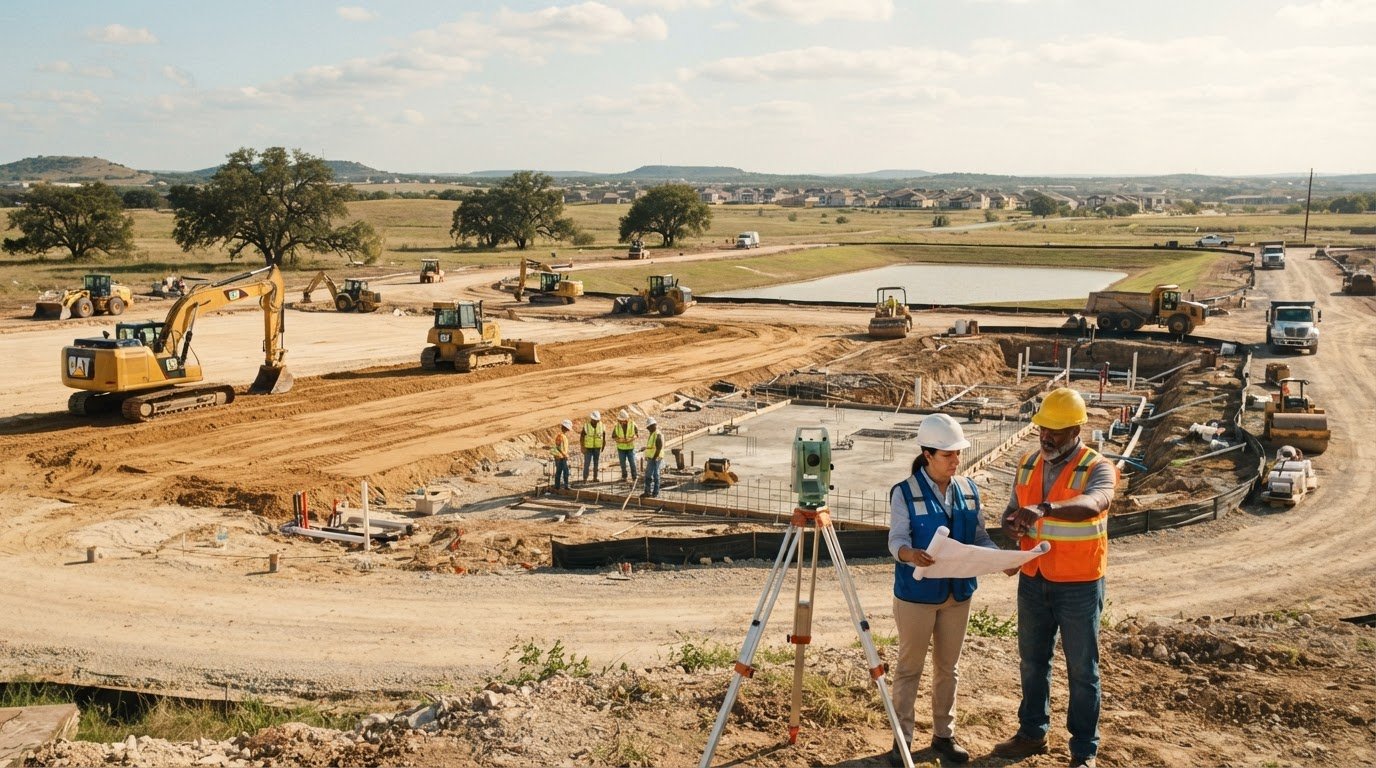
The handoff between excavation teams and utility contractors is a frequent point of friction. It's vital to ensure that detention ponds are fully functional before large-scale paving starts to manage site runoff effectively. Poor coordination here leads to utility strikes that can paralyze a job site and inflate contingency costs. Choosing a partner who provides turnkey civil services allows for a more synchronized workflow, where earthwork and utility installation are managed under a single point of accountability. This integrated approach eliminates the gaps where most logistical errors occur.
Mitigating Environmental and Logistical Factors
Environmental and logistical variables are the most volatile factors in any concrete schedule. While the weather remains outside a developer's control, the response to it is a matter of professional discipline. Proactive weather monitoring is the first line of defense. Establishing a 'Plan B' for rain events ensures that crews can pivot to indoor tasks or site prep rather than incurring idle labor costs. This level of organization is central to how to avoid concrete construction delays. If a pour must be postponed, having a pre-arranged window with the batch plant minimizes the ripple effect on the project timeline.
Logistical efficiency also depends on the physical accessibility of the site. Heavy mixers and pump trucks require stable, reinforced ingress and egress routes to operate safely. If site access is compromised by poor drainage or inadequate earthwork, delivery trucks will stall at the perimeter. On-site security is another critical but often overlooked factor. The theft of structural reinforcements or the vandalism of fresh concrete can cause immediate and expensive setbacks. Maintaining a secure perimeter and utilizing professional monitoring services protects your material investment and keeps the schedule on track.
Beating the Texas Heat: Concrete Curing Strategies
In major Texas metros like Houston and San Antonio, high temperatures present a significant technical challenge. Utilizing specialized admixtures is essential to control set times and maintain workability during the summer months. We prioritize early-morning pours, often beginning at 3:00 AM, to ensure the concrete is placed and finished before the peak heat of the afternoon. Thermal cracking occurs when the temperature differential between the core and the surface of the concrete becomes too great, creating internal stresses that lead to structural fissures; proper hydration and cooling measures are required to prevent it. Steadfast adherence to these curing protocols is vital for long-term durability.
Streamlining Material Delivery and Vendor Coordination
Securing material lead times is a primary concern for developers seeking how to avoid concrete construction delays in 2026. With structural steel currently requiring 14 to 20 weeks for delivery, early procurement is mandatory. Building strong vendor relationships through consistent performance and timely payments ensures that your project receives priority during peak demand. We also recommend scheduling 'buffer days' between major structural milestones. These planned gaps allow for unforeseen minor adjustments without derailing the entire sequence of trades, providing a necessary layer of protection for your delivery dates.

Structural Solutions: Choosing Between CIP and Precast for Speed
Choosing the structural framework is a high-stakes decision that dictates the pace of the entire vertical build. Developers who prioritize speed-to-market must evaluate whether Cast-in-Place or precast methods better align with their specific project goals. This choice impacts everything from labor density on-site to the complexity of the supply chain. Mastering this technical selection is a critical component of how to avoid concrete construction delays, as the wrong method for a specific site can lead to permanent schedule inflation. Each system carries distinct labor requirements and logistical demands that must be factored into the master schedule well before the first column is poured.
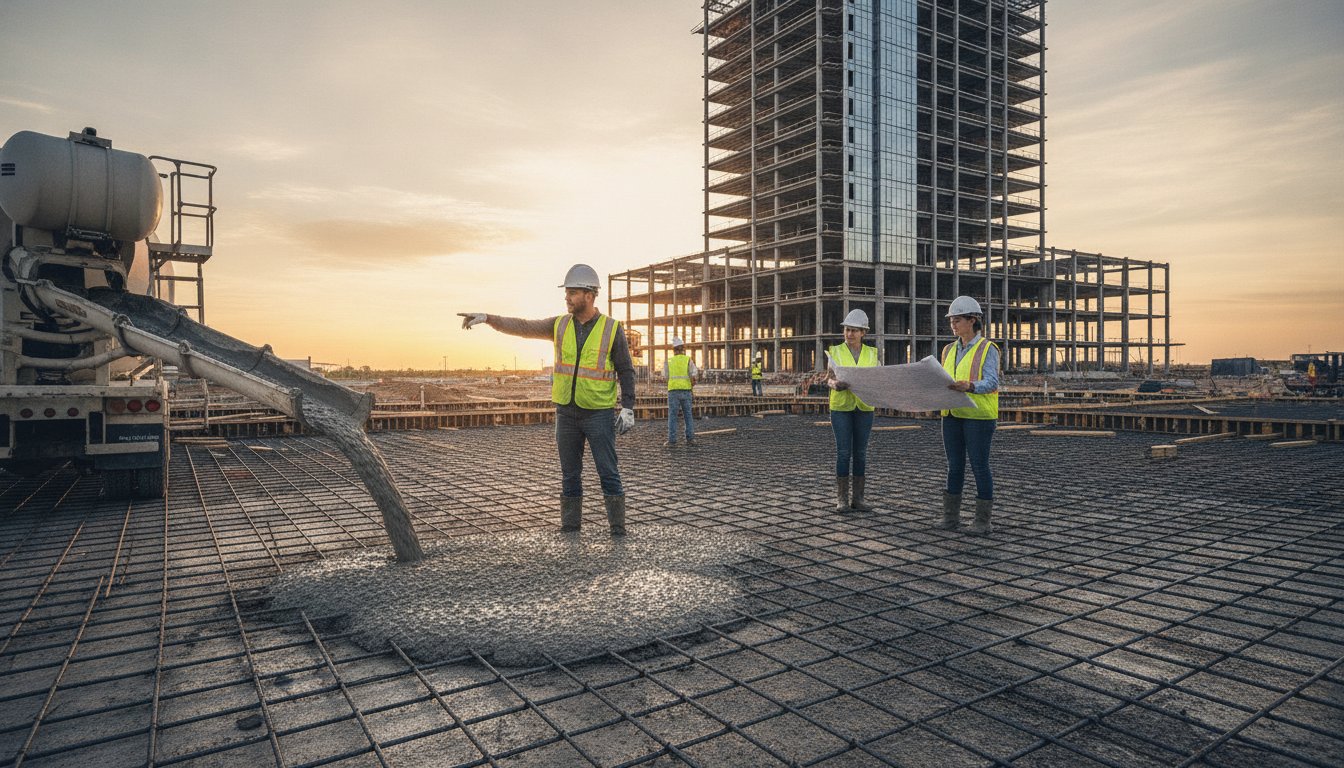
Complexity increases significantly during multi-level podium slab construction, where the transition between different structural uses occurs. These slabs often serve as the transfer level for utilities and vertical loads, making them a common bottleneck. Managing this phase requires a steadfast commitment to coordination between the structural concrete teams and the MEP contractors. When these trades work in isolation, the resulting friction often leads to rework and missed milestones. Learning how to avoid concrete construction delays at these critical junctions requires a single point of accountability for the entire structural scope.
Assessing Cast-in-Place (CIP) Efficiency for High-Rises
CIP concrete remains the industry standard for high-rise residential and commercial buildings due to its architectural flexibility. It allows for custom floor plates and complex geometries that precast cannot easily replicate. To maintain a steady vertical pace, we focus on managing the formwork cycle with operational precision. By utilizing high-early-strength mixes and disciplined stripping schedules, teams can achieve a predictable floor-to-floor cycle. In many Texas midrise projects, CIP is the most cost-effective path because it minimizes the specialized shipping costs associated with oversized precast components.
When Precast Foundations Offer a Faster Path
Precast foundations and components offer a compelling alternative when on-site labor is scarce or the schedule is exceptionally tight. Because these elements are manufactured in a controlled off-site facility, they aren't subject to the same weather-related curing failures as field-poured concrete. Utilizing a precast garage foundation can shave weeks off a project timeline by allowing for immediate assembly upon delivery. This method requires expert coordination of heavy-haul logistics and crane placement. If you're seeking a partner to manage these complexities, contact us to discuss our structural concrete and foundation services for your next development.
The Born Integrated Approach: Efficiency Through Integrity
The term 'Integrated' serves as more than a descriptor of our service list; it represents a fundamental philosophy of operational accountability. In traditional development models, the gap between the civil site work and the structural concrete teams is often where project momentum is lost. When these phases are siloed, communication breakdowns lead to the very idle labor costs and scheduling conflicts we have discussed. Our approach consolidates these critical phases under a single point of accountability. By managing the transition from mass soil excavation to the final pour, we eliminate the coordination gaps that frequently derail commercial schedules. This unified oversight is a primary strategy for how to avoid concrete construction delays, ensuring that the subgrade is perfectly prepared for the structural load it must carry.
Safety is another pillar of our delay-prevention strategy. We view a disciplined, safe job site as a direct contributor to project efficiency. An accident doesn't just represent a human tragedy; it causes an immediate and prolonged work stoppage that can paralyze a development for weeks. Our steadfast commitment to rigorous safety standards protects our crews and your timeline simultaneously. This focus on substance over style ensures that every phase of the build, from detention ponds to podium slabs, is executed with a level of precision that supports long-term project viability and professional stability.
Why Integrated Civil and Concrete Services Reduce Friction
Eliminating the 'blame game' between excavation and paving teams is essential for maintaining a predictable timeline. When a single partner manages the underground utility installation and the subsequent slab on grade, the handoff is seamless. There's no risk of a concrete crew arriving to find a subgrade that hasn't met compaction requirements. We've demonstrated this efficiency in numerous projects, including high-specification commercial concrete paving. By streamlining these transitions, we reduce the friction that typically inflates contingency costs and pushes back delivery dates.
Building Long-Term Vendor and Customer Relationships
Reliability is the currency of the construction industry. Our consistent performance and ethical conduct have allowed us to build deep-rooted relationships with the region's top material suppliers. In the competitive 2026 Texas market, these relationships ensure that our clients receive priority service and secure material lead times even during peak demand. Attentive service and clear, unhurried communication prevent the misunderstandings that lead to logistical errors. As you plan your next Texas development, partnering with a firm that values substance and technical proficiency will be your most effective method for how to avoid concrete construction delays. We invite you to reach out and discuss how our integrated civil and concrete solutions can establish a lasting foundation for your project's success.
Securing the Future of Your Project Timeline
Transitioning from site readiness to structural completion requires more than just a schedule; it demands a steadfast commitment to operational precision. We've explored how synchronizing mass excavation with concrete placement eliminates the friction that leads to cascading stalls. By mastering soil stabilization and selecting the appropriate structural method, whether Cast-in-Place or precast, you establish a resilient foundation for vertical progress.
Understanding how to avoid concrete construction delays is ultimately about choosing a partner who values substance and professional duty. With a proven track record across the Houston, Austin, and Dallas metros, we bring expertise in full-range concrete services and a dedicated focus on safety standards. Partner with Born Integrated Construction for your next Texas project to ensure your development benefits from our unwavering integrity and technical proficiency. We look forward to building a lasting professional partnership that delivers consistent value to your development portfolio.
Frequently Asked Questions
What is the #1 cause of concrete construction delays in Texas?
The primary cause of delays is the fragmentation between civil site preparation and structural concrete teams. When separate contractors manage mass excavation and the final pour, communication gaps regarding subgrade readiness often emerge. This lack of integration forces crews to wait for site corrections, which stalls the vertical progress of the development. Establishing a single point of accountability for both phases is the most effective way to maintain momentum.
How does soil stabilization help avoid project delays?
Soil stabilization creates a rigid and predictable foundation, which is essential when dealing with expansive Texas clays. By chemically treating the subgrade with lime or fly ash, you ensure the platform remains stable regardless of moisture changes. This proactive technical step prevents the slab cracking or shifting that would otherwise require expensive and time-consuming rework later in the project schedule.
Can weather-related concrete delays be insured or mitigated?
While weather remains outside a developer's control, its impact is mitigated through disciplined "Plan B" scheduling and the use of technical admixtures. High-early-strength mixes allow concrete to reach structural integrity faster, reducing the window of vulnerability to rain. Developers who focus on how to avoid concrete construction delays often use advanced monitoring tools to adjust pour windows before a storm arrives on site.
Is precast concrete always faster than cast-in-place?
Precast concrete is typically faster for repetitive structures like parking garages because components are manufactured in a controlled off-site environment. However, it requires significant lead time for fabrication and complex heavy-haul logistics. Cast-in-place (CIP) remains a highly efficient option for complex high-rise projects where the flexibility of on-site formwork allows for a steady vertical rhythm without the constraints of oversized delivery schedules.
How much buffer time should I build into a commercial concrete schedule?
A standard professional recommendation is to include a 10% to 15% buffer within the concrete phase of the master schedule. This contingency accounts for minor inspection delays or short-term weather events that are common in the Texas climate. Building this time into the schedule from the start preserves the professional stability of the project and prevents a single missed pour from derailing the subsequent trades.
What should I look for in a commercial concrete contractor to ensure on-time delivery?
Look for a contractor with a proven track record of managing both civil and structural scopes under a single point of accountability. This integration reduces the likelihood of trade friction and coordination errors. Additionally, a firm with established vendor relationships can better secure material lead times, which is a vital part of how to avoid concrete construction delays in a volatile construction market.
How do underground utility issues impact the concrete pouring schedule?
Misaligned utilities or unmapped line strikes can paralyze a project for weeks while repairs and re-inspections are conducted. Since concrete cannot be poured over unfinished or incorrect utility work, these errors cause an immediate and costly work stoppage. Ensuring that detention ponds and underground lines are verified before the slab on grade begins is a non-negotiable step for maintaining site readiness.
Does the size of the concrete crew directly impact the speed of the project?
A larger crew doesn't always translate to a faster project; operational precision and equipment availability are far more influential. A disciplined, well-coordinated team using specialized pumps and finishing tools will outperform a larger, disorganized group. Speed is gained through the methodical management of technical details and the seamless handoff between the excavation and paving teams rather than raw labor numbers.