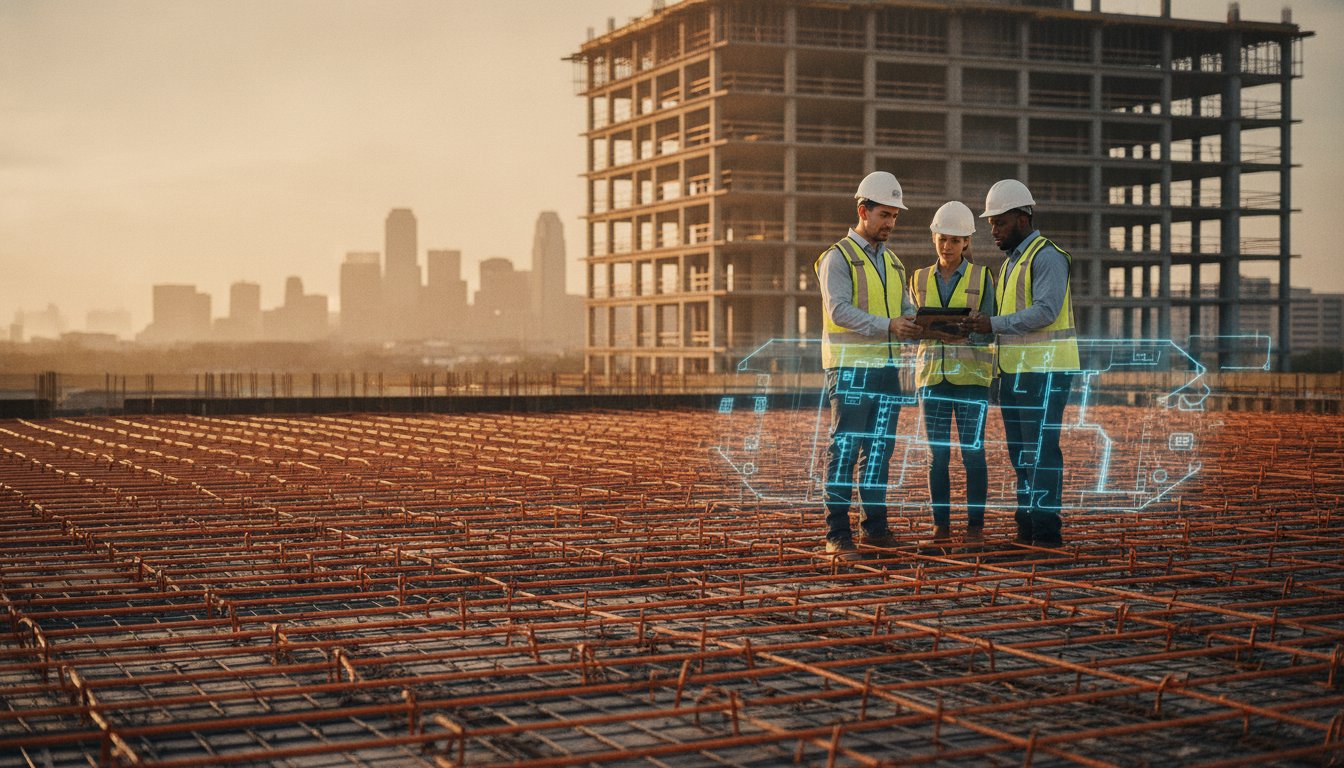
Texas leads the nation with nearly $90 billion in annual commercial construction spending, yet many of these high-value assets are built on some of the most volatile soil in the country. In such a high-stakes environment, choosing a post tension slab contractor Texas developers can trust is a matter of protecting the long-term viability of the asset. You likely understand that the expansive clay found throughout Houston, Austin, and Dallas doesn't remain static. It shifts and breathes, creating a constant risk of foundation cracks that can compromise even the most ambitious mid-rise or high-rise projects.
We recognize that a foundation should be a permanent anchor rather than a source of professional concern. This article explains why post-tensioning is the definitive engineering choice for 2026 developments and how to select a partner who masters the state's unique soil challenges. We'll examine the technical advantages of PT slabs, the impact of recent 2024 IRC code updates on PTI certification, and the critical safety protocols required for high-tension cable stressing. By the end, you'll see how seamless integration between earthwork and structural concrete ensures your project remains both stable and on schedule.
Key Takeaways
- Understand why post-tension slabs are the engineered standard for managing the high plasticity and movement of Texas clay soils.
- Gain insight into the precision engineering required during the cable stressing phase, including the necessity of specialized certification and safety protocols.
- Determine whether a PT slab, slab-on-grade, or podium deck is the most appropriate foundation for your specific commercial or multi-family asset.
- Identify the technical qualifications and equipment logistics required when vetting a post tension slab contractor Texas developers can depend on for 2026 projects.
- Discover the advantages of utilizing an integrated partner who manages the entire lifecycle from mass soil excavation to final structural concrete delivery.
Post Tension Slab Foundations in Texas: Why They Are the Gold Standard
A Post-tensioned concrete (PT) slab is a sophisticated structural system where the concrete is reinforced with high-strength steel tendons that are tensioned after the material has achieved a specific cured strength. Unlike traditional slab-on-grade foundations that rely on passive rebar, a PT system is an active engineering solution. By applying immense force to the internal cables, the system compresses the concrete, significantly enhancing its ability to resist the tensile stresses that lead to structural failure. For 2026 commercial developments, this technology is no longer an optional upgrade; it's a fundamental requirement for building on volatile terrain.
The geological reality of the Texas landscape dictates the necessity of this approach. Much of the state is characterized by highly plastic, expansive clay soils. These soils don't remain static; they undergo dramatic volume changes based on moisture levels. A professional post tension slab contractor Texas developers trust recognizes that a standard foundation cannot withstand these forces without eventually cracking. Post-tensioning provides the necessary internal "squeeze" to keep the slab intact even as the ground beneath it shifts. This active reinforcement offers several critical advantages for large-scale assets:
- Crack Suppression: The constant state of compression helps close micro-cracks before they can expand into structural issues.
- Deflection Control: PT slabs better manage the heavy loads associated with mid-rise and high-rise structures.
- Structural Integrity: The foundation acts as a monolithic unit, providing a more stable base for the entire building envelope.
The economic impact of this technology is equally significant. Because the concrete is used more efficiently, engineers can often specify thinner slabs and reduce the overall volume of material required. This leads to direct cost savings on concrete and steel while allowing for longer spans between columns.
Combating Expansive Soils in Houston and Austin
The soil profiles in Houston and Austin are notorious for their "heave" and "shrink" cycles. During the wet seasons, the clay expands with enough force to lift entire structures; during droughts, the soil contracts, leaving the foundation unsupported. Post-tensioning creates a rigid platform that resists these differential movements. However, the slab is only as good as the ground it sits on. Achieving proper soil stabilization for commercial paving and foundations is a critical first step. It ensures a consistent subgrade that allows the PT system to perform as designed, protecting the asset from the inevitable shifts of the Texas earth.
Engineering Benefits for Mid-Rise and High-Rise Assets
For high-density developments, PT slabs enable architectural freedom that traditional methods can't match. By optimizing slab thickness, developers can reduce the dead load of the building, which often simplifies the design of the vertical support members and the primary foundation. This efficiency allows for open floor plans with fewer interior columns, a feature that's highly valued in modern office and multi-family designs. A seasoned post tension slab contractor Texas firms partner with will focus on these technical details to ensure the long-term durability and reduced maintenance costs of the structural frame.
The Post-Tensioning Process: Precision Engineering and Safety
The successful execution of a post-tensioned foundation is a high-stakes engineering event that demands absolute precision from start to finish. Unlike traditional methods, this process involves the management of immense stored energy within the concrete matrix. A qualified post tension slab contractor Texas developers rely on must possess the technical expertise to handle hydraulic jacks, specialized anchors, and high-strength steel tendons. These components work together to apply roughly 33,000 lbs of force per tendon; a load that transforms the concrete into a resilient, active structural system. Because of the inherent risks and technical requirements, the Post-Tensioning Institute (PTI) provides the necessary standards for these applications, ensuring that materials and personnel meet rigorous certification benchmarks.
Safety is the primary pillar of our operational philosophy during the stressing phase. According to OSHA regulation 1926.701, access to the tensioning area must be strictly controlled, and employees are prohibited from standing directly behind the jack during operation. This isn't merely a regulatory hurdle; it's a critical safety protocol designed to protect lives. If a tendon or anchor fails under 33,000 lbs of pressure, the result can be catastrophic. Our team maintains a disciplined job site, establishing clear safety zones and ensuring that every technician is fully trained in high-tension procedures. If you're planning a large-scale development, choosing an integrated structural partner ensures these safety standards are upheld without compromise.
Step-by-Step Execution: From Formwork to Stressing
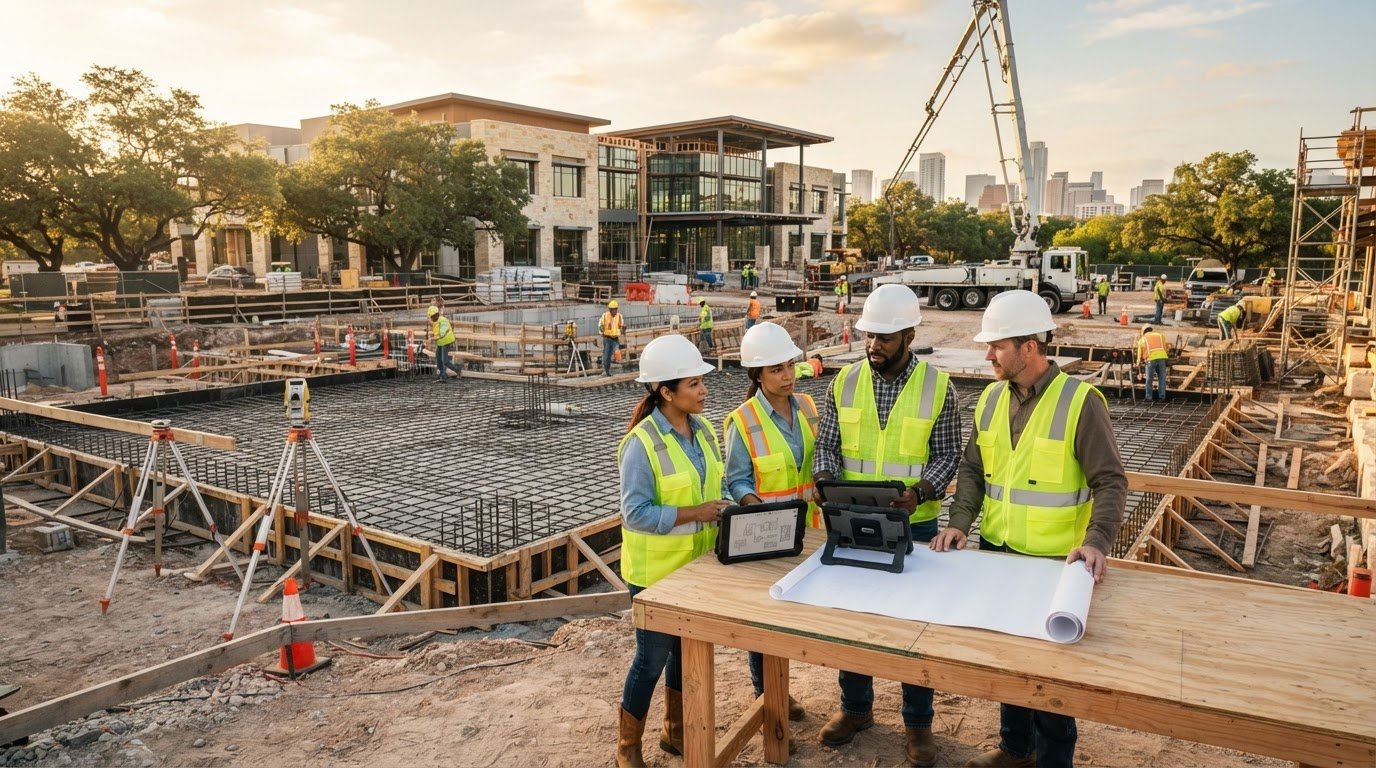
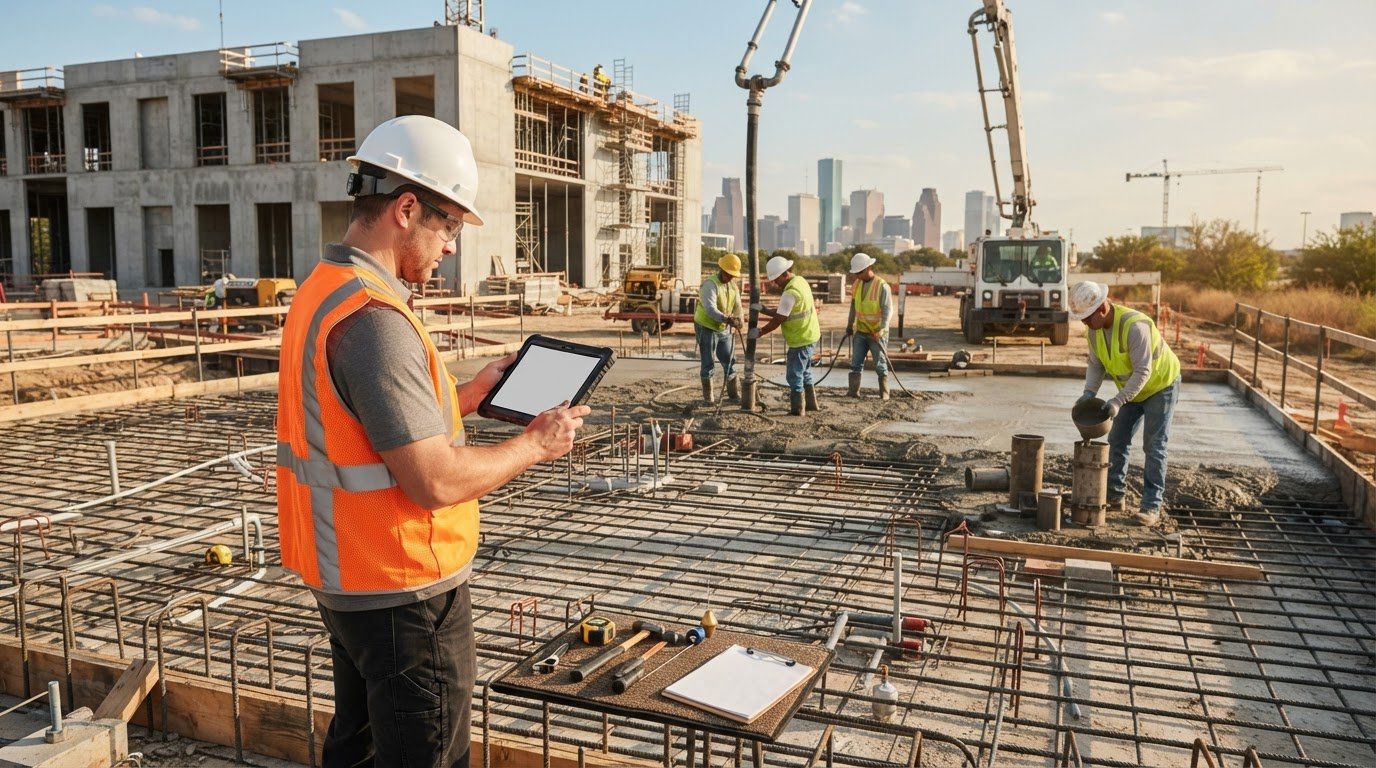
The process begins with the careful placement of tendons in a specific "profile" or drape. These cables don't sit flat; they follow a curved path designed by structural engineers to counteract the specific load points of the building. Once the tendons are secured, the concrete is poured. It's essential that the concrete reaches a specific compressive strength, typically 75% of its design PSI, before stressing begins. This ensures the material can withstand the localized pressure at the anchor points. After the pour, our technicians use calibrated hydraulic jacks to pull the tendons to the engineered tension, effectively "squeezing" the slab into its final, high-performance state.
Safety and Integrity in Large-Scale Contracts
Quality control is maintained through meticulous structural reporting. We measure the "elongation" of each tendon, which is the physical distance the steel stretches under load. These measurements must align with the engineer's theoretical calculations within a strict tolerance, usually plus or minus 7%. Any deviation requires immediate investigation to ensure there are no internal obstructions or placement errors. For 2026 projects, adhering to the 2024 International Residential Code (IRC) requirements for PTI-certified personnel is mandatory. We document every stressing record and provide comprehensive third-party inspection reports, ensuring your asset meets all Texas building codes and maintains long-term structural integrity.
Comparing PT Slabs to Other Structural Foundations
Choosing the right foundation system is a strategic decision that affects both the construction timeline and the long-term performance of a commercial asset. While several structural options exist, the unique environmental pressures of the Southern United States often lead developers to seek a specialized post tension slab contractor Texas firms can rely on for high-performance outcomes. Understanding the distinctions between these systems is essential for optimizing project budgets and ensuring structural longevity. It's not just about the initial pour; it's about how the foundation will respond to the earth for the next fifty years.
Traditional slab-on-grade systems rely on passive reinforcement, such as rebar or wire mesh, to provide tensile strength. While effective for smaller footprints or exceptionally stable soil conditions, they often lack the resilience needed for the expansive clay found across the state. In contrast, post-tensioning creates an active structural environment that suppresses cracks before they begin. According to the Post-Tensioning Institute, these systems are particularly advantageous in areas with problematic soils because they allow the foundation to bridge across localized soft spots or soil movements that would otherwise cause a standard slab to fail.
Slab on Grade vs. Post-Tensioning
The primary difference between these two methods lies in how they manage stress. Traditional reinforcement only begins to work after the concrete has already started to crack or deflect. Post-tensioning applies a pre-emptive compressive force that keeps the material under pressure, which naturally resists the formation of cracks. This efficiency allows for a reduction in total concrete volume and rebar weight, often leading to a lighter and more cost-effective structure. For industrial warehouses or retail centers where large, joint-free floors are required, PT slabs are typically the superior choice due to their ability to minimize the number of control joints and maintenance requirements.
The Role of Podium Slabs in Houston Developments
In dense urban environments like Houston, mixed-use developments often require a transition between different occupancy types. This is where Expert Podium Slab Contractor in Houston services become vital. Podium slabs, often utilizing post-tensioning, serve as a structural transfer level. They support multiple stories of wood or light-gauge steel framing above a concrete parking or retail base, necessitating a foundation that can handle immense, concentrated loads.
These structural CIP solutions are essential for 2026 developments that prioritize high-density living and commercial space. By integrating PT technology into a podium deck, engineers can achieve thinner profiles and longer spans, maximizing the available height and square footage of the asset. Whether you're managing a residential tower or a multi-level parking structure, the choice of a post tension slab contractor Texas teams trust will determine how effectively these complex loads are distributed throughout the building’s life cycle.

Vetting Your Post Tension Slab Contractor for 2026
Selecting a partner for structural concrete work is a decision that impacts the entire lifecycle of your development. It's not enough to simply review a portfolio of completed projects. You must verify that your chosen post tension slab contractor Texas developers trust has deep-rooted expertise in Cast-in-Place (CIP) methods and structural concrete. This technical proficiency ensures that the interaction between the concrete matrix and the high-tension cables is managed with surgical precision. A primary indicator of a contractor's stability is their control over logistics; those who own their stressing equipment and maintain direct oversight of the supply chain are better equipped to handle the complexities of 2026 developments.
Regional knowledge is another non-negotiable factor. The municipal code requirements in Dallas differ from those in Houston or Austin, particularly regarding drainage and soil preparation. A contractor who understands these local nuances can prevent costly delays during the inspection phase. We advocate for a "Turn Key Civil" approach where one partner manages everything from mass soil excavation to the final structural pour. This integration reduces foundation risk by ensuring the subgrade is perfectly prepared for the specific requirements of the post-tensioning system. If you require a partner who values substance over style, contact Born Integrated Construction to discuss your structural requirements.
Safety Records and Insurance Requirements
High-tension stressing is inherently risky, making a contractor's safety record a critical metric for evaluation. You should always review a firm's Experience Modification Rate (EMR). A rate below 1.0 indicates a commitment to safety that exceeds industry averages. For multi-story structural projects, insurance limits must be substantial enough to cover the high valuation of the asset. We maintain a grounded, professional approach to these requirements, providing the transparency needed to instill confidence in our project partners.
Project Management and Efficiency
The development landscape for 2026 demands strict adherence to timelines. Efficiency is born from meticulous scheduling and strong vendor relationships that ensure material availability even during peak demand. Our team prioritizes attentive service, ensuring that every phase of the structural work aligns with the broader project milestones. This commitment to consistent performance allows developers to focus on the long-term viability of their assets, knowing the foundation is being managed by disciplined professionals who lead through proven results.
Born Integrated Construction: Delivering Stability for Texas
Born Integrated Construction represents a steadfast partner for developers across the state's major metropolitan hubs. As a seasoned post tension slab contractor Texas firms depend on, we understand that the longevity of a high-rise or mid-rise asset depends on more than just the final concrete pour. It requires a disciplined approach to the entire site development process. From the initial mass soil excavation in Houston to the final stressing of tendons in a Dallas podium deck, our team provides the technical proficiency and operational precision required for the most demanding 2026 developments. We maintain a presence in Houston, Austin, San Antonio, and Dallas, allowing us to manage projects with a deep understanding of regional soil profiles and municipal codes.
We don't view structural concrete in isolation. Instead, we treat the foundation as the culmination of a rigorous civil engineering process. This integrated perspective is what differentiates a standard contractor from a partner invested in the long-term viability of your commercial investment. Our portfolio includes a diverse range of complex structures, including CIP garages, high-rise foundations, and podium slabs. In every instance, our goal is to provide a grounded and reliable service that allows our clients to build with absolute confidence. We prioritize substance over style, focusing on the meticulous management of details that ensure a project remains on schedule and within technical specifications.
Turn Key Civil and Structural Solutions
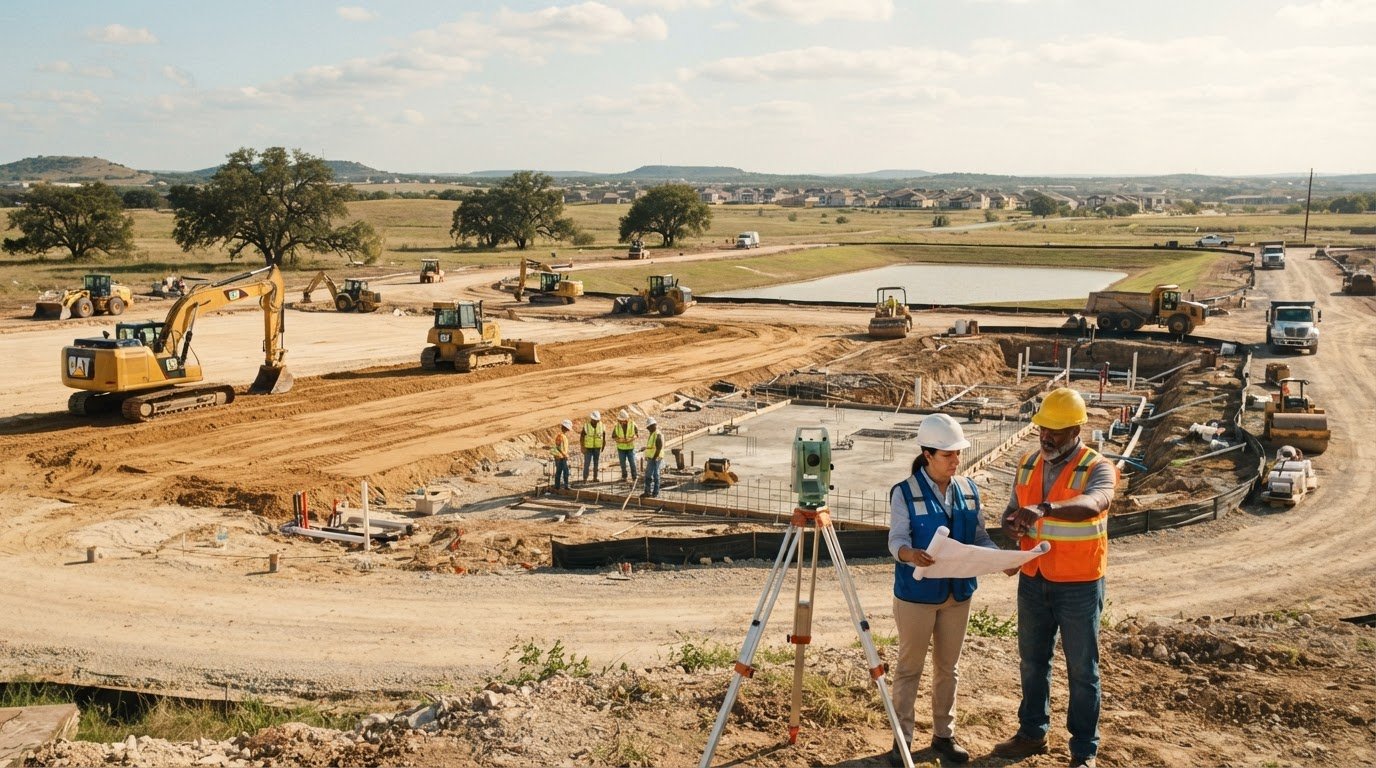
By positioning ourselves as a Turn Key Civil and structural partner, we eliminate the friction often found between separate earthwork and concrete crews. Our expertise in mass soil excavation ensures that the subgrade is stabilized and prepared to the exact tolerances required for a post-tensioned system. We coordinate the installation of underground utilities simultaneously with slab preparation. This ensures that conduits and plumbing are precisely located before the concrete is placed. This single point of contact simplifies project management and ensures that the structural integrity of the slab is never compromised by poor site preparation. It's a methodical approach that creates a more predictable and transparent construction experience for the developer.
Commitment to Craftsmanship and Safety
Every project we undertake is executed with a commitment to established safety protocols and high standards of craftsmanship. We maintain the same level of thoroughness in every pour, from expansive commercial sidewalks to complex high-rise slabs. Building lasting foundations is our primary duty. We understand that your commercial investment requires a structure that can withstand the test of time and the volatile nature of Texas soil. We invite you to contact our team to discuss how our integrated civil and structural solutions can provide a stable, cost-effective foundation for your next Texas development. Our focus remains on delivering consistent value and unwavering reliability for every client we serve.
Securing the Structural Future of Texas Developments
The landscape of Texas commercial construction in 2026 requires a foundation that does more than just sit on the ground; it must actively resist the shifting nature of expansive clay. By prioritizing precision engineering and PTI-certified safety protocols, you ensure that your high-rise or mid-rise asset remains a stable investment for decades. Selecting an experienced post tension slab contractor Texas firms depend on is the most critical step in mitigating structural risk and maintaining strict project timelines. A well-executed foundation is the silent partner in your project's long-term success.
Born Integrated Construction brings a disciplined approach to every site, acting as specialists in CIP midrise and highrise foundations. Our turn key civil and structural concrete services provide a seamless transition from mass excavation to the final cable stress, ensuring no detail is overlooked. We remain dedicated to serving major Texas hubs with integrity and safety, building foundations that reflect our deep-rooted pride in craftsmanship. Partner with Texas's steadfast post tension slab contractor today. We look forward to helping you establish a legacy of stability and professional excellence in your next development.
Frequently Asked Questions
What is the primary benefit of using a post tension slab in Texas?
The primary benefit is the foundation's ability to resist the shifting and cracking caused by the state's expansive clay soils. By applying active compression, the slab moves as a single, rigid unit rather than succumbing to localized soil heave. This structural integrity is essential for maintaining the long term value of commercial assets in an environment where soil movement is a constant pressure.
How long does the tensioning process take after the concrete is poured?
The tensioning process typically occurs three to seven days after the initial concrete pour. This timeline depends on the concrete reaching approximately 75% of its design strength, which ensures the material can withstand the localized pressure of the anchors. Our team monitors the curing process closely to ensure that stressing happens at the precise moment required for optimal structural performance and project efficiency.
Can a post tension slab be repaired if a cable is damaged?
Yes, a post tensioned slab can be repaired through specialized engineering techniques such as tendon splicing or the installation of external reinforcement. If a cable is compromised during subsequent construction or due to environmental factors, a qualified post tension slab contractor Texas developers trust can restore the system's integrity. These repairs require meticulous oversight to ensure the restored tension matches the original structural requirements.
Are post tension slabs more expensive than traditional rebar slabs?
Post tensioned slabs are often more cost effective for large scale commercial projects because they require less concrete and steel reinforcement than traditional rebar slabs. While the specialized labor and cable materials involve specific costs, the reduction in total material volume and the ability to bridge longer spans often result in a lower overall project budget. It's a strategic investment that balances construction efficiency with long term durability.
What are the safety risks associated with post-tensioning?
The primary safety risks involve the immense stored energy within the high tension cables, which can reach 33,000 lbs of force during the stressing phase. Failure to follow strict safety protocols can lead to anchor blowouts or cable snaps, posing a significant risk to personnel. We mitigate these dangers by establishing clear safety zones and ensuring all field personnel are fully trained in high tension operations and OSHA standards.
Does Born Integrated Construction serve San Antonio and Fort Worth?
Yes, Born Integrated Construction serves major Texas hubs including Houston, Austin, Dallas, and San Antonio. We maintain the logistics and equipment necessary to support large scale developments across these regions, ensuring that our grounded approach to structural concrete is available for projects throughout the state. Our team is equipped to handle the unique municipal codes and soil conditions found in each of these metropolitan areas.
Is a post tension slab suitable for high-rise commercial buildings?
A post tension slab is highly suitable and often the preferred choice for high rise commercial buildings. The system allows for thinner floor slabs and longer spans between support columns, which maximizes usable square footage and reduces the building's overall dead load. This efficiency is a critical factor for developers seeking to optimize high density assets while maintaining the highest standards of structural stability for the life of the building.
How do expansive soils in Houston affect foundation design?
The expansive clay soils in Houston undergo significant volume changes during wet and dry cycles, which can exert immense upward pressure on a foundation. Design must account for this potential vertical rise by creating a slab that is rigid enough to bridge across soil movement without fracturing. Utilizing an integrated post tension slab contractor Texas firms rely on ensures that the foundation is engineered specifically to withstand these local geological challenges through active reinforcement.