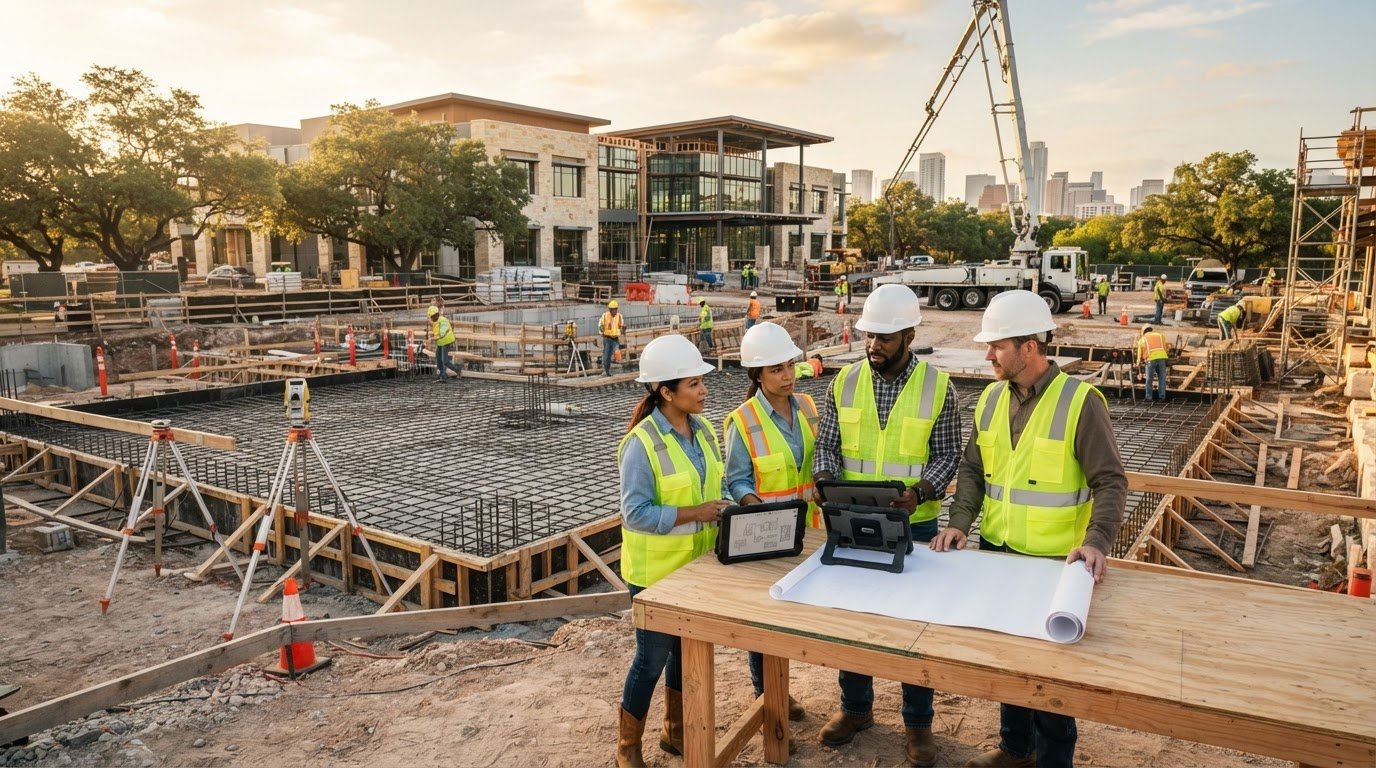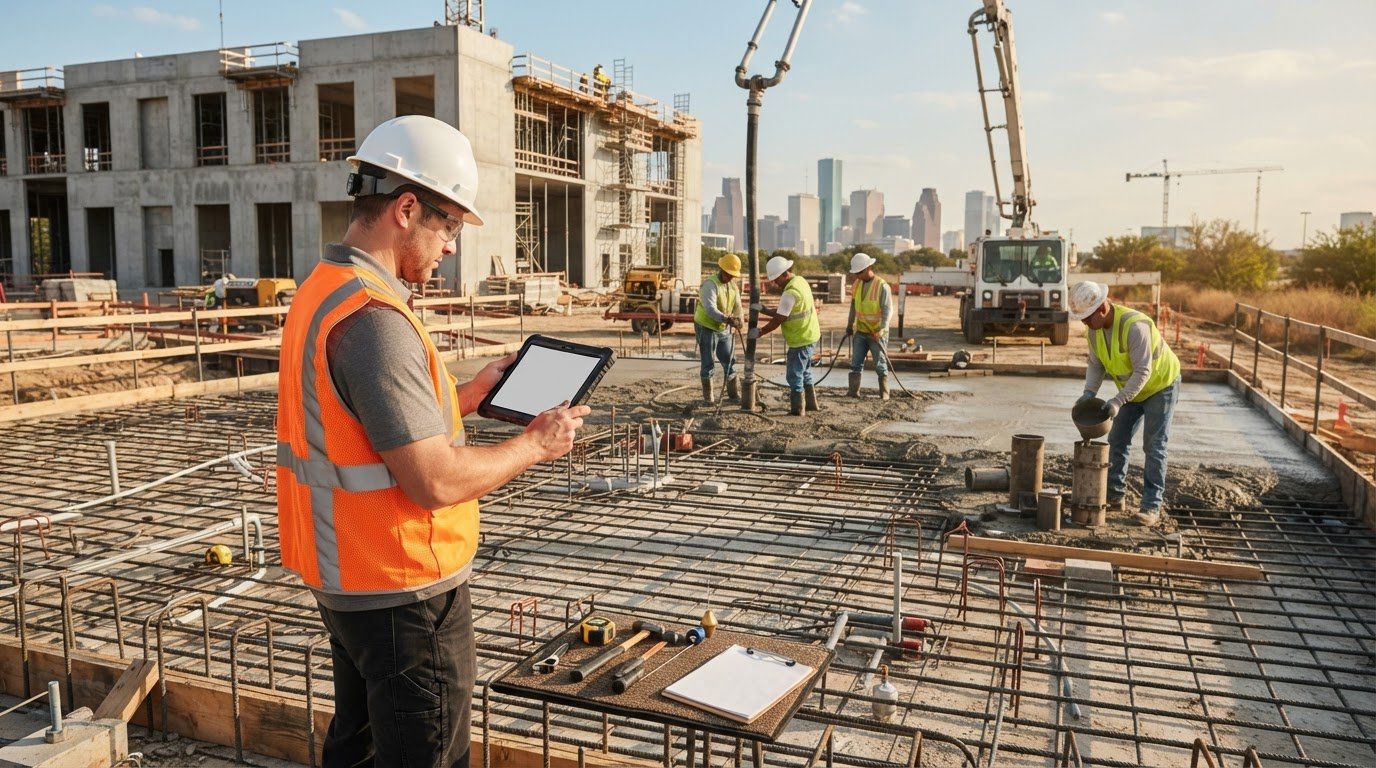
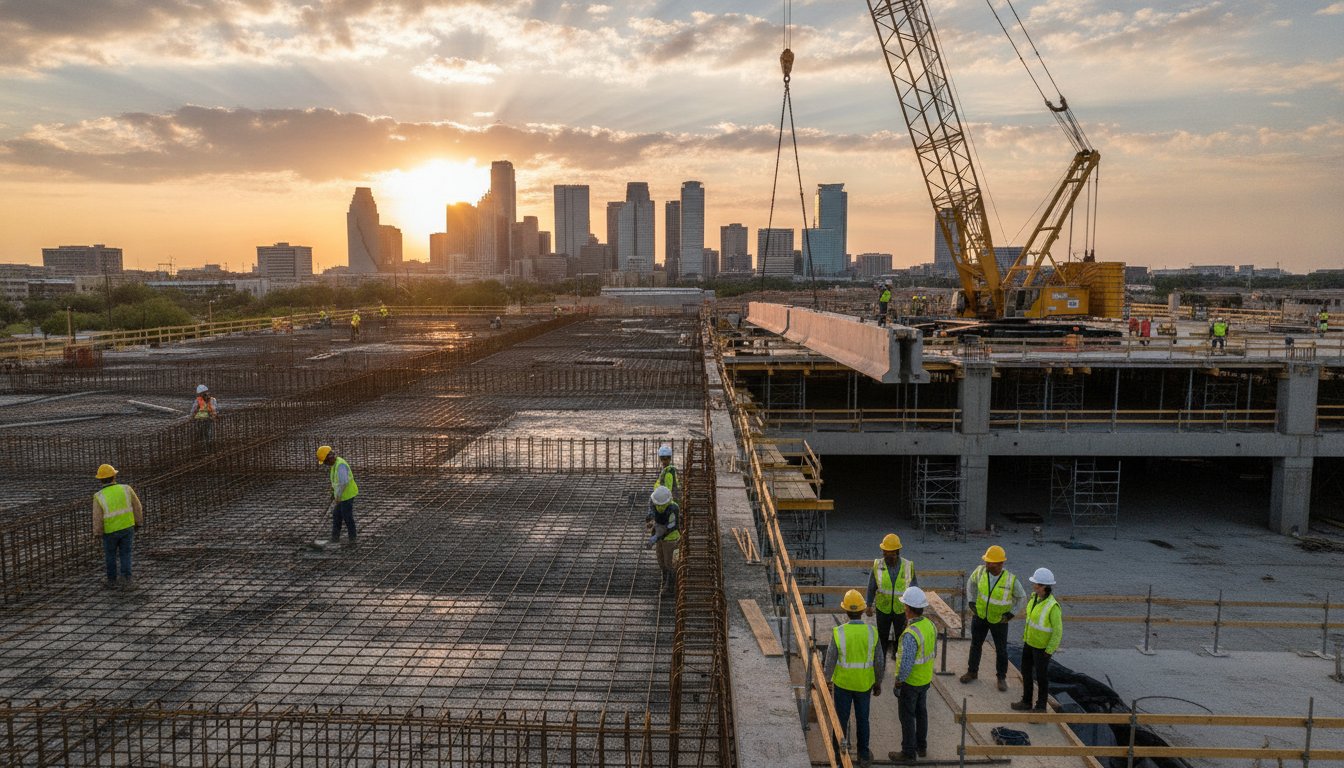
A parking garage foundation in Texas is only as reliable as the contractor's mastery of the expansive clay beneath it. In a region where soil movement can compromise even the most ambitious designs, the difference between a 50-year service life and premature structural failure rests on the initial execution of the subgrade and slab. As a specialized cast-in-place concrete parking garage contractor Texas developers trust for technical precision, we understand the necessity of a foundation that remains steadfast against environmental pressures.
You likely recognize that coordination gaps between civil site preparation and structural concrete are the primary drivers of project delays and budget overruns. It's a common challenge to ensure that underground utilities and structural slabs integrate without conflict. This guide provides a comprehensive framework for selecting and executing high-integrity foundations that meet Texas-specific municipal engineering standards. We will examine the technical trade-offs between cast-in-place and precast systems, the importance of turnkey civil integration, and the proven methods for ensuring long-term structural viability in our unique climate.
Key Takeaways
- Understand why mass soil excavation and stabilization are the essential first steps to mitigate the risks of expansive "Texas Gumbo" clay.
- Evaluate the technical differences between bespoke cast-in-place systems and precast foundations to determine the best fit for your project's architectural complexity and timeline.
- Learn how a specialized cast-in-place concrete parking garage contractor Texas developers trust can bridge the gap between civil site preparation and structural execution.
- Gain insights into the 2026 municipal engineering standards and geotechnical analysis required to ensure a 50-year service life for your structured parking project.
The Critical Role of Structural Foundations in Texas Parking Garages
A multi-level parking garage is not merely a place to store vehicles; it is a complex engineering feat that must manage immense vertical and horizontal forces. In the Texas landscape, where expansive clay soils are a constant variable, the foundation serves as the primary safeguard against structural failure. Every high-rise or mid-rise project begins with the subsurface. Establishing a steadfast base requires more than just a standard concrete pour. It demands the technical proficiency of a seasoned cast-in-place concrete parking garage contractor Texas developers rely on to handle the specific load-bearing requirements of structured parking.
The integrity of a garage foundation directly dictates the safety and longevity of the entire facility. While a surface lot might tolerate minor shifts, a structured garage cannot. Any movement in the subgrade can lead to misalignments in the columns and beams above, creating safety hazards and compromising the 50-year service life developers expect. High-integrity foundations typically consist of a coordinated system of deep footings, grade beams, and structural slabs. These components work in unison to distribute weight evenly across the building's footprint, ensuring that the structural frame remains level even as the surrounding soil fluctuates. Most reinforced concrete systems used in these applications are designed to withstand both the static weight of the building and the dynamic loads of moving vehicles.
Structured Parking vs. Surface Lot Foundations
The engineering requirements for structured parking differ fundamentally from standard flatwork. A surface lot primarily manages the weight of the vehicle directly above a specific point on the slab. In contrast, a multi-level garage concentrates the weight of several stories into specific columns and load-bearing walls. This vertical load-bearing requirement necessitates a thicker, more robust foundation design. In high-density urban developments across Dallas, Houston, and Austin, where land is at a premium, the foundation design also impacts the total height and footprint of the garage. A precise foundation allows for tighter tolerances, which can maximize the number of parking spaces available within a restricted site.
The Economic Impact of Foundational Integrity
Investing in superior initial construction quality is a calculated strategy to reduce lifecycle maintenance costs. When a foundation is executed with operational precision, it protects the developer’s long-term asset value by preventing early structural fatigue. Poorly executed foundations lead to cracks, water infiltration, and steel corrosion, which are expensive to remediate in a multi-level structure. By partnering with an expert cast-in-place concrete parking garage contractor Texas projects stay on schedule and avoid the financial pitfalls of post-construction shifting. Using high-grade materials and meticulous site preparation ensures that the structure remains a reliable asset for decades, rather than a liability that requires constant repair.
Cast-in-Place (CIP) vs. Precast Foundations: A Comparative Analysis
Selecting the appropriate structural framework is one of the most consequential decisions a developer makes during the planning phase. Both systems offer distinct advantages depending on the site constraints, budget, and project goals. A seasoned cast-in-place concrete parking garage contractor Texas firms partner with can provide the technical insight necessary to evaluate these options against specific soil reports and architectural requirements. While one method prioritizes speed, the other focuses on bespoke flexibility and long-term monolithic strength.
Cast-in-place concrete is a monolithic structural solution for garages where the framework is cast as a single, continuous unit at the project site. This approach provides a high degree of rigidity and seamless joints, which are critical for maintaining structural integrity over a 50-year service life. In the unique Texas landscape, where soil shifts are frequent, the monolithic connection between columns and slabs in a CIP system often provides better resistance to the stresses caused by expansive clay compared to modular alternatives.
Cast-in-Place (CIP) Garage Foundations
CIP systems are the preferred choice for bespoke and complex garage designs, particularly in dense urban environments like Houston or Austin. Because the concrete is poured on-site, it allows for maximum design flexibility on irregular lots where pre-manufactured components might not fit. The monolithic nature of the pour results in superior water resistance, as there are fewer joints where moisture can penetrate and cause steel reinforcement corrosion. This rigidity is especially beneficial in mid-rise and high-rise applications where vertical loads are concentrated and structural damping is required to manage the vibrations of moving vehicles.
Precast Garage Foundation Systems
Precast foundations involve components manufactured in a factory-controlled environment and transported to the site for assembly. This method is often utilized to meet accelerated 2026 construction timelines, as it allows for site preparation and component fabrication to occur simultaneously. According to the Precast/Prestressed Concrete Institute comparison data, precast systems offer exceptional quality control and speed of erection. These systems are best suited for large-scale suburban developments and standardized designs where repetitive layouts allow for rapid assembly.
Evaluating the initial investment requires looking beyond the price per cubic yard. Precast may reduce on-site labor requirements but carries higher transportation and heavy crane expenses. Conversely, a cast-in-place concrete parking garage contractor Texas developers hire may require more intensive on-site labor, but the resulting structure offers significant long-term value through reduced maintenance and increased durability. Ultimately, the choice depends on whether the project prioritizes the immediate speed of assembly or the enduring stability of a monolithic structure.
Navigating Texas Soil Challenges: Stability and Site Preparation
Texas soil, particularly the highly expansive clay known as "Texas Gumbo" found throughout Houston and Beaumont, presents a unique set of challenges for structured parking. These soils expand and contract significantly with moisture changes, exerting immense pressure on sub-surface structures. Engaging a cast-in-place concrete parking garage contractor Texas developers trust ensures that the transition from raw earth to structural slab is managed with technical precision. Without a disciplined approach to site preparation, even the most robust concrete design is susceptible to shifting and structural distress.
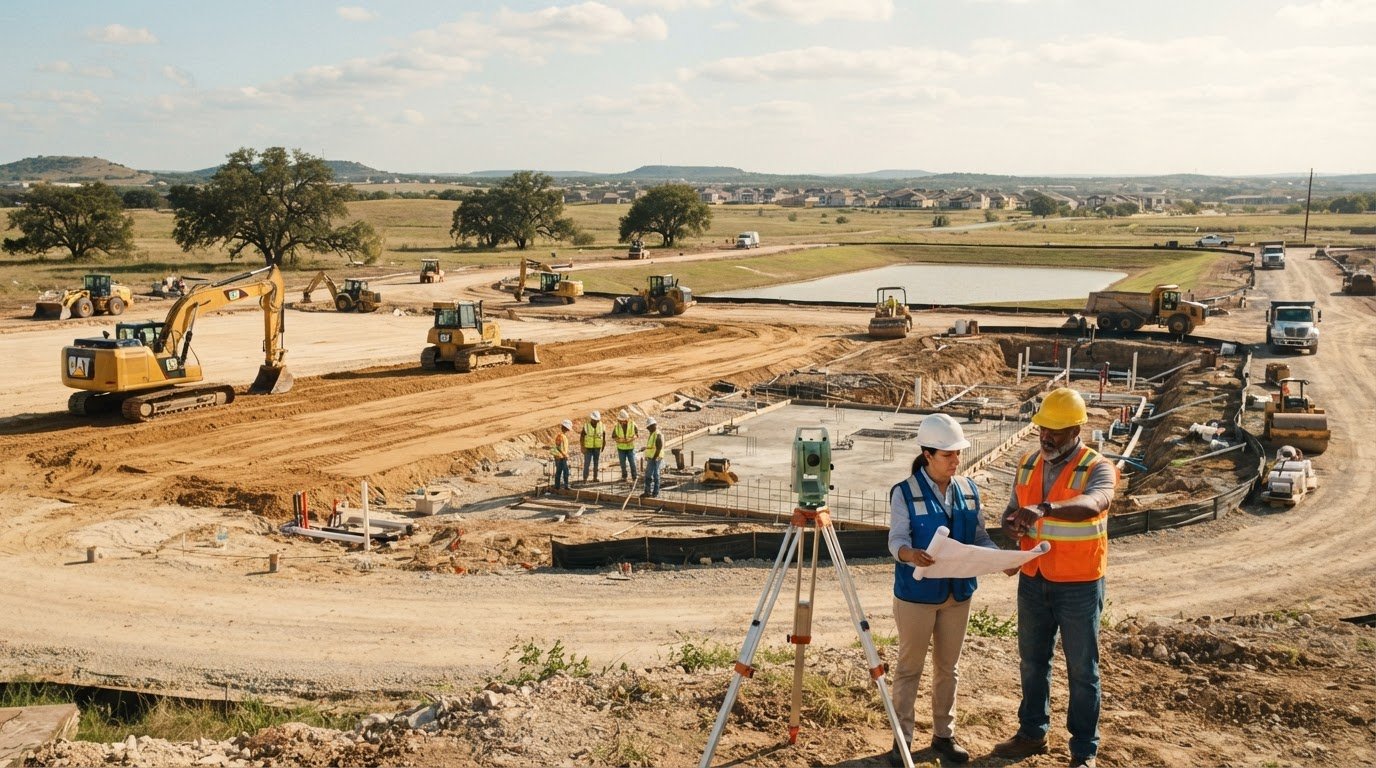
Mass soil excavation is the non-negotiable first step in establishing a reliable foundation. This process involves removing unstable native materials and replacing them with engineered fill or treating the existing soil to alter its chemical properties. By establishing a stable, non-reactive base, we mitigate the risk of differential settlement. This phase also requires the strategic integration of detention ponds and stormwater management systems. These components aren't just secondary features; they're essential for municipal drainage compliance and protecting the foundation from hydrostatic pressure during heavy rain events.
Mass Excavation and Site Readiness
Precision earthwork is required to prepare a site for the multi-ton structural loads inherent in modern garage designs. This stage involves meticulous grading and the creation of a level platform that serves as the starting point for all vertical construction. In addition to the garage footprint, developers must consider the surrounding infrastructure. For those managing larger sites, coordinating this work with commercial concrete paving in Conroe or similar regional hubs ensures that heavy-duty access roads are engineered to the same high standards as the garage itself. Proper detention pond construction during this phase prevents future erosion and ensures the site handles runoff according to 2026 municipal standards.
Paving and Foundation Stabilization Techniques
Stabilization methods vary based on the specific geotechnical report for the site. Chemical stabilization, such as the injection of lime or fly ash, is often employed to neutralize the expansive properties of clay. Mechanical stabilization involves the use of geogrids or specialized compaction techniques to increase the load-bearing capacity of the soil. These methods provide a level, non-reactive base necessary for the successful pouring of structural podium slabs. Rigorous soil stabilization protocols provide a predictable, non-reactive subgrade that prevents foundation cracking amidst the volatile moisture cycles of 2026 Texas climates. This methodical preparation ensures that the structural concrete poured above remains steadfast and secure for decades.

Planning Your Structured Parking Project: Selection and Engineering Criteria
Execution of a multi-level parking project requires a methodical approach that prioritizes technical accuracy over speed. A disciplined planning phase eliminates the coordination gaps that often lead to structural compromises or budget overruns. When developers partner with a cast-in-place concrete parking garage contractor Texas firms trust for integrated service, they gain a partner capable of bridging the gap between raw geotechnical data and vertical construction. This systematic progression ensures every phase of the build supports the 50-year service life goal.
The planning process follows a logical hierarchy of operations. It begins with a comprehensive geotechnical report to identify the specific behavior of the site's soil, followed by the selection of the structural system. Once the framework is chosen, the focus shifts to the integration of underground infrastructure. The following steps define the path to structural success:
- Step 1: Geotechnical Reporting. This detailed soil analysis dictates the depth of footings and the specific stabilization methods required for the site.
- Step 2: System Selection. Developers must determine the optimal structural system, weighing the bespoke flexibility of CIP against the speed of precast based on site constraints.
- Step 3: Utility Coordination. Mapping sanitary, storm sewer, and domestic water lines is critical before any structural slab work begins.
- Step 4: Contractor Selection. Prioritize a partner with "Turn Key Civil" capabilities to ensure a single point of accountability from excavation to the final pour.
- Step 5: Quality Control Protocols. Establish rigorous safety and material testing standards to maintain operational precision throughout the build.
Coordinating Underground Utilities
The complexity of sanitary and storm sewer lines beneath a garage requires meticulous planning. These systems must be perfectly aligned with the structural grid before any concrete is placed. Domestic water systems and electrical conduits also require protection during the foundation pour to prevent accidental damage or misalignment. An integrated civil contractor reduces coordination errors by managing both the subsurface utility installation and the structural concrete work. This unity of command prevents the common project delays that occur when separate subcontractors fail to communicate regarding utility placement and slab thickness.
Evaluating Contractor Proficiency
When assessing a potential partner, their safety record and professional stability are the most reliable indicators of future performance. In major Texas metros, the ability to meet 2026 high-performance material standards is a prerequisite for any large-scale commercial contract. It's essential to ask potential contractors about their specific experience with 2026 municipal drainage requirements in cities like Houston or Dallas. Choosing a partner like Born Integrated Construction ensures your project is managed by a disciplined professional who values substance over style and delivers proven results. This steadfast approach to craftsmanship is what ultimately protects the developer's long-term asset value.
Born Integrated Construction: Delivering Steadfast Structural Concrete Solutions
Born Integrated Construction operates on the principle that a structure is only as reliable as the foundation beneath it. We provide a sense of security for developers by prioritizing professional stability and a deep-rooted commitment to high standards. Our team understands that multi-level developments require a disciplined approach to execution, particularly when managing the volatile soil conditions found across the Texas landscape. As a specialized cast-in-place concrete parking garage contractor Texas developers trust, we maintain a focus on the enduring nature of our work, ensuring every project exceeds its 50-year service life goals.
Our methodology is characterized by a methodical and highly organized rhythm. We don't just act as a subcontractor; we function as a seasoned partner that manages the intricate details of structural integrity. By integrating mass soil excavation, detention pond construction, and structural concrete into a single point of accountability, we streamline the development process for mid-rise and high-rise projects. This integrated approach eliminates the coordination gaps that frequently lead to delays, allowing for a steady and predictable construction experience from the first shovel in the ground to the final structural pour.
The Born Integrated Advantage
The advantage of partnering with our team lies in our comprehensive technical scope and our mastery of both CIP and precast systems. We've established a reputation for excellence in major Texas metros, including Houston, Austin, and The Woodlands. Our expertise covers the entire civil and structural spectrum, including:
- Specialized expertise in CIP mid-rise and high-rise foundations.
- Full-service civil capabilities, from mass excavation to detention pond construction.
- Precision paving stabilization and structural podium slab execution.
- Strict adherence to 2026 municipal drainage and engineering standards.
This breadth of capability allows us to manage complex engineering challenges with operational precision. Our culture of craftsmanship is centered on long-term structural viability, ensuring that every grade beam and footing is executed with the meticulous management of details that modern Texas developments demand.
Partnering for Your Next Texas Development
We cultivate strong relationships with developers by acting as a dependable partner who values substance over style. Our unhurried, methodical approach ensures that we solve potential engineering conflicts during the planning phase, rather than during active construction. We take pride in our ability to deliver consistent value through proven results and unwavering consistency. Whether you are navigating the "Texas Gumbo" of the Gulf Coast or the rocky terrain of Central Texas, our team provides the disciplined execution necessary for success. We invite you to consult with Born Integrated Construction for your 2026 garage project to discuss how our integrated civil and structural solutions can secure your next development.
Securing Your Development’s Structural Future
The decision between cast-in-place and precast systems isn't just about construction speed; it's about matching the structural framework to the specific geotechnical demands of your site. We've established that navigating the expansive clay soils of the Gulf Coast and the Central Texas corridors requires a disciplined approach to site preparation and stabilization. A successful project integrates these civil requirements with high-performance structural concrete to ensure a 50-year service life. As an authoritative cast-in-place concrete parking garage contractor Texas projects demand for technical excellence, we provide the stability your investment requires.
Our team remains specialized in both CIP and precast structured parking, offering full turn-key civil and structural concrete integration. We serve the major metros of Houston, Austin, Dallas, and San Antonio with a focus on safety and meticulous detail. By establishing a steadfast foundation today, you protect the long-term viability of your facility for decades to come. Partner with Born Integrated Construction for your next structural project and let's build a foundation that stands the test of time. We look forward to delivering a result that reflects your commitment to quality and longevity.
Frequently Asked Questions
What is the difference between a parking lot and a parking garage foundation?
A parking garage foundation is a high-load engineering feat designed to support multi-level vertical forces, while a parking lot is standard flatwork for surface-level weight. Garages require deep footers and grade beams to distribute the immense weight of the structure. This structural complexity ensures the building remains stable even as vehicle loads fluctuate across different levels during daily operation.
How does Texas soil impact the choice of a parking garage foundation?
Expansive clay soils in Texas create significant hydrostatic pressure that can lead to foundation shifting and structural distress. These "Texas Gumbo" soils require specialized engineering to mitigate the risks of expansion and contraction cycles. Developers must choose foundation systems that can withstand these environmental pressures without compromising the long-term integrity of the garage or the safety of its users.
Is cast-in-place or precast better for a multi-level parking structure?
Cast-in-place systems provide monolithic rigidity and bespoke flexibility for irregular urban lots, while precast systems prioritize manufacturing speed and standardized assembly. Engaging an expert cast-in-place concrete parking garage contractor Texas firms rely on helps determine the optimal system based on your specific geotechnical report. Both methods have distinct advantages depending on whether the project goals focus on architectural complexity or accelerated 2026 construction timelines.
Why is soil stabilization necessary for commercial concrete foundations in Texas?
Stabilization is essential because it transforms volatile, expansive clay into a predictable and non-reactive base for heavy structural loads. By utilizing chemical injections or mechanical compaction, contractors prevent the foundation from cracking during extreme moisture cycles. This process is a non-negotiable step in ensuring the 50-year service life of a commercial parking facility in the volatile Texas climate.
How long does it take to construct a parking garage foundation in 2026?
Most parking garage projects in 2026 follow a timeline of 6 to 18 months from start to finish. The foundation and excavation portion typically accounts for a significant segment of the early schedule, often following a 2 to 6 month permitting window. Site-specific challenges, such as the degree of soil stabilization required, also impact how quickly the structural slab is ready for vertical construction.
What underground utilities must be planned before a garage slab is poured?
Builders must coordinate sanitary sewer lines, storm drainage, and domestic water systems before any structural concrete is placed. Proper placement of electrical conduits and fire suppression lines is also critical to avoid costly remediation after the slab has cured. Managing these utilities through an integrated civil partner reduces the risk of coordination errors that frequently delay multi-level developments.
Does Born Integrated Construction handle both excavation and concrete work?
Born Integrated Construction manages the entire scope of work from mass soil excavation and detention pond construction to the final structural pour. This integrated service model provides developers with professional stability and a streamlined workflow. By handling both civil site preparation and structural concrete, we ensure that every detail of the foundation is executed with operational precision and long-term viability.
What are the municipal requirements for detention ponds in new Texas developments?
Texas municipalities require detention ponds to mitigate the impact of stormwater runoff on local infrastructure and surrounding properties. These requirements are governed by specific 2026 drainage standards that vary between major metros like Houston and Dallas. Proper pond design is essential for municipal compliance and helps protect the garage foundation from the risks of erosion and water infiltration during heavy rain events.