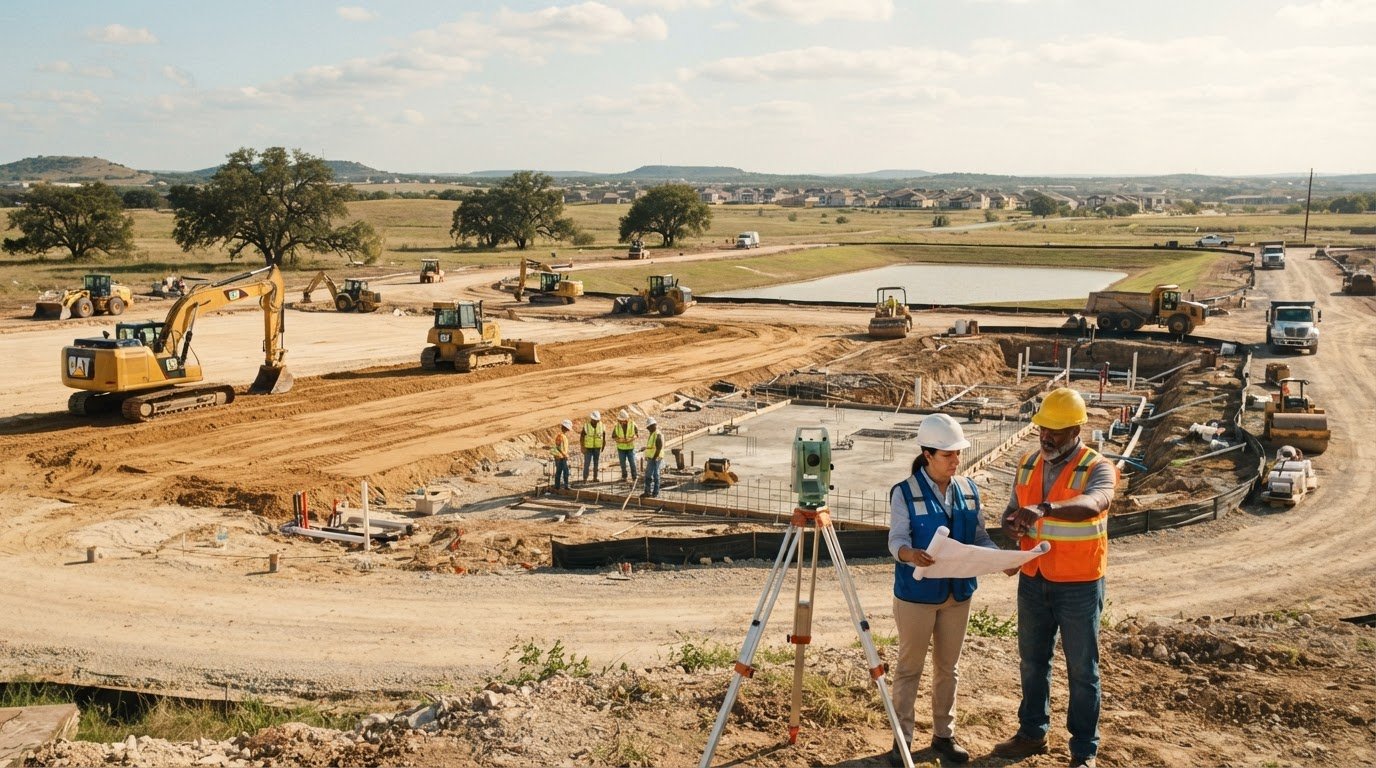

Not all contractors are equipped to handle the complexity of storm sewer installation, and choosing the wrong one can result in costly delays, failed inspections, and serious drainage failures down the line. If you're searching for a reliable storm sewer installation contractor in Texas, you already understand the stakes involved. The challenge isn't just finding someone with a crew and equipment; it's finding a contractor with the specific expertise, regulatory knowledge, and operational discipline to execute the work correctly from the ground up.
That concern is well-founded. Texas municipalities and state agencies maintain detailed standards for stormwater infrastructure, and compliance isn't optional. A contractor who cuts corners or lacks familiarity with local permitting requirements can leave a project exposed to significant liability and rework costs.
This guide is designed to give you a clear, practical framework for evaluating your options with confidence. You'll learn what qualifications and capabilities actually matter, how to assess a contractor's track record with underground utility systems, and what questions to ask before signing any agreement. By the end, you'll have the criteria needed to make a well-informed decision and move your project forward on solid footing.
Key Takeaways
- Storm sewer systems are critical urban infrastructure components that manage runoff and prevent flooding - understanding how they function helps you make more informed decisions throughout your project.
- Texas maintains specific regulatory requirements for storm sewer installation, and knowing the permitting process in advance can prevent costly delays and compliance failures.
- Selecting the right storm sewer installation contractor in Texas requires evaluating experience with underground utility systems, proper licensing, and a verifiable track record of completed projects.
- The installation process follows a defined sequence - from site assessment through excavation and preparation - and knowing what to expect helps you hold your contractor accountable at every stage.
- Born Integrated Construction brings demonstrated expertise in underground utility and concrete construction, positioning the firm as a dependable partner for storm sewer projects that demand precision and compliance.
Understanding Storm Sewer Systems: Importance and Functionality
Storm sewer systems are engineered networks designed to collect, convey, and discharge surface runoff generated by rainfall and snowmelt. Unlike sanitary sewer systems, which carry wastewater to treatment facilities, storm sewers move water directly to natural discharge points such as rivers, streams, and retention basins. In urban and suburban environments, where impervious surfaces like roads, parking lots, and rooftops prevent natural ground absorption, these systems are the primary defense against flooding and infrastructure damage.
The practical stakes are significant. Without adequate storm drainage, even moderate rainfall events can overwhelm roadways, compromise building foundations, and create hazardous conditions for pedestrians and motorists alike. Effective storm sewer installation also carries environmental consequences; properly designed systems reduce the volume of untreated runoff that carries sediment, hydrocarbons, and other pollutants into local waterways.
Components of Storm Sewer Systems
A functioning storm sewer system is made up of several interdependent components, each serving a distinct role in the collection and conveyance of stormwater:
- Inlets and catch basins: These surface-level structures capture runoff from streets and paved areas. Catch basins include a sump at the bottom that traps debris and sediment before water enters the pipe network, reducing the accumulation of solids downstream.
- Pipes and drains: The subsurface conveyance network typically consists of reinforced concrete pipe (RCP), high-density polyethylene (HDPE), or corrugated metal pipe (CMP). Material selection depends on soil conditions, load requirements, and the diameter needed to handle design flow volumes.
- Outfalls: These are the terminal discharge points where collected stormwater exits the system and enters a receiving body of water or detention facility. Outfall design must account for erosion control and comply with discharge regulations enforced at the state and local level.
Benefits of Proper Storm Sewer Installation
When installation is executed with precision, the benefits extend well beyond basic drainage. Properly constructed systems protect property values by preventing flood damage, reduce maintenance burdens on municipal infrastructure, and contribute to cleaner waterways by directing runoff through systems designed to minimize pollutant loads. For any project in Texas, working with a qualified storm sewer installation contractor Texas ensures the system is built to handle regional rainfall intensity and meets the specific standards set by local authorities.
Compliance is not a secondary consideration. Texas municipalities enforce detailed stormwater management ordinances, and installations that don't meet design specifications may require costly remediation or fail inspection outright. Getting the foundational work right from the start is the most reliable path to long-term performance.
Texas Regulations and Compliance for Storm Sewer Installation
Regulatory compliance isn't a formality you address at the end of a project. In Texas, it shapes every phase of storm sewer installation, from initial site assessment through final inspection. Understanding the framework before work begins is the most reliable way to avoid delays, rework, and legal exposure.
Texas operates under a layered regulatory structure where state-level oversight intersects with city-specific codes. Navigating that structure requires more than general familiarity; it demands precise knowledge of which agencies hold authority over a given project and what documentation each one requires.
Key Regulatory Bodies in Texas
The Texas Commission on Environmental Quality (TCEQ) is the primary state agency governing stormwater management. TCEQ administers the Texas Pollutant Discharge Elimination System (TPDES) permit program, which regulates stormwater discharges from construction sites that disturb one or more acres of land. Projects meeting that threshold must file a Notice of Intent (NOI) before breaking ground and implement a Storm Water Pollution Prevention Plan (SW3P) that documents erosion controls and best management practices throughout construction.
Local municipalities add another layer of requirements. Cities such as Houston, Dallas, Austin, and San Antonio maintain their own drainage design standards, right-of-way permitting processes, and inspection protocols. These city-specific codes may specify pipe materials, minimum cover depths, inlet spacing, and outfall treatment requirements that exceed state minimums. A qualified storm sewer installation contractor Texas must be fluent in both TCEQ requirements and the local ordinances governing the specific jurisdiction where work is being performed.
Drainage basin regulations also carry weight. Many Texas municipalities have adopted regional watershed management plans that restrict impervious cover, mandate detention, or impose specific discharge rate limitations. Projects located within regulated drainage basins must demonstrate that the proposed system won't increase peak runoff to downstream properties.
Common Compliance Issues to Avoid
Several failure points appear consistently across storm sewer projects in Texas:
- Failure to obtain proper permits: Beginning excavation without the required municipal right-of-way permits or TCEQ coverage can result in stop-work orders, financial penalties, and mandatory restoration of disturbed areas. Permit applications often require engineered drainage plans, so lead times must be factored into project scheduling.
- Non-compliance with environmental regulations: Inadequate erosion controls or failure to maintain the SW3P can trigger TCEQ enforcement actions. Inspectors can issue notices of violation that carry per-day penalties until deficiencies are corrected.
- Inadequate documentation: Inspectors expect organized records, including permit copies, approved plans, inspection logs, and material submittals. Missing documentation at a critical inspection can delay project closeout and final payment.
Selecting a contractor with direct experience managing TCEQ compliance and local permitting removes a significant source of project risk. Working with a contractor who understands Texas regulatory requirements from the outset ensures your project stays on schedule and clears every inspection without costly interruption.
How to Choose a Storm Sewer Installation Contractor
Choosing the right contractor is where projects either gain a solid foundation or accumulate problems that compound through every subsequent phase. The decision deserves a structured approach, not a quick comparison of bid prices. A qualified storm sewer installation contractor Texas brings more than equipment to the job; they bring regulatory fluency, documented experience with underground utility systems, and the operational discipline to manage complex installations without cutting corners.
Evaluating Experience and Expertise
Start by verifying that the contractor has direct, hands-on experience with storm sewer systems specifically, not just general civil or site work. Ask for a breakdown of completed projects that involved subsurface drainage infrastructure, including pipe diameters, depths, and soil conditions encountered. Contractors who specialize in underground utility systems will speak with precision about these details. Those who don't will offer vague generalities.
Project complexity matters as much as project count. A contractor who has managed large-scale commercial or municipal installations understands the coordination demands that smaller residential work rarely imposes: utility conflict resolution, traffic control, phased excavation, and multi-agency inspection schedules. Verify that their past projects reflect the scale and scope of what you're planning.
Confirm that the contractor holds a current Texas contractor's license appropriate for the work being performed, and that they carry both general liability insurance and workers' compensation coverage. Request certificates of insurance directly from their provider, not just copies from the contractor. Confirm that coverage limits are adequate for the value of your project before any agreement is signed.
Importance of Reviews and References
References from previous clients provide information that no proposal document can. Ask specifically for contacts from projects that involved storm sewer or underground drainage work, and ask those references direct questions: Was the work completed on schedule? How did the contractor handle unexpected site conditions? Were inspections passed on the first submission?
Online reviews offer a supplementary layer of perspective, though they're most useful when read in aggregate. A pattern of comments about poor communication or unresolved punch list items is more informative than any single review. Request case studies or project summaries for installations comparable to yours in scope and site complexity.
When evaluating bids, look beyond the total number. A detailed, itemized proposal signals that the contractor understands the full scope of work. Vague line items or missing allowances for permitting, erosion controls, or inspection fees can indicate either inexperience or a deliberate low-bid strategy that will surface as change orders later. Clear pricing structures and realistic timelines, backed by a documented track record, are the marks of a contractor who manages projects with the same rigor they bring to the field.
Firms like Born Integrated Construction, with demonstrated experience in underground utility systems and a commitment to quality and compliance across every project phase, represent the standard worth holding other contractors to when making this evaluation.
What to Expect During the Storm Sewer Installation Process
Understanding what actually happens during installation gives you a meaningful basis for holding your contractor accountable. Each phase has defined objectives, and when those objectives are met in sequence, the result is a system built to perform reliably for decades.
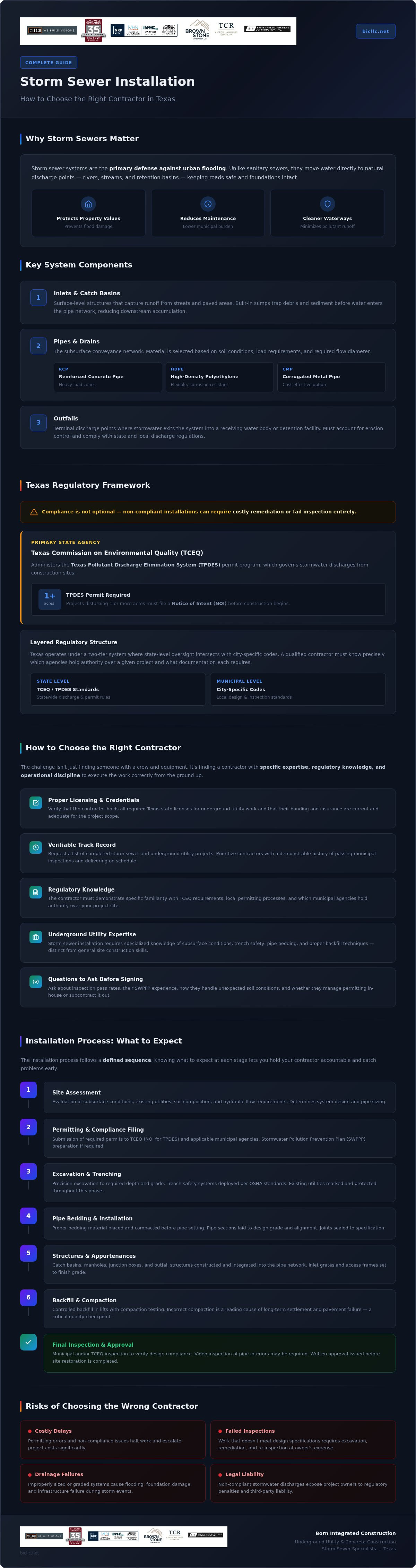
The process begins with a thorough site assessment. A qualified contractor will review engineered drainage plans, identify existing underground utilities through locate services, evaluate soil bearing conditions, and confirm that the proposed pipe alignment and grade match the approved design. This phase isn't administrative overhead; it's where conflicts between the design and actual site conditions get resolved before excavation begins.
Excavation follows a structured sequence. The contractor establishes grade control using laser or optical instruments, then opens the trench to the specified depth and width. Trench walls are shored or sloped in accordance with OSHA requirements, and bedding material is placed and compacted to the elevation required for the pipe invert. The precision of this step directly affects the final grade and flow performance of the installed system.
Component installation proceeds from the downstream end of the system upstream. Pipe sections are set to grade, joints are sealed, and connections to inlets, manholes, and outfall structures are completed with the specified materials. Backfill is placed in lifts and compacted to the density required by the project specifications, which is a step that's frequently rushed on poorly managed projects and leads to surface settlement later.
Final inspections close out the installation. Municipal inspectors verify pipe alignment, joint integrity, inlet elevations, and outfall conditions against the approved plans. In jurisdictions requiring video inspection of the installed pipe, that footage becomes part of the permanent project record.
Typical Timeline for Installation
Project duration varies considerably based on system length, pipe diameter, depth of installation, soil conditions, and the number of structures involved. A straightforward commercial site installation may be completed in a matter of weeks, while a larger municipal or mixed-use development project can span several months. Weather is a consistent variable in Texas; extended rainfall periods can halt excavation and delay compaction operations. A competent storm sewer installation contractor Texas will build weather contingencies into the schedule and communicate proactively when conditions affect the critical path.
Post-Installation Considerations
Once the system is in service, periodic maintenance protects the investment. Catch basins should be inspected and cleaned regularly to prevent sediment accumulation from restricting flow capacity. Outfall structures warrant inspection after significant storm events to identify erosion or debris blockages. Signs that warrant a contractor call-back include surface settlement over the pipe corridor, standing water in areas that previously drained well, and visible joint separation at structure connections.
Before project closeout, confirm the scope of any warranty coverage provided by the contractor and clarify what conditions it covers. Contact Born Integrated Construction to discuss your project's installation and long-term maintenance requirements with a team that brings the same discipline to post-installation support as it does to the field work itself.
Born Integrated Construction: Your Trusted Storm Sewer Installation Contractor
Selecting a contractor is ultimately a decision about trust. You're entrusting a team with subsurface infrastructure that will carry stormwater for decades, and the margin for error is narrow. Born Integrated Construction has built its reputation on exactly the kind of disciplined, detail-oriented execution that underground utility work demands. The firm brings demonstrated experience in concrete construction and underground utility systems, with a consistent focus on quality and safety across every project phase.
That focus isn't incidental. It's reflected in how the team approaches each engagement: reviewing engineered plans thoroughly before mobilizing, managing compliance documentation with the same rigor applied to field operations, and treating every inspection as a milestone to be passed on the first submission. Projects succeed when that discipline is present from day one.
Why Choose Us?
Born Integrated Construction has worked across a diverse range of storm sewer projects throughout Texas, from commercial site development to large-scale civil installations. That breadth of experience translates directly into operational competence. The team understands how soil conditions vary across Texas regions, how municipal inspection expectations differ from one jurisdiction to the next, and how to resolve the utility conflicts and site constraints that inevitably surface during excavation.
Strong working relationships with local municipalities are a practical asset on any project requiring right-of-way access or multi-agency coordination. Familiarity with how specific permitting offices operate, what documentation they prioritize, and what common deficiencies trigger delays gives clients a meaningful advantage in keeping their schedules intact. As a storm sewer installation contractor Texas clients can rely on, Born Integrated Construction brings that institutional knowledge to every project it undertakes.
The team is structured to deliver reliable solutions, not just completed installations. That means proactive communication when site conditions require plan adjustments, thorough backfill and compaction practices that protect against long-term settlement, and a commitment to closeout documentation that supports final inspections without friction.
Get Started Today
Every project begins with a conversation. Whether you're in early planning stages or ready to move toward permitting and mobilization, Born Integrated Construction is prepared to assess your project's scope and provide a clear, itemized estimate that reflects the full work required.
Don't leave a critical infrastructure project to a contractor who treats storm sewer installation as a secondary capability. Contact Born Integrated Construction to discuss your storm sewer installation needs with a team that brings the same precision to underground utility systems as it does to every other phase of concrete and civil construction. Reach out today to schedule your consultation and take the first step toward a project built on solid ground.
Take the Next Step Toward a Storm Sewer System Built to Last
Storm sewer installation is infrastructure work where the quality of execution determines performance for decades. Throughout this guide, you've seen what separates a capable contractor from a risky one: verified experience with underground utility systems, a thorough understanding of Texas regulatory requirements, and the operational discipline to manage every phase without shortcuts.
Those standards aren't abstract. They translate directly into systems that pass inspection the first time, drain reliably under heavy rainfall, and don't require costly remediation after the fact. Finding a storm sewer installation contractor Texas who meets that bar requires deliberate evaluation, and the criteria covered here give you the framework to do exactly that.
Born Integrated Construction brings experienced crews, a genuine commitment to quality and safety, and strong working relationships with local municipalities to every project it undertakes. That combination matters when schedules are tight and compliance isn't negotiable.
Don't wait until a project is already in motion to vet your contractor. Contact Born Integrated Construction today for expert storm sewer installation services and start your project with a team you can count on.
Frequently Asked Questions About Storm Sewer Installation in Texas
What is the typical cost of storm sewer installation in Texas?
Storm sewer installation costs vary considerably based on system length, pipe diameter, depth of excavation, soil conditions, and the number of structures such as inlets and manholes required. Site-specific factors like existing utility conflicts and local permitting fees also influence the final figure. Because these variables interact in ways that are unique to each project, the most reliable cost information comes from a detailed, itemized estimate prepared after a contractor reviews your engineered plans and site conditions directly.
How long does a storm sewer installation project usually take?
A straightforward commercial installation may be completed within a few weeks, while larger civil or mixed-use development projects can extend across several months. The primary variables are system length, pipe depth, soil conditions, and the complexity of required structures. In Texas, extended rainfall periods can interrupt excavation and compaction operations, so a well-managed schedule includes realistic weather contingencies and clear communication protocols when conditions affect progress.
What are the common materials used in storm sewer construction?
The three most widely used pipe materials are reinforced concrete pipe (RCP), high-density polyethylene (HDPE), and corrugated metal pipe (CMP). Material selection depends on the required pipe diameter, anticipated load from surface traffic, soil chemistry, and local municipal specifications. RCP is frequently specified for larger-diameter installations under roadways, while HDPE offers flexibility in certain soil conditions. Your contractor and engineer of record should confirm material selection against the approved project plans before procurement.
Do I need a permit for storm sewer installation?
Yes, permits are required for virtually all storm sewer installations in Texas. Projects disturbing one or more acres of land require TCEQ coverage under the TPDES program, including a filed Notice of Intent and an active Storm Water Pollution Prevention Plan. Most municipalities also require right-of-way permits for work within public infrastructure corridors, and those applications typically need engineered drainage plans before approval is granted. Beginning excavation without the proper permits can result in stop-work orders and financial penalties.
What should I consider when choosing a contractor for storm sewer installation?
A qualified storm sewer installation contractor in Texas should demonstrate direct experience with underground utility systems, not just general site work. Verify that they hold the appropriate state contractor's license, carry adequate general liability and workers' compensation insurance, and can provide references from comparable storm sewer projects. Evaluate their proposals carefully; a detailed, itemized bid that accounts for permitting, erosion controls, and inspection fees signals the kind of operational discipline that translates into fewer change orders and smoother inspections.
How does storm sewer maintenance work?
Routine maintenance focuses on keeping the system clear and structurally sound. Catch basins should be inspected and cleaned periodically to prevent sediment accumulation from restricting flow capacity. Outfall structures warrant inspection after significant storm events to identify erosion or debris blockages. Signs that something requires attention include surface settlement over the pipe corridor, standing water in areas that previously drained without issue, and visible joint separation at inlet or manhole connections. Addressing these conditions early prevents more costly remediation later.
What are the environmental benefits of a well-installed storm sewer system?
A properly constructed storm sewer system reduces the volume of uncontrolled runoff that carries sediment, hydrocarbons, and other pollutants into local waterways. By directing stormwater through engineered conveyance networks, the system limits erosion at discharge points and helps municipalities meet water quality standards. In Texas, where development pressure continues to increase impervious cover across urban watersheds, well-designed and correctly installed systems play a meaningful role in protecting the long-term health of rivers, streams, and downstream detention facilities.