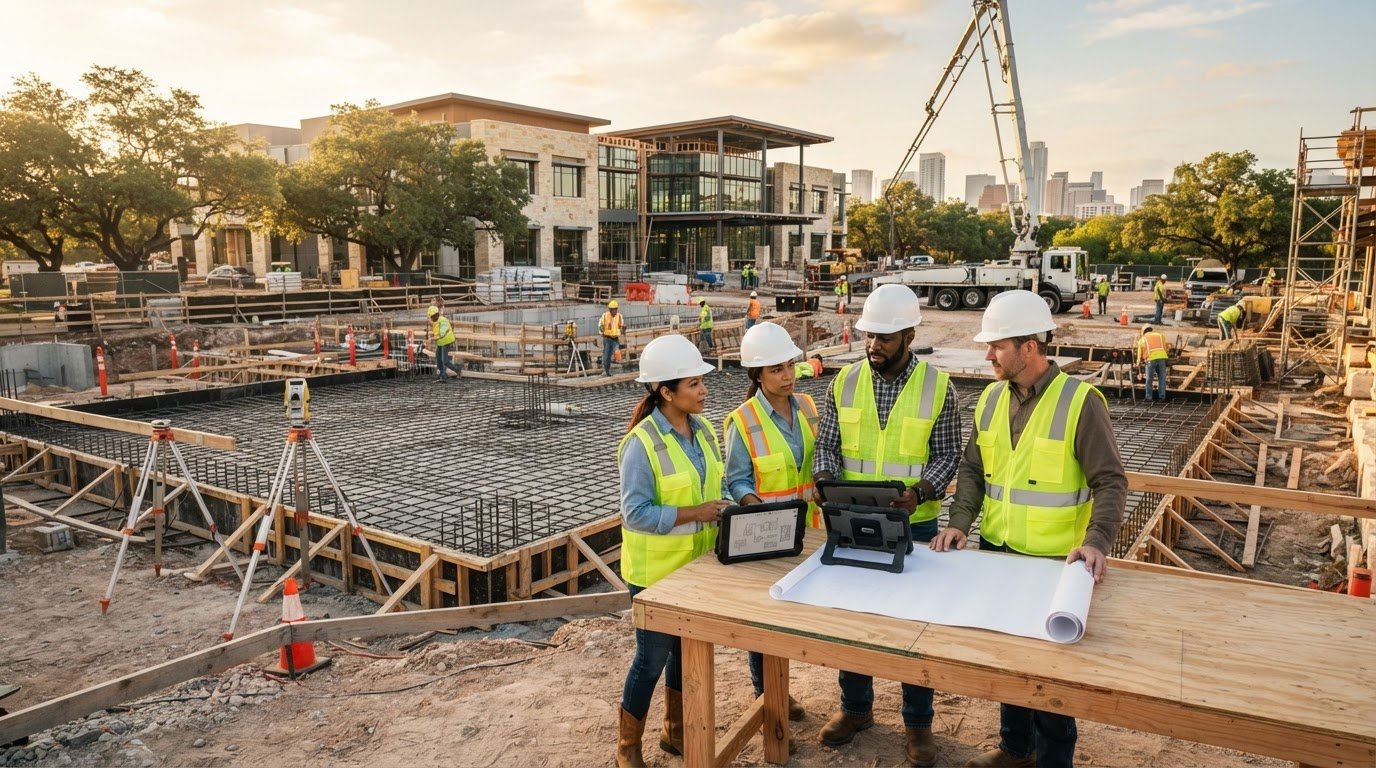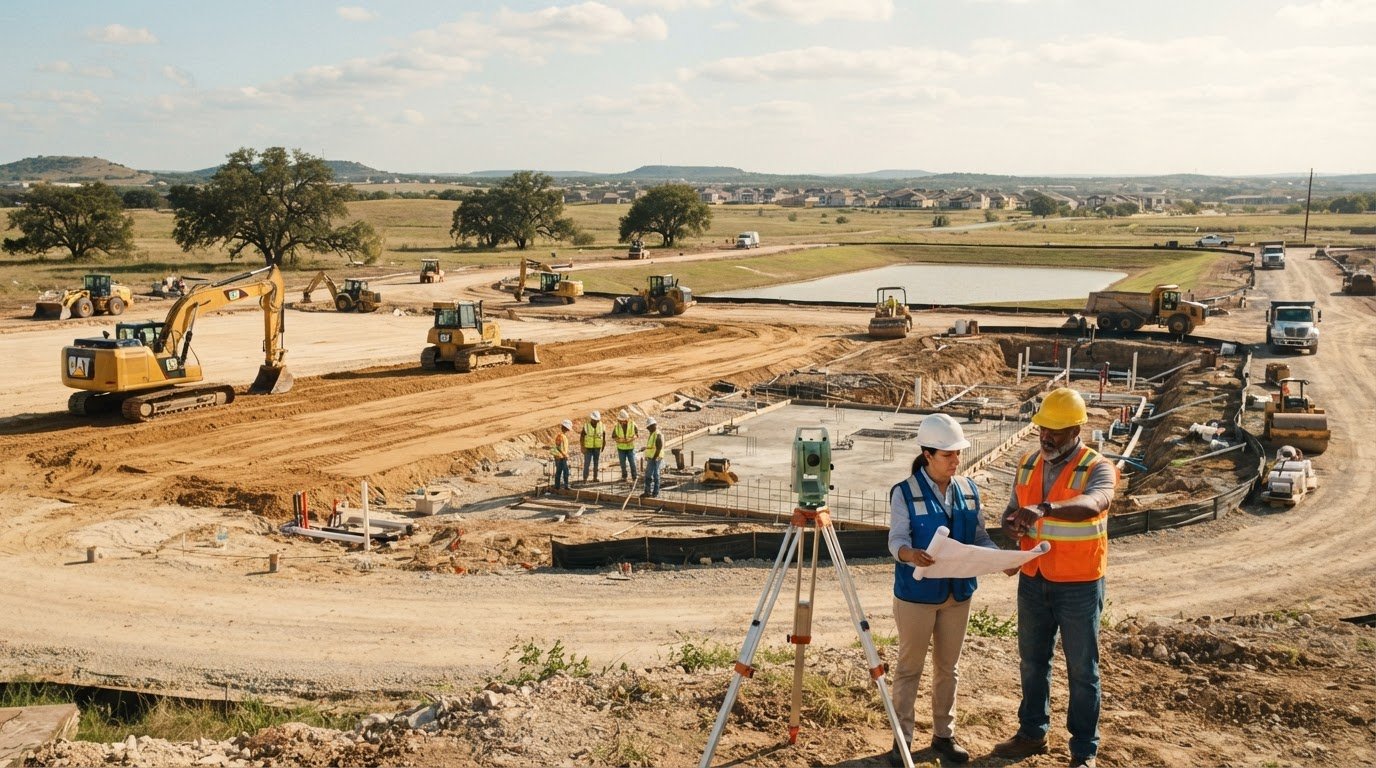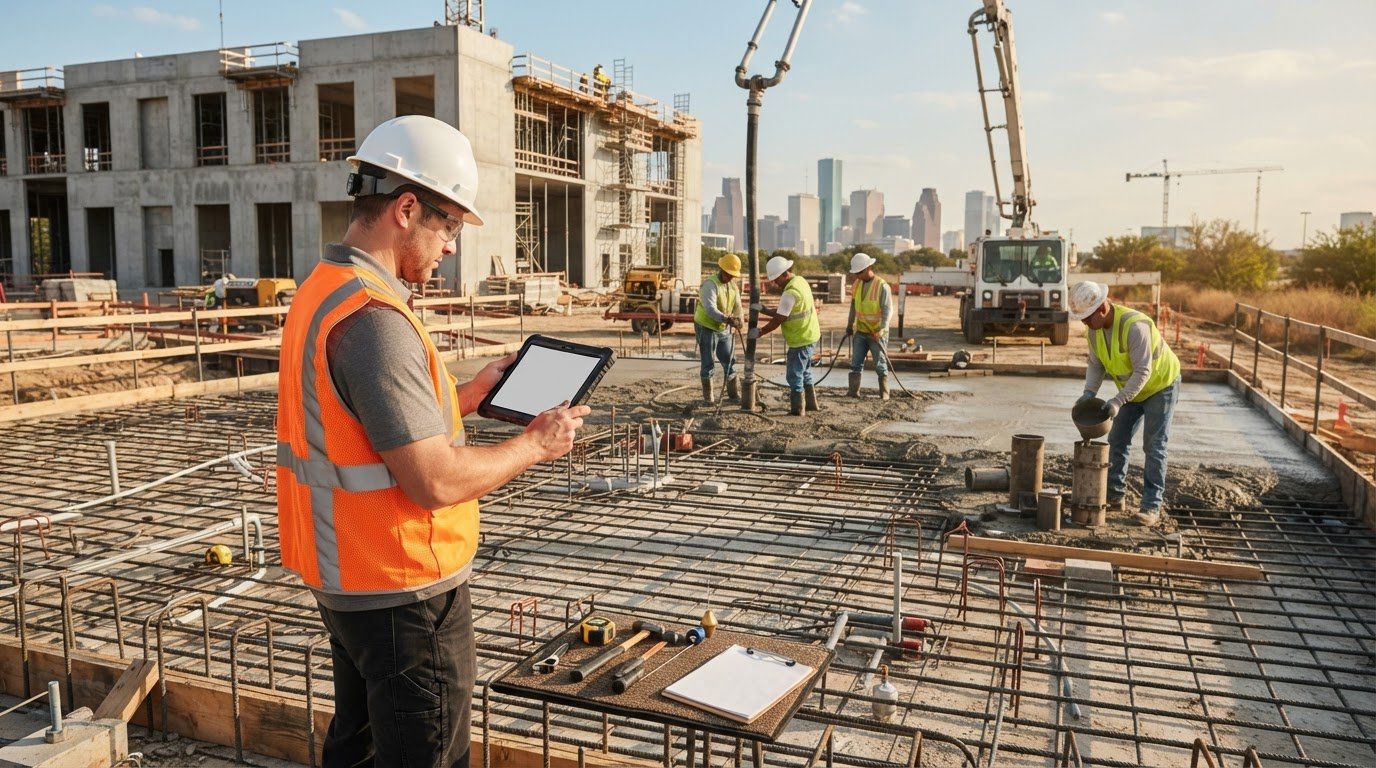
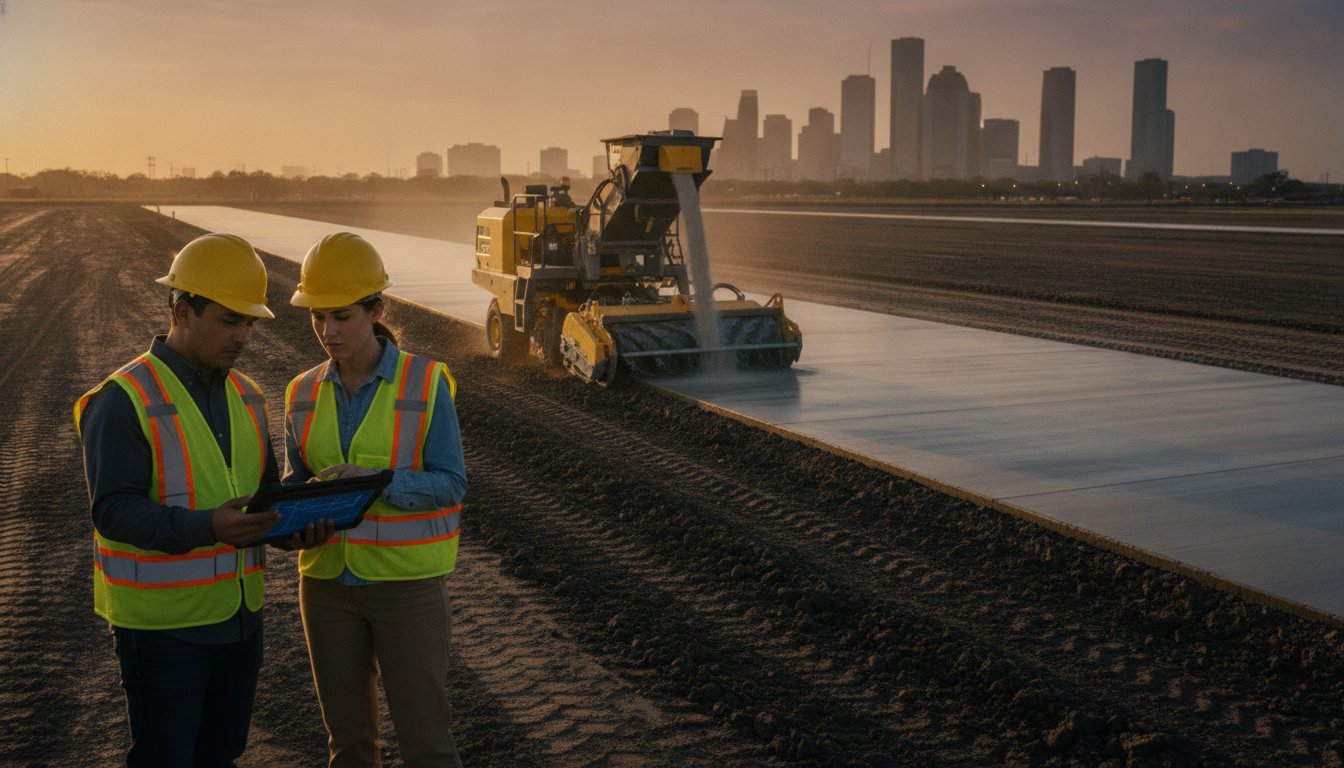
A commercial concrete slab is only as reliable as the ground supporting it, yet many projects fail because they treat the state's expansive clay as a static variable rather than a structural threat. You likely recognize that shifting subgrades and saturated job sites are the primary drivers of premature pavement failure and unexpected repair costs. In a state where 92 percent of construction firms face skilled labor shortages in 2026, getting the foundation right the first time is a matter of operational necessity. Proper soil stabilization for concrete paving Texas provides the structural insurance needed to protect your investment from the volatile moisture cycles common in Houston, Austin, and San Antonio.
We'll show you how a disciplined approach to site preparation leads to a surface with a 30 plus year service life while potentially reducing your total concrete thickness requirements. This guide covers the latest regulatory updates, including the April 2026 statewide special provisions for lime and cement treatment. By understanding these technical standards, you can ensure your project passes TxDOT or municipal inspections on the first attempt. We will explore the specific chemical stabilization methods that turn unstable Texas earth into a steadfast platform for high performance paving.
Key Takeaways
- Understand why the expansive clay of the Texas Blackland Prairie necessitates engineered soil intervention to prevent premature structural failure of concrete slabs.
- Learn to distinguish between mechanical and chemical soil stabilization for concrete paving Texas to select the most durable subgrade solution for your specific site conditions.
- Ensure project compliance by adhering to the latest April 2026 TxDOT special provisions regarding lime and cement treatment protocols.
- Identify how to mitigate the risk of sulfate heave through rigorous laboratory testing and precise additive dosage during the subgrade preparation phase.
- Discover the operational advantages of an integrated site-to-slab approach that combines mass excavation with precision stabilization to achieve a 30 plus year service life.
The Necessity of Soil Stabilization for Texas Concrete Paving
Soil stabilization is the engineered process of improving subgrade physical properties through chemical or mechanical means. In the context of large scale infrastructure, it represents a commitment to long term viability rather than a temporary fix for site logistics. For developers and civil engineers, soil stabilization for concrete paving Texas serves as the primary defense against the state's volatile geological conditions. By creating a rigid, uniform platform, this process ensures that the concrete slab above is supported by a foundation capable of withstanding heavy traffic loads for a 30 year design life.
The economic impact of this preparation is substantial. A stabilized subgrade increases the structural coefficient of the foundation, which often allows for a reduction in the required thickness of costly concrete paving. This optimization does not compromise quality. Instead, it aligns the pavement design with the actual load bearing capacity of the treated earth. Investing in a steadfast foundation reduces the high cost of concrete repair due to shifting subgrades, providing a sense of security for the project's entire lifecycle.
Understanding the 'Blackland Prairie' and Gulf Coast Clays
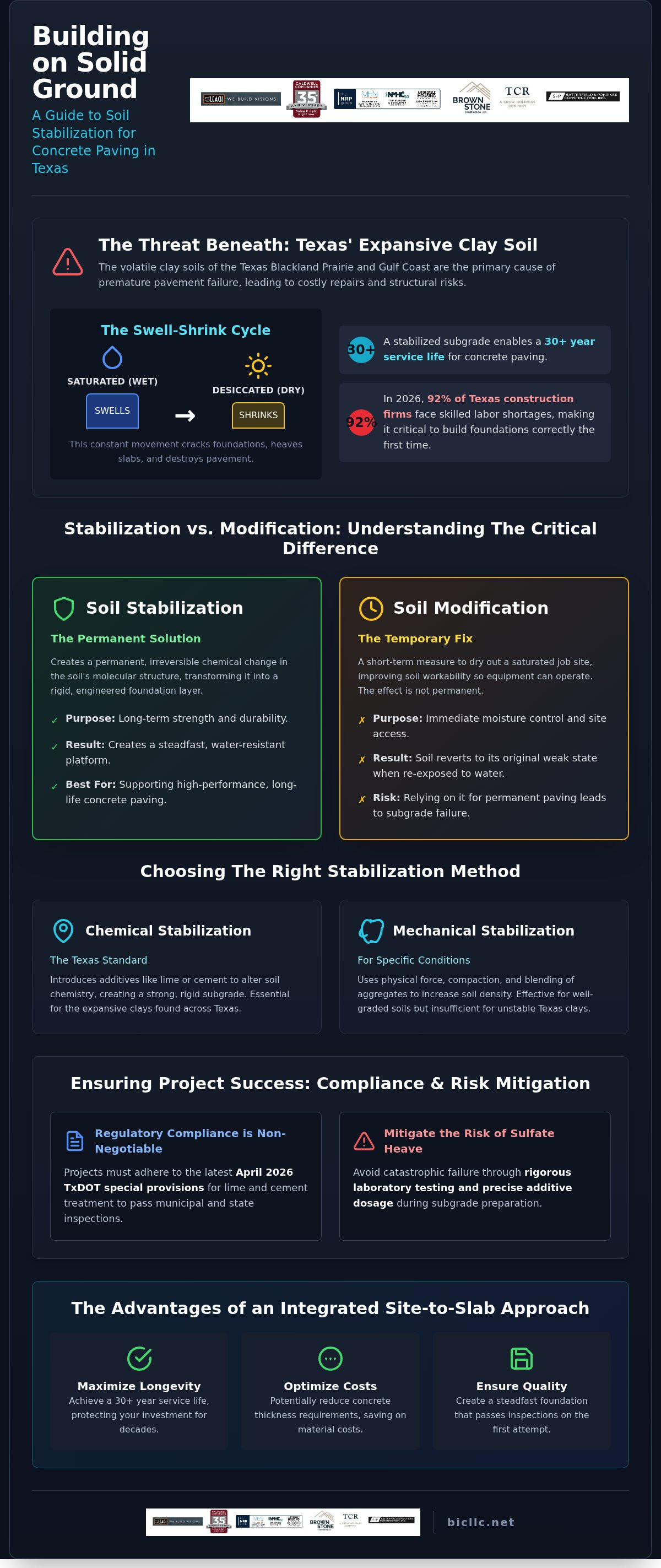
The Texas landscape is dominated by the Blackland Prairie and coastal regions, areas notorious for expansive clay soils. These soils are characterized by a high Plasticity Index (PI), which is a numerical representation of a soil's ability to undergo volume changes based on moisture content. In cities like Houston and Dallas, these clays act like a geological sponge. When saturated, they swell with immense pressure. When dry, they shrink and create deep fissures. Expansive clay is the leading cause of pavement failure in Central Texas. This moisture induced swelling leads to slab cracking and heaving, which can render a commercial parking lot or road unusable within just a few seasons if the subgrade is left untreated.
Stabilization vs. Modification: Knowing the Difference
It's common for stakeholders to confuse soil modification with true stabilization, yet the two serve vastly different purposes. Soil modification is typically a temporary measure. It involves adding small amounts of lime or cement to dry out a saturated job site, allowing equipment to move and work to continue. It's a tool for moisture control and immediate site access.
In contrast, soil stabilization creates a permanent chemical change in the soil's molecular structure. This process transforms a weak subgrade into a rigid, engineered pavement layer that won't revert to its original state when exposed to water. Choosing the wrong method is a significant risk. Relying on modification for a permanent paving project often results in subgrade failure once the temporary drying effect wears off. A disciplined professional prioritizes the permanent bond of stabilization to ensure the enduring nature of their professional output.
Mechanical vs. Chemical Stabilization: Choosing the Right Method
Selecting the appropriate method for soil stabilization for concrete paving Texas depends entirely on the geological profile of the job site. Mechanical stabilization relies on physical force. By blending select aggregates into the native subgrade and applying rigorous compaction, contractors increase the soil's dry density and shear strength. While this method is effective for well graded soils, it often fails to address the chemical instability of the expansive clays found across the Blackland Prairie. For most commercial projects in Texas, chemical stabilization is the required standard to ensure long term structural integrity.
Chemical stabilization involves the introduction of specific additives that alter the soil's molecular structure. The choice of additive is dictated by the soil's chemical composition and its Plasticity Index. In the limestone heavy regions surrounding San Antonio, the subgrade may require different handling than the silty, alluvial deposits found in the Houston Ship Channel area. A disciplined approach to site assessment ensures that the chosen method provides a steadfast foundation for the concrete slab. For developers seeking a reliable partner to manage these complex subgrade requirements, Born Integrated Construction provides the technical expertise necessary for precise execution.
Lime Stabilization: The Standard for High-Plasticity Clays
For soils with a high clay content, hydrated lime is the industry standard. When lime is mixed into moist clay, a two stage chemical reaction occurs. First, cation exchange and flocculation immediately reduce the soil's plasticity, making it more workable and less prone to volume changes. Second, a long term pozzolanic reaction creates a permanent, stone like matrix. According to the Lime Association of Texas, this process significantly improves the load bearing capacity of the subgrade. Curing is a critical phase in this process. Patience during the five day cure period specified in TxDOT Item 260 ensures that the chemical bonds fully mature before the concrete paving begins.
Cement-Treated Base (CTB) and Fly Ash Options
Portland Cement is the preferred additive for soils with lower plasticity or higher sand content. Cement hydration creates a rigid, moisture resistant base that is ideal for heavy duty commercial roads. In 2026, construction standards increasingly emphasize the use of Fly Ash (Class C) as a supplementary or primary stabilizer. Fly ash improves subgrade strength while reducing permeability, which is essential for managing the high water tables of the Gulf Coast. These materials also align with modern environmental considerations. Utilizing industrial byproducts like fly ash contributes to Greenhouse Gas reduction goals, making it a responsible choice for sustainable infrastructure. Whether using cement or fly ash, adhering to the April 2026 statewide special provisions for road mixed treatment is essential for passing municipal inspections.
The Engineering Process: From Mass Excavation to Subgrade Readiness
Achieving a 30 year design life for commercial infrastructure requires a methodical transition from raw earth to an engineered platform. This sequence begins with mass soil excavation, which serves as the critical starting point for all subsequent subgrade work. It's a disciplined progression that bridges the gap between bulk earthmoving and precise civil engineering. When executing soil stabilization for concrete paving Texas, every step must be documented and verified to ensure the enduring nature of the final surface.
The engineering process follows a strict order of operations to maintain structural integrity:
- Step 1: Comprehensive lab analysis establishes the soil profile and identifies the presence of harmful sulfates.
- Step 2: Precision grading and mass excavation reach the design subgrade elevations specified in the site plan.
- Step 3: Chemical additives are distributed using specialized equipment and blended with high torque rotovators to a depth of 6 to 12 inches.
- Step 4: Final compaction and moisture control are performed to meet 2026 TxDOT or municipal density specifications.
This methodical approach ensures that soil stabilization for concrete paving Texas provides a steadfast foundation. By removing the guesswork from site preparation, developers can move forward with confidence in their project's long term viability.
Soil Testing: The Foundation of Operational Precision
Determining the optimum moisture content (OMC) is the first priority for achieving maximum dry density. Laboratory testing is essential because guessing the lime or cement percentage is a recipe for failure that leads to shifting foundations and costly slab repairs. Lab results dictate the exact dosage required to neutralize soil plasticity. This data driven approach is supported by TxDOT research on stabilizing expansive clays, which emphasizes the need for chemical precision when dealing with the volatile soils of Central and North Texas. Without these tests, the chemical reaction may be insufficient to prevent future heaving.
The Role of Detention Ponds in Site Stabilization
Effective detention pond construction plays a critical role in managing site runoff during the stabilization phase. If a job site becomes saturated due to poor drainage, chemical additives cannot bond correctly with the clay particles, leading to project delays and compromised subgrade strength. Integrating drainage management with paving preparation prevents subgrade saturation and ensures the site remains ready for structural concrete pouring. A well managed detention system provides the operational security needed to maintain tight construction schedules despite the unpredictable Texas weather cycles.
Common Pitfalls in Texas Paving Stabilization
Executing soil stabilization for concrete paving Texas requires more than just the right additives; it demands a disciplined adherence to engineering protocols. Even with high quality materials, several common pitfalls can compromise the structural integrity of the subgrade. The most significant of these is the 'Sulfate Heave' trap. In many regions of Texas, soils contain high levels of soluble sulfates. When lime is introduced to these soils, it can react to form ettringite, a mineral that expands and causes the ground to heave with enough force to shatter new concrete slabs. According to TxDOT Item 260, quicklime should not be used if sulfates exceed 3,000 ppm without specialized mitigation strategies.
Compaction also requires a balanced, professional approach. Under compaction leaves voids that lead to future settling, while over compaction can shear the soil and destroy the chemical bonds formed during the stabilization process. Finding the engineered 'sweet spot' is essential for creating a steadfast foundation. Furthermore, rushing the process by pouring concrete before the subgrade has fully cured is a frequent mistake. A standard five day cure is typically necessary to allow the pozzolanic reactions to reach their required strength, ensuring the enduring nature of the professional output.
Managing Moisture and Weather Extremes
Texas weather in 2026 continues to present challenges, particularly with temperatures frequently exceeding 100°F. High heat causes the moisture necessary for chemical hydration to evaporate too quickly, which can leave the lime or cement unactivated. Contractors must manage the moisture environment meticulously to ensure the stabilizer bonds correctly. Protecting the site from sudden flash floods is equally vital. A sudden downpour can wash away additives or saturate the subgrade before it has completed the mellowing period. For lime stabilization, this mellowing period of 24 to 72 hours is a non negotiable phase that allows the lime to break down clay clods before final compaction.
The Cost of Cutting Corners on Subgrade Prep
It's a common misconception that increasing slab thickness can compensate for a weak or unstable subgrade. Pavement failure case studies repeatedly show that when the underlying soil shifts, even the thickest concrete will eventually crack and fail. A 20 year cost analysis reveals that stabilized sites have significantly lower maintenance requirements compared to non stabilized sites, which often require major repairs within the first five years. Integrity in these unseen layers defines the ultimate success of the project. If you are planning a high stakes development, ensure your project is built on a reliable foundation by partnering with an expert in paving stabilization.
Born Integrated Construction: Steadfast Solutions for Texas Infrastructure
Born Integrated Construction (BIC) operates on the principle that civil site work and structural concrete should never be treated as isolated phases. This philosophy is embedded in our name. By managing the entire scope from mass soil excavation to commercial concrete paving, we eliminate the gaps where structural failures often begin. Our team utilizes late-model stabilization equipment to ensure accurate additive distribution and operational precision. This disciplined approach to soil stabilization for concrete paving Texas provides our partners with a sense of security and confidence in the long-term viability of their infrastructure.
We maintain a deep-rooted commitment to high standards. Our work adheres to the most rigorous TxDOT and municipal requirements, ensuring that every commercial project passes inspection on the first attempt. With regional expertise spanning Houston, Austin, San Antonio, and Dallas, we possess an intimate knowledge of local soil profiles. This experience allows us to anticipate geological challenges before they impact your schedule or budget. We don't just build surfaces; we establish the enduring foundations required for high-stakes Texas developments.
The Advantage of an Integrated Civil Partner
The traditional model of hiring separate contractors for site preparation and paving doesn't just create delays; it introduces accountability gaps. When one team handles the dirt work and another pours the slab, the responsibility for subgrade performance becomes blurred. BIC removes this risk by providing a single point of contact for the entire civil package. This integration ensures consistency in quality from the initial cut to the final finish. We prioritize building long-term relationships through reliable performance and attentive service, acting as a dependable partner rather than just another subcontractor. Our integrated approach suggests a business that is as organized in its physical operations as it is in its communication.
Serving the Growing Texas Market in 2026
As Texas continues its rapid expansion, we remain focused on supporting the industrial and residential developments that drive our state's economy. Our crews are actively delivering cost-effective infrastructure solutions in Conroe, The Woodlands, and Beaumont. We understand that in 2026, operational efficiency is paramount due to labor shortages and rising material costs. By providing precise soil stabilization for concrete paving Texas, we help developers maximize their budgets while ensuring their projects stand the test of time. Substance and execution are our priorities. Contact Born Integrated Construction for a consultation on your 2026 paving project.
Establishing Permanent Foundations for 2026 and Beyond
The long-term viability of any commercial project in the state depends on the structural integrity of the subgrade. We've established that addressing the expansive nature of the Blackland Prairie through engineered chemical bonds is an operational necessity rather than an optional expense. Implementing precise soil stabilization for concrete paving Texas ensures that your infrastructure can withstand decades of heavy use and moisture cycles without the high cost of premature failure. It's a commitment to substance and craftsmanship that begins long before the first yard of concrete is poured.
Our team provides the operational precision required to meet these high standards. By utilizing a specialized fleet for precision additive distribution and maintaining strict compliance with 2026 Texas engineering standards, we deliver results that are both predictable and durable. You can secure your project's foundation with Born Integrated Construction's stabilization services. Our integrated site work and paving expertise allow for seamless execution from the initial mass excavation to the final finish. We look forward to being your dependable partner in building infrastructure that lasts.
Frequently Asked Questions
How long does the soil stabilization process take before we can pour concrete?
The stabilization process typically requires a five day curing period before concrete placement can begin. As specified in TxDOT Item 260 and 265, this timeframe allows the chemical pozzolanic reactions to reach the required compressive strength. Patience during this phase is essential. It ensures the subgrade won't shift or settle once the slab is poured, protecting the long term integrity of the project.
What is the difference between lime and cement stabilization for Texas projects?
The choice depends entirely on the soil's Plasticity Index (PI). Lime is the industry standard for the high plasticity clays of the Blackland Prairie because it chemically reduces the soil's swelling potential. Cement is preferred for sandy or low plasticity soils where it creates a rigid, stone like base for soil stabilization for concrete paving Texas. Proper testing determines which additive will provide the most steadfast foundation.
Can soil stabilization reduce the required thickness of my concrete slab?
Yes, an engineered subgrade often allows for a reduction in the required concrete slab thickness. By increasing the structural coefficient of the foundation, the treated soil bears more of the load. This optimization maintains the 30 year design life while reducing the volume of costly concrete material needed. It's a disciplined way to align pavement design with the actual load bearing capacity of the site.
Does soil stabilization help with site drainage and detention pond performance?
Paving stabilization is intrinsically linked to moisture management. A stabilized subgrade is less permeable, which prevents water from infiltrating the foundation and causing slab heave. Integrating this with detention pond construction ensures that site runoff is managed efficiently. This coordination prevents the subgrade from becoming saturated during critical construction phases, maintaining the schedule and the structural integrity of the site.
What are the specific TxDOT requirements for soil stabilization in 2026?
Current standards follow the TxDOT 2024 Specifications with 2026 updates. Specifically, projects must adhere to Statewide Special Provisions SP 260-001 and SP 275-001, which were issued in April 2026. These regulations govern everything from the minimum unconfined compressive strength to the specific test methods, such as Tex-127-E, used for mix design. Adhering to these rigorous standards is a core pillar of our operational precision.
How does Born Integrated Construction handle high-sulfate soils in North Texas?
We manage high sulfate soils through rigorous laboratory testing before any additives are introduced. If soluble sulfates exceed 3,000 ppm, we avoid the use of quicklime to prevent the risk of sulfate heave. In these cases, our team implements specific mitigation strategies or utilizes alternative stabilizers. This methodical approach ensures the enduring nature of the professional output even in challenging geological regions.
Is soil stabilization required for both residential and commercial concrete paving?
While soil stabilization for concrete paving Texas is beneficial for many project types, it's a structural necessity for heavy duty commercial and industrial infrastructure. Our focus remains on large scale commercial paving where the loads are significantly higher. Stabilization provides the necessary structural insurance to protect these high stakes investments from the volatile Texas climate and expansive clay soils.
What is the cost-benefit analysis of stabilization vs. traditional soil replacement?
Soil stabilization is generally more cost effective and reliable than traditional over excavation and soil replacement. Replacing native soil with select fill requires significant hauling and material costs that can strain a budget. Stabilization utilizes the existing earth, transforming it into a high performance layer. This method offers superior long term durability and a lower total lifecycle cost for the project owner.